Do not carry the mattress, bedding or nearby belongings to another room. Seal anything you must move, inspect the entire sleeping area, and confirm the insect by physical evidence rather than bites alone. Put dryer-safe textiles through a household dryer on high heat for 30 minutes, then keep them sealed. Encase the mattress and box spring, isolate the bed, and arrange experienced pest-control help if you find bugs beyond the bed.
The steps below follow current guidance from the U.S. Environmental Protection Agency (EPA) and the Centers for Disease Control and Prevention (CDC).
As an Amazon Associate I earn from qualifying purchases.
What to do in the first hour
- Stop moving exposed items. Do not carry loose bedding, clothing, luggage or furniture through the home. Place anything that must be moved into a tightly sealed bag or container first.
- Record what you found. Note the date, room and exact location, and take clear photographs of insects, spots, eggs or shed skins. If you rent, notify the landlord or property manager promptly; local responsibilities differ.
- Inspect before cleaning. Check the mattress seams and folds, underside, box spring, bed frame, headboard, bedside furniture and cracks nearby. Look for live bugs, pale shed skins, tiny eggs and rusty or reddish spots.
- Bag textiles at the point of removal. Carry sealed bags directly to the dryer or treatment area. Do not open them in another room.
- Arrange identification and help. If the evidence is unclear, ask a qualified pest professional or a local Cooperative Extension identification service. A bite pattern by itself cannot confirm bed bugs.
Bites may take up to 14 days to appear in some people, according to the CDC. Other skin conditions and insects can look similar, so physical evidence or expert identification is more reliable than itching alone.
Do these 3 things before closing this tab:
1Scan for outdated or missing drivers - takes under a minute2Clear out junk files and repair common Windows errors3Fix the driver behind crashes, sound loss and screen glitchesHow to confirm that the mattress has bed bugs
Signs to look for
- Live insects: adults are small, flat and reddish-brown; young bugs are smaller and paler.
- Shed skins: translucent shells left as nymphs grow.
- Eggs and eggshells: tiny, pale material tucked into seams or crevices.
- Rust-colored or dark spots: blood or excrement marks on fabric, the frame or nearby surfaces.
- Clusters in hiding places: evidence concentrated in stitching, screw holes, joints and cracks rather than on the mattress’s open surface.
The CDC’s bed bug guidance emphasizes checking the whole sleeping area. Inspect the box spring, frame, headboard, nightstand, upholstered furniture and wall or floor cracks. Finding nothing on top of the mattress does not rule out an infestation.
#1 Best Overall

- 360° Coverage Protection - Fits 54 inches by 75 inches full size mattress up to 13 inches deep, fully encasing all sides. The stretchy fabric slips on easily and stays securely in place without shifting. Refer to the installation video below for step-by-step guidance.
- Soft and Durable Fabric - The non-crinkling design keeps the full size mattress cover quiet and comfortable without feeling stiff. Made from smooth, knitted polyester, that lays flat across the mattress.
- Secure Zippered Closure - The wrap-around zipper encloses the mattress for a tight, secure fit. The mattress protector is designed to provide all-around coverage without shifting.
- 100% Waterproof Liquid Barrier - A protective waterproof layer helps block spills, sweat, drinks and everyday accidents from reaching the mattress, ideal for homes with kids or pets.
- Easy Machine Care – The full size mattress encasement is simple to maintain. Machine wash and tumble dry on low heat with your regular laundry to keep it clean. Note: Packaging may vary slightly.
Why bites are not enough
Some people show no reaction, while others develop marks days later. The CDC notes that signs can take as long as 14 days to appear. Bed bugs are also not known to spread disease to people, although bites can itch, rarely trigger an allergic reaction, and become infected if repeatedly scratched. Treat severe swelling, breathing difficulty or signs of infection as a medical issue rather than a pest-identification problem.
Handle sheets, clothing and other textiles safely
Use the dryer for heat-tolerant items
For items that can safely withstand it, run a household dryer on high heat for 30 minutes. EPA preparation and integrated-pest-management guidance identifies this as a way to kill bed bugs and eggs. Washing alone may not do the job, so do not substitute a wash cycle for the dryer.
- Seal the hamper load or loose items before leaving the infested room.
- Open the bag only at the dryer and place items directly inside.
- Run the high-heat cycle for 30 minutes, following the fabric-care label.
- Put finished items into a new clean bag or lidded container immediately.
- Keep treated textiles sealed until the sleeping area has been addressed.
Do not use high heat on materials that could melt, scorch or otherwise be damaged. Ask a dry cleaner or pest professional how to handle delicate, non-washable or oversized items, and transport them sealed.
Free tools Windows power users keep installed
One-click scans. No signup required.
Rank #2

- Bed Bug Mattress Encasement Sealed on All Six Sides: The nylon zipper closure glides around three sides and tucks under a stitched guard flap, leaving no open corner or gap at the pull; sleep tight knowing nothing crawls in and nothing crawls out
- Jersey Knit Mattress Encasement, Soft and Quiet: The knitted polyester face feels more like a soft T-shirt than plastic, silky smooth and silent as you turn over; the breathable jersey fabric handles a warm wash and low tumble dry and keeps its shape
- Waterproof Mattress Cover for Spills and Night Accidents: A waterproof layer sealed beneath the knit helps keep sweat, spills, and wet nights off your mattress; ideal for kids still learning, and when a mess happens it unzips and washes like a sheet
- Dust Mite Mattress Cover and Allergen Barrier: The tight knit and sealed zipper keep dust mite allergens shut inside the mattress instead of drifting into bedding; and rest easier knowing the fabric on your skin is OEKO-TEX Standard 100 certified
- Size and Depth: This Queen mattress encasement fits a mattress measuring 60 by 80 inches and 12 inches deep, stretching up to 13; measure yours first, then slip this zippered waterproof bed bug proof cover down like a pillowcase, and zip it closed
Items that cannot go in a dryer
Keep these items isolated and ask a professional about a suitable method. Do not improvise with household freezing, a hair dryer or unverified time-and-temperature combinations. A treatment is only dependable when the entire item reaches the required conditions for the required duration.
Contain the mattress and make the bed an island
Install complete encasements
Use a durable, bed-bug-proof encasement designed for the exact mattress and box-spring dimensions. It should have a complete zipper closure, fit without gaps, and resist tearing. Encase both the mattress and box spring; covering only one leaves a potential refuge.
Leave the encasements in place for a full year and inspect them regularly for tears. If a cover rips, replace it promptly. An encasement traps bugs inside and removes seams as hiding places, but it does not eliminate bugs elsewhere in the room.
Rank #3
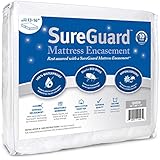
- 100% Waterproof - Six-sided premium mattress protector blocks perspiration, bed wetting, liquids and stains; 10-year quality guarantee (NOTE: For frequent accidents and easy clean-ups, place a fitted SureGuard Mattress Protector over the encasement).
- Bed Bug Proof - Super fine zipper with Invisi-Zip and SureSeal technology completely seals off the mattress from bed bugs - use with a SureGuard Box Spring Encasement
- Keeps Your Mattress Clean & Fresh - Blocks dust, dirt and dander on all sides.
- Soft & Noiseless - 100% cotton terry top; Wicks away moisture; Retains the feel of your mattress - Free from Vinyl, PVC, Phthalates, fire retardants and other toxic chemicals
- Queen (60 in x 80 in) - Fits 13 to 16 inches deep; Zippered Mattress Encasement - Machine wash and dry. Independently lab tested and GREENGUARD Gold certified.
Separate and monitor the bed
- Move the bed at least six inches from the wall.
- Ensure blankets, sheets and bed skirts do not touch the floor.
- Place a bed-leg interceptor under every leg, keeping each interceptor level and unobstructed.
- Inspect interceptors and the bed perimeter on a regular schedule and record what you find.
This “bed island” arrangement limits routes onto the bed and makes monitoring easier. It is a containment and detection measure, not a complete treatment for an infestation in furniture or walls.
Quick wins for a faster PC:
Clear out junk files and repair common Windows errorsFree Scan →Fix the driver behind crashes, sound loss and screen glitchesFind Drivers →Inspect beyond the mattress
Work outward from the bed in a systematic pattern. Use a flashlight and a thin card to examine seams, joints and cracks without scattering debris.
Sleeping-area checklist
- Top, underside and piping of the mattress encasement or mattress.
- All sides and corners of the box spring, including the dust cover and frame openings.
- Bed-frame joints, screw holes, slats and casters.
- Headboard front, back and wall attachments.
- Nightstands, drawers, upholstery, cable openings and items stored beneath the bed.
- Baseboards, carpet edges, electrical-plate gaps and cracks in nearby walls.
- Sofas, chairs, luggage and clothing piles close to the sleeping area.
Do not move furniture from the room to “protect” another room. That can spread the insects. If you need to remove an item for treatment, seal it before transport and keep the route short.
Rank #4

- 360° Coverage Protection - Fits 39 inches by 75 inches twin size mattress up to 13 inches deep, fully encasing all sides. The stretchy fabric slips on easily and stays securely in place without shifting. Refer to the installation video below for step-by-step guidance.
- Soft and Durable Fabric - The non-crinkling design keeps the twin size mattress cover quiet and comfortable without feeling stiff. Made from smooth, knitted polyester, that lays flat across the mattress.
- Secure Zippered Closure - The wrap-around zipper encloses the mattress for a tight, secure fit. The mattress protector is designed to provide all-around coverage without shifting.
- 100% Waterproof Liquid Barrier - A protective waterproof layer helps block spills, sweat, drinks and everyday accidents from reaching the mattress, ideal for homes with kids or pets.
- Easy Machine Care – The twin size mattress encasement is simple to maintain. Machine wash and tumble dry on low heat with your regular laundry to keep it clean. Note: Packaging may vary slightly.
Choose a treatment plan
Why integrated pest management is recommended
EPA describes bed bug control as integrated pest management (IPM): inspection, physical measures, targeted treatment, and repeated monitoring rather than one spray or one cleaning session. Read the EPA’s IPM guidance and do-it-yourself control guidance to understand the sequence and safety limits.
Professional help is appropriate when bugs are found in more than one room, in upholstered furniture or wall voids, when occupants cannot safely perform repeated inspections, or when earlier attempts failed. The CDC advises contacting a pest-control company experienced with bed bugs when an infestation is suspected.
How to compare professionals
Ask whether the company will inspect rather than quote from a photograph, what treatment method it proposes, how it protects occupants and pets, and how many follow-up visits and inspections are included. Confirm that the technician has bed bug experience and serves your locality. No single method is suitable for every building; treatment must reach hidden harborages and account for neighboring rooms or units.
Best Value

- 360° Coverage Protection - Fits 72 inches by 84 inches california king size mattress up to 15 inches deep, fully encasing all sides. The stretchy fabric slips on easily and stays securely in place without shifting. Refer to the installation video below for step-by-step guidance.
- Soft and Durable Fabric - The non-crinkling design keeps the california king size mattress cover quiet and comfortable without feeling stiff. Made from smooth, knitted polyester, that lays flat across the mattress.
- Secure Zippered Closure - The wrap-around zipper encloses the mattress for a tight, secure fit. The mattress protector is designed to provide all-around coverage without shifting.
- 100% Waterproof Liquid Barrier - A protective waterproof layer helps block spills, sweat, drinks and everyday accidents from reaching the mattress, ideal for homes with kids or pets.
- Easy Machine Care – The california king size mattress encasement is simple to maintain. Machine wash and tumble dry on low heat with your regular laundry to keep it clean. Note: Packaging may vary slightly.
Heat treatment is not a thermostat project
EPA IPM guidance describes professional heat treatment of articles or areas at least 120°F (about 49°C) for 90 minutes to ensure eggs are killed. That figure applies to controlled treatment with specialized equipment and monitoring. It is not an instruction to heat a bedroom with a thermostat, fireplace or space heater.
Independent reader supportYour contribution helps us test, update, and keep practical guides available for everyone.What not to do
- Do not throw out the mattress automatically. EPA recommends encasement and says furniture should be discarded only when it cannot be safely eliminated. If disposal is necessary, damage or label the item so nobody takes it, and follow local waste rules.
- Do not heat the room with household appliances. EPA warns that raising the thermostat or using space heaters will not work and can cause fire or other hazards. See its top-ten tips.
- Do not rely on washing alone. Use the high-heat dryer procedure for suitable textiles.
- Do not rely on unverified freezing. A household freezer may not maintain the required temperature throughout an item for the required time.
- Do not use a fogger as the only control. Foggers may miss hiding places and create exposure or fire risks.
- Do not apply an unregistered pesticide. Any product must be labeled for bed bugs, used exactly according to its label, and kept away from people and animals as directed. Review EPA’s safety guidance.
Renting, neighbors and shared buildings
Notify the landlord or property manager as soon as you document evidence. In apartments, bed bugs can move through adjoining rooms or units, so ask how neighboring spaces will be inspected. The division of inspection, treatment and disposal costs varies by jurisdiction and lease; check applicable local housing rules rather than assuming who is responsible.
Continue sleeping in the isolated bed unless a qualified professional instructs otherwise. Moving to a sofa or another bedroom can establish a second harbor and make treatment harder. Keep all movement of belongings sealed and controlled.
Recommended Free Tools
Monitoring after cleanup
Inspection must continue after visible bugs disappear. EPA DIY guidance recommends checking at least every seven days during control and continuing to check for at least a year after completion. Record dates, locations, interceptor catches and any new stains or shed skins.
- Inspect encasements, interceptors and bed joints on the seven-day schedule.
- Recheck nearby furniture and cracks, not just the mattress.
- Keep treated linens sealed and avoid reintroducing uninspected luggage or used furniture.
- Report any live bug or new evidence to the professional handling the case.
If evidence returns, do not respond by applying more pesticide indiscriminately. Reassess the inspection area, neighboring rooms and treatment coverage with the pest professional.
When to seek medical care
Most bites can be managed with ordinary anti-itch care, but medical advice is warranted for spreading redness, warmth, pus, fever or other signs of a secondary infection. Seek urgent care for facial swelling, trouble breathing or a severe allergic reaction. Bed bugs are a pest-control problem, not proof that a home is dirty, and the insects are not known to spread disease to people.
Quick Recap
A practical decision guide
| What you find | Best next action |
|---|---|
| Only an uncertain bite or rash | Do not label it bed bugs. Inspect seams and the surrounding room; obtain identification if physical evidence appears. |
| Live bug, eggs, shed skins or rusty spots on the bed | Seal textiles, use the dryer for suitable items, encase mattress and box spring, install interceptors and begin documented inspection. |
| Evidence on furniture, walls or in more than one room | Keep items contained and contact a bed bug-experienced professional; ask for an inspection and follow-up plan. |
| Damaged mattress or furniture that cannot be treated safely | Discuss disposal with the professional, mark the item as infested and follow local waste requirements so others cannot reuse it. |
Product prices and availability are accurate as of the date/time indicated and are subject to change. Any price and availability information displayed on Amazon at the time of purchase will apply.




