If a landslide damages a nearby power line or hydropower facility, keep well away, warn others without approaching, and report the danger from a safe location. Call your local emergency number for immediate danger, injury, or fire; report downed electrical equipment to the utility serving the area. A slide can keep moving, and a landslide-blocked stream can create a downstream flood hazard. Follow local alerts, evacuation orders, and site warnings.
What should you do if a power line is down after a landslide?
Assume every downed power line is energized. Do not touch it, approach it, drive over it, or touch anything—or anyone—in contact with it. Keep other people and pets away, and avoid water that may contain a fallen line. Do not try to inspect, move, or repair a damaged pole, transformer, or overhead or buried electrical equipment.
As an Amazon Associate I earn from qualifying purchases.
- Call emergency services if there is immediate danger, a fire, an injury, or someone has contacted electrical equipment.
- Report the line to the local utility serving the location. There is no single national utility number; use an official local contact.
- If a line falls across your vehicle, stay inside and call for help. Follow current emergency responder instructions if an immediate fire changes the situation. Do not attempt a rescue that would bring you near the line.
Visible damage does not show whether electrical equipment is live or structurally stable. Landslide debris or damage to a foundation may have affected equipment beyond what can be seen safely. CDC guidance on downed power lines explains the danger and what to do if a line falls across a vehicle; Ready.gov’s landslide guidance advises staying clear of damaged utilities.
Free tools Windows power users keep installed
One-click scans. No signup required.
Who should you call, and what should you report?
For immediate danger or injury, call your local emergency number. Report a downed line to the utility as well. USGS advises reporting landslide events to local authorities so the area can be evaluated. The correct utility and emergency-management contacts depend on the location; do not rely on sample-plan names or phone numbers as real contacts.
#1 Best Overall

- 𝗣𝗼𝘄𝗲𝗿𝗳𝘂𝗹 𝗢𝘂𝘁𝗽𝘂𝘁 - 4400 peak watts and 3400 running watts, perfect for RV camping and home backup
- 𝗠𝘂𝗹𝘁𝗶-𝗢𝘂𝘁𝗽𝘂𝘁 𝗢𝗽𝘁𝗶𝗼𝗻𝘀 - Includes 2*120V AC ports, 1*12V DC port, 1*RV port
- 𝗟𝗼𝗻𝗴 𝗥𝘂𝗻𝘁𝗶𝗺𝗲: Runs for up to 14 hours at 25% load with ECO mode, 2 gallon fuel tank with fuel gauge, allows you to check fuel levels at a glance, keeping you prepared
- 𝐋𝐨𝐰 𝐍𝐨𝐢𝐬𝐞: Under 72 dBA from 23FT away, this generator provides steady power for your home during a power outage or RV nights
- 𝗟𝗶𝗴𝗵𝘁𝘄𝗲𝗶𝗴𝗵𝘁 𝗮𝗻𝗱 𝗣𝗼𝗿𝘁𝗮𝗯𝗹𝗲: Only 56lbs, easy to move around
From a safe place, give the best location you can and describe only what you can see without going closer. Useful details include:
- Visible damage to a line, pole, or other equipment;
- fresh ground or road cracks, bulges, or deformation;
- new water flowing from or pooling on the slope;
- whether people may be cut off; and
- a stream that appears blocked or water levels that seem to be changing.
Do not enter a closed area or seek a closer view to collect details. USGS landslide-preparedness guidance describes warning signs and recommends reporting landslide events to local authorities.
Rank #2

- Ultra-Lightweight: At only 7.5 lbs, the Explorer 300 delivers a robust 292Wh capacity while remaining 17% lighter than the industry average. The sleek, integrated handle makes it effortless to carry on long hikes or pack with your camping gear, providing reliable off-grid power without adding bulk to your load.
- Versatile Power for 6 Devices: Equipped with 2 AC outlets, a 100W USB-C PD port, 2 USB-A ports, and a 120W car port. With a 300W rated output (600W peak surge), it easily handles laptops, drones, and cameras, while also serving as a dependable cpap battery for camping or a robust solar powered generator when paired with panels.
- Built to Last: Upgraded with premium LiFePO4 chemistry, this portable generator delivers over 4,000 charge cycles before reaching 70% capacity. This ensures more than 11 years of reliable service life, making it a sustainable and durable energy partner for a decade of exploration.
- Fast Solar Charging: Perfect for off-grid use, this solar powered generator pairs seamlessly with Jackery panels. Reach 80% capacity in approximately 2.8 hours with a 100W solar panel, or maintain your gear with a portable 40W panel (80% in 7.5 hours), making it an essential part of your hunting essentials.
- WHAT YOU GET: 1* Jackery Explorer 300 Portable Power Station, 1*AC adapter, 1* car charger cable, 1* user guide (𝐒𝐨𝐥𝐚𝐫 𝐏𝐚𝐧𝐞𝐥 𝐍𝐨𝐭 𝐈𝐧𝐜𝐥𝐮𝐝𝐞𝐝.)
Why the slide area and access routes may remain dangerous
Landslides can move at rates from inches per year to tens of miles per hour, according to the USGS Landslide Hazards Program. Some occur without warning; others develop over days, weeks, or longer. A slow-moving slide can change quickly. Fresh cracks, bulging or deformed ground and roads, new flowing or ponded water, sagging or taut utility lines, and broken utilities are warning signs—not an all-clear if they are absent.
The Tool Desk
Outbyte Driver Updater FREEFix the driver behind crashes, sound loss and screen glitchesFind Drivers →Outbyte PC Repair FREERepair Windows errors before they cause bigger problemsFix Now →Stay out of the affected area, report signs of renewed movement, and obey closures and responder instructions. Fresh scarps can shed unstable material, particularly where seeps or springs are present; slide or flood erosion can also leave edges undercut. A USGS field report following Hurricane Helene, Open-File Report 2025-1028, first posted June 9, 2025, cautions responders about these conditions and treats a river dammed by a landslide as a situation that may call for major concern, rescue, or evacuation. Those observations do not establish a universally safe distance from a slide.
Rank #3

- Gasoline: 5300 Running Watts & 6500 Peak Watts; Propane: 4800 Running Watts & 5800 Peak Watts; 4.7 Gallon Fuel Tank with Fuel Gauge; Up to 14.5 Hours of Run Time with 120/240V Volt Selector Switch
- Features One 5–20R 120V 20V Household Duplex Receptacle, One RV-Ready TT-30R 30A Receptacle, and One Transfer Switch Ready L14-30R 30A Receptacle; All Outlets Have Rubber Covers for Added Safety
- Plug-and-Play: Comes with Oil, an Oil Funnel, Propane Hose, Tool Kit, Wheel Kit, and a User’s Manual to Get You Started Right Out of the Box (Minimal Assembly Required)
- Powered by a 274 CC Westinghouse 4-Stroke OHV Engine Featuring a Long-Lasting Cast Iron Sleeve with Automatic Low Oil and Carbon Monoxide (CO) Shutdown
- All Westinghouse Portable Generators are Functionally Tested in the Factory and May Contain Minimum Residual Oil and/or Fuel Odor; EPA Compliant; Backed By 3-Year Limited Service, Labor, and Parts Coverage and Nationwide Customer Service Network
Could a landslide dam cause flooding downstream?
Yes. A landslide can block a stream and form a debris dam. Water may collect behind the blockage, which can later breach and send water downstream. The hazard is not necessarily confined to the visible slide area.
Do not approach the blockage or walk or drive along the channel to inspect it. Follow evacuation directions and move away from the channel as local authorities instruct. If a hydropower facility may also be affected, stay clear of the dam structures, powerhouse, intake, canals, tailrace, and project waters. Treat posted warnings, sirens, and changing water conditions seriously, and follow site instructions and emergency officials.
Rank #4
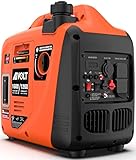
- 🔌 Safe for Sensitive Electronics | <3% THD Clean Power Inverter Generator - This portable inverter generator with advanced inverter tech delivers stable, clean power (THD <3%), safe for your phones, laptops, or small tools. It’s the perfect for home office backups during blackouts or generator for camping - keep your devices charged without worry
- ⚡ Powerful & Fuel-Efficient | Runtime: 8 hrs at 25% load, 2 hrs at full load – This AIVOLT quiet gas inverter generator, powered by a 60cc 4-stroke OHV engine with copper windings, delivers 1600 starting watts and 1260 running watts. The eco-mode switch intelligently adjusts fuel consumption, enabling up to 8 hrs of continuous operation at 25% load for significant fuel savings, while full 1260W operation runs approximately 2 hrs (refuel as needed). Perfect for camping, RV trips, tailgating, job sites, and home backup.
- 🔇 Ultra-Quiet (57 dBA) & Lightweight - This portable quiet generator (57 dBA at 23ft) is quieter than a normal conversation— no more noisy distractions during camping or backyard gatherings, truly a silent gas generator. At just 28lbs, it’s 20% lighter than similar models, a handy small inverter generator easy to carry to campsites or job sites as your go-to quiet generator for camping
- 🔌🔗 Multifunctional Panel & Parallel Capability - This portable inverter generator comes with 2x120V outlets and 2 USB ports (Type-A/C), perfect for charging phones while running a camping fridge. 3 indicator lights and an hour meter let you monitor power status in real time. Need more power? Connect two AIVOLT VS1600101 quiet inverter generators via a parallel kit (not included) to double your output seamlessly
- 🛡️ CO Protect & Comprehensive Safety - This gas powered generator features built-in CO Alert tech that auto-shuts down when unsafe CO levels are detected, protecting your family. Low oil auto-shutdown and overload protection also safeguard both the generator and your electronics - make it a safe for home or RV use, no safety worries
The Federal Energy Regulatory Commission explains that public-safety measures at hydropower projects are selected for project-specific conditions and may include signs, lights, sirens, buoys, barriers, fences, safety nets, escape ladders, and guards. FERC’s hydropower public-safety information describes these measures. Do not assume that a warning system or particular feature is present at every facility.
How do dam and hydropower emergency notifications work?
Emergency action planning coordinates dam owners or operators with emergency responders; the public should not try to manage the response. If a facility appears damaged, report immediate danger to local emergency services. Contact the owner or operator too if an official contact is safely available, then follow alerts and instructions from authorities.
Best Value

- Perfect as a backup power source for larger homes or a dependable source of portable power
- 14,500 peak watts, 11,500 running watts (gasoline); 13,500 peak watts, 10,500 running watts (propane); 12,000 peak watts, 9,500 running watts (natural gas)
- Powered by a heavy duty 550cc 4-Stroke OHV Westinghouse Engine constructed with a durable cast iron sleeve; Runs for up to 19 hours on a 9.5 gal. fuel tank with built-in fuel gauge; up to 7 hours on a 20 lb. propane tank
- Engineered with low THD, so it's safe for sensitive electronics. Power phones, computers, TVs and more. Stay connected with people, news and entertainment during power outages, or on jobsites and campsites. Durable copper windings help your generator produce cleaner power, run cooler and last longer
- All Westinghouse portable generators are gunctionally tested in the factory and may contain minimum residual oil and/or fuel odor; EPA compliant; Backed by 3-Year limited service, labor, and parts coverage and Nationwide Customer Service Network
FERC’s emergency action planning guidelines describe coordination between dam owners and responders. FEMA planning material includes an example notification flow that starts with the dam owner or operator and also involves local 911 and emergency management. Phone numbers and contact names in sample plans are examples, not contacts for your location; use official local information.
How to prepare for local emergency alerts
Check which alert channels local emergency management and the hydropower facility use, how to receive warnings for your area, and whether your home or usual routes fall within a local evacuation area. A battery-powered weather radio with SAME alerts may be useful in some places: FEMA identifies weather radio as one possible channel for severe-weather information and notifications to residents below dams. Coverage can be spotty, and the radio receives alerts only when left on. Verify local coverage and alert use; a radio does not replace calling emergency services, reporting a damaged line, or obeying an evacuation order. FEMA’s dam-safety handbook discusses weather radio as a notification channel.
Quick Recap
Product prices and availability are accurate as of the date/time indicated and are subject to change. Any price and availability information displayed on Amazon at the time of purchase will apply.




