A commercial diving school should comply with the occupational diving rules that apply where it operates, teach to the qualification and diving mode students intend to use, and be able to document competent instruction, safe procedures, suitable equipment, emergency readiness and training records. In the United States, the federal baseline is OSHA’s 29 CFR Part 1910 Subpart T, subject to applicable state-plan and related worksite requirements. ADCI and IMCA criteria can provide additional industry benchmarks, but neither is a universal legal standard.
Which rules apply to the school?
Start with the school’s location, the work its graduates are being prepared to perform, and the diving mode taught. Occupational diving requirements can vary by country, U.S. state or territory, work sector and type of operation. A school should be able to identify the rules governing its training and explain how its syllabus and operating procedures meet them.
As an Amazon Associate I earn from qualifying purchases.
United States: OSHA Subpart T
OSHA identifies 29 CFR Part 1910 Subpart T as the federal commercial-diving framework. It covers matters including dive-team qualifications, the safe-practices manual, pre-dive, in-dive and post-dive procedures, equipment, and recordkeeping. Related maritime and construction standards may also apply, and OSHA-approved state plans may set different or more stringent requirements. A school or employer should check the requirements for the particular jurisdiction and work rather than assume that federal Subpart T is the only applicable rule.
Industry criteria are not the same as law
ADCI commercial diver certification-card requirements and IMCA offshore qualification-recognition criteria can help evaluate training, but they do not replace local legislation. Their scope and conditions matter: a program requirement is not automatically a statutory minimum for every school, and an offshore recognition framework is not a universal rule for all occupational diving.
#1 Best Overall

- ⚓ MATERIAL :- Aluminum, Steel And Glass
- ⚓ SPECIFICATIONS :- Metal : Solid Steel Iron, Finish: As Shown As Picture Approx Size: 16" X 12.5" X 15" / 40 X 32 X 45Cm. Weight: 7.5 Kg (Approx). Volume Weight: 15 Kg. Model: Anchor Engineering 1921.
- ⚓ HANDCRAFTED :- By A Series Of Master Craftsmen Using Only The Highest Grade Materials Truly A Fusion Of Art And History, A Museum Quality Masterpiece Unmatched By Another Model Producing Company On Earth The Perfect Gift For Any Aviation Enthusiast, History Buff, Military Personnel, Automobile Enthusiast, Or Collector.
- ⚓ OUR DIVING :- Helmets Collections Are A Good Gifting Option On Occasion Of Birthday, Anniversary, Retirement, Special Occasions Like Christmas Halloween Or Can Be Used For Home Or Office Decoration As An Piece Of Art Collection.
- ⚓ PERFECT DISPLAY :- Piece For Large Hotel Entrances, Lobbies & Halls Perfect For Decorating & Enhancing Your Home | Perfect Home Decor Accent 100% Quality Satisfaction Guaranteed
How do the main standards differ?
| Framework | What it addresses | What it does not establish |
|---|---|---|
| OSHA 29 CFR Part 1910 Subpart T | U.S. federal occupational diving requirements, including dive-team qualifications, operating procedures, equipment and records; related standards and state plans may also apply. | A single worldwide rule or a universal school accreditation. OSHA-approved state plans can differ or be more stringent. |
| ADCI commercial diver certification-card program | ADCI’s published criteria for new applicants to its commercial diver card program include a formal completion certificate from an accredited commercial diving school, at least 625 documented hours of formal instruction, and ANSI/ACDE-01-2015 or a recognized equivalent. | A universal legal minimum of 625 hours for every commercial diving school, country or qualification. These are ADCI program requirements. |
| IMCA offshore qualification-recognition criteria | Recognition considerations for offshore qualifications, including independent oversight, competent instructors, suitable facilities and equipment, safe systems, emergency arrangements and verifiable certificates. | A substitute for the law where the school operates or a recognition requirement for every type of diving school. |
ADCI also states that recreational scuba credentials alone do not meet its commercial-diver training criteria. That distinction is specific to occupational preparation: recreational certification should not be represented as proof of commercial-diving qualification.
What should a school be able to demonstrate?
Training that matches the intended job
The course should prepare students for the occupational role and diving mode it advertises. Ask what qualification a graduate receives, what work that qualification is intended to support, and how the syllabus covers the required skills. The school should retain records that show the training completed and the level attained.
Rank #2

- Brand: D3 MART
- D3 MART Vintage 18 Diving Helmet Maritime 1921 Anchor Engineering Deep Sca Antique Scuba Divers Helmet Replica Reproduction.
OSHA’s 2000 interpretation discussed acceptable documentation of appropriate-level training, but OSHA marks the letter as archived historical content. It is useful context, not a current standalone rule; confirm current agency requirements rather than relying on that interpretation alone.
Outdated Drivers Are Slowing You Down
One free scan finds every outdated or missing driver and matches the right update for your exact hardware.Free scan · exact hardware matchPC Slower Than It Used to Be?
A free scan shows the junk files, broken settings and background clutter dragging Windows down - then fixes them in one click.Free scan · Windows 10 & 11Competent instruction and independent oversight
Instructors should be competent to teach and assess the courses they deliver safely and correctly. For offshore training seeking IMCA recognition, the criteria call for independent national regulator oversight, credible government or government-appointed oversight of the training regime, and regular inspections or audits. Ask for evidence of instructor qualifications and audit or inspection arrangements, not just a description of the school’s experience.
Rank #3

- 🤿 CLASSIC SEA DIVER HELMET DESIGN – Decorative reproduction inspired by traditional deep-sea diving helmets, featuring an authentic maritime silhouette for a distinctive vintage display.
- ⚓ ANTIQUE-INSPIRED NAUTICAL STYLE – Rustic vintage finish and traditional diver helmet detailing create a timeless maritime appearance that complements coastal and nautical décor. Made from Brass and Copper
- ✨ STRIKING DISPLAY PIECE – Designed to stand out on desks, bookshelves, cabinets, display tables, offices, studies, living rooms, and nautical-themed interiors. Size : 6 Inches
- 🏡 VERSATILE MARITIME DECOR – Pairs beautifully with brass telescopes, ship bells, compasses, anchors, ship models, and other nautical collectibles to create a classic marine-themed setting. 6" Sea Diver Decorative Diving Helmet
- 🎁 UNIQUE GIFT FOR MARITIME ENTHUSIASTS – A distinctive decorative gift for divers, sailors, ocean lovers, nautical collectors, history enthusiasts, and vintage décor fans.
Safe procedures, facilities, equipment and records
A school should have documented safe systems of work, deliver the appropriate syllabus, and use training sites, facilities and equipment fit for the course. IMCA’s offshore criteria refer to relevant Diving Equipment Systems Inspection Guidance (DESIGN) documents for offshore diver training equipment. OSHA Subpart T also addresses equipment and recordkeeping. Ask how equipment is inspected and maintained, what training records are retained, and whether the evidence covers the specific mode and work taught.
Emergency planning and hazard-specific teaching
IMCA criteria call for arrangements and enough trained personnel to respond effectively to foreseeable diving and non-diving emergencies. A school should be able to explain its emergency plan, staff responsibilities and response capability, and show how drills or assessments reflect its site and course. The available criteria do not establish one universal equipment list that every school must have.
Rank #4

- Metals used : Pure Copper, Brass & Glass
- Approx. Size : 18″ x 12.5″ x 17″ / 45 x 32 x 42 cm
- Net Weight : 10.5 Kg Actual Weight
- Volume Weight : 18 Kg Gross Weight with Packing Material
- Model : Mark-V US Navy
Training and risk assessment should also reflect the hazards of the intended work. OSHA identifies risks such as drowning, respiratory and circulatory problems, hypothermia, low visibility and exertion, along with construction-related hazards including cutting, welding, material handling, heavy equipment and power tools. A course aimed at work involving those hazards should address them rather than rely on generic diver-safety instruction.
Do these 3 things before closing this tab:
1Fix the driver behind crashes, sound loss and screen glitches2Clear out junk files and repair common Windows errors3Scan for outdated or missing drivers - takes under a minuteHow can you check a school before enrolling or auditing it?
Request documents and verify claims against the governing authority or recognition body. A certificate, course name or marketing claim alone does not establish that the school complies with the rules for a particular job or jurisdiction.
Best Value
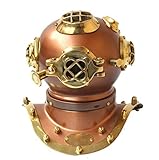
- Desk decorative Miniature Divers helmet Size : 7.5X6 inches. Model:-Replica Mark V US Navy. Crafted using the highest quality aluminum with a antique copper finish.
- Color:- Copper and Shiny Brass, Material used : Brass & Aluminum, Weight:1.50 KG, Copper finish vintage theme.
- Perfect Display:- Piece For Hotel Entrances, Lobbies & Halls Perfect For Decorating & Enhancing Your Home, Home Decor Accent
- Nautical Decor:- It will add a definite nautical touch to whatever room it is placed in and is a must have for those who appreciate high quality nautical decor
- Usage:Home Decorative, Desktop Decorative, Table Decorative, Collectible. Packing:Packed in single Parcels, Corrugated Export packing
- Identify the jurisdiction and work. Record the country, state or territory, intended occupational role, work sector and diving mode. Find the applicable regulator and determine whether state-plan, maritime, construction or other requirements affect the course.
- Confirm the qualification being taught. Ask for the qualification name, the level students complete, the work it prepares them for, and documentation of syllabus coverage and completed training.
- Check oversight and recognition status. Ask who inspects or audits the school and how often. If the school claims IMCA-recognized offshore training, verify the relevant qualification’s current status; recognition can be suspended or withdrawn.
- Verify credentials and certificates. For IMCA-recognized offshore qualifications, certificates must be issued by the national government or a government-appointed certifying body, not by the training facility, and must be verifiable. Confirm the issuing body and verification route.
- Review staff, equipment and emergency arrangements. Request evidence of instructor competence, equipment inspection and maintenance, facility suitability, emergency plans, trained response personnel and relevant drills or assessments.
- Match the records to the course. Check that retained records show the syllabus delivered, training completed and level attained, and that hazard instruction reflects the work for which students are being prepared.
When comparing two schools, use the same evidence categories for both: governing jurisdiction, qualifications and modes taught, oversight, instructor competence, equipment and facilities, emergency readiness, and training records. That makes differences in documentation and scope visible without treating a single accreditation label as a complete safety assessment.
How should historical or program-specific claims be read?
ADCI’s published certification requirements page, accessed in 2026, specifies at least 625 documented hours for new applicants to its commercial diver certification-card program. It also lists ANSI/ACDE-01-2015 or a recognized equivalent. Those figures and criteria belong to that program; they are not a global statutory hour requirement.
OSHA’s 2000 interpretation letter stated that there were no commercial diver licensing programs in the United States and that ADCI issued a commercial diver certification card. Because that statement is historical and the letter is archived, do not treat it as a definitive description of current licensing or certification arrangements. Verify current requirements with the relevant regulator and credentialing body.
Free tools Windows power users keep installed
One-click scans. No signup required.
IMCA IN 1385, published on 24 March 2023, concerns recognition of offshore qualifications. It can inform an offshore-school review, but the legislation that applies locally remains controlling.
Quick Recap
Product prices and availability are accurate as of the date/time indicated and are subject to change. Any price and availability information displayed on Amazon at the time of purchase will apply.




