Do these 3 things before closing this tab:
1Fix the driver behind crashes, sound loss and screen glitches2Clear out junk files and repair common Windows errors3Scan for outdated or missing drivers - takes under a minuteA stealth game feels like Metal Gear Solid when it turns infiltration into a deliberate loop: read enemies and surroundings, choose a route and tools, move carefully, and adapt when the plan goes wrong. The series’ distinctive feel also comes from precise movement, inventive concealment, escalating but readable detection, and a strong narrative voice. The balance differs by game: Metal Gear Solid V emphasizes self-planned routes, while Metal Gear Solid 3 makes camouflage and survival in nature central to infiltration.
Stealth is a plan the player can read and change
The basic rhythm is observe, plan, move, and adapt. A player should be able to gather useful information—where guards look, what sounds might expose them, and what terrain or hiding places are available—then turn it into a choice. The game should reward attention without prescribing one correct route.
| # | Preview | Product | Price | |
|---|---|---|---|---|
| 1 |

|
METAL GEAR SOLID | MASTER COLLECTION Vol. 2 - PlayStation 5 | $49.94 | Buy on Amazon |
| 2 |

|
METAL GEAR SOLID Δ: SNAKE EATER TACTICAL ED – PS5 | $37.49 | Buy on Amazon |
| 3 |

|
Metal Gear Solid Master Collection Vol. 1 - PS5 | $33.59 | Buy on Amazon |
| 4 |

|
Metal Gear Solid: Master Collection Vol.1 (Xbox Series X|S) | $35.34 | Buy on Amazon |
| 5 |
|
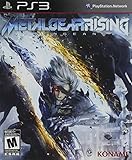
Metal Gear Rising: Revengeance | $16.97 | Buy on Amazon |
As an Amazon Associate I earn from qualifying purchases.
Hideo Kojima described Metal Gear Solid V as a “stealth simulator” in an open world. He said the open-world structure was meant to “remove the rails from the stealth experience,” letting players plan routes and experiment with infiltration strategies. That freedom is not the absence of design: it works when the environment gives players enough information to make choices meaningful. Xbox Wire’s 2013 interview with Kojima explains that intention.
Recommended Free Tools
Detection should create a playable escalation
Infiltration feels tense when enemy perception is understandable and being spotted changes the situation. In accounts of the early series, sightlines and enemy behavior made detection consequential: guards could pursue the player rather than treating discovery as an abstract fail state. Later games added broader sightlines, radar, sound sensitivity, and alert and evasion phases, shaping the tension around what happens after a mistake.
#1 Best Overall
- GAME LIST: Metal Gear Solid 4: Guns of the Patriots, Metal Gear Solid: Peace Walker (HD Collection version), Metal Gear: Ghost Babel. Versions for other regions of Metal Gear Solid 4: Guns of the Patriots and Metal Gear Solid: Peace Walker (HD Collection version) can be downloaded separately from the store. Metal Gear Solid: Peace Walker supports online play for up to 6 players.
- DIGITAL BOOKS: Metal Gear Solid 4: Screenplay Book, Metal Gear Solid 4: Master Book, Metal Gear Solid: Peace Walker Screenplay Book, and Metal Gear Solid: Peace Walker Master Book. All are accessible via the in-game Start Menu.
- METAL GEAR SOLID: MASTER COLLECTION Vol.1 SAVE-DATA BONUS*: If a user has saved data for any title included in METAL GEAR SOLID: MASTER COLLECTION Vol.1, you can receive in-game items usable in Metal Gear Solid 4: Guns of the Patriots and Metal Gear Solid: Peace Walker (HD Collection version) respectively. Metal Gear Solid 4: Guns of the Patriots Bonus: Gold Camouflage. Metal Gear Solid: Peace Walker (HD Collection version) Bonus: GOLD Uniform.
A useful design distinction is between being seen and losing immediately. An alert that feels like enemies have genuinely noticed something can give the player a chance to respond, escape, hide, or manage the consequences. The GameDeveloper report on Kojima’s GDC talk traces the series’ detection ideas, while the GDC game narrative review examines how an alert can feel like an event in the world rather than an immediate, abstract failure.
Spaces and tools make concealment expressive
Metal Gear’s environments are part of the stealth system. A wall, patch of grass, log, sound source, or hiding place matters because it changes what the player can risk. The series’ move into natural environments made concealment more than slipping behind constructed cover: in Metal Gear Solid 3, camouflage and terrain became part of how the player stayed hidden. Konami’s official Metal Gear history describes blending into nature as a central part of that game’s approach.
Rank #2
- The story, characters, voice acting, gameplay, and music that made the original a sensation return, remade for modern consoles
- This evolutionary leap breathes new life into every cutscene, and rebuilds every corner of the world
- Incredible new graphics bring the wild growth of the jungles, forests, and swamps to life in exquisite detail
- Characters are rendered in fine detail so that facial wrinkles, pores, & separate eye & iris movements are visible, allowing for rich animations
- Any injuries to his actual body will leave their mark permanently, telling a story of each player's unique journey
The tools should suit the setting rather than follow a universal checklist. In Metal Gear Solid 3, camouflage, treating injuries, and capturing food connect stealth with survival. Those systems ask the player to adapt to the environment, not simply to select a gadget for a scripted obstacle. Other entries can create a Metal Gear-like feeling through different tools, as long as tools and spaces invite observation and improvisation.
Precise movement makes small decisions matter
When success depends on how much of a guard’s view the player enters or how close they get to a threat, controls need to make movement feel deliberate. Yuji Korekado, creative producer on Metal Gear Solid Delta: Snake Eater, said: “Metal Gear is a stealth game, so it’s crucial for players to be able to make precise movements.” In a 2025 PlayStation.Blog interview, he discussed preserving the original feel while adding realism.
Rank #3
- Title Lineup:Metal Gear, Metal Gear 2: Solid Snake, Metal Gear Solid (Including VR Missions/Special Missions), Metal Gear Solid 2: Sons of Liberty (HD Collection version), Metal Gear Solid 3: Snake Eater (HD Collection version), Metal Gear (NES/FC version), Snake's Revenge
- Video: Metal Gear Solid: Digital Graphic Novel, Metal Gear Solid 2: Digital Graphic Novel
- Digital book: Metal Gear Solid: Screenplay Book, Metal Gear Solid: Master Book, Metal Gear Solid 2: Screenplay Book, Metal Gear Solid 2: Master Book, Metal Gear Solid 3: Screenplay Book, Metal Gear Solid 3: Master Book, Metal Gear & Metal Gear 2: Screenplay Book, Metal Gear & Metal Gear 2: Master Book
- Soundtrack: Metal Gear Solid: Digital Soundtrack
The point is not that every stealth game needs the same control scheme. It is that the player should trust the relationship between input and exposure. If a small positional adjustment can keep Snake concealed—or accidentally reveal him—the movement system is part of the stealth design, not a layer separate from it.
The series has more than one stealth texture
“Metal Gear feel” is not a fixed set of mechanics shared identically by every entry. Metal Gear Solid V foregrounds route freedom and player-planned infiltration. Metal Gear Solid 3 gives concealment a close relationship with natural terrain and survival. A game can draw on one side of that identity without reproducing every system from another entry.
Rank #4
- This innovative game series was born from the idea of avoiding combat and infiltrating enemy territory undetected
- Title line up: Metal Gear, Metal Gear 2, Metal Gear Solid, Metal Gear Solid 2, Metal Gear Solid 3, Metal Gear (NES/FC version), and Snake’s Revenge
- Digital books: Metal Gear Solid, Metal Gear Solid 2, Metal Gear Solid 3, Metal Gear, and Metal Gear; Screenplay and Master Books included
- Video: Metal Gear Solid; Digital Graphic Novel and Metal Gear Solid 2; Digital Graphic Novel
- Includes Metal Gear Solid: Digital Soundtrack
| Design axis | Question to ask |
|---|---|
| Player vulnerability | How dangerous is direct confrontation, and how strongly does the game encourage avoidance? |
| Information | What can the player learn about enemies and the environment before acting? |
| Detection response | Does discovery create readable escalation and a chance to recover, or an immediate reset? |
| Route freedom | Does the player follow a prescribed sequence or plan a route? |
| Tools and spaces | Do gadgets and terrain invite improvisation, or mainly serve scripted tasks? |
| Tone and fantasy | Does the player feel like a vulnerable infiltrator, a gadget-heavy super spy, or something else? |
These axes help explain why games can share stealth, weapons, and gadgets but still feel different. In a PlayStation retrospective on Syphon Filter, director John Garvin described a focus on weapons, gadgets, and stealth intended to make players feel like super spies. That overlaps with Metal Gear’s toolkit, but a different power fantasy and pacing can produce a different overall feel.
Story and perspective are part of the identity
Stealth mechanics alone do not account for Metal Gear’s identity. Asked about the series’ trademark, Kojima said: “Stealth and the desire to convey a meaningful message to the player. The way these elements are implemented may vary, but they’ll always be there.” That answer, from the 2013 Xbox Wire interview, connects the act of infiltration to the series’ distinctive narrative ambitions; it does not mean another stealth game must copy its story or themes.
Best Value
- Rising's stealth elements will emphasize Raiden's considerable speed and agility through what Matsuyama describes as "hunting stealth."
- Gameplay will focus on two key elements: swordfighting, and a style of stealth that is more fast-paced and action-oriented.
- "Cutting" entails sophisticated swordplay that lets players engage in third person melee combat, as well as precisely slash enemies and objects "at will" along a geometrical plane using a "free slicing" mode.
Perspective also shapes the sensation of hiding and being hunted. Kojima called Metal Gear a hide-and-seek game and said he was excited by the idea of adding a camera that could change position in a 3D world. His 2012 PlayStation.Blog interview makes clear that navigating space and seeing it from changing angles belong to the series’ design history, not just its visual presentation.
A practical test for a Metal Gear-like feel
- Can players observe enough to make an informed plan?
- Are there meaningful choices about route, timing, movement, and tools?
- Does the environment provide usable concealment rather than merely decorative cover?
- Can players understand when they have been detected and what the resulting alert means?
- Does discovery change play in a way that supports response and adaptation?
- Do controls make careful positioning feel trustworthy?
- Does the game’s tone or story give infiltration a distinctive purpose?
No single checklist guarantees a Metal Gear Solid feel. The characteristic effect comes from how these elements work together: the player studies a situation, commits to a plan, and has to think again when the world pushes back.
Quick Recap
Product prices and availability are accurate as of the date/time indicated and are subject to change. Any price and availability information displayed on Amazon at the time of purchase will apply.




