Hoid is the Cosmere’s recurring connective character: the same elusive individual crosses stories, worlds and genres, often disguised or present only briefly. Brandon Sanderson confirms that the Hoid in Elantris, Mistborn and Warbreaker is one person. His larger purpose is intentional but unresolved, so the useful way to read him is as a bridge between otherwise self-contained books—not as a mystery with an author-approved solution.
What Hoid is in the Cosmere
The Cosmere is Brandon Sanderson’s shared fictional universe. Its epic fantasy series take place in different settings, with separate casts and immediate conflicts, but they also share deeper history, rules and occasional characters. Hoid is the most conspicuous example of that design.


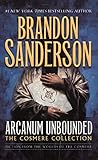


As an Amazon Associate I earn from qualifying purchases.
Sanderson has described Hoid as a character he imagined appearing in other people’s stories while disguised as someone who belonged in each setting. That concept eventually became part of the deliberate architecture of the Cosmere. A brief encounter that looks like local color in one novel can therefore be the same character readers meet under a different role elsewhere.
The Tool Desk
Outbyte PC Repair FREERepair Windows errors before they cause bigger problemsFix Now →Outbyte Driver Updater FREEScan for outdated or missing drivers - takes under a minuteDriver Scan →Hoid is an alias rather than a normal, repeated name. Sanderson’s official FAQ confirms that the Hoid in Elantris, Mistborn and Warbreaker is the same individual, not three unrelated cameos. The confirmation establishes continuity; it does not provide a complete biography, timeline or explanation of his motives.
#1 Best Overall
“Hoid is a mystery which I cannot speak on other than what has been written in the text of the novels.” — Brandon Sanderson, author, official FAQ “Who Is Hoid?”
That sentence is the boundary for responsible explanations. The books contain clues and the appearances are planned, but Sanderson has not published a definitive account of Hoid’s ultimate agenda. Interpretations can be useful; they should remain interpretations.
A practical definition for new readers
Calling Hoid a “connective character” is more accurate than calling him the protagonist of the entire Cosmere. He does not replace the heroes of Elantris, Mistborn, Warbreaker or The Stormlight Archive. Instead, he moves through their stories, sometimes as a minor participant and sometimes as the person telling the story. His recurrence gives readers a way to notice the shared setting without requiring every novel to stop for a lecture about it.
Recommended Free Tools
This distinction also explains why a reader can finish one series without recognizing Hoid at all. A disguise, a short conversation or a passing reference may be meaningful only in retrospect. Recognition is an added layer, not a test that must be passed before the local plot makes sense.
What is confirmed, and what remains deliberately obscure?
The identity is continuous
The strongest canon point is simple: Hoid is one continuing character across multiple Cosmere stories. Different names, jobs, costumes or levels of visibility do not automatically indicate different people. A reader can miss him because a scene is short, because he is disguised, or because the text does not call attention to the connection.
The appearances are intentional
Sanderson has said Hoid’s actions are not random. That does not mean every appearance advances the same visible plot. A cameo may establish that two settings belong to the same universe, preserve a clue for later, provide a distinctive voice, or simply let a recurring personality pass through a story. The intention is confirmed; the complete plan is not.
The agenda is not solved by official explanation
Sanderson’s FAQ directs readers to piece together what the novels themselves say. It does not offer a final statement of Hoid’s origin, loyalties or end goal. Older FAQ material also describes a planned behind-the-scenes story involving Hoid, potentially including short fiction, while emphasizing that the main series should remain self-contained. That is evidence of authorial intent at the time, not a guaranteed release schedule or a promise that every question will receive a direct answer.
Free tools Windows power users keep installed
One-click scans. No signup required.
What “confirmed” should mean in a guide
There are several levels of certainty worth keeping separate. First is an explicit author statement, such as the confirmation that the Hoid in three early works is the same person. Second is what the published text plainly shows. Third is a connection suggested by a clue or a secondary index. The third category can be fascinating, but it should not be phrased as though Sanderson has individually verified every alias or chapter reference.
Rank #2
This vocabulary protects both new and experienced readers. “Sanderson confirms” should be reserved for what he actually stated. “The novel shows” belongs to details visible in the primary text. “Readers often infer” signals an interpretation. Keeping those labels in place makes a spoiler-aware explanation more trustworthy.
Hoid’s confirmed and reported appearance landscape
There is no single author-verified catalogue that assigns every alias, off-page mention and chapter to Hoid. The safest guide separates explicit confirmation from broader checklists. The following groupings tell you where to look without pretending that every scene detail has equal evidentiary status.
Elantris, Mistborn and Warbreaker: the confirmed cross-series foundation
Sanderson’s official “Who Is Hoid?” FAQ explicitly identifies the character in these three works as the same individual. These early appearances are useful for understanding the device itself: a reader can encounter Hoid as a seemingly local figure before recognizing a pattern across books. The FAQ confirms the shared identity, but it does not turn every scene, alias or inferred objective into an officially annotated explanation.
What’s actually slowing this PC down?
Pick the symptom - the matching free tool is one click away.
If these are the books you already own, there is no need to reread them in a special order. You can continue the series you prefer, then compare the moments in which Hoid appears. The comparison is where the connective effect becomes visible: the settings remain distinct, while one recurring person links them.
The Well of Ascension: a continuity wrinkle, not a straightforward cameo list
The official continuity note for The Well of Ascension explains that an earlier version of Hoid’s appearance was cut or changed during revision. In the continuity Sanderson describes, Hoid is at Terris after visiting the Well. The published novel leaves only a subtle clue rather than the more explicit version readers may encounter in older annotations.
This matters because an obsolete summary can reverse the sequence and say that Hoid went looking for the Well. That is not the current continuity explanation. If you are following this thread, Mistborn: Secret History is especially relevant to the surrounding continuity discussion, but it is not a prerequisite for understanding the basic fact that the scene was revised.
The lesson is broader than this one book: publication history can affect how a cameo is described. A draft, an old annotation and the final text are not interchangeable. When they conflict, use the author’s current continuity explanation and the published novel rather than repeating an older summary because it is more dramatic.
Do these 3 things before closing this tab:
1Scan for outdated or missing drivers - takes under a minute2Clear out junk files and repair common Windows errors3Fix the driver behind crashes, sound loss and screen glitchesLater Mistborn books, The Stormlight Archive and other Cosmere fiction
Secondary appearance indexes place Hoid across later Mistborn books, The Stormlight Archive and additional Cosmere novels and short fiction. Those indexes are useful as search checklists, particularly when you want to revisit a suspected cameo, but they are not a substitute for the primary text or an author-verified scene catalogue.
Rank #3
When a guide names a precise alias, chapter or line from one of these works, check the novel itself before treating that detail as settled canon. Some connections are direct, some are disguised and some are reported only as subtle indications. The broad pattern—Hoid recurs across the Cosmere—is firmly established even when a granular appearance list is not.
Hoid’s Travails: stories told in Hoid’s voice
In a 2025 update, Sanderson used the name “Hoid’s Travails” for stories told in Hoid’s voice about stops on less central Cosmere worlds. He identified Tress of the Emerald Sea and Yumi and the Nightmare Painter as books in that group and said they can be read in any order. He also described The Fires of December as taking place earlier chronologically, while Hoid tells it later.
This group is different from a blink-and-you-miss-it cameo. Hoid’s voice and perspective are central to the reading experience, so these books are the clearest starting point for readers who want to understand how he functions as a narrator. They still do not constitute a complete confession of his motives.
The order distinction is useful. Sanderson’s statement concerns the order in which the Travails stories can be read, while the events themselves do not necessarily occur in that same sequence. In particular, The Fires of December is described as earlier in the fictional chronology even though Hoid presents it later. That is a continuity note, not a demand that readers reconstruct a master timeline first.
How to recognize what a Hoid appearance is doing
He supplies connective tissue
A Hoid appearance can make a distant world feel like part of a larger setting without requiring the main plot to stop and explain the universe. The connection may be no more than recognition for an attentive reader, but it rewards people who enjoy tracing recurring elements across series.
He preserves mystery while signaling design
Because Hoid is often disguised or encountered briefly, his scenes can operate on two levels. A first-time reader can read the immediate conversation at face value. A returning Cosmere reader may notice language, timing or a familiar presence and ask a larger question. That layered construction lets Sanderson add continuity without making every book dependent on a master glossary.
He changes narrative distance
In a conventional cameo, Hoid is a supporting figure inside someone else’s viewpoint. In the Travails books, he is also the storyteller. Moving from a fleeting appearance to a sustained narrative voice changes what readers can observe, but it does not erase the gap between what Hoid says, what he knows and what the author has confirmed about him.
Quick wins for a faster PC:
Clear out junk files and repair common Windows errorsFree Scan →Scan for outdated or missing drivers - takes under a minuteDriver Scan →Repair Windows errors before they cause bigger problemsFix Now →He is a bridge, not a substitute protagonist for every series
Sanderson’s broader Cosmere statement is deliberately modest: “The Cosmere is an interconnected universe that my epic fantasy stories take place in that share some characters.” Hoid is one of those shared characters, but the individual series retain their own protagonists, conflicts and rules. Reading every Hoid appearance is optional rather than a requirement for following a local story.
He creates a rereading reward
A first reading can treat a scene as part of the immediate book. A later reading, after encountering Hoid elsewhere, can reveal why the moment feels unusual or why a seemingly incidental speaker stands out. The reward comes from changed context, not from a requirement that every reader identify the connection immediately. That is why spoiler-light guides should explain the pattern without cataloguing every surprise.
What readers should not claim as settled fact
- Do not present a complete motive. The author has confirmed that Hoid’s actions are intentional, not what the final objective is.
- Do not treat every online checklist as an official catalogue. Secondary indexes can point you toward scenes, but exact aliases and chapter-level claims require verification in the books.
- Do not reuse the obsolete Well of Ascension explanation. The revised continuity places Hoid at Terris after visiting the Well and leaves a subtle clue in the published text.
- Do not make the Cosmere compulsory. Sanderson says each series is designed to be enjoyable on its own, even though the connections become more relevant deeper into the books.
- Do not assume a narrator’s account is a complete profile of himself. Hoid’s voice is part of the experience; it is not automatically an authorial statement that resolves every mystery.
- Do not turn a planned publication into a guaranteed release. The 2025 update described future campaign and edition plans; availability and fulfillment can change.
Choosing what to read next
Your best next book depends on how visible you want Hoid to be, how much cross-series context you already have and how carefully you want to avoid spoilers. There is no mandatory Cosmere order for following him.
| Reading choice | Hoid’s prominence | Context and spoiler profile |
|---|---|---|
| Elantris, Mistborn or Warbreaker | Brief or supporting appearances that establish the recurring-character pattern | Works as an entry point to its own story; the shared identity becomes more meaningful when compared with the other two |
| Mistborn: Secret History | Relevant to the continuity conversation surrounding the Well of Ascension | Best approached after gaining familiarity with the associated Mistborn material; it is not required to understand Hoid’s basic identity |
| Tress of the Emerald Sea | Hoid’s storytelling voice is a major part of the presentation | One of the books Sanderson groups under Hoid’s Travails; readable in any order within that group |
| Yumi and the Nightmare Painter | Hoid is prominent as narrator | Another Hoid’s Travails book; also readable without a prescribed order in that group |
| The Fires of December | Part of the Hoid’s Travails concept | Sanderson describes its events as earlier chronologically, although Hoid tells the story later |
| Secondary appearance indexes | Potentially broad coverage across later Cosmere works | Use as a checklist, then verify each scene against the primary text; do not treat the index as final canon evidence |
A spoiler-light route
- Continue the Cosmere series you already enjoy. Its local plot does not require a Hoid encyclopaedia.
- Read Tress of the Emerald Sea or Yumi and the Nightmare Painter if you want Hoid’s voice to be foregrounded rather than hidden in a cameo.
- Return to the earlier books—especially Elantris, Mistborn and Warbreaker—to notice how the same character can blend into different settings.
- Add Mistborn: Secret History when you are ready to examine the Well of Ascension continuity thread.
A more connected route
If you enjoy tracking lore, read across the major Cosmere series and keep a personal list of appearances. Mark each entry as explicit, inferred or reported by a secondary index. That simple distinction prevents a plausible fan interpretation from becoming an accidental statement of canon. Compare the language in the primary books rather than relying on an online list that may preserve an outdated annotation.
How to choose based on your goal
Choose a brief-cameo route if you want the surprise of recognizing Hoid naturally. Choose a narrator-led book if your main interest is his voice, storytelling habits and control of the narrative frame. Choose a cross-series reread if you enjoy comparing how the same figure adapts to different settings. None of these choices is more “correct”; they simply emphasize different functions of the character.
Independent reader supportYour contribution helps us test, update, and keep practical guides available for everyone.Current publication context for Hoid’s Travails
Sanderson’s 2025 update also described a Hoid Storybook Collection containing four picture-book stories: “The Dog and the Dragon,” “The Girl Who Looked Up,” “Wandersail” and “Chasmfriends Get a Pet.” The update discussed a March 2026 crowdfunding campaign and later commercial editions as planned publication steps. Those plans are time-sensitive; availability, fulfillment and regional editions can change, so confirm the current status before treating a particular edition as available.
The collection is adjacent to the larger Hoid question rather than a required entry in the novel-reading path. Its value is seeing how the character’s storytelling identity can extend into shorter, illustrated forms. Readers interested in purchasing a copy should check that the listing matches the named collection and edition, since regional availability can differ.
Why the mystery is part of the role
Hoid’s usefulness depends on controlled incompleteness. If every appearance came with a biography and a stated mission, he would stop feeling like a traveler moving through other people’s narratives and start functioning as a conventional exposition device. Sanderson instead gives readers enough continuity to recognize a pattern while withholding the master explanation.
Windows Errors? Fix Them Before They Spread
Repair common Windows errors and clear accumulated junk for a smoother, more stable PC - no reinstall needed.Free scan · no reinstallOutdated Drivers Are Slowing You Down
One free scan finds every outdated or missing driver and matches the right update for your exact hardware.Free scan · exact hardware matchThat approach also protects the independence of each series. A reader can care about the immediate story first, then decide whether the wider universe is worth pursuing. The deeper connections reward attention; they do not replace character development or conflict within the individual book.
The result is a character with three simultaneous statuses: a confirmed recurring person, a flexible narrative tool and an unresolved mystery. Those statuses are compatible. The fact that Hoid is real and continuous is canon. The meaning of every action, the complete chronology and the final purpose remain questions the novels must answer—or leave open—rather than questions a guide can settle in advance.
Bottom line
Read Hoid as the Cosmere’s connective traveler and occasional narrator. His identity across Elantris, Mistborn and Warbreaker is confirmed, his appearances are purposeful, and his Travails books put his storytelling voice at the center. Beyond those points, keep the language conditional: the clues are intentional, the theories are yours, and Sanderson has not published a complete explanation of where Hoid is ultimately going.
Frequently Asked Questions
Is Hoid the same person in every Cosmere book?
Yes, Sanderson’s official FAQ confirms that the Hoid in Elantris, Mistborn and Warbreaker is the same individual. That does not mean every reported cameo or alias has been individually catalogued in an official list.
What is Hoid’s actual goal?
The novels provide clues, and Sanderson says Hoid’s actions are intentional, but he has not published a complete explanation of Hoid’s agenda. Any detailed answer beyond the text is a theory, not settled author confirmation.
Do I need to read every Cosmere series to understand Hoid?
No. Sanderson says the individual series are designed to be enjoyable on their own. Read more widely only if you want to trace the connections or compare Hoid’s appearances.
Where is Hoid most prominent?
He is especially prominent as a storyteller in Tress of the Emerald Sea and Yumi and the Nightmare Painter, which Sanderson groups under Hoid’s Travails. In other books, his presence may be brief or disguised.
What changed about Hoid in The Well of Ascension?
Sanderson explained that an earlier version of the appearance was cut or revised. His stated continuity places Hoid at Terris after visiting the Well, while the published novel retains only a subtle clue.
Is there a definitive list of every Hoid appearance?
Not in the official material discussed here. Secondary indexes can help you locate possible scenes, but verify exact aliases, chapters and details against the primary books.
What is the best first Hoid-focused book?
If you want Hoid’s voice foregrounded, start with Tress of the Emerald Sea or Yumi and the Nightmare Painter. If you prefer discovering cameos naturally, continue with any Cosmere series you already enjoy.
Are Hoid’s Travails books required reading?
No. They are an optional path for readers interested in Hoid as narrator and in less central Cosmere worlds. Sanderson says the named books can be read in any order within the group.
The Bottom Line
Hoid is a confirmed recurring character who links otherwise self-contained Cosmere stories. His identity and purposeful appearances are canon; his ultimate agenda remains deliberately unresolved. Start with the series or Hoid’s Travails book that matches your preferred level of context and spoilers.
Quick Recap
Product prices and availability are accurate as of the date/time indicated and are subject to change. Any price and availability information displayed on Amazon at the time of purchase will apply.




