What’s actually slowing this PC down?
Pick the symptom - the matching free tool is one click away.
In US federal law, the 700 MHz band spans 698–806 MHz. That definition is specific to the United States: other countries organize spectrum differently, and “700 MHz” does not by itself identify a technology, operator, or single use.
What does 700 MHz mean?
MHz, or megahertz, is a unit of frequency. “700 MHz” is a convenient name for a range of radio frequencies, not one exact frequency. The US statutory definition sets the range at 698–806 MHz (47 U.S.C. § 1401).
As an Amazon Associate I earn from qualifying purchases.
The range includes multiple allocations and service segments. It is not one uninterrupted block available for one purpose, and the label alone does not mean LTE, 5G, public safety, or television.
How is the US 700 MHz band divided?
The FCC identifies several distinct portions within the band. Its listed Lower and Upper 700 MHz service segments and public-safety portions are:
#1 Best Overall
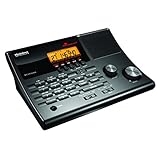
- LISTEN IN AND STAY INFORMED! The Uniden BC365CRS is an affordable 500 channel all-in-one conventional Analog Scanner, Alarm Clock, and FM Radio with loads of features in a convenient desktop design.
- 500 CHANNELS: Get started listening right away with convenient pre-sets for the most popular searches, Non-Digital Police/Fire/Emergency, Weather reports, Marine, Aircraft, Amateur Radio, Railroad, and other bands. This makes it easy to find channels that interest you.
- BUILT-IN FM RADIO & ALARM CLOCK: Save up to 30 FM stations in preset memories so you can instantly tune to your favorite local broadcast. Alarm Clock with Snooze and Sleep - Set the BC365CRS to wake you to scanning, a weather channel, or your favorite FM station.
- ATTRACTIVE DESIGN: Ideal for Home Use. This all-in-one scanner features a fresh design that's attractive on your desktop and easy to read at night through its clear LCD backlit display. The buttons are nicely laid out for ease of use, so there's no fumbling around in the dark.
- PRIORITY with DO-NOT-DISTURB: Store your most important frequencies into priority channels. When scanning, these channels are checked every 2 seconds, so you are more likely to catch important activity on these channels.
| FCC segment | Frequency range |
|---|---|
| Lower 700 MHz Service | 698–746 MHz |
| Upper 700 MHz service portion | 746–758 MHz |
| Public safety | 758–775 MHz |
| Upper 700 MHz service portion | 775–788 MHz |
| Public safety | 788–805 MHz |
| Upper 700 MHz service portion | 805–806 MHz |
These are FCC-identified segments, not a claim that each segment has an identical license or operating arrangement. The FCC describes the band’s primary allocations as fixed, mobile, and broadcasting, across broader allocation ranges that include 698–763 MHz and 775–793 MHz. Allocation and national band plans determine how spectrum is used; the statutory endpoints do not make every frequency interchangeable (FCC 23-22).
Independent reader supportYour contribution helps us test, update, and keep practical guides available for everyone.Does “700 MHz” mean the same thing in every country?
No. The US definition is not a universal band plan. For example, Ofcom’s UK mobile-spectrum table lists 703–733 MHz for uplink and 738–758 MHz for downlink in its 700 MHz row; it also lists 758–788 MHz within that row. Those UK mobile entries are not a substitute for the US statutory definition. Ofcom’s table was last updated 6 May 2026 (Ofcom frequency and technical information).
Rank #2

- MENUS THAT MAKE SENSE. 1,000 MEMORIES. 10 NAMED ZONES. Built for amateur operators who want organized analog control. Use clear English menus and the full keypad for common changes; group home, travel, club, event, simplex, and receive channels as your plan grows.
- SCAN THE ZONES THAT MATTER. Choose which named zones scan together. Temporarily skip a busy channel without changing your saved scan list. Scanning is for conventional analog channels; it does not decode DMR/digital or trunked systems.
- MORE INFORMATION AT A GLANCE. Choose Name + Frequency in the two-channel view. Dual Watch alternates one receiver between the two displayed channels. Turn Dual Watch off and enable Single Watch for a full-screen view of one channel's name, zone, and frequency. Approximate dBm adds signal context.
- START ON THE RADIO. BUILD LARGER PLANS ON A COMPUTER. Make common changes from the keypad. For larger plans, use BTECH CPS or supported CHIRP-next with the separately sold PC03. Firmware updates require BTECH CPS, the PC03, and BTECH's matching instructions. USB-C charges the battery.
- TRI-BAND AMATEUR TRANSMIT. RECEIVE-ONLY LISTENING. Valid amateur authorization is required to transmit on amateur frequencies in the U.S.; use only supported amateur bands within your privileges. Airband AM, NOAA weather, and broadcast FM are receive-only.
The ITU likewise describes the US 700 MHz band plan as 698–806 MHz and notes that national plans can differ, including in uplink and downlink assignments. Such differences can require coordination near borders (ITU-R Report M.2480-1).
Quick Recap
Rank #4

- Long Range Transmission: Experience long-distance transmission capabilities, reaching up to 15 miles. This extended range allows you to communicate effectively over vast distances, making it ideal for outdoor adventures, emergencies, or professional use. FCC ID: 2AN62-UV5G
Rank #3

- New SDS150 is Uniden’s most advanced digital radio scanner ever. Designed with input from long-time Uniden users, the SDS150 offers: Enhanced Sensitivity: Improved signal reception and filtering to eliminate interference. Simplified Interface: A new control layout and digital display for intuitive operation. Extended Battery Life: Optimized power management for long-term field use. Lightweight Durability: Portable yet rugged enough for daily professional use.
- Now with added features like a built-in GPS receiver, charge cradle, and support for the U/AWARE app, the SDS150 takes portable field-ready scanning to the next level.
- Built tough for real-world use, the SDS150 is water-resistant to JIS4/IPX4 standards and packed with powerful tools for serious monitoring.
- Software Defined Scanner - First scanner to incorporate SDR technology. True I/Q Receiver - Exceptional performance in weak-signal environments.
- Built in GPS Receiver. BT U/Aware Smartphone App Connectivity. Charge Cradle with extra battery charging slot (Extra battery sold separately).
What does the band label tell you—and what does it not?
- It tells you a frequency range only when the jurisdiction is specified. In US federal law, that range is 698–806 MHz.
- It does not identify one service. Commercial, guard-band, and public-safety spectrum are among the distinct segments and uses described by the FCC.
- It does not establish device compatibility. A device must support the relevant frequencies and the applicable national band plan; the phrase “700 MHz” alone is insufficient.
- It does not establish coverage distance or building penetration. Those outcomes cannot be inferred from the band name alone.
Product prices and availability are accurate as of the date/time indicated and are subject to change. Any price and availability information displayed on Amazon at the time of purchase will apply.




