Ground noise injection can mean either unwanted electrical noise entering a ground conductor in interconnected equipment, or the deliberate application of a disturbance during electromagnetic-compatibility (EMC) testing. The phrase does not have one universal definition across those contexts. This article explains both, with the first meaning focused on real-world systems.
What does ground noise injection mean in interconnected equipment?
In an electrical or computer system, ground noise injection is the entry of unwanted noise current into a ground conductor. That current can create a voltage difference between the ground references of connected devices. A data cable linking the devices may then provide a path for current between those references.
As an Amazon Associate I earn from qualifying purchases.
One mechanism described by Schneider Electric is power-supply filters coupling common-mode and normal-mode noise from power lines into ground. Ground-reference differences can also result from ground faults, currents between separate panels, or induced currents. The term describes the unwanted disturbance and its effect on connected equipment; it is not a name for one single source or circuit.
Do these 3 things before closing this tab:
1Scan for outdated or missing drivers - takes under a minute2Clear out junk files and repair common Windows errors3Fix the driver behind crashes, sound loss and screen glitchesHow is inter-system ground noise different from common-mode noise?
These are related but distinct problems. Inter-system ground noise is a voltage difference between the ground references of interconnected devices. Common-mode noise, in the distinction made by Schneider Electric, is noise between hot and neutral measured with respect to ground. Either problem can occur without the other.
#1 Best Overall

- Ground loop filter noise isolator, eliminating the hiss, buzz and interference caused by ground loops which happens when the audio source and the speaker use the same power source in some car speakers / home stereo systems when using the Bluetooth receiver.
- You can enjoy the clean and clear music/audio by eliminating the current noise in some car speakers / home stereo systems.
- Works with any device that has a 3.5mm jack including smartphones, tablets, mp3 player, speakers, when grounding issues persist. You could also use with a Bluetooth Receiver/Bluetooth Hands-free Car Kit in your Car Audio System/Home Stereo.
- Being so mini, portable and light, plug and play, no battery need or button, all you need to do is to plug in the ground loop isolator
- Portable, light-weight and plug and play without any complicated setup. Package Contents: Besign Ground Loop noise Isolator with 3.5mm Audio Cable, User Manual.
As a result, equipment that reduces common-mode noise on AC power does not necessarily correct a ground-reference difference carried through a data connection. A surge protector, power conditioner, or UPS should not be assumed to solve every inter-system ground-noise problem.
What can ground-reference differences do?
When a data connection joins devices at different ground potentials, current can flow through the connection. Depending on the level and circumstances, the result may be data corruption, interface damage, or heating of data cabling. Schneider Electric identifies RS-232, parallel, and USB connections as examples that can be susceptible to inter-system ground noise. Ethernet and fiber provide electrical isolation in the examples discussed in its white paper.
Rank #2

- Eliminates ground loop noise between the audio source and radio. For use with audio devices have 4-Channel RCA audio outputs, including pre-amp outputs.
- Made from High Fidelity Permalloy Transformers to minimize signal loss, unlike other old ground loop isolators with HUGE DISTORTION under 100Hz.
- Close to perfect response of +/- .03 db from 2 to 20,000Hz.
- Super compact design for easy installation in tight space.
- Split pin RCA connector with pure Oxygen Free Copper spiral shielding wire.
The same white paper gives an illustrative ground-fault surge range of a few volts to more than half the rated power voltage—120 VAC or 230 VAC in its examples—depending on grounding-system quality. This is the paper’s example, not a general prevalence statistic or a measurement that applies to every installation.
Recommended Free Tools
Is ground noise injection ever intentional?
Yes. In EMC work, engineers deliberately apply electrical or RF disturbances to assess whether equipment can withstand them. This use of “injection” refers to a test method, not an unwanted fault in an operating installation.
Rank #3

- Designed exclusively to eliminate ground loop hum and alternator whine between car audio head units and amplifiers. This product is NOT for radio static, antenna noise, or speaker distortion. Please confirm your noise type before purchasing to ensure this product is right for your situation.
- Made from High Fidelity Permalloy Transformers to minimize signal loss, unlike other old ground loop isolators with HUGE DISTORTION under 100Hz.
- Close to perfect response of +/- .03 db from 2 to 20,000Hz
- Super compact design for easy installation in tight space.
- Split pin RCA connector with pure Oxygen Free Copper spiral shielding wire
Conducted-immunity testing
Conducted-immunity testing assesses a device’s ability to withstand RF disturbance voltages and currents coupled through external wiring. Texas Instruments’ industrial Ethernet example shows a setup using an RF generator, attenuator, coupling/decoupling network (CDN), injection port, and device under test. Its report points to IEC 61000-4-6 for test details. This is laboratory testing, not a household fix.
Non-contact coil-based research
A 2025 paper by Lee and colleagues describes a flexible printed-circuit-board dual-coil approach that injects and senses RF noise on a mobile-phone camera module to estimate relative immunity. The authors report that the injected noise caused the device under test to malfunction. That reported result does not establish broad applicability or certification to an EMC standard.
Rank #4

- Package Contents: 2PCS Ground Loop Noise Isolator with 3.5mm audio cable in one set, enough to meet your needs and we also provide the user manual, which can help you easily use them
- Eliminating the Buzzing Noise: The audio isolation transformer can help filtering out buzzing, hiss and interference noise and achieve clear music/audio in car audio/home stereo systems
- Easy to Use: Please plug the ground loop noise isolator directly into the speakers AUX port, and plug another side into the audio source. Then you can enjoy the good quality sound with no other setup needed.
- Portable: The size of ground loop noise isolator is 2.36 x 0.75 x 0.75 inch (0.05lb), compact and lightweight, easy to carry and store. You can use them when you want to achieve clean, clear and uncompromised music/audio
- Application: The 3.5mm audio jacks is compatible for smartphones, tablets, laptop, mp3 player, radio or other speakers. If you have any question about the ground loop noise isolator, please feel free to contact us
How should you investigate suspected noise safely?
Do not disconnect or defeat protective earth. Schneider Electric’s Neil Rasmussen warns: “Ground wire disconnection should never be performed because it is illegal and presents a severe shock hazard.” That warning concerns the safety ground, not a troubleshooting option. If you suspect a ground-reference problem—especially if equipment is damaged, a cable feels warm, or devices are on different building circuits—have a qualified electrical or EMC professional assess the installation.
The Tool Desk
Outbyte Driver Updater FREEScan for outdated or missing drivers - takes under a minuteDriver Scan →Outbyte PC Repair FREERepair Windows errors before they cause bigger problemsFix Now →For a measurement, the probe setup itself can affect what an oscilloscope shows. Tektronix notes that short probe-ground connections help limit unwanted pickup. A differential probe can avoid adding a probe-ground connection and reduce common-mode noise, but it is a measurement tool, not a noise injector. Select one only after matching its voltage and common-mode ratings, bandwidth, connection style, and application to the circuit.
Best Value
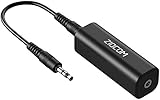
- Eliminating Buzzing Noise : Eliminating the buzzing noise, caused by ground loops which happens when the audio source and the speaker use the same power source in some car speakers / home stereo systems when using the Bluetooth receiver.
- Working Principle: Filters out noise instantly for clear, uninterrupted, uncompromised sound by eliminating the current noise in some car speakers / home stereo systems
- Plug and Play: Nifty little gadget that just plugs in; no other setup needed.
- Wide Compatibility: Works with any audio device that has 3.5mm audio jacks, for your Car Audio System/Home Stereo.
- Note: The Ground Loop Isolator connect to the AUX Jack in car to eliminate noise.You will enjoy good quality sound when use it with Ground Loop Noise isolator.
Which approach fits diagnosis versus immunity testing?
The right method depends on the question. Diagnosing a suspected voltage difference between equipment references is not the same task as testing a product’s immunity to a prescribed RF disturbance. For test planning, relevant considerations include the purpose, coupling method (conducted through a CDN or non-contact coil), frequency range and bandwidth, required disturbance level, measurement accuracy, device geometry, and applicable standard. The sources describe different methods; they do not establish a universal setup or a product recommendation.
Quick Recap
Sources
- Schneider Electric Data Center Science Center, Neil Rasmussen, Inter-system Ground Noise: Causes and Effects, White Paper 8, Revision 2.
- Texas Instruments, Optimizing EMC Performance in Industrial Ethernet Application, SNLA466A, August 2024, revised October 2024.
- Tektronix, Making Single-ended Measurements with a Differential Probe.
- Lee et al., Development of a Non-Contact Ground Noise Injector on Flexible PCB for RF Immunity Test of a Mobile Phone, IEEE Transactions on Electromagnetic Compatibility, early access June 2025.
Product prices and availability are accurate as of the date/time indicated and are subject to change. Any price and availability information displayed on Amazon at the time of purchase will apply.




