Quick wins for a faster PC:
Fix the driver behind crashes, sound loss and screen glitchesFind Drivers →Clear out junk files and repair common Windows errorsFree Scan →Scan for outdated or missing drivers - takes under a minuteDriver Scan →Short answer: a PSP can still connect to Wi‑Fi and use its built-in browser for simple, lightweight web pages. You can enter addresses, scroll, follow links, go back, use tabs, submit some forms, upload files and view certain Flash content. It is not a modern browser, however. Its NetFront-based engine, restricted memory and legacy security protocols mean that many current HTTPS sites, JavaScript-heavy applications and media services will fail, time out or render incorrectly.
The practical distinction is important: a working Wi‑Fi connection only proves that the PSP reached the network. It does not prove that a contemporary website can be parsed, authenticated or displayed by the old browser.
As an Amazon Associate I earn from qualifying purchases.
What the PSP’s built-in browser can do
Open pages and navigate between them
Sony’s PSP documentation describes a complete, if basic, browsing workflow. From the XMB, open Network, choose Internet Browser, and enter a web address with the on-screen keyboard. The browser can display web pages, scroll through a document, follow links, return to the previous page and open multiple tabs. Sony’s PSP-3004 guide also documents the controls for moving around a page and going back without closing the browser.
These functions are useful for simple sites: a mostly text-based reference page, a lightweight forum, a basic personal site or an old web application that does not depend on current JavaScript frameworks. The browser is not limited to a preselected portal; it accepts a URL directly.
#1 Best Overall

- Sony PSP 3000 International Console, Fully Technician Tested.
Use forms, cookies and uploads
The underlying browser supports HTML forms and cookies, so some sign-in pages, searches and short submissions can work. Sony also lists file uploading among the browser’s documented subjects. In practice, an upload still depends on the page using controls the old engine understands and on the PSP having access to the file on its storage.
Cookies can be configured in the browser settings. A site that requires a particular cookie format, modern session protection or a script-generated login may still fail even though a simple form works.
Display images, animation and Flash
Sony provides separate switches for images, animation, JavaScript and Flash. Images and animation are enabled by default; JavaScript defaults to On, while Flash defaults to Off. On a PSP-1000, Sony requires an additional confirmation in system settings before Flash can be enabled.
The developer reference for the PSP identifies the Flash implementation as a limited, historical Flash 6 capability added with firmware 2.70. That is not equivalent to current browser plug-in support. It cannot run modern video players, current advertising components or applications built for later Flash versions, and enabling it does not update the browser engine.
Sony warns that images and animations on some pages may not display correctly. Turning those features off can make a page lighter, but it cannot add support for a missing format or repair a broken script.
How the browser’s old architecture limits it
NetFront and the firmware era
A community-maintained PSP Developer wiki identifies the stock browser as a licensed NetFront version introduced with firmware 2.00. It describes support for cookies, forms and CSS, plus only a limited subset of JavaScript. The same reference places Flash support in firmware 2.70. These details explain why the browser can handle conventional HTML while struggling with sites designed around current JavaScript APIs, modern CSS and large client-side bundles.
Sony’s archive shows that the PSP received multiple system-software versions and that updates could add or revise features and security patches. Browser behavior can therefore differ with installed firmware, but updating the firmware does not turn the PSP into a contemporary rendering platform. The hardware and browser architecture remain constrained.
What’s actually slowing this PC down?
Pick the symptom - the matching free tool is one click away.
Rank #2

- Sony PSP 3000 International Console, Fully Technician Tested.
Memory is a hard ceiling
The browser has far less working memory than a current phone or computer. A page can fail simply because its document, images, scripts and temporary objects do not fit, even when the network transfer itself succeeds. Large home pages, image galleries and script-heavy dashboards are especially vulnerable to blank screens, partial rendering or an abrupt return to the XMB.
Sony includes a Memory Conservation option. It uses less memory while displaying a page and may allow a page containing more data to open, but Sony says image quality is reduced. This setting changes how the browser allocates memory; it does not increase the PSP’s RAM or improve JavaScript and TLS support.
Legacy encryption and certificates
The same technical reference attributes many current-site failures to outdated TLS and certificate capabilities as well as memory limits. A modern HTTPS server may require protocol versions, cipher suites or certificate-chain behavior that the PSP cannot negotiate. In that case, changing cache size or enabling JavaScript will not help: the connection fails before the page can be rendered.
This explanation comes from a secondary technical reference, not a Sony promise that any specific domain will work or fail. A site can also change its server configuration, so compatibility is not permanent.
Free tools Windows power users keep installed
One-click scans. No signup required.
PSP browser settings explained
Open the browser’s settings or tools menu to adjust the following controls. The cache figures are capacities for cached files, not measurements of total browser memory.
| Setting | Sony-documented choices or default | What it changes |
|---|---|---|
| Images | On by default; can be turned off | Whether page images are fetched and displayed. Disabling them reduces transfer and memory use but removes visual content. |
| Animation | On by default; can be turned off | Whether supported animated elements play. It does not add support for modern video or canvas applications. |
| JavaScript | On by default; can be turned off | Enables the browser’s limited JavaScript implementation. On does not mean current ECMAScript or framework compatibility. |
| Flash | Off by default | Enables the historical Flash capability. PSP-1000 systems require an additional system-settings confirmation. |
| Cache | None, 512 KB, 1024 KB or 2048 KB | Stores downloaded files for reuse. When the selected capacity is exceeded, the oldest cached files are removed first. |
| Memory Conservation | Toggle | Uses less memory to display a page, potentially allowing larger pages to open while reducing image quality. |
| Cookies | Configurable | Controls storage of site cookies needed by some sessions and preferences. |
| Proxy | Configurable | Allows a proxy to be specified when the network requires one. A proxy cannot make an incompatible browser engine modern. |
The cache choices should not be confused with a 512 KB, 1024 KB or 2048 KB browser-memory limit. They are simply storage allocations for cached files. Clearing or shrinking the cache can recover space for cached content, but it cannot solve a TLS negotiation error or unsupported script API.
Can a PSP open modern websites?
Some can, but only when the site still offers a simple path that the PSP understands. A small, mostly static page using ordinary HTML, modest images and older CSS has a reasonable chance. A page that requires a basic form submission may also work if its login and session flow do not depend on newer browser features.
Rank #3
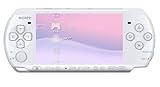
- This Certified Refurbished product is manufacturer refurbished, shows limited or no wear, and includes a 90-day warranty
- Play any of more than 360 games anytime, anywhere on the dazzling, 4.3” widescreen LCD
- Take your entertainment with you on the go by placing your downloaded videos on Memory Stick Duo
- Listen to music, watch movies, check the Internet, watch live and recorded TV, and jam to Internet Radio
Expect trouble with pages that combine several modern requirements:
Recommended Free Tools
- HTTPS configurations that reject the PSP’s legacy TLS or certificate behavior.
- Single-page applications that need current JavaScript, large bundles or APIs absent from the limited implementation.
- Modern CSS layouts, web fonts, canvas effects or media interfaces that the old renderer does not implement correctly.
- Large image grids, social feeds and dashboards that exhaust available memory.
- Video and audio players that rely on HTML5 media, encrypted playback or plug-ins newer than the PSP’s historical Flash 6 support.
- Sites that use script-generated navigation, authentication or bot checks rather than ordinary links and forms.
A page may therefore show a title and some text while losing its menus, images or login controls. That partial result is a compatibility problem, not evidence that Wi‑Fi is disconnected.
Can you still use the internet browser on a PSP? Start with the connection
Before diagnosing a page, establish that the PSP can join a wireless network. Sony’s PSP-3004 documentation places the browser under the Network menu and describes entering an address after the connection is available. Use this order so a network fault is not confused with a rendering fault:
- Open the PSP’s network settings and select an available wireless connection that the console can use.
- Complete the connection test and confirm that the PSP reports a successful network connection.
- Launch Network → Internet Browser.
- Enter a short, known address with the on-screen keyboard rather than beginning with a large, script-heavy site.
- Wait for the page to finish loading, then try a second lightweight page. If both fail before any content appears, investigate the wireless connection, DNS or proxy configuration.
Successful connection testing does not guarantee that a current HTTPS site will authenticate. Once basic pages work, a failure limited to one domain is more likely to be caused by that site’s protocol, certificate, scripts or page size.
Why websites will not load, and what to try
The browser cannot connect to any site
- Run the PSP connection test again and verify that the selected access point is still available.
- Check whether a proxy is configured. An obsolete or incorrect proxy can prevent every request; remove it unless the network specifically requires one.
- Try a simple HTTP page or a very small site. If nothing opens, the issue is probably network configuration rather than page compatibility.
The page starts, then becomes blank or returns to the menu
- Turn on Memory Conservation and reload. Sony says this can let pages containing more data display, with reduced image quality.
- Turn images and animation off, reload, and see whether the text and controls appear.
- Clear the cache or choose a smaller cache allocation if cached files are contributing to the problem.
- Close other browser tabs before loading a large page. Tabs and page resources compete for the same constrained memory.
Text appears but buttons or menus do not work
Leave JavaScript enabled for sites that need it, but recognize that the PSP implements only a limited subset. If a site offers a basic or mobile version, use that address. Disabling JavaScript can make a simple page faster, yet it will remove controls that genuinely require scripts.
An HTTPS warning or authentication error appears
Check the PSP’s date and time, then retry once. If the error persists only on modern HTTPS sites, the likely cause is legacy TLS or certificate support. There is no browser setting that can install current protocol support into the stock engine. Do not enter passwords on a page that cannot establish a trustworthy connection.
Flash content does not play
Confirm that Flash is enabled in the browser and, on a PSP-1000, that the separate system confirmation was completed. Even then, only the historical Flash capability is available. A site built for later Flash versions or for HTML5 video will not be repaired by this switch.
Rank #4

- Sony PSP 3000 International Console, Fully Technician Tested.
Unofficial browser alternatives
Homebrew projects take different approaches, and none should be treated as a verified modern-web solution. They may require custom firmware, a particular memory mode or a still-operating proxy service. Installing unofficial software also introduces compatibility and security questions that Sony’s stock browser does not.
| Option | Requirements described by the technical reference | How it differs | What to verify first |
|---|---|---|---|
| Stock PSP browser | Official PSP firmware | Local NetFront rendering with Sony-documented controls and settings; limited by legacy memory, engine and security support. | Your firmware, network configuration and the specific page’s requirements. |
| Opera Mini through PSPKVM | Unofficial setup and custom firmware; historically depended on server-side rendering and an Opera proxy | Some processing was delegated to a remote service, reducing local rendering demands. | Whether the legacy proxy service still operates, whether your PSP model and firmware are supported, and whether the download is trustworthy. |
| Tilefinch | Custom firmware and 64 MB mode, according to the reference | Another unofficial browser project intended to work within PSP-specific constraints. | Current project status, model support, installation instructions and safety before changing firmware. |
The reference does not establish present-day reliability, speed or modern TLS compatibility for these projects. Treat them as experiments for technically confident owners, not guaranteed upgrades. A proxy-based browser can also stop working when its remote service disappears, even if the PSP software itself remains installed.
Model, firmware and storage considerations
PSP-1000 versus later models
The PSP-1000 has the documented extra confirmation step for Flash. Other PSP models may differ in available memory modes, firmware history and physical controls. Sony’s PSP-3004 manual is a useful guide to the browser workflow for that model, but its menu labels should not be assumed identical on every regional or firmware variant.
Firmware version matters, but it is not a modernizer
Firmware 2.00 introduced the built-in NetFront browser identified by the technical reference, and firmware 2.70 added its historical Flash capability. Later system software can change menus or security patches, so record the installed version before troubleshooting. Updating within the official PSP software line may improve system behavior, but it cannot supply current browser standards or modern certificate libraries.
Memory Stick Duo capacity
A compatible Memory Stick Duo can provide room for saved files, browser downloads or homebrew data. It does not increase browser memory, replace the rendering engine or add TLS capabilities. Confirm the card’s compatibility with your exact PSP model; storage expansion and browser compatibility are separate issues.
What the PSP browser remains good for
- Reading lightweight, mostly text-based pages.
- Opening a simple reference site or old personal page.
- Following ordinary links and using basic forms when the server does not require modern scripts.
- Testing legacy web content or learning how an older handheld browser behaves.
It is a poor fit for account management, banking, shopping checkouts, streaming video, social-media feeds and any service that requires current HTTPS and JavaScript. Even when a page appears, the absence of current security and web standards makes the PSP unsuitable for sensitive transactions.
Bottom line: what a modern browser can—and cannot—do on a PSP
The PSP can still browse the web in the narrow sense: connect over Wi‑Fi, open an address, scroll, use tabs and back navigation, submit some forms and display simple pages. Sony’s controls for images, animation, JavaScript, Flash, cookies, cache, proxy and memory conservation let you adapt a page to the handheld’s constraints.
Those controls do not make the browser modern. Limited NetFront-era JavaScript, historical Flash 6 support, restricted memory and legacy TLS and certificate handling explain why many current sites fail. Use the stock browser for lightweight, non-sensitive pages; troubleshoot network and memory settings systematically; and regard unofficial browsers as unverified projects rather than dependable replacements.
Quick Recap
Product prices and availability are accurate as of the date/time indicated and are subject to change. Any price and availability information displayed on Amazon at the time of purchase will apply.




