3D positional sound is audio rendered so that you perceive a sound as coming from a particular place around you—not merely from the left or right stereo channel. The renderer uses cues such as timing, loudness, and frequency differences between your ears to suggest a source’s direction and distance. Depending on the system, it can also represent height, movement, obstacles, and room reflections.
What does “3D positional sound” mean?
It describes a listening effect: sounds appear to occupy locations in a three-dimensional scene relative to a listener. A sound might seem to come from above, behind, or nearby, and its apparent location may change as the source or listener moves. Microsoft Research explains that the brain uses temporal and spectral cues to infer a sound’s direction and distance (Microsoft Research’s overview of 3D audio).
As an Amazon Associate I earn from qualifying purchases.
Positional sound is not a single audio format or product. It is the perceived result of rendering audio for locations in a scene. Channel-based, object-based, and scene-based audio are different ways to represent or deliver sound; they are not synonyms for the positional effect. Dolby, for example, describes object-based audio as placing and moving sounds in space, and scene-based audio as capturing soundfields such as Ambisonics (Dolby’s surround-sound guide).
The Tool Desk
Outbyte PC Repair FREERepair Windows errors before they cause bigger problemsFix Now →Outbyte Driver Updater FREEScan for outdated or missing drivers - takes under a minuteDriver Scan →How does spatial audio make sounds seem to come from different directions?
Direction and distance cues
Sound reaches each ear at slightly different times and levels. The shape of the head and outer ears also changes the sound’s frequency content depending on its direction. The brain interprets these differences as clues to where a source is. A renderer can adjust those cues to make audio seem to come from a chosen position rather than from a speaker or headphone driver.
#1 Best Overall

- Enjoy expansive cinematic sound. Big 50 mm audio drivers deliver an incredible sound experience
- Hear Enemies From All Sides. DTS Headphone:X 2.0 surround sound(1) lets you hear enemies sneaking behind you, special ability cues, and immersive environments. It’s positional clarity that can make the difference between victory and defeat. Experience three-dimensional audio that goes beyond 7.1 channels to make you feel like you’re right in the middle of the action. (1) DTS Headphone:X 2.0 requires Logitech G HUB Software.
- Be Heard Loud and Clear. The big 6 mm boom mic makes sure you’re heard by gaming partners and mutes when flipped up.
- Use One Headset For Most Game Platforms. Your headphones work with your PC or Mac via USB DAC or 3.5 mm cable, mobile devices with 3.5 mm cable or with gaming consoles including PlayStationⓇ 5 and PlayStationⓇ 4 (USB wireless stereo sound only), Nintendo Switch (wireless stereo sound when docked)
- Game for Hours in Comfort. Everything about these headphones is about comfort: The deluxe lightweight leatherette ear cups and headband are made to keep pressure off your ears. Ear cups rotate up to 90 degrees for convenience.
Distance can be suggested by changing a source’s level and other characteristics as it moves farther from the listener. Apple’s PHASE documentation describes defining a sound source’s three-dimensional position and orientation, then adjusting its level according to its distance from a listener (Apple PHASE documentation).
Binaural rendering and HRTFs
For headphone playback, a common method is binaural rendering: filtering audio to approximate how sound from a particular direction reaches the two ears. The filters are based on head-related transfer functions, or HRTFs, which describe direction- and frequency-dependent changes in sound at the ears. Apple’s AVFAudio documentation describes HRTF filtering for headphone emulation (Apple AVFAudio documentation).
Rank #2

- Immersive 7.1 Surround Sound: This gaming headset delivering stereo surround sound for realistic audio. Whether you're in a high-speed FPS battle or losing yourself RPG adventures, this Ps5 headset provides crisp treble, punchy bass, and precise directional cues, giving you a competitive edge
- Great Humanized Design: Comfortable and breathable permeability protein over-ear pads perfectly on your head, adjustable headband distributes pressure evenly, you’ll enjoy lasting comfort during hours of gaming and suitable for all gaming players of all ages
- Sensitivity Noise-Cancelling Microphone: 360° omnidirectionally rotatable sensitive microphone, premium noise cancellation, sound localisation, your voice comes through loud and natural, ensuring your teammates catch every callout, even in chaotic battle scenes.
- Universal Compatibility: This gaming headphone support for PC, Ps5, Ps4, Xbox one, Xbox Series X/S, Switch, Laptop, Mobile Phone and other devices with 3.5mm jack.Note 1: When you use headset on your PC, be sure to connect the "1-to-2 3.5mm audio jack splitter cable" (Red-Mic, Green-audio). (Please note you need an extra Microsoft Adapter when connect with an old version Xbox One controller)
- Cool style gaming experience: Colorful RGB lights create a gorgeous gaming atmosphere, adding excitement to every match. Heightening immersion for FPS, MOBA, and action titles. These eye-catching lights give your setup a gamer-ready look while maintaining focus on performance. (*Note: The USB connector is for LED lighting only)
The fit is not identical for everyone. Microsoft Research notes that a listener’s head and ears may differ from the mannequin used to create a binaural recording, which can make the apparent location less precise or more blurred. Personalized HRTFs can be measured, but the process is specialized and time-consuming; synthesized personalization trades accuracy against the amount of information collected about a listener (Microsoft Research’s overview of 3D audio).
What’s actually slowing this PC down?
Pick the symptom - the matching free tool is one click away.
Movement, obstacles, and reflections
More advanced renderers can update a sound as its source or listener moves, and may model orientation, blocked sound, or reflections from a room. Those features depend on the implementation; they are not guaranteed by the label “3D audio.” Microsoft’s Windows spatial-audio APIs distinguish fixed, speaker-like channels from dynamic spatial objects whose positions and volumes can change over time (Microsoft’s Windows spatial-sound API documentation).
Rank #3
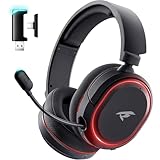
- 🎵【7.1 Surround Sound & Aesthetic Decorative Light】 UG-08S PC gaming headset can provide you with a cinema 3D stereo surround sound experience, designed specifically for gamers and audiophiles and multi-platform Compatibility. Long-press the 'M' key to activate 7.1 surround sound and dynamic driver reproduces deep bass and clear highs. Which allows you to hear every detail in the game with pin-drop clarity from up to 40 feet away. Such as teammates' voices, footsteps, direction, and more. Double-click the M key to activate the ambient light, then single-click the M key to switch between two modes: steady light and gradient. Valorise wireless pc headset will bring a cooler gaming atmosphere.
- 🔋【Extraordinary 100-Hour Battery Life & Support Use While Charging 】Valorise PS5 headset has a sustainable game time of 45-100Hrs. 100-hour playtime via bluetooth mode, turn off RGB lights and microphone. 45-hour playtime via 2.4GHz dongle mode, turn on RGB lights and microphone. With a low battery alert for timely recharging, our wireless PS5 headset supports simultaneous charging and use. Even if it runs out of battery, 3.5mm headphone jack is still available for console gaming using. Full-recharge in just 2-3Hrs.
- ⚡【2.4GHz Wireless & Bluetooth 5.4 & 3.5 mm】 Experience the Valorise Wireless Gaming Headset, designed with wide compatibility for gaming devices like PS5, PS4, PC, Mac, phone, pad, Nintendo Switch. One step to setup the wireless headset by plugging in USB & Type-C 2.4G transmitter(ultra-low latency ≤5ms). Which has better freedom and more stable data transmission than traditional wired gaming headsets. Switch to bluetooth mode with a simple 3-tap for mobile devices like phones, tablets and Switch. For those preferring a wired setup, connect to various gaming devices via a standard 3.5mm cable.
- 🎙️【Retractable ENC Noise-Canceling Microphone & One-touch Mute】Equipped with a 360° omnidirectional Noise-Canceling microphone. Our wireless headset can accurately calculate the speaker's direction, preserving the target voice while eliminating background noise for improved call quality. Gaming headsets with mic ensure your voice are relayed in high-definition clarity to your teammates, even in the heat of battle. Meanwhile, the retractable microphone combines the advantages of various types of microphones: ultra-low latency, high sound reproduction, concealability, and portability, the perfect gift for gamers and music enthusiasts.
- 🎧【Ergonomic Memory Sponge Cushions & Passive noise cancellation 】Combine soft lightweight memory sponge cushions and breathable fabric, complemented by the flexibility of rotating ear cups and adjustable angles. Valorise pc gaming headset are designed to perfectly fit the shape of your head, providing a customized fit. Breathable fabric minimizes sweat and heat, experience long-lasting, comfortable wear without squeezing your head. With ear cups designed to envelop your ears, effectively isolates environmental noise, enjoy passive noise cancellation without the need for active noise cancelling.
Do you need headphones for positional audio?
No. Headphones are a common way to hear binaural rendering, but positional sound is broader than headphone playback. Spatial audio can also be rendered for loudspeakers or multichannel systems. The listening setup affects how the cues are delivered; headphones alone do not create positional rendering, and a positional effect does not require a headset by definition.
Head tracking can help keep a virtual scene stable as you turn your head, depending on the system. Without an audio scene update that accounts for head movement, the scene may seem to move with you and the illusion can weaken, as Microsoft Research explains in its discussion of spatial audio (Microsoft Research’s overview of 3D audio).
Rank #4

- 285G LIGHTWEIGHT BUILD — Experience superior audio and game for hours without being weighed down by the headset
- TRIFORCE 40MM DRIVERS — Cutting-edge proprietary design divides the driver into 3 parts for the individual tuning of highs, mids, and lows —producing brighter, clearer audio with richer highs and more powerful lows
- HYPERCLEAR CARDIOID MIC — An improved pickup pattern ensures more voice and less noise with the sweet spot easily placed at the mouth because of the mic’s bendable design
- HYBRID FABRIC AND MEMORY FOAM EAR CUSHIONS — Wrapped in a combination of breathable fabric and plush leatherette to provide a snug fit to ensure constant comfort for prolonged gaming
- 7.1 SURROUND SOUND — Provides accurate positional audio that lets you pinpoint intuitively where every sound is coming from. *Only available on Windows 10 64-bit
How is positional sound different from stereo and audio formats?
Ordinary stereo assigns audio to two channels, typically left and right. That can create a sense of width, but it does not by itself specify a sound’s position anywhere in a three-dimensional scene. Positional rendering instead uses a listener and sound sources with locations, then produces the cues needed for the chosen playback system.
The terms describe different layers of audio:
- Positional sound: the perceived location and movement of sound relative to a listener.
- Channel-based audio: audio assigned to fixed channels or speaker positions.
- Object-based audio: audio elements that can be placed and moved independently in a scene.
- Scene-based audio: a representation of a soundfield, such as Ambisonics, that can be decoded for playback.
Microsoft’s spatial-audio APIs also distinguish fixed channels from dynamic objects. Dolby’s terminology explains object- and scene-based approaches, but those representation choices alone do not guarantee how accurately every listener will perceive a location.
Why can the effect vary between listeners?
Localization depends on the renderer, the playback setup, and a listener’s hearing and anatomy. HRTFs that work well for one person may produce less precise direction cues for another. Head movement can also affect the illusion if the rendered scene does not respond appropriately. For that reason, “3D positional sound” describes a capability or intended effect, not a promise that every listener will hear every source in the same place.
Quick Recap
Product prices and availability are accurate as of the date/time indicated and are subject to change. Any price and availability information displayed on Amazon at the time of purchase will apply.




