Vicquant’s design called for offline, on-device financial analysis, but the live configuration described by its author used internet-based model calls instead. The difference came down to hosting capacity: the author says his PaaS tier could not run the local 8B model. The distinction matters because a tested architecture and a deployed service are not necessarily the same thing.
What the planned architecture was meant to do
In a first-person DEV Community article, author Victor describes Vicquant as an offline financial-advisor application. Its planned inference setup uses two models running locally on the user’s device through llama.cpp:
| # | Preview | Product | Price | |
|---|---|---|---|---|
| 1 |

|
GMKtec EVO-X2 AI Mini PC Ryzen Al Max+ 395 Superchip 128GB LPDDR5X 2TB SSD | $3,649.99 | Buy on Amazon |
| 2 |
|
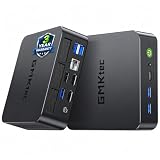
GMKtec Gaming PC Mini AI Desktop Computer Intel Core Ultra 5 226V 16GB DDR5 | $549.98 | Buy on Amazon |
As an Amazon Associate I earn from qualifying purchases.
- Llama-3.1-8B-Instruct for deeper financial reasoning.
- Phi-3.5-mini as a faster option intended to use less RAM.
Victor’s rationale is that response speed and reasoning quality pull in different directions, so routing between models could serve different needs better than relying on one model for both. The article does not provide a comparative evaluation showing how the models perform against each other.
Do these 3 things before closing this tab:
1Scan for outdated or missing drivers - takes under a minute2Clear out junk files and repair common Windows errors3Fix the driver behind crashes, sound loss and screen glitchesWhat the author reports about local testing
Victor says the local design passed testing on a target with 8GB of RAM and 4 vCPUs, producing roughly 12–15 tokens per second. These are project-specific figures reported by the author, not independent benchmark results or a general hardware requirement.
#1 Best Overall
- EVOLUTION RYZEN AI MAX+ 395 MINI PC - GMKtec EVO-X2 is the next evolution in AI mini PC Ryzen Strix Halo series. Thanks to AMD Simultaneous Multithreading (SMT) the core-count is effectively doubled, to 32 threads. Ryzen AI Max+ 395 has 64 MB of L3 cache and can boost up to 5.1 GHz, depending on the workload. The Ryzen AI Max+ 395 is currently rated as the "most powerful x86 APU" on the market for AI computing.
- AI NPU with XDNA 2 ARCHITECTURE - Powered by 16 “Zen 5” CPU cores, 50+ peak AI TOPS XDNA 2 NPU and a truly massive integrated GPU driven by 40 AMD RDNA 3.5 CUs, the Ryzen AI MAX+ 395 is a transformative upgrade and delivers a significant performance boost over the competition. The Ryzen AI Max+ 395 excels in consumer AI workloads like the llama.cpp-powered application: LM Studio. Shaping up to be the must-have app for client LLM workloads, LM Studio allows users to locally run the latest language model without any technical knowledge required and unleash their creativity and productivity.
- AMD RADEON 8090S iGPU GAMING PC - The AMD Radeon RX 8060S offers all 40 CUs with up to 2.9 GHz graphics clock and uses the new RDNA 3.5 architecture. The powerful iGPU is positioned between an RTX 4060 and 4070 laptop GPU and therefore enables gaming in FHD at maximum details in most demanding games. The 8060S can also utilize the full 128GB pool, which is perfect for running LLMs such as Deepseek 70B Q8, which runs comfortably on this machine.
- EIGHT CHANNEL LPDDR5X - LPDDR5X is a new ground breaking memory small form factor installed on-board. With blazing speeds up to to 8000MT/s, it runs 1.5x faster than the DDR5 SODIMMs; 90% better performance over DDR5 SODIMMs in video conferencing and photo editing; 30% better performance in productivity apps; 12% better performance in digital content workloads.
- QUAD SCREEN 8K DISPLAY SUPPORT - EVO-X2 AI Mini PC support 4-screen 4K/8K output via HDMI 2.1 (8K@60Hz), DisplayPort 1.4 (4K@60Hz), and dual USB 4 40Gbps Transfer speed (supporting PD3.0/DP1.4/DATA). Ideal for gaming, video editing, and multitasking, it provides expansive and crisp multi-display support.
The article does not identify the computer, model quantization, inference settings, workload, or measurement method. Those omissions make it impossible to assess how reproducible the reported speed would be on another setup.
Why the deployed version used a different inference route
The live version Victor describes did not run the local models in production. He says his current PaaS hosting tier lacked the RAM and CPU capacity for the 8B model, and that he had not purchased an available Pro plan. Instead, he connected the deployed application to OpenRouter.
That meant the demo described in the article needed an internet connection, routed model calls through OpenRouter, and had offline mode disabled. The article does not name the hosting provider, plan, resource allocation, or cost, so it does not support provider-specific pricing or capacity advice.
Quick wins for a faster PC:
Clear out junk files and repair common Windows errorsFree Scan →Scan for outdated or missing drivers - takes under a minuteDriver Scan →Victor says the local implementation remained in the codebase and had been tested, with local inference intended to return if the hosting constraint were removed. That is an intention stated in the article, not confirmation of a later change. Because deployment can change, check the live application and current project updates before relying on this description as its present status.
Rank #2
- AI MINI PC WORKSTATION - Powered by the Intel Core Ultra 5 226V (3.50GHz base, 4.50GHz boost) with a dedicated 97 total TOPS (47 NPU + 64 GPU), this mini PC outperforms the Core i5 14450HX, Ryzen 7 6800H in real-world AI tasks; the K17 AI local workstation enables real-time generative AI tasks without the cloud on Gemma-4-E4B & E2B—supporting text generation, code completion, summarization, intelligent chat, and data analysis directly on your edge device for enhanced privacy, zero latency, and offline capability.
- GAMING PC WITH INTEL ARC 130V GPU - Experience a quantum leap in integrated graphics with the Intel Arc 130V GPU (boosting up to 1.85GHz), which leaves the competition in the dust by delivering comparable or superior gaming and content creation performance while consuming up to 50% less power than leading rivals like the Radeon 890M—this groundbreaking efficiency means you get desktop-class discrete performance (rivaling the GTX 1650) in a silent, cool-running mini PC, with cutting-edge features like hardware ray tracing, XeSS AI upscaling, and full AV1 encoding support that competitors' integrated solutions simply can't match
- UPDATE DRIVERS - Intel Graphics Driver 32.0.101.8509 (WHQL Certified – Released 02/13/26) for Intel Arc 130V GPU delivers XeSS 3 Multi-Frame Generation (MFG) supporting up to 4× AI-based frame output; enhances gaming performance by 10% average FPS uplift and up to 25% improvement in 1% low (99th percentile) FPS for reduced stuttering across 9-game suite including Black Myth: Wukong (+13.8%), Fortnite S34 (+17.9%), DOTA 2 (+16.0%), PayDay 3 (+12.6%), *Counter-Strike 2* (+8.0%), and Cyberpunk 2077 (+6.1%); XeSS 3 MFG officially extended to Lunar Lake platform GPUs (Arc 130V and 140V) alongside Arc B/A Series discrete GPUs.
- WHY LPDDR5X IS BETTER THAN DDR5 - Equipped with 16GB of premium SK Hynix LPDDR5x memory running at an incredible 8533 MT/s, this mini PC delivers nearly 2x the bandwidth of standard SO-DIMM DDR5 (4800–5600 MT/s). The soldered, ultra-low-latency design reduces power draw and unlocks smoother multitasking, faster app loading, and significantly better iGPU gaming performance—especially on Intel Core Ultra integrated graphics—so you can game at higher settings and zip through creative workloads without stutter or slowdown.
- TRANSFORM YOUR WORKSPACE WITH TRIPLE 4K DISPLAY SUPPORT: Unleash unparalleled productivity by connecting three crystal-clear 4K monitors at 60Hz via DUAL HDMI 2.1 TMDS and USB4 port—effortlessly run stock tickers on one screen, complex spreadsheets on another, and video conferencing on the third, or dominate trading and financial modeling with real-time data sprawled across your entire field of view without any lag or stuttering.
What stayed deterministic in the financial logic
Victor says the AI does not calculate indicators, signals, or backtest results. Those figures are produced by deterministic Python code; the model’s role is to explain figures that have already been calculated.
The article reports 147 of 147 tests passing across indicators, signal logic, and backtesting, and says the signals must pass a two-year historical-data gate. These are author-reported project claims, not independently inspected test results and not evidence that any investment strategy is profitable or financially sound.
The design-versus-deployment trade-off
| Dimension | Planned design | Deployed version described by Victor |
|---|---|---|
| Where inference runs | On the user’s device through llama.cpp | Model calls routed through OpenRouter |
| Connectivity | Offline-oriented local inference | Internet required; offline mode disabled |
| Model approach | Llama-3.1-8B-Instruct for deeper reasoning and Phi-3.5-mini as a faster, lower-RAM option | The article does not specify which model or routing configuration the deployed OpenRouter calls used |
| Compute constraint | Author reports testing at 8GB RAM and 4 vCPUs, around 12–15 tokens per second | Author says the current PaaS tier could not support the local 8B model; exact resources are not stated |
| Financial outputs | Indicators, signals, and backtests calculated in deterministic Python; AI explains results | The article describes this same separation between calculation and explanation |
| Hosting cost | Not stated in Victor’s DEV Community article | Not stated in Victor’s DEV Community article |
How to read the project’s capability claims
The account is useful because it separates what the project was designed to do from what the author says the demo could do under its hosting constraints. It is still a first-person description rather than an independent audit. Victor makes that distinction explicit: “But I’d rather say that directly than let a live demo imply a capability it isn’t currently providing.”
The article page identifies the author as Victor and displays “Posted on Oct 4,” but does not show a publication year. Its statements about deployment therefore describe the configuration at the time of writing, not necessarily the application’s status today.
Quick Recap
Product prices and availability are accurate as of the date/time indicated and are subject to change. Any price and availability information displayed on Amazon at the time of purchase will apply.




