Turn-based describes how actions unfold: players and opponents act in discrete turns instead of continuously. Tactical RPG describes what combat asks you to think about: movement, positioning, unit roles and the layout of a battlefield. The terms are not opposites. Many tactical RPGs are turn-based, but a game can have turn-based combat without being a tactical RPG.
In short, one label is mainly about when actions happen; the other is about which battle decisions matter. That distinction is useful when comparing games, but it is a practical guide rather than an official, fixed genre rule.
| # | Preview | Product | Price | |
|---|---|---|---|---|
| 1 |
|
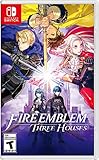
Fire Emblem: Three Houses | $74.99 | Buy on Amazon |
| 2 |
|
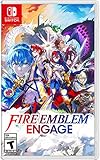
Fire Emblem™ Engage - Nintendo Switch | $66.95 | Buy on Amazon |
| 3 |

|
Fire Emblem: Radiant Dawn | $222.08 | Buy on Amazon |
| 4 |

|
FIRE EMBLEM: FORTUNE’S WEAVE GAME GUIDE: Complete Walkthrough, Combat Strategies, Character... | $19.99 | Buy on Amazon |
| 5 |
|
Fire Emblem: Three Houses (Nintendo Switch) (European Version) | $72.99 | Buy on Amazon |
As an Amazon Associate I earn from qualifying purchases.
What each label tells you
“Turn-based” is primarily a pacing and action-resolution label. A turn gives the player an opportunity to choose an action—such as attacking, using an ability or issuing a command—before the game resolves it and play advances. The exact order and rules vary by game; the label alone does not tell you whether combat uses a map, how many characters you control or how much the battlefield matters.
Quick wins for a faster PC:
Fix the driver behind crashes, sound loss and screen glitchesFind Drivers →Repair Windows errors before they cause bigger problemsFix Now →Scan for outdated or missing drivers - takes under a minuteDriver Scan →In other words, turn-based combat gives you discrete decision windows instead of asking you to act continuously in real time. That can make it easier to pause and consider a command, but the term does not specify how many options you have, how complex the choices are, or whether a character acts before another. Those details depend on the individual game’s rules.
#1 Best Overall
- Here, order is maintained by the Church of Seiros from its headquarters at Garreg Mach Monastery, home to the Officers Academy, where you’re invited to teach one of its three mighty houses: The Black Eagles, The Blue Lions, and The Golden Deer.
- Which house will you choose?
- As its professor, you must lead your students in class and in tactical RPG battles wrought with strategic, new twists to overcome.
“Tactical RPG” points to a stronger emphasis on battle decisions, especially where units move and stand. A tactical RPG commonly asks you to direct multiple characters across a battlefield, weighing their positions and roles alongside their abilities and resources. Many use discrete turns, but the tactical element is the focus on the battle space, not simply the fact that actions happen one at a time.
That difference matters because a player can select commands one at a time without needing to plan routes or formations. A tactical battle adds decisions about where a unit can go, where it should end its move, and how its position relates to the rest of the encounter. Position becomes part of the problem to solve rather than merely a visual backdrop.
These are practical genre descriptions, not a formal, universally enforced taxonomy. Games combine mechanics in different ways, and players or publishers may use genre labels differently. Treat the labels as clues about the experience, then check what a specific game asks you to do.
Outdated Drivers Are Slowing You Down
One free scan finds every outdated or missing driver and matches the right update for your exact hardware.Free scan · exact hardware matchPC Slower Than It Used to Be?
A free scan shows the junk files, broken settings and background clutter dragging Windows down - then fixes them in one click.Free scan · Windows 10 & 11Quick comparison
| Question | Turn-based RPG, generally | Tactical RPG, generally |
|---|---|---|
| What does the label describe? | Actions resolve in turns rather than in continuous real time. | Combat places substantial emphasis on decisions made across a battlefield, often involving several units. |
| What choices tend to matter? | Commands, party composition, abilities, resources and character development. | Those RPG choices, plus movement, positioning, unit roles and battlefield layout. |
| Does it have to use a grid? | No. Turn-based combat alone does not imply a grid or meaningful spatial movement. | A map or grid is common, but the important distinction is that battle space and positioning matter. |
| Can a game fit both labels? | Yes. A tactical RPG can resolve actions in discrete turns. | Yes. The labels describe overlapping aspects rather than mutually exclusive categories. |
| Examples cited by the sources | Nintendo names Pokémon as an RPG example. | Game Developer discusses Fire Emblem and Final Fantasy Tactics as tactical RPG examples. |
The table describes common tendencies rather than requirements every game must meet. Bandai Namco’s Europe-facing RPG guide offers a useful shorthand: it describes strategy RPGs as extending the turn-based formula across a tactical grid, where positioning matters as much as stats. That is the publisher’s framing, not an industry-wide standard: Bandai Namco’s RPG games guide.
The word “generally” is important in each column. A turn-based label cannot tell you whether a game puts most of its attention on battles, exploration, story or character development. Likewise, “tactical” suggests that battlefield decisions are prominent, but it does not prescribe one exact map, turn order or roster system. The labels are most helpful when treated as a starting point for asking more specific questions.
What playing each kind of RPG tends to involve
Turn-based RPGs: choose actions and manage a party
In a conventional party-based turn-based RPG, you select commands and decide how to spend abilities or other resources as battles progress. Party choices and character development can shape which options are available. The experience may also include exploration, a story and a world to move through between encounters.
Rank #2
- Reawaken as a Divine Dragon and take down a thousand-year-old threat
- Take on turn-based, tactical combat and use Emblem Rings to customize your strategy
- Collect Emblem Rings and use them to summon heroes from past Fire EmblemTM games
- Fire EmblemTM Engage launches on January 20, 2023 alongside Fire Emblem Engage: Divine Edition featuring a steelbook case and art book
Those decisions can involve choosing among attacks, abilities or other commands, deciding how to use resources, and considering how the members of a party fit together. But the label does not say whether you issue a command for one character at a time, choose a set of party actions, or follow some other turn structure. It also does not mean that every encounter is a puzzle about position. The central clue is simply that actions resolve through turns rather than continuous real-time play.
Do these 3 things before closing this tab:
1Fix the driver behind crashes, sound loss and screen glitches2Clear out junk files and repair common Windows errors3Scan for outdated or missing drivers - takes under a minuteThese are common RPG ingredients, not a checklist that every game must satisfy. Nintendo’s UK support glossary describes RPGs broadly as games involving control of a character, storylines and game worlds, exploration, battles and sometimes character customization; it gives Pokémon as an example. That description is about RPGs generally, rather than a rule for turn-based combat: Nintendo’s game-type definitions.
That distinction prevents a common category mistake: an example of an RPG is not necessarily an example of every RPG subgenre. The Nintendo glossary uses Pokémon to illustrate the broader role-playing-game category. It does not establish that every Pokémon game has identical pacing or that every RPG with turns uses the same battle format. Use examples to make a tendency concrete, not as a template that every title must copy.
Tactical RPGs: plan around the battlefield
In tactical combat, deciding what a unit does is only part of the turn. You also consider where it can move, where it should finish, how its position relates to other units, and how the team’s roles fit together. A position can change the outcome of an action or the choices available on a later turn.
That creates a different kind of decision-making emphasis. In addition to choosing an ability or managing a resource, you may need to consider the placement of several units and the way each one’s role supports the others. A battlefield map matters because movement and position are relevant to the plan. A grid is a common way to represent that space, but the useful question is not simply whether squares are visible: it is whether movement and positioning have meaningful consequences in combat.
Examples illustrate how these decisions can differ from one tactical RPG to another. Game Developer discusses Fire Emblem’s separate player and enemy phases, and uses Final Fantasy Tactics to discuss character classes, turn order and the timing of ability choices. The same article quotes Jason Kim, creative director of Children of Zodiarc, describing that game’s ability choices as relatively open apart from strategic effects such as haste or stop and enemy weaknesses—for example, using ice against a fire-based monster. These are examples of particular games and a developer’s comments about one game, not rules for the whole genre: Game Developer’s discussion of tactical RPGs.
Rank #3
- Minor wear and tear on case, otherwise great condition.
The examples show why “tactical” is not a synonym for one rigid combat formula. The Game Developer discussion points to phases in Fire Emblem, and to classes, turn order and ability timing in Final Fantasy Tactics. Kim’s comment about Children of Zodiarc focuses on the freedom to choose abilities, with strategic effects and enemy weaknesses as considerations. These details describe the cited examples, not mandatory mechanics in every tactical RPG.
When ability choice and battlefield placement both matter, the player is weighing more than one layer of a decision. One layer is what to do; another is when or where to do it. Kim’s example illustrates how ability selection can be shaped by a status effect or an enemy weakness, while the broader tactical-RPG description adds movement and position to the kinds of factors a player may consider. No single quoted example should be stretched into a universal rule.
Why the labels overlap—and where they do not
A game can be turn-based because it gives players discrete opportunities to act, while also being tactical because movement and positioning across a battlefield are central to combat. That combination is common enough that “turn-based” and “tactical” are sometimes used together, but the words answer different questions: one concerns how actions are paced; the other concerns the kinds of battle decisions the game emphasizes.
Think of the terms as two independent descriptions rather than two sides of a choice. You can ask whether actions happen in turns, then separately ask whether battles make unit movement and placement a major part of play. A game can satisfy both descriptions, one of them, or combine elements in a less familiar way. Seeing “turn-based” in a listing does not prove that the game is a tactical RPG; seeing “tactical” does not, by itself, tell you the precise way its turns work.
Turn order and command selection by themselves do not make a game a tactical RPG. If combat is mostly about choosing an attack or ability for a character or party, with little meaningful movement across a battlefield, “turn-based RPG” may communicate more than “tactical RPG.” Conversely, the word “tactical” does not guarantee a particular turn structure. A tertiary overview notes that tactical RPGs combine RPG mechanics with tactical strategy and that variants are not all necessarily turn-based; treat that as context, not a definitive classification: Tactical role-playing game overview.
Spatial tactics are not exclusive to tactical RPGs, either. A turn-based game can make placement matter without building its entire combat system around controlling multiple units across a map. To classify a game fairly, look at the role positioning plays throughout its battles rather than treating one grid, one turn system or a single mechanic as decisive.
The same caution applies to claims about depth. A map can create more positioning questions, but that does not make every tactical RPG automatically deeper, more demanding or better than every other turn-based RPG. Different games can emphasize different decisions. A useful comparison is descriptive: it tells you which kinds of choices are prominent, rather than ranking the games or their players.
The Tool Desk
Outbyte Driver Updater FREEFix the driver behind crashes, sound loss and screen glitchesFind Drivers →Outbyte PC Repair FREERepair Windows errors before they cause bigger problemsFix Now →How to compare two games fairly
Use concrete questions rather than assuming one genre label means a fixed set of features. This helps distinguish a game’s actual play from shorthand on a box, store page or review.
- Check how actions resolve. Do characters act in discrete turns, or does combat progress continuously? This identifies pacing, not whether the game is tactical. The turn label also does not tell you the exact turn order or which actions are available; look for a description of the particular game if those details matter to you.
- Look at the battle space. Is there a map or grid? More importantly, can movement and position change the options or outcomes that matter? A grid is useful evidence of how a game presents space, but its presence alone does not establish that positioning is a central combat decision.
- Count what you direct. Are you choosing commands for one character, managing a party, or moving multiple units individually across a battlefield? The number and organization of the units you direct help explain the kind of decisions the game asks you to make, but they are not a stand-alone genre test.
- Notice where the challenge sits. Does the game primarily ask you to choose abilities and manage resources, or also to plan movement, positioning and unit roles? A tactical emphasis means the latter kinds of decisions are important, not that ability choice and resource management disappear.
- Consider play between encounters. How much of the experience centers on exploration and story compared with tactical battles? RPGs can include worlds, storylines and exploration, but those broad elements do not settle whether combat is tactical.
- Track what carries forward. Does progression involve character growth, classes, equipment, team composition or other lasting changes? These are useful things to compare across RPGs. The factors described by Nintendo and Game Developer support them as comparison axes, not as a guarantee that every game includes each one.
These questions are comparison tools, not a scoring system. A tactical RPG is not automatically deeper or better than another turn-based RPG; a game can prioritize different kinds of decisions and still be rewarding on its own terms.
For a fair side-by-side comparison, apply the same questions to each game. For example, do not conclude that one is tactical just because its battles show a map; ask whether movement and positioning affect the decisions that matter. Do not call another game non-tactical just because its combat also involves commands and abilities; ask how much the battle space shapes play. This keeps the comparison focused on mechanics rather than assumptions attached to a label.
Independent reader supportYour contribution helps us test, update, and keep practical guides available for everyone.Which label should guide your choice?
- If you want time to choose commands: look for turn-based combat. The label signals discrete action resolution, but check the game’s description for details about party management and battle structure.
- If you want to move units and plan around a map: look for tactical RPG or strategy RPG, then confirm that movement and positioning are significant parts of its combat.
- If you want both: many tactical RPGs offer turn-based battles, so both descriptions can apply. Read how the game handles turns and battlefield decisions rather than relying on a single tag.
- If genre labels seem inconsistent: compare the mechanics directly. Genre boundaries are conventional, and hybrid designs can make a simple either-or answer misleading.
The examples in the cited material can help orient a search: Nintendo names Pokémon as an RPG example, while Game Developer discusses Fire Emblem and Final Fantasy Tactics as tactical RPG examples. They illustrate categories; they should not be read as proof that all games in either category work alike. Check an individual game’s description for the features you want.
No current official US retail listing was published for a specific Fire Emblem title’s physical edition, platform, price, stock status or affiliate-program status. If you plan to buy a game as an example to try, verify the exact title and edition in a current listing rather than assuming those details. No accessory or guide is needed to understand the difference between these genres.
Best Value
- Compatible with Nintendo Switch only
What the sources can—and cannot—establish
Bandai Namco’s guide and Nintendo’s support glossary are useful publisher and platform-holder explanations, but they are not formal genre standards. The Bandai Namco page is Europe-facing and the Nintendo glossary is UK-facing. Their descriptions can help explain common usage, but they do not settle every borderline case or substitute for examining a particular game.
The examples and design discussion from Game Developer add concrete context about Fire Emblem, Final Fantasy Tactics and Children of Zodiarc. The broader tertiary overview can support the point that variants may differ, but it should not be treated as the final authority on classification. Taken together, these sources support a practical distinction—turns describe action pacing, while tactical RPGs emphasize battlefield decisions—not a precise standard that every publisher must follow.
No named statistic is needed to explain the distinction, and the reviewed sources do not support a market-size, player-count or genre-history figure. Leaving out such numbers is more useful than adding a statistic that does not answer the reader’s question.
Recommended Free Tools
Frequently Asked Questions
What’s the difference between a tactical and turn-based RPG?
Turn-based describes action pacing: actions resolve in discrete turns rather than continuously. Tactical RPG describes a stronger focus on battlefield decisions such as movement, positioning and unit roles. Many tactical RPGs are turn-based, so the labels can both apply.
Does a turn-based RPG have to be a tactical RPG?
No. Turn order and command selection alone do not make a game tactical. If meaningful movement and positioning across a battlefield are not a major part of combat, “turn-based RPG” may be the more informative description.
Does a tactical RPG have to be turn-based or use a grid?
Not necessarily. Many tactical RPGs use discrete turns, and a map or grid is common, but neither label guarantees one exact system. The key practical clue is whether tactical decisions about the battle space are emphasized; genre usage can vary.
Is one genre deeper or better than the other?
No. These labels describe different emphases, not quality. A tactical RPG may add movement and positioning decisions, while another turn-based RPG may focus more on commands, party choices or resources. Which is better depends on the kind of play you want.
Free tools Windows power users keep installed
One-click scans. No signup required.
Which examples illustrate the difference?
Nintendo names Pokémon as an RPG example. Game Developer discusses Fire Emblem and Final Fantasy Tactics as tactical RPG examples. They illustrate common genre descriptions, not rules that every game in either category must follow.
The Bottom Line
Bottom line: “Turn-based” tells you that actions resolve in discrete turns; “tactical RPG” tells you to expect combat where battlefield decisions such as movement and positioning matter. Many games are both. To decide whether a specific game fits what you want, look beyond its tags and check how its turns, units and battle space actually work.
Quick Recap
Product prices and availability are accurate as of the date/time indicated and are subject to change. Any price and availability information displayed on Amazon at the time of purchase will apply.




