Do these 3 things before closing this tab:
1Repair Windows errors before they cause bigger problems2Scan for outdated or missing drivers - takes under a minute3Clear out junk files and repair common Windows errorsEin tragbares Flipperspiel lässt sich als kleines mechanisches Tischmodell aus einer Holzplatte, einer Kugel, Hindernissen, einem Federstarter und handbetätigten Flippern bauen. Für elektronische Punkte, Licht oder Sound kann ein micro:bit hinzukommen. Da die Baupläne kein einheitliches Transportmaß vorgeben, muss die gewünschte Größe und Zerlegbarkeit von Anfang an Teil des Entwurfs sein.
Welche Bauweise passt zu deinem Flipper?
Lege zuerst fest, ob du vor allem eine funktionierende Mechanik oder zusätzlich programmierbare Effekte möchtest. Ein einfacher Holzflipper kommt ohne Elektronik aus; eine Erweiterung mit micro:bit kann Zählung, Licht und Sound übernehmen.
As an Amazon Associate I earn from qualifying purchases.
| Entscheidung | Mechanischer Aufbau | Elektronische Erweiterung |
|---|---|---|
| Steuerung und Rückmeldung | Handbetätigte Flipper und manuelle Punkteführung; ein konkreter Holzplan ist bei Aduis beschrieben. | micro:bit für elektronische Zählung und optionale Effekte; das MIT Edgerton Center stellt dafür Verdrahtungs- und Codebeispiele bereit. |
| Fertigung | Zuschnitt und Montage mit Handwerkzeugen. | Laserzuschnitt für Spielfeldteile und optional 3D-gedruckte Flipper oder Pusher; abhängig von verfügbarer Werkstatt. |
| Layout | Hindernisse nach dem Ausprobieren fest montieren. | Mit einem provisorischen Raster-Spielfeld beginnen und Elemente vor dem endgültigen Aufbau verschieben. |
Das MIT-Projekt ist als anpassbarer Baukasten für eine oder zwei Personen angelegt. Es umfasst Montageanleitung, micro:bit-Verdrahtung und Codebeispiele. Der elektronische Teil ist optional: Das Spielfeld lässt sich zunächst rein mechanisch bauen.
Welche Materialien und Maße nennt ein konkreter Holzplan?
Die Aduis-Anleitung beschreibt einen bestimmten Holzflipper, nicht ein allgemeingültiges Maß für Mini-Flipper. Sie nennt eine Sperrholz-Grundplatte von 430 × 290 × 6 mm und eine Eisenkugel mit 10,3 mm Durchmesser. Weitere Teile sind Sperrholz, Kiefernleisten, Schrauben, drei Gummiringe und eine Schelle. Als Werkzeuge führt die Anleitung unter anderem Bohrer, Zange, Schraubendreher, Laubsäge, Feinsäge, Schleifpapier und Klebstoff auf.
#1 Best Overall

- BUILD IT, THEN ACTUALLY PLAY IT: Most STEM kits get built once and shelved. This one becomes a real working arcade machine with spring launcher, flippers and scoring targets that gets played for months after build day.
- LEARN REAL ENGINEERING BY DOING: Assemble levers, springs and ramps and see momentum, energy transfer and mechanical advantage work in your hands.
- FOR KIDS, TEENS AND ADULTS ALIKE: A satisfying mechanical model kit for ages 8 to 99. Kids build it with a parent, teens build it solo, and adults get a genuinely absorbing screen-free project with a real payoff at the end.
- FUN FAMILY AND PARTY GAME: Once built, take turns and compete for high score. A tabletop arcade game that turns into game night entertainment for the whole family, not a toy that only one person uses.
- THE ULTIMATE BIRTHDAY GIFT: A thoughtful birthday or holiday gift for boys, girls, teens and adults who love building. Trusted by families in 33+ countries, winner of the 2022 Innovative Toy of the Year in the Netherlands and a 2022 TOTY Finalist.
Das MIT Edgerton Center empfiehlt für seine laser-geschnittenen Grundteile 1/8-Zoll-Sperrholz; Acryl wird als Alternative genannt. Die verfügbaren Unterlagen enthalten außerdem STL-Dateien für druckbare Flipper und Pusher. Das sind Optionen des MIT-Baukastens, keine Voraussetzung für jeden Eigenbau.
So planst und baust du das Spielfeld
- Abmessungen und Transport festlegen. Entscheide vor dem Zuschnitt über die kompakte Spielfeldgröße und prüfe, ob Rückwand, Anzeige oder Seitenteile abnehmbar sein sollen. Die verfügbaren Baupläne geben kein verifiziertes Standard-Packmaß für einen tragbaren Flipper vor.
- Mechanik und Wertung wählen. Für einen einfachen Einstieg reichen Kugel, Federstarter, Hindernisse und handbetätigte Flipper. Plane micro:bit-Elektronik nur ein, wenn du programmierbare Punkte oder Effekte möchtest.
- Ein provisorisches Layout aufbauen. Platziere Flipper, Bumper, Rampen und andere Hindernisse zunächst auf einem Raster oder in einer veränderbaren Anordnung. Das MIT-Projekt empfiehlt, das Spiel erst zu testen und danach auf ein festes Spielfeld zu übertragen.
- Fertigung an die Werkzeuge anpassen. Teile lassen sich von Hand zuschneiden oder mit einem Laser fertigen. Für gedruckte Flipper und Pusher kannst du beim MIT-Projekt die bereitgestellten STL-Dateien nutzen.
- Mechanik montieren und Beweglichkeit prüfen. Bei der Aduis-Konstruktion dürfen die beweglichen Teile nicht festgeklebt werden. Stelle Schrauben so ein, dass die Flipper frei schwenken können.
- Erst nach dem Test dauerhaft befestigen. Wenn Kugelbahn und Flipperpositionen funktionieren, übertrage das Layout auf das feste Spielfeld und montiere die Hindernisse. Ergänze anschließend gewünschte Gestaltungselemente.
- Elektronik schrittweise ergänzen. Bei der MIT-Variante helfen die enthaltenen Verdrahtungs- und Codebeispiele beim Ergänzen von Zählung, Licht, Sound oder Bewegung. Ein konkretes micro:bit-Boardmodell ist in den Projektangaben nicht festgelegt.
Was macht den Flipper tatsächlich transportabel?
„Tragbar“ ist hier eine Entwurfsentscheidung, keine durch die Baupläne festgelegte Größe. Halte die Grundfläche so kompakt, wie es Spielbarkeit und gewünschte Hindernisse zulassen, und teile den Aufbau bei Bedarf in Baugruppen. Abnehmbare Teile können den Transport erleichtern, müssen aber so ausgelegt sein, dass sie sich am Einsatzort sicher und wiederholbar befestigen lassen.
Rank #2

- Classic Arcade Pinball Action at Your Fingertips: Pull the spring-loaded launcher to fire steel balls across three elevated tracks. Use the side control buttons to activate the flippers and keep the ball in play, recreating the fast-paced thrill of retro arcade pinball in a compact desktop form
- Smart Scoring with Immersive Light & Sound: Built-in infrared sensors track every score across the tracks and bumper zones. Each successful hit lights up a star on the central display and triggers clear celebratory sound effects, delivering that satisfying arcade feedback with every shot
- Intricate Multi-level Track Challenges: Navigate winding tunnels, elastic bumpers, and three ringing copper bells across a layered course. Built-in restart channels send stray balls straight back to the launcher, keeping the action smooth and uninterrupted for hours of replay fun
- Nostalgic Circus-style Desk Display: Ornate vintage carvings, top-hat soldier figures and warm integrated lighting bring classic carnival charm to any space. It doubles as an eye-catching decorative piece for desks, man caves, game rooms and living room shelves
- Rewarding Build & Unique Gift: Precision laser-cut wooden pieces assemble into a fully working pinball machine for a satisfying screen-free project. It makes a standout gift for birthdays, Christmas, or family game nights, loved by puzzle fans, retro gamers and kids alike
Plane auch Platz für die Kugel und lose Teile ein, damit beim Transport nichts aus dem Spielfeld fällt. Keine der zugänglichen Bauanleitungen garantiert ein bestimmtes Gewicht, Packmaß oder eine bestimmte Bauzeit; diese Werte hängen von Material, Konstruktion und gewählter Elektronik ab.
Quick wins for a faster PC:
Fix the driver behind crashes, sound loss and screen glitchesFind Drivers →Repair Windows errors before they cause bigger problemsFix Now →Scan for outdated or missing drivers - takes under a minuteDriver Scan →Weitere Spielideen aus bestehenden Bauanleitungen
Die fischertechnik-Anleitung beschreibt ebenfalls ein Pinball-Spiel mit Metallkugel, Hindernissen und federndem Abschuss. Sie schlägt Solo- und Mehrspieler-Varianten sowie veränderbare Hindernispositionen vor. Das ist eine nützliche Inspiration, wenn du die Bahn zunächst variabel halten möchtest, bis eine spielbare Anordnung gefunden ist.
Quick Recap
Best Value
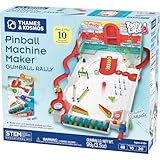
- Build your own customizable pinball machine that uses edible gumballs as the pinballs!
- The reconfigurable and reusable building system includes all kinds of obstacles like bumpers, slingshots, bells, ramps, and more; move them around to change up the playing field!
- A fun, gamified approach to learning about physics concepts like force, motion, gravity, simple machines, collisions, and more.
- Trial-and-error experiments promote hands-on learning, encourage creative problem-solving, and provide hours of open-ended play that’s different every time!
- Gumballs included! The kit comes with approximately 45 delicious standard machine-size gumballs.
Rank #4
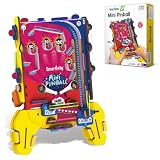
- BUILD YOUR OWN ARCADE. HOLD IT IN YOUR HANDS: This is a handheld, pocket-sized pinball machine — kids build it themselves from precision-cut wooden parts, then play it anywhere. No table needed, no electricity, no batteries. Flip the launcher, watch the ball navigate the obstacles, aim for the highest score. Arcade action that fits in a backpack. Ages 6 to 12.
- REAL MECHANICAL PINBALL — NOT A DIGITAL IMITATION: Gravity, momentum, and mechanical flippers — this mini pinball machine works exactly like a real arcade machine, just at pocket scale. Every flip of the launcher is a live physics lesson: force, trajectory, gravity, and reaction. Kids feel the physics they're learning, rather than reading about it.
- BEAT YOUR HIGH SCORE — SOLO OR HEAD-TO-HEAD: Play alone to beat your own record, or pass it to a friend and challenge them to top your score. The game rewards practice — early sessions are chaotic and fun, but repeat players develop real precision and strategy. The kind of game that comes out at every sleepover, road trip, and waiting room.
- STEM SKILLS IN EVERY FLIP: Building the machine teaches structural assembly, spatial reasoning, and mechanical thinking. Playing it teaches gravity, force, momentum, and cause-and-effect — the same physics concepts covered in school science. Two STEM learning moments from one build-and-play kit, for kids aged 6 to 12.
- PERFECT TRAVEL TOY — COMPACT, SCREEN-FREE, ALWAYS READY: Small enough for a jacket pocket, engaging enough for a transatlantic flight. No charger, no Wi-Fi, no app. Kids pick it up, flip the launcher, and play. The screen-free alternative that parents reach for as readily as kids do. Built from safe, eco-friendly engineered wood that survives travel.
Rank #3

- Build Your Own Pinball Machine: Kids can build a fully functional pinball and then enjoy hours of exciting gameplay. A hands-on engineering kit that combines construction and play for a fun and rewarding experience
- STEM Learning Made Fun: Introduces basic concepts of engineering and physics through interactive play. Helps develop problem-solving and fine motor skills while keeping kids engaged without screens
- Exciting Arcade Game Experience: Features working flippers, ramps, and moving parts that create a true pinball experience. Kids can launch, play, and score just like an arcade game at home
- Eco-Friendly and Easy Build: Made from environmentally friendly engineered wood for safe play. No glue required for easy building. Step-by-step illustrated instructions make it easy for kids to build with confidence
- Great Gift for Kids Ages 8-14: Suitable for birthdays and holidays. Designed for boys and girls who enjoy building, 3D puzzles, and hands-on activities, with added fun for family bonding
Product prices and availability are accurate as of the date/time indicated and are subject to change. Any price and availability information displayed on Amazon at the time of purchase will apply.




