PR agencies get the most value from time tracking when every entry is tied to a client and a defined piece of work, marked as billable or internal, and reviewed against the relevant retainer or project budget while delivery is still in progress. That makes time records useful for billing, staffing, utilization analysis, and timely scope conversations—not just timesheets at month-end.
What PR agencies should track
Use a small, consistent set of fields that reflects how the agency sells and manages work. Each entry should identify:
As an Amazon Associate I earn from qualifying purchases.
- Client: the organization receiving or benefiting from the work.
- Retainer, campaign, or project: the budget or workstream against which effort should be reviewed.
- Task: a useful category such as media outreach, strategy, reporting, or account administration. Choose categories your team can apply consistently.
- Billable status: whether the time is chargeable to the client under the agency’s agreement. Keep internal work distinct.
- Duration and brief context: enough information for an account lead or finance reviewer to understand the work, without turning an entry into a diary.
Agency-focused vendor guidance also points to client, project, and billing codes as useful ways to structure entries. ClickTime’s PR agency page describes coding by client, campaign, and billing code. The exact code list should follow your agency’s contracts and reporting needs, not a software vendor’s default taxonomy.
Do these 3 things before closing this tab:
1Scan for outdated or missing drivers - takes under a minute2Repair Windows errors before they cause bigger problems3Fix the driver behind crashes, sound loss and screen glitchesHow to build a time-entry process that people can follow
1. Define the codes before choosing a tool
Decide how retainers, campaigns, projects, tasks, and billable status will be represented. Keep the taxonomy narrow enough that account teams can choose the right code quickly. If two categories routinely mean the same thing in practice, simplify them; if a category cannot support a billing, budget, or management decision, reconsider whether it needs to be a required field.
#1 Best Overall
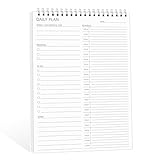
- ✔This daily plan pad features detailed hourly schedule timelines from 12 AM to 11 PM, perfectly segment your morning, afternoon and evening hours. Track meetings, appointments and fixed tasks hour by hour to eliminate procrastination and boost your daily time management efficiency.
- ✔ 1.Put an end to the time black hole: Every hour of activity is recorded, so you always know where your time goes and bid farewell to "being busy yet achieving nothing". 2.Cure procrastination: Visual time grids have an inherent sense of supervision; blank time slots serve as a direct reminder, with more binding power than phone alerts. 3.Gain instant a sense of accomplishment: Check off completed tasks with a simple tick. A filled time axis page by page delivers physical feedback that digital tools cannot match, making it easier to keep going the more you use it.
- ✔ 1.Students & Exam Takers: Plan class, review and practice time; allocate study hours for each subject precisely for targeted exam preparation. 2.Professionals: Schedule meetings, work projects and commute time; prioritize tasks clearly and bid farewell to chaotic overtime. 3.Freelancers & Stay-at-Home Parents: Clearly divide work/childcare/personal time to avoid blurring the boundaries between life and work. 4.Self-Discipline Enthusiasts: Check in on fitness, reading and learning; develop regular routines with hourly scales to build good habits effortlessly.
2. Record time frequently
Entries made close to when work occurs are less likely to require reconstruction from memory. Choose a cadence—such as daily entry or a regular weekly timesheet—that fits the team’s workflow, then set clear submission deadlines. Use reminders and an approval step if late or incomplete records delay invoice preparation. ClickTime’s Allison Worldwide case study describes late timesheets as a constraint on accurate monthly invoicing.
3. Review work against budgets during delivery
Compare recorded hours or costs with the relevant retainer or project budget while work is underway. A variance is a prompt to investigate, not automatically proof that someone made a mistake. The account lead can assess whether the work is taking longer than expected, whether priorities changed, whether staffing should shift, or whether the client needs a scope conversation. Reviewing only after a period closes makes it harder to change course in time.
Rank #2

- TASK PLANNER NOTEPAD FOR WORK – Structured task planner and productivity planner designed as a task organizer and workflow planner with expanded layout
- REDUCE OVERWHELM & IMPROVE EXECUTION – Use this task planner, productivity planner, and task tracker to organize workflow and improve execution
- TASK PLANNING + ACTIVITY TRACKING IN ONE FORMAT – Use as a productivity planner, task organizer, and workflow planner to manage tasks and execution
- ANALOG TASK & ACTIVITY SYSTEM THAT WORKS – Writing tasks improves memory and reduces missed steps
- STRUCTURED CHECKLIST + LOG FORMAT – Combines task planning and activity tracking with expanded space for detailed workflow management
4. Keep client work and internal work separate
Classify non-chargeable activities consistently, including internal meetings, training, business development, and administration where those categories fit your agency. This separation helps explain how staff capacity is being used. Do not treat a high share of chargeable time as a complete measure of performance: workload, role, delivery quality, scope, and the agency’s definition of available capacity all affect interpretation.
5. Connect approved records to billing and reporting
Where the existing finance workflow supports it, connect approved time to invoicing and management reports. Confirm which fields transfer, how corrections are handled, and which steps still require manual reconciliation. A connection is only useful if the data remains understandable and reviewable by the people responsible for accounts and finance.
Rank #3

- Made in USA. Veteran-Owned and Proudly Produced in Ohio.
- THIS IS ESSENTIAL FOR LAWYERS AND CONSULTANTS: BookFactory Time Tracking book is a necessary addition to any attorney’s office, small business or freelance assignment. It’s a fundamental part of any business like. A simple and easy way track your billable hours
- TRACK BILLABLE HOURS BY DAY OR BY CLIENT: For business or personal use, time tracking is shown across a 2-page spread, on the left side, you have days and each hour, where you can write quick details about who you worked for. On the right side of the page you can keep more detailed track of the specific tasks you worked on and what client it was for – what breaks you took, and when, as well as the specific amount of time you spent on each task
- EXCELLENT VISUAL TO SHOW HOW YOU’RE SPENDING YOUR TIME: You may wonder where your day is going, or how you still have so much to do when you’ve already been working for hours. You may just need to be able to give your client an itemized invoice of work provided… either way, this book will be a help to you
- BUS-100-69CW-PP-(Time-Tracker)
How to use time data without mistaking utilization for the goal
Utilization usually expresses a portion of available working capacity spent on billable work, but agencies must define both parts consistently. Decide which roles are included, what counts as available capacity, and how leave or non-working time is treated. Without a stable denominator, comparisons between teams or periods can mislead.
Use utilization alongside other signals: retainer effort versus plan, workload and capacity by role, internal time patterns, and the margin or delivery economics available to your business. If a team’s utilization shifts, investigate the cause before changing targets or incentives. Raw utilization alone cannot distinguish efficient delivery from overservicing, unrealistic budgets, or excessive workload.
Rank #4

- SIMPLE, ATTRACTIVE DESIGN - The notepad flaunts a design that's both stylish and fun, making it the perfect backdrop to track your daily tasks and other deliverables.
- 8.5" X 11": LETTER SIZE - With ample space for jotting down your activities/tasks, projects and deliverables, this notepad ensures you never miss a beat. The larger size offers room to log all your work.
- DOUBLE-WIRE SPIRAL BINDING - Tear off sheets as needed or keep them intact to be able to look back on your prior tasks. Whether you're at your desk, in a meeting, or on the go, your notepad is ready for you to use as you see fit.
- 50 SHEETS - Created so you can list all your tasks onto one sheet in order to keep track of time stamps as you note how you spend your time each day.
- VERSATILE FOR TRACKING ALL YOUR TASKS - Whether you're a professional who bills for your time, a student recording time spent on studies, or a volunteer tracking your hours, this notepad can help you record your time spent on any and all activities throughout your day.
Teamwork.com’s State of Agency Operations Benchmarking Report 2023 surveyed 512 agency leaders across multiple agency types, including PR agencies, and organizations from fewer than 10 to more than 3,000 employees. It reports a margin of error of ±4.9 percentage points at a 95% confidence level. In that 2023 survey, 33% of agencies struggled to hit billable utilization benchmarks above 50%, 38% overserviced clients, and 52% of leaders said employees submitted time-tracking data on time 90–100% of the time. These are historical, cross-agency survey findings, not PR-only results or recommended targets. Read the report methodology and findings.
What features should PR agencies look for in time-tracking software?
Choose around the workflow you need to improve rather than the length of a feature list. Time capture, budget oversight, approvals, utilization, resource planning, expense handling, reporting, and invoicing are distinct capabilities. Ask vendors to show how each would work with your actual codes and review steps.
Best Value

- Plan Smarter, Stress Less: Our undated planner has 50 daily planning sheets per planning pad to help you keep your notes organized all in one place. Track important projects, tasks, time blocking, and goals with our planner.
- Enhance Your Productivity: The simple solution for managing your daily schedule. Helps you focus, especially those with ADHD. With our daily planner you can track your appointments and meetings throughout the week, organize your tasks in order of priority, jot down thoughts or ideas, and record when projects are due.
- Upgrade Your Office Supplies: The minimal design makes this a stylish and practical addition to your work from home essentials for both women and men. This to-do list notepad looks professional and keeps you organized.
- Give The Gift Of Organization: The sleek design makes this a beautifully practical gift for moms and dads who need a little extra help keeping track of soccer games, field trips, and doctor’s appointments. Also makes a wonderful gift for college students, coworkers, your boss, or the entrepreneur in your life to help them stay on top of busy schedules.
- Cultivate Healthy Habits: Plan and track your meals and water intake each day and use the checkbox as a visual reminder. Take a minute each day to write down something good that happened. Practicing gratitude is proven to increase happiness!
| Decision area | What to verify |
|---|---|
| Entry and compliance | Timer and manual-entry options, timesheet cadence, reminders, approval flow, and visibility into missing or late entries. |
| Agency coding | Whether records can be linked to the client, retainer or campaign, task, billing code, and billable status your team uses. |
| Retainer and project oversight | How actual hours or costs compare with a fixed-fee or time budget, and whether account leads can see a variance early enough to act. |
| Management reporting | Whether reporting can separate chargeable and internal time and show utilization, workload, capacity, or margin at useful levels of detail. |
| Downstream workflow | How approvals, invoices, expenses, accounting or finance connections, and project-management integrations fit your current process. Verify current integrations with the vendor. |
| Adoption and complexity | Whether the entry process is straightforward for staff and whether the system reduces or adds reconciliation work for account and finance teams. |
A standalone tracker may be simpler to introduce; an integrated agency system may reduce handoffs but requires a close fit with current processes. Synergist positions its product around connecting timesheets with agency jobs, budgets, utilization, and invoicing. That is vendor positioning, not an independent comparison. See Synergist’s timesheet feature information.
Independent reader supportYour contribution helps us test, update, and keep practical guides available for everyone.Software examples to investigate
The following products illustrate different approaches, not rankings or hands-on recommendations. Feature descriptions below reflect vendor material and can change; confirm plan limits, current availability, integrations, and workflow fit directly with each provider.
| Product | Vendor-described emphasis | Useful evaluation question |
|---|---|---|
| ClickTime | PR agency time tracking, client/campaign/billing-code entry, budget tracking, utilization, and resource planning. | Can your account and finance teams use its coding and approval process to identify missing time before monthly invoicing? |
| Clockify | Timers and manual entry, project budgets, rates and costs, resource planning, invoicing, expenses, time off, utilization, and reporting. | Which of these functions are available in the plan you are considering, and how do its budget reports map to your retainers? |
| Toggl Track | Time tracking for billable and internal work; its Sweat+Co customer story discusses remote visibility and retainer profitability. | Can staff record client and internal conversations in a way that produces reports your account leads will actually use? |
| Synergist | Agency timesheets connected to job budgets, utilization, and invoicing; its vendor material names PR agency AMBITIOUS as a customer. | Does an agency-wide system fit your processes better than a standalone tracker, and what setup or reconciliation would it require? |
| Harvest | A vendor page aimed at PR agencies for time and budget tracking. | Ask the vendor to demonstrate the specific approvals, reporting, and finance handoffs your process needs. |
| Wrike | A project-management product with time-tracking functionality; its Tipton Communications customer story emphasizes project administration. | Would time tracking inside a project-management workflow reduce handoffs, or would your finance process still need separate reconciliation? |
Relevant vendor pages include ClickTime, Clockify, Toggl Track’s Sweat+Co story, Synergist, Harvest, and Wrike’s Tipton Communications story.
Recommended Free Tools
What vendor case studies can—and cannot—tell you
Customer stories can suggest questions to ask during a demonstration, but their results are customer-specific and vendor-published. They do not establish what another agency should expect.
Quick Recap
- ClickTime reports that Allison Worldwide saved 20 administrative hours each month, reduced late timesheet submissions by 30%, and hired twice as many new billable employees. Those figures are ClickTime’s account of one customer’s experience, not a general forecast. Allison Worldwide finance team member Susan Canales said the company had planned and run every billable hour through ClickTime since 2013 for a staff of more than 500. Read the case study.
- Toggl quotes Sweat+Co business consultant Dax Kimbrough as saying Toggl Track increased the company’s profitability by at least 20% after it used time data to identify overservicing, inefficiency, or slow work. This is a vendor-published statement from one customer, not an independently verified or typical outcome. Read the customer story.
- Wrike’s Tipton Communications story says the customer estimated it had been losing 5% to 10% of billable hours to project administration before adopting Wrike. That is Tipton’s estimate presented by the vendor, not an industry statistic. Read the customer story.
- Synergist quotes AMBITIOUS founder and director Lis Anderson describing time management as a way to understand whether the agency is overservicing or underservicing clients and why. It illustrates a potential use of time data, not proof of a result for other agencies. See the feature page.
Common process failures to prevent
- Codes are too broad: if an entry says only “client work,” it may not show which retainer or campaign used the effort.
- Entries are reconstructed at period-end: delayed recording can reduce detail and hold up approvals or invoicing.
- Budgets are reviewed only after delivery: the agency loses the chance to adjust staffing or discuss scope while work is active.
- Internal work is mixed with client-chargeable time: utilization and profitability reporting then depend on inconsistent classification.
- Utilization is treated as a standalone performance score: the metric cannot explain the cause of a change without workload, role, budget, and delivery context.
- Software is selected from a feature list alone: a nominal integration or report is not enough; confirm what data actually transfers and what remains manual.
Product prices and availability are accurate as of the date/time indicated and are subject to change. Any price and availability information displayed on Amazon at the time of purchase will apply.




