If a rejection email says the employer chose to “move forward with other candidates,” it confirms that your application will not advance—but it does not explain why. Treat a generic message as an outcome, not a personalized assessment. You can send one brief, courteous request for feedback to someone you spoke with, then make your own interview notes and look for patterns across several applications.
What does “we decided to move forward with other candidates” mean?
It means the employer is not continuing with your application. The phrase compares your candidacy with others; by itself, it does not identify a weakness or say what happened behind the scenes. It does not establish that you failed an interview, lacked a required skill, or were screened out by software.



As an Amazon Associate I earn from qualifying purchases.
Even a rejection that mentions a “skillset” may not give enough detail to tell you which qualification or decision mattered. One candidate, Amber Marcotte, described receiving a message saying her application would not move forward “due to the skillset we are seeking to fill this role,” and found it uninformative. That is an individual experience, not evidence about how often employers use such wording: Amber Marcotte’s public LinkedIn post.
Do these 3 things before closing this tab:
1Repair Windows errors before they cause bigger problems2Fix the driver behind crashes, sound loss and screen glitches3Clear out junk files and repair common Windows errorsA generic template can follow an application that ended at any stage. Without a specific explanation from the employer, the email cannot tell you whether the deciding factor was experience, interview performance, timing, another candidate’s fit, or something else.
#1 Best Overall
Does a rejection mean you weren’t qualified?
Not necessarily. The message establishes the hiring decision, not a complete judgment of your qualifications. An employer may select someone else even when you meet the stated requirements. Unless the employer gives a concrete reason, you cannot reliably identify the deciding factor from the rejection alone.
It is also not safe to turn the phrase “other candidates” into a diagnosis: it does not prove that one answer went badly, that you missed a qualification, or that an automated system rejected you. Those are possibilities only if the employer explicitly says so—not facts contained in a generic rejection.
Rank #2
Can you ask for feedback after a job rejection?
Yes. If you had meaningful contact with a recruiter or interviewer, one short, courteous message is reasonable. Address it to the person who spoke with you, if you have a suitable channel, and ask one focused question. For example, ask whether there is one area you could strengthen for future interviews.
Free tools Windows power users keep installed
One-click scans. No signup required.
You could write:
Thank you for letting me know. I appreciated the chance to speak with you about the role. If you are able to share one area I could strengthen for future interviews, I would value the guidance. I understand if you’re unable to provide individual feedback.
Keep the request brief and accept the decision without arguing it. Asking for a full account of the hiring decision is broader and less actionable than asking for one useful suggestion. A request creates an opportunity to hear back; it does not entitle you to an explanation, and a reply is not guaranteed. Treat any feedback you receive as an additional perspective, not necessarily a complete account of the decision.
If the only contact is an unmonitored no-reply address and you have no reasonable way to reach someone who spoke with you, there may be no practical recipient for the request. The advice to make one careful attempt is practical guidance, not a proven way to increase the odds of a response. Asael Shinder’s DEV Community article describes the familiar scenario of interviews followed by “We have decided to move forward with other candidates,” and recommends a narrow feedback request and a personal review of the interview.
Rank #4
Should you reply to a rejection email?
Reply if you want to thank the person for their time or make one polite request for feedback and there is a real person to contact. You do not need to reply simply because you received a rejection, and a response is unlikely to change a decision that has already been communicated. Avoid sending repeated follow-ups or trying to debate a generic explanation.
What to do if no one responds
Make your own record soon after the interview, while you still remember the details. This will not reveal the employer’s hidden rationale; it gives you material to reflect on based on what you experienced.
Best Value

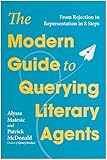
- Crafting a Submissions Strategy: Advice on Selecting Markets and Contest Participation
- Cover Letter Tips and Leveraging Rejection Letters
- Navigating Wait Times and Payment Management
- Building Literary Connections: Engage with Editors, Readers, and Peers
- Write down one answer that went well.
- Note one answer you would sharpen or explain differently next time.
- Record one question you wish you had asked.
- Mark the point in the conversation where you felt least clear, if there was one.
- Review your notes after several interviews and look for a repeated issue before deciding there is a pattern to work on.
Ordinary notes are enough. One rejection, on its own, tells you little about a recurring weakness. A similar challenge across multiple interviews is more useful to examine—but even then, your notes can guide improvement without proving why any particular employer made its decision.
Are employers required to explain a rejection?
Do not assume that a general rule requires every employer to give individual applicants a reason—or that no such obligation can ever apply. The U.S. Department of Labor’s Post-Employment Guidance for 2020 addresses a specific ethics question: for covered federal employees, a prospective employer’s rejection notification means the employee is no longer considered to be seeking employment for purposes of that guide’s conflict-of-interest analysis. It is not a general rule about what all employers must tell applicants.
Quick Recap
Product prices and availability are accurate as of the date/time indicated and are subject to change. Any price and availability information displayed on Amazon at the time of purchase will apply.
What’s actually slowing this PC down?
Pick the symptom - the matching free tool is one click away.




