What’s actually slowing this PC down?
Pick the symptom - the matching free tool is one click away.
After a voice assistant is activated, it records the interaction and usually sends the recording to the manufacturer’s servers for processing. What happens next depends on the provider and your settings: audio, transcripts, and related account activity may be handled or retained differently. A device waiting for a wake word is not necessarily streaming every sound in the room, but it can activate by mistake—and data sent to a provider raises separate privacy and cybersecurity questions.
What happens to your speech after activation?
A wake-word assistant listens for a trigger or another activation method. When it detects one, it records the request. Background speech that resembles the wake phrase can trigger a recording accidentally, so a recording may include words you did not intend to send. The Federal Trade Commission (FTC) advises consumers to check for device lights or sounds that signal activation and to learn how each manufacturer handles recordings. The FTC’s voice-assistant guidance says recordings are usually sent to the manufacturer’s servers.
As an Amazon Associate I earn from qualifying purchases.
The provider can process the request and may associate interaction information with your account or other linked information. Depending on its practices and your choices, that information may include audio, a transcript, or activity history. Some providers may allow human review in certain circumstances. The available evidence does not establish that every provider keeps raw audio, uses recordings to train models, or handles deletion the same way.
Does a smart speaker record everything?
Being ready for a wake word is not the same as continuously sending all room audio to a server. The FTC describes activation and accidental wake-word detection as relevant risks; it does not say that every assistant streams all nearby speech whenever its microphone is enabled. A physical microphone-off switch or button can provide a way to stop the device from listening for activation, but indicator lights and controls vary by model.
#1 Best Overall
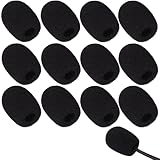
- Ample 12 Pack for Daily Replacement: You will receive 12 pieces of high-density microphone covers foam, sufficient quantity to meet your long-term use and replacement needs. Perfect for sharing with family, friend or colleagues, and ideals for both personal and professional use
- Premium Soft & High-Density Foam: Our mic cover is made of thick, elastic and breathable foam material, which is soft to touch, durable, tear-resistant and not easy to deform. With good elasticity and shrinkage, it fits snugly on your microphone and stays securely in place
- Effective Noise Reduction & Clear Sound: These microphone windscreens efficiently reduce wind interference, background noise and plosive sounds, greatly improving your recording and voice quality. They help deliver clear, clean and natural audio for speaking, singing, streaming and recording
- Sanitary Protection for Your Microphone: The microphone cover keeps your microphone clean by blocking dust, sweat, saliva and moisture. It helps maintain hygiene, especially when mics are shared, and effectively extends the service life of your microphone
- Wide Compatibility & Versatile Use: Our mic covers for microphones suitable for most standard lapel, lavalier and headset microphones. Perfect for gaming, conferences, recording, teaching, live streaming, stage performance, fitness classes and daily indoor or outdoor use
One provider’s published example
Google’s documentation says Google Assistant interaction data is stored on Google servers, while audio recordings are not retained on Google servers by default; users can opt to save audio. It also describes reviewing and deleting activity through My Activity and says some Nest services process some data locally. These are Google’s statements about its services, not an industry-wide rule. Settings and documentation can change, so check the current controls for the particular device and account you use. Google’s Assistant privacy and security information explains its approach.
Who can listen to recordings, and what are the risks?
Privacy handling and cybersecurity attacks are related but different. Privacy questions include whether a device activated unintentionally, how long interaction records remain available, whether people can review recordings, and whether deletion removes all associated copies. The sources do not establish a universal retention period or show that a deletion request always removes audio, transcripts, backups, or derived data across every provider.
Rank #2

- KEEP CONVERSATIONS PRIVATE! Mic-Lock secures your device’s microphone input. When plugged in, Mic-Lock will automatically becomes the device’s primary “microphone” which prevents others from listening in.
- PREVENT CYBER ATTACKERS: Our one-piece privacy solution prevents audio hackers from using your microphones or even your speakers to listen to you.
- THE ONLY DIGITAL ANTI-SPYING SOUND PREVENTOR: Mic-Lock tricks your electronic device into believing its microphone is occupied by copying the exact signal a microphone generates, thus preventing cyber attackers from using it.
- SIMPLE AND EASY TO USE: Works with any 3.5 mm device or headset or speaker. No software is needed.
- COMPACT DESIGN: The compact design is perfect for traveling to work, school, vacations, or anywhere you may be headed. Simply plug it into your laptop, phone, or tablet and you’re ready to go!
A specific enforcement matter illustrates why deletion scope matters. In a May 31, 2023 announcement, the FTC and U.S. Department of Justice said their complaint alleged that Amazon retained children’s voice and geolocation data for years, failed to remove transcripts from all databases after parents requested deletion, and used retained recordings to improve speech recognition. The agencies announced a proposed $25 million civil penalty and proposed deletion, notification, and data-use restrictions. These were allegations and proposed terms at the time of the announcement, not a statement here about the current court status. The announcement notes that stipulated orders have force of law when approved and signed by the court. Read the FTC and DOJ announcement.
Children’s voice data
The FTC says an audio file containing a child’s voice is personal information under the Children’s Online Privacy Protection Act (COPPA). Its limited enforcement policy for voice audio applies when a company collects the audio solely to replace typed words, keeps it only briefly for that purpose, provides clear notice about collection, use, and deletion, and does not use it for another purpose before destroying it. This does not remove other COPPA obligations, and the policy does not apply when voice is used to request other personal information, such as a name. The FTC’s COPPA FAQs provide further detail.
Rank #3

- Microphone cover set: 5 pieces foam mic cover, 2.9 x 2.5 inches, caliber size is 1.4 inches, suitable for most standard handheld microphone, not for headset mic
- Thick and soft foam: the ball-type foam microphone windscreen is soft and thick, has good elasticity and shrinkage, convenient to set on the microphone
- Widely application: the foam ball windscreen for microphone is suitable for ktv, dance ball, conference room, news interviews, stage performance and other places
- Clean and sanitary: these mic wind covers can keep your microphone away from saliva and moisture influences, allow you to use the mic in an ease and comfortable mood
- Attention: the foam microphone covers was squeezed in a bag, so please put it out for a little time then it will return to its original shape
Cybersecurity threats become especially consequential when voice assistants are connected to sensitive services. NIST’s December 2025 guidance addresses smart speakers used in home health care—not ordinary consumer use in general. For the telehealth interaction it describes, a patient’s voice recording is sent to the assistant platform for processing. NIST identifies potential threats including interception of unencrypted communications, data manipulation, denial of service, disruption of an application or operating system that changes commands, and unauthorized access through a home network or weak physical controls. It recommends safeguards such as encryption, limiting access to authorized people and devices, and separating medical or biometric devices from other networks. NIST’s smart-speaker guidance explains this higher-stakes context.
How to reduce voice-data exposure
- Know when the assistant is active. Check the device manual for its activation lights or sounds and whether it has a physical microphone-off control. Use that control when you do not want the device listening for a wake word.
- Review the provider’s privacy policy and settings. Look for whether human review can be limited or disabled, whether audio saving is optional, and what interaction history is retained.
- Inspect and clear activity. Use the provider’s account activity tools to review and delete old recordings or interactions. If available, configure automatic deletion. Check whether the controls cover transcripts and related activity as well as audio.
- Protect the account. Use a long, unique password and enable multifactor authentication (MFA) when offered. Review linked email, shopping, and other permissions; use a PIN or disable voice ordering if household members or visitors should not be able to make purchases or take other actions.
- Secure the home network. Follow the FTC’s advice to secure your router and connected home network. This can help protect devices against network risks, but it cannot control what a provider retains after receiving a recording. The FTC lists these consumer steps.
- For a health-care setup, address the added sensitivity. Organizations integrating assistants with telehealth should consider NIST’s safeguards, including encrypted communications, access limited to authorized people and devices, and network segmentation.
What to check when comparing assistants
There is no current, comparable vendor-by-vendor assessment in the cited sources, so a ranking would not be justified. Instead, check the documentation for the specific device and account against these questions:
Rank #4

- Premium Material: Our black microphone covers disposable are crafted from premium non-woven fabric, ultra-thin design which maintains sound clarity. You will receive 100 mic covers, enough for long-term use
- Elastic Fit: Designed with stretchable edges. With just a simple pull to stretch the cover over the microphone, the mic covers for microphones securely stays in place, providing hassle-free use. This user-friendly design allows for quick installation and easy removal, making it ideal for busy performers or venues that require frequent microphone changes
- Clean Shared-Mic Use: These disposable microphone covers are designed for shared spaces, blocking dust, please discard after use, ensuring that every use is hygienic. Helps extend the life of the microphone
- Broad Compatibility: These black odorless microphone windshields are designed to fit most standard handheld and karaoke microphones seamlessly. Designed with stretchable edges, it can well meet your needs in daily life
- Multi-Situation Use: Our microphone covers are suitable for a variety of occasions, especially for KTV, home karaoke, recording studio, live shooting and stage performance. Whether you're entertaining guests at a party, giving a speech, or performing live on stage, a microphone cover ensures clean and comfortable use and improves the overall experience
- What triggers activation, how are accidental activations indicated, and is there a physical microphone mute?
- Is audio saved by default, and what retention choices are available?
- How long are transcripts and interaction histories retained, and can they be deleted?
- Can human review or use for product improvement be limited?
- Does deletion cover transcripts and other retained copies, or only visible activity?
- Which requests are processed locally and which are sent to cloud services?
- What account-security features and linked-service permissions are available?
The cited sources do not establish a comparable rate of voice-data breaches. They support practical questions about handling and security, not a numerical estimate of how likely a breach is.
The Tool Desk
Outbyte Driver Updater FREEFix the driver behind crashes, sound loss and screen glitchesFind Drivers →Outbyte PC Repair FREEClear out junk files and repair common Windows errorsFree Scan →Quick Recap
Best Value
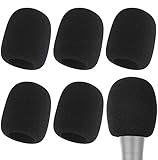
- Snug Fit for Standard Mics: 6 pieces of black foam covers sized 2.8 x 2.3 inches with a 1.4-inch opening, built to fit most standard handheld microphones (not for headset mics)
- Thick High-Density Foam: Ball-type windscreen with dense, soft foam that keeps its shape, installs in seconds, and holds up through repeated washing without tearing
- Reduces Plosives and Wind Noise: Blocks pops, breath, and wind so your voice stays clear without muffling high and low frequencies
- Washable and Reusable: Rinse off dust, moisture, and spit; air dry and reuse to keep every recording clean
- For KTV, Podcasting, and Stage: Works in conference rooms, news interviews, singing, and outdoor events; vacuum-packed, so let the foam expand for a few hours before use
Product prices and availability are accurate as of the date/time indicated and are subject to change. Any price and availability information displayed on Amazon at the time of purchase will apply.




