Android’s “three levels” most likely means its three biometric security classes: Class 1, Class 2, and Class 3. These are technical ratings for a particular face or fingerprint implementation—not three settings you can choose on every phone. The class helps determine whether an app can use that biometric for authentication, but it does not replace your PIN, pattern, or password.
What Android’s three biometric classes mean
Android groups biometric implementations into Class 1, Class 2, and Class 3. Older Android documentation and interfaces used the labels Convenience, Weak, and Strong, respectively. The class belongs to the specific biometric method and its implementation, not automatically to the phone as a whole. A phone’s face unlock and fingerprint reader may therefore have different classes.
As an Amazon Associate I earn from qualifying purchases.
Android evaluates both how a biometric performs and how securely the system handles it. For performance, its criteria include false acceptance rate (FAR), spoof acceptance rate (SAR), and, where applicable, imposter acceptance rate (IAR). Architectural security also matters: a secure pipeline is designed so that even a compromised kernel or platform cannot read raw biometric data or inject synthetic data to influence authentication. See Android’s biometric security measurement documentation.
How the classes compare
Android’s overview table gives the following class figures. These are technical criteria, not observed attack rates for a particular phone or predictions of an individual user’s risk.
#1 Best Overall

- 360 Degree Detection: The Fingerprint Login Key is a 360 degree detection and reading fingerprint, one account can set 10 fingerprints, can be set for multiple accounts, and automatically log in to the account through fingerprints.
- Self Learning Algorithm: USB Fingerprint Reader automatically improve fingerprint information after each successful recognition, adapt to subtle changes in fingerprints, continuously improve the recognition rate, and become more sensitive the more you using.
- Support System: The Laptop Fingerprint Reader supports for 7, for 8, for 10, for 11, for 1Password, for Keeper, for Dashlane, for Enpass, for RoBoForm, for KeePass, for LastPass and other third party software.
- Small and Portable: The biometric fingerprint scanner is small and portable, which can be inserted into the USB port of the computer and used to complete the login and verification on the supported website by identifying the fingerprint.
- 0.5s Recognition: The USB Fingerprint Reader verifies fingerprints in 0.5 seconds, securely protecting your logins and data with an advanced fingerprint security device.
| Android class | Older label | SAR band, including all PAI species | FAR in Android’s class overview |
|---|---|---|---|
| Class 1 | Convenience | 20–30% | 1/50,000 |
| Class 2 | Weak | 7–20% | 1/50,000 |
| Class 3 | Strong | 0–7% | 1/50,000 |
Android defines SAR as the chance that a system accepts a previously recorded, known-good sample during a spoof attack. FAR describes how often it accepts a randomly chosen incorrect input; IAR concerns acceptance of an input intended to mimic a known-good sample. FAR alone does not capture resistance to targeted attacks. The table’s shared FAR figure does not mean the classes offer identical spoof resistance: their SAR bands differ.
Why class matters to apps
Apps can request different levels of biometric authentication. Under Android’s compatibility rules, a request for strong biometrics—or one that uses a cryptographic object—requires Class 3 authentication. Class 1 has fewer app-facing capabilities. This is why face unlock may work to unlock one phone but not be offered by another phone, or another biometric method on the same phone, for a banking app or other sensitive app. The app’s requirements and Android’s assessment of that particular implementation both matter.
Rank #2
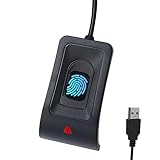
- Instant Windows Hello Integration: Seamlessly access your Windows 10/11 PC with Microsoft-certified biometric authentication. Replace cumbersome passwords with one-touch fingerprint login through the native Windows Hello framework—no third-party software required.
- Microsoft-Certified Security: Officially supports Windows Biometric Framework and Windows Hello. 0.001% False Acceptance Rate and 0.1% False Rejection Rate—bank-grade security for your desktop.
- Plug & Play – No Drivers Needed: Zero driver installation for genuine Windows systems—automatic recognition upon connection (95%+ compatibility). For custom Windows builds, a free driver update is available via the included quick-start guide.
- 10 Fingerprints – Fast for Everyone: Store up to 10 unique fingerprints for family members or shared workstations. Lightning-fast authentication in under 0.5 seconds—no waiting, no frustration.
- Professional-Grade Design – Built to Last: Includes a 5FT braided USB extension cable for flexible, durable placement. Aluminum-alloy sensor housing resists wear and drops—built for daily use in offices, homes, and shared workstations.
Android treats biometrics as a secondary authentication tier, balancing convenience and security; a biometric class is not a promise that a device or account is invulnerable. The Android biometrics overview explains the classes and their role.
How to check whether your face unlock or fingerprint qualifies
Do not infer a class from a feature name such as “face unlock,” or assume every sensor on a model has the same rating. Look for documentation that identifies the class for the exact modality on your exact phone model. When comparing phones, check:
Rank #3
![ineo USB Fingerprint Reader for Windows Hello, Compact Plug and Play Security Key, Silver [Not for Mac]](https://m.media-amazon.com/images/I/41kpVE976ZL._SL160_.jpg)
- Instant Windows Hello Integration: Quickly unlock your Windows 10/11 PC with your fingerprint. No need to type passwords—just one touch for fast and secure access. Works directly with Windows Hello, no extra software needed.
- Plug & Play Simplicity: No drivers needed for genuine Windows systems—just plug it in and it works. Automatically recognized in most cases (95%+ compatibility). Tip: Manual driver update may be required for non-genuine systems.
- USB Fingerprint Reader: A compact metal fingerprint scanner for PCs and laptops that makes logging in quick and easy—just plug it into any USB port and start using it. Its ultra-portable design fits perfectly in your laptop bag.
- Microsoft-Certified Security: Fully supports Windows Hello and the Windows Biometric Framework for safe and reliable login. Features high accuracy (0.001% false acceptance / 0.1% false rejection) to keep your data secure. Also supports password and file encryption for most websites.
- Multi-User Flexibility: Store up to 10 fingerprints—perfect for shared devices at home or work. Enjoy fast and smooth access with lightning-speed authentication in under 0.5 seconds.
- Whether the stated class applies to face recognition, fingerprint matching, or both.
- The implementation’s security class and the relevant spoof-resistance criteria, rather than a generic claim that the method is secure.
- Whether the apps and authentication flows you use require Class 3.
- The phone’s Android version and launch history, since compatibility rules can differ.
Android notes that a device upgraded to a newer Android version may remain subject to compatibility constraints tied to the version installed when it originally launched. For that reason, a general description of current Android rules may not settle what a particular upgraded phone supports; check the manufacturer’s documentation for the model and sensor, as well as the requirements of the app you want to use.
Independent reader supportYour contribution helps us test, update, and keep practical guides available for everyone.Biometrics still rely on a PIN, pattern, or password
Your primary device credential remains the fallback when biometric authentication is unavailable or Android requires it. The timing and conditions for credential re-entry can depend on the biometric class, Android version, and the device’s launch history. BGR’s September 27, 2026 article says Class 3 requires primary authentication every 72 hours, but Android’s official compatibility documentation contains more detailed rules and warns that upgraded devices can retain launch-era constraints. Treat that interval as BGR’s simplified summary, not a universal rule for every Android phone.
Rank #4
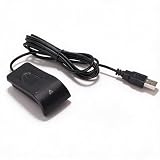
- Plug and Play: The USB fingerprint reader supports for Wins 10, 11, and above systems, allowing for secure login and preventing unauthorized device access by simply plugging the reader into a USB port, no need for additional software installation.
- Fast Accurate Recognition: Utilizing capacitive fingerprint recognition technology, responds in less than 0.5s. With a simple touch, users can log in quickly without entering complex passwords. 360° all angle recognition offers accuracy that surpasses traditional optical technology, providing a more accurate and sensitive performance.
- Enhanced Security: The portable fingerprint scanner features unique security functions, encrypting and storing the passwords of most websites. It can also be set to automatically encrypt all files within designated folders, accessible via fingerprint. This method is more secure, faster, and efficient compared to saving passwords directly in the browser.
- Adaptive Learning Algorithm: Incorporating advanced fingerprint technology, the reader combines biometric performance with a self learning algorithm and anti spoofing support. The fingerprint information improves automatically with each successful recognition, adapting to subtle changes and continuously enhancing recognition rates. The more you use it, the more sensitive it becomes.
- Compact and Multi User Friendly: Made with ABS material, the scanner is lightweight and compact, easy to use, and supports login for multiple fingerprints and accounts simultaneously. Its flexible configuration allows users to share file security with friends and colleagues better. Each user account can set up to 10 fingerprints and configure fingerprints for multiple accounts.
What the Pixel example does—and does not—show
BGR reported on September 27, 2026 that Pixel 8 and newer phones have Class 3 facial scans. That is a dated, secondary, model-specific report—not proof that every phone’s face unlock has the same class, nor a substitute for checking current documentation for a particular model and Android version. The class applies to the face implementation being discussed; it does not establish the class of a separate fingerprint sensor.
Do these 3 things before closing this tab:
1Clear out junk files and repair common Windows errors2Fix the driver behind crashes, sound loss and screen glitches3Repair Windows errors before they cause bigger problemsQuick Recap
Product prices and availability are accurate as of the date/time indicated and are subject to change. Any price and availability information displayed on Amazon at the time of purchase will apply.




