Free tools Windows power users keep installed
One-click scans. No signup required.
Choose the phone that meets your 12-year-old’s actual communication needs and matches their readiness—not one based on age alone. If calls and texts are enough and your family is not ready for wider app and web access, a basic or flip phone is a reasonable starting point. If smartphone features would be useful and your child is ready to manage them with support, agree on boundaries and settings together, then review how they are working.
There is no universal “right age” for a first smartphone
The American Academy of Pediatrics (AAP) says there is no one perfect age for a first smartphone. Its advice is to weigh practical need and a child’s individual readiness. In its “Getting Your First Phone” Q&A, the AAP reports that three out of four parents of children under 13 said their child did not have their own smartphone; over 40% of parents of 11- and 12-year-olds reported the same. Those are ownership findings, not evidence that a particular age is right or wrong for your child.
As an Amazon Associate I earn from qualifying purchases.
A smartphone can provide more independence and ways to communicate with friends, but it also gives access to apps and websites that may not be intended for children and teens. The decision is therefore less about whether a 12-year-old is “old enough” in the abstract and more about what the phone needs to do, what access the family is comfortable with, and whether the child and caregivers are ready to manage it.
The Tool Desk
Outbyte PC Repair FREEClear out junk files and repair common Windows errorsFree Scan →Outbyte Driver Updater FREEScan for outdated or missing drivers - takes under a minuteDriver Scan →What each type of phone is suited to
| Decision point | Basic or flip phone | Smartphone |
|---|---|---|
| Main use | Often suits a child who mainly needs calls and texts for family coordination or friends. Check the specific phone’s capabilities. | Useful when the child needs apps, web access, or other smartphone functions. |
| Access | May offer fewer app and web features, but basic phones vary. | Offers broader access to apps and websites; family boundaries and settings matter. |
| Setup | Agree on contacts, when the phone can be used, and whether features such as location sharing are enabled. | Agree on privacy, content, contacts, downloads, purchases, and time boundaries. |
| When it may fit | A lower-access way to stay in contact when broader online access is not yet needed or welcome. | A possible fit when its added functions are useful and the child can use them responsibly with caregiver support. |
| Review | Check whether it still meets the child’s needs as school, activities, and routines change. | Check in every few weeks and adjust the plan if phone use affects sleep, homework, relationships, or family routines. |
This is a comparison of the options, not a head-to-head test of devices. Features differ by model, and carrier compatibility, network support, and local availability need to be checked for the specific phone.
#1 Best Overall

- Simple operating system for operate easier, Sound clear and loud
- Nostalgic button design, focused on calls and texts, No Internet access and without camera
- Type-C fast charging, 1050mAh real capacity battery for up to 120h+ standby
- Special SOS button and #2 to #9 8 keys can be set as speed dial buttons for quick assistance
- FM Radio, Alarms, MP3 Player, Mini-games, Notes, Calculator, Calendar, Bluetooth, Flashlight & more—all in one
How to judge whether your child is ready
The AAP’s questions are prompts for a family conversation, not a diagnostic test or pass/fail checklist. Consider how your child handles responsibility and relationships, and whether you can provide ongoing support.
- Responsibility: Do they manage homework and follow existing technology rules?
- Consideration: Can they recognize when they have hurt someone’s feelings and make amends?
- Honesty and judgment: Are they truthful with caregivers and able to navigate disagreements or social conflict respectfully?
- Digital literacy: Can they recognize that online information and interactions require judgment, and ask for help when something feels wrong?
- Practical need: Do school, activities, travel, or coordination needs call for functions beyond calls and texts?
- Family support: Are caregivers ready to set expectations, discuss problems, configure settings, and revisit the plan?
The AAP’s policy statement on media use in school-aged children and adolescents also emphasizes digital media literacy, truthfulness with caregivers, social skills, and practical need. A child need not be perfect; what matters is whether the family can address foreseeable challenges together.
Rank #2

- TODDLER TOY GIFT: 8 modes( mobile mode, piano mode, color mode, fruit mode, drum mode, game mode, maths mode and question mode) for baby to grow in interaction. It is a great Christmas gift for boys and girls
- GREAT VISUAL AND AUDITORY EXPERIENCE: Soft, colorful LED lights and adjustable volume provide a safe and engaging sensory experience for baby. Great for capturing baby's attention and making them love it
- UNIQUE DESIGN: Toy phone looks like a small Phone, has USB for charging like a mobile phone. Let baby have their own phone and no longer taking yours
- EASY TO USE AND SAFE: Easy to use by touching the screen. Made of ABS material, frosted surface and rounded edges to ensure safe use
- MINI SIZE: With mini size of 4.9 x 2.3 x 0.3 inches and weighing only 1.4oz, this phone is perfect for baby to grasp with one hand easily
If calls and texts are enough, check the basic-phone details
A basic or flip phone can meet a narrower communication need without making broader app access the default. But the label “flip phone” does not guarantee that a device has no browser, apps, messaging features, or location sharing. Check the phone’s specifications and settings before buying or handing it over.
Quick wins for a faster PC:
Clear out junk files and repair common Windows errorsFree Scan →Fix the driver behind crashes, sound loss and screen glitchesFind Drivers →The Federal Trade Commission (FTC) advises families considering a child-focused phone to check whether it can restrict browsers, outside apps, and contact from unknown people. The FTC’s online-safety guidance also makes clear that features vary, so verify what the particular device actually allows. The AAP suggests asking your carrier whether it offers a flip phone limited to calls and texts; smart watches and starter smartphones with selected restrictions are other possibilities, not endorsements of specific products.
Rank #3

- 1.8" 128x160 Resolution | 800mAh Battery
- MicroSD up to 32GB
- This item is unlocked to work on cellular frequencies (bands): 2G Network GSM 850 / 900 / 1800 / 1900 Compatibile Nationwide on 2G carriers like Straight Talk, Simple Mobile, or any other carrier that accepts a 2G ONLY GSM Sim Card. Will NOT work with 3G only providers - NO AT&T, NO T-Mobile, NO CDMA Carriers (Verizon, Sprint, Boost, PagePlus)
- VGA Camera | LED Flashlight
- Wireless FM Antenna | Bluetooth v2.1 +EDR | Music Function Keys
For any phone, agree on who the child can contact, when it can be used, and whether location sharing is appropriate. Do not assume a basic model lacks internet access or tracking simply because it looks less like a smartphone.
Independent reader supportYour contribution helps us test, update, and keep practical guides available for everyone.If you choose a smartphone, set the rules before handoff
Treat the phone as a shared family plan rather than a device that controls alone can make safe. Discuss expectations with your child, explain the reasons behind them, and decide separately whether social media apps are allowed. A written family phone agreement can help make responsibilities and boundaries clear.
Rank #4

- 1. The Perfect First Phone for Kids—Small in Size, Big on Connection: Measuring just 3.54 x 1.97 inches, this palm-sized kids phone is made for little hands. It’s the ultimate way to stay in touch without handing over an expensive device. Connect effortlessly via home Wi-Fi or your car’s hotspot to check in anytime. It slips right into small pockets or backpacks, giving parents complete peace of mind wherever kids go.(❌SIM services are not supported.)
- 2. Say Goodbye to Phone Hijacking—A Smart Device Just for Them: Tired of your kids taking your phone to watch videos or play games? Give them their own mini smartphone! It smoothly runs most apps like WhatsApp/Tiktok/Facebook ect,and educational games. They can even pair it with Bluetooth headphones to listen to their favorite music without disturbing the house. Not only does it improve children's social skills, but it also helps them gain knowledge they wouldn't learn in a classroom. Now they enjoy their own digital space, and you get your phone back!
- 3. Face-to-Face Smiles Anytime—Video Calls & Safe Memory Making: Whether you’re at work or traveling, the front camera lets you video chat over Wi-Fi so you can see your child’s sweet face anytime. They’ll love using the rear camera to capture backyard discoveries and daily adventures. Combined with secure facial recognition, this mini phone gives young users a safe, fun way to explore photography and stay connected with family.(⚠️Please note: All calls must be made via WhatsApp or similar apps.)
- 4. 128GB Storage Expansion—Endless Entertainment on the Go: Perfect for road trips! It supports up to a 128GB memory card to massively expand storage, holding thousands of photos, videos, audiobooks, and files. Kids can watch offline cartoons or stream via an in-car hotspot. Connect Bluetooth headphones for quiet back-seat listening, keeping them happily entertained without borrowing your phone or draining data!
- 5. Complete Protection & Vibrant Colors—The Ultimate Gift: Available in charming Blue, Pink, and Black, this palm-sized phone makes a magical gift your child will cherish. We’ve included a custom phone case and screen protector right in the box, shielding the device from everyday bumps and drops by active kids. Give them the excitement of owning their first "real" phone, safely protected and built just for them!
- Agree on when and where it is used. Set expectations for bedrooms, meals, homework, school, and bedtime. The AAP suggests do-not-disturb or focus mode during school, homework, and bedtime for young teens, and advises keeping media use from disrupting sleep.
- Set access boundaries together. Review privacy and content settings, permitted contacts, app downloads, purchases, and downtime. Decide what the child may change independently and what requires caregiver approval.
- Practice what to do when there is a problem. Talk through unwanted contact, upsetting content, peer conflict, or a mistake. Make it clear how the child can ask for help without the conversation becoming only about punishment.
- Check in and adjust. Revisit the agreement every few weeks. If phone use is affecting sleep, schoolwork, relationships, or family routines, change the plan and settings.
The AAP’s guidance on parental monitoring favors safety plans that include a young person’s input and help them learn self-regulation. Controls can set boundaries and support teaching, but they cannot guarantee safety or replace conversation.
Quick Recap
Best Value
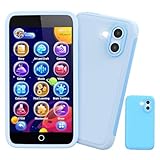
- 200+ Educational Games: This kids smart phone toy comes with 200+ learning games designed for ages 3–12. From ABCs and 123s to puzzles and brain builders, there’s always something new—never boring! It also includes a flashlight, fun camera, drawing tools, storybooks, and an alarm clock. Kids learn core skills while having fun. (Note: No Wi-Fi or calling functions.)
- Dual Camera + 45 Stickers – Capture Fun Moments: Featuring both front and rear cameras, this 3.97" touchscreen phone lets kids record videos and take selfies like little photographers. With 45+ stickers and frames, they can add silly, cute, and fun effects. A great birthday, Halloween, or Christmas gift for ages 3–12—turn everyday moments into fun memories!
- 190+ Drawings – Where Creativity Takes Off: Packed with 190+ coloring and drawing pages, this kids’ phone boosts imagination, color recognition, and hand-eye coordination. Plus, with 5 interactive story adventures included, every tap becomes a new creative journey—turning screen time into meaningful playtime.
- Long Battery & 8GB Storage – Play All Day: Powered by a 1500mAh rechargeable battery, this kids’ phone delivers hours of nonstop fun and learning wherever they go. The built-in 8GB memory safely stores hundreds of photos, drawings, and videos without worrying about space. Includes a shockproof silicone case to protect against drops and everyday bumps.
- Parental Control Mode – Safe Screen Time: Designed with password protection, app and time management, plus support for multiple child accounts, this phone makes digital play safe and distraction-free. Parents stay in control of what kids access. (Note: Does not support app downloads to ensure attention stays on educational content.)
A practical way to make the decision
- Start with the need: If calls and texts cover the reason for getting a phone, a basic model may be enough.
- Consider access, not just the hardware: If the family is not ready for a child to use apps and the web broadly, choose a device and settings that match that boundary.
- Match responsibility with support: Consider the child’s behavior and judgment alongside caregivers’ capacity to stay involved.
- Leave room to change course: Reassess as school, activities, and the child’s needs evolve. A first phone does not have to settle every future technology decision.
Product prices and availability are accurate as of the date/time indicated and are subject to change. Any price and availability information displayed on Amazon at the time of purchase will apply.




