Keep money you may need soon in an account you can readily access. Consider a certificate of deposit (CD) for money with a known later use date only if its maturity fits your plans and you can accept the contract’s early-withdrawal rules. The right choice depends on when you need the cash, how much reserve you need, and the specific account terms—not just the advertised rate.
Should I lock in a CD rate or keep my cash accessible?
Separate your money by when you expect to use it. Cash for routine bills, planned near-term expenses, or emergencies belongs in an account with practical access. Money set aside for a known future expense may fit a CD if you can leave it there until maturity, or accept the stated consequences if your plans change. A CD is a savings account offered by banks and credit unions, but it generally ties the deposit to a specified term. The CFPB explains how CD terms and early withdrawals work.

As an Amazon Associate I earn from qualifying purchases.
There is no universal amount that every saver should lock away. The FDIC’s January 2025 consumer guidance says financial experts generally recommend keeping at least six months of living expenses in a federally insured product, including a savings account or CD. Treat that as general guidance, not a rule tailored to your circumstances; a CD may be less suitable for emergency money if withdrawing early would trigger a penalty or be restricted. Read the FDIC’s emergency-savings guidance.
How to compare a CD with an accessible account
Do not compare accounts by rate alone. Check the terms that determine whether the return is worth giving up access, and whether the product works for the date you need the money.
#1 Best Overall
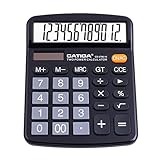
- [LARGE DISPLAY] - The huge LCD screen that clearly displays big numbers makes it easy to read from afar, and it’s aesthetically pleasing.
- [SENSITIVE AND BIG BUTTONS] - Your calculation process will be faster and smoother with this calculator’s responsive buttons. Once pressed, the buttons quickly register and display the corresponding number on the screen. The big size of the buttons prevents you from hitting the wrong button.
- [DUAL POWER DESIGN] - This calculator utilizes both the solar power and battery power (battery included). The solar panel, as long as you use it in a lit environment, will power up the calculator thoroughly.
- [VERSATILE PURPOSES] -This calculator is designed for many occasions: business, office, home, basic budgeting, school, and more. Use it to assist your personal finance or just a quick calculation session.
- [FUNCTIONALITIES] - Add, subtract, multiply, divide, backspace, grand total, CE, %, M+/M-/MRC, On/AC Button, and Auto Power-Off. The calculator will turn itself off after about 6 minutes of being idle.
| What to check | Questions to answer |
|---|---|
| Access | Can you withdraw before maturity? If so, what penalty, forfeited interest, or redemption restriction applies? |
| Timing | Does the maturity date fall before or near the planned expense? Is there a renewal window or deadline to act? |
| Return terms | Is the rate fixed or variable, and when is interest paid? Compare the stated terms rather than assuming today’s rate will continue. |
| Product structure | Is the CD callable or market-linked? Those features can affect how long the money stays invested and whether early redemption is available. |
| Protection | Is the institution federally insured, and how much of your existing balance there already counts toward applicable coverage? |
The CFPB recommends comparing a CD’s term, interest rate, and early-withdrawal penalty. The account disclosure should spell out the rate, interest-payment timing, maturity date, and redemption terms. Current rates, minimums, penalties, and other terms vary by institution and product, so verify the specific offer before opening an account. See the CFPB’s CD comparison guidance and Investor.gov’s overview of CD disclosures and risks.
Will I lose money if I withdraw a CD early?
It depends on the contract. Many fixed-rate CDs allow early withdrawal but impose a penalty; the amount and how it is applied are product-specific. Check whether the penalty can reduce interest you have earned, and whether the contract states any circumstances in which it could affect principal. Some CDs, including market-linked products, may not permit early redemption at all. Do not assume that every CD offers the same escape route. The FDIC outlines CD redemption and product-structure considerations.
Rank #2
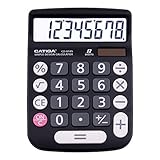
- EASY-TO-USE DESIGN - With its large screen, this calculator is made for convenient and comfortable everyday use. Its tilted and angled display allows you to easily see your calculations without straining your eyes.
- LARGE RESPONSIVE BUTTONS - Spacious button sizes ensure that your fingers are much less likely to hit the wrong number, all while providing a satisfying sensation when typing.
- ROBUST BUILD - Built with a sturdy and premium plastic body, this desktop calculator is constructed with everyday use in mind. It is convenient, powerful, and long lasting.
- VERSATILE FUNCTIONS - With its add, subtract, multiply, divide, percent, grand total and CE Button functionalities, this calculator's versatile nature allows it to be used in many occasions.
- DUAL POWER SOURCES - With the aid of its dual solar and battery power system, this calculator is fully powered in any lit environment. The battery comes included with the calculator, ensuring quick and easy access right away. PLEASE NOTE: The calculator will turn itself off after about 6 minutes of being idle.
A callable CD creates a different risk: the bank may end the CD early under the call terms. That is not the same as you choosing to withdraw your money. Read the call provisions as well as the depositor’s redemption rights. Review the FDIC’s guidance on callable and market-linked CDs.
The Tool Desk
Outbyte PC Repair FREERepair Windows errors before they cause bigger problemsFix Now →Outbyte Driver Updater FREEFix the driver behind crashes, sound loss and screen glitchesFind Drivers →Check the maturity and renewal terms before you commit
Choose a maturity date that matches the money’s intended use. If you may need the deposit before that date, weigh the possible penalty or redemption restriction against the value of keeping the money accessible. Also find out whether the CD renews automatically, what rate and term would apply at renewal, and how long you have to act if you do not want it to renew. The FDIC recommends checking renewal terms.
Rank #3
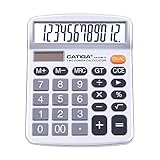
- [LARGE DISPLAY] - The huge LCD screen that clearly displays big numbers makes it easy to read from afar, and it’s aesthetically pleasing.
- [SENSITIVE AND BIG BUTTONS] - Your calculation process will be faster and smoother with this calculator’s responsive buttons. Once pressed, the buttons quickly register and display the corresponding number on the screen. The big size of the buttons prevents you from hitting the wrong button.
- [DUAL POWER DESIGN] - This calculator utilizes both the solar power and battery power (battery included). The solar panel, as long as you use it in a lit environment, will power up the calculator thoroughly.
- [VERSATILE PURPOSES] -This calculator is designed for many occasions: business, office, home, basic budgeting, school, and more. Use it to assist your personal finance or just a quick calculation session.
- [FUNCTIONALITIES] - Add, subtract, multiply, divide, backspace, grand total, CE, %, M+/M-/MRC, On/AC Button, and Auto Power-Off. The calculator will turn itself off after about 6 minutes of being idle.
Some savers stagger maturity dates so portions of their money become available at different times. That can help align access with a sequence of planned expenses, but it does not make every deposit immediately available or remove each CD’s contract terms. Decide whether this approach fits your cash-flow needs rather than treating it as a guarantee of liquidity.
Independent reader supportYour contribution helps us test, update, and keep practical guides available for everyone.Confirm deposit insurance across your accounts
For eligible deposits, the CFPB states that coverage is up to $250,000 for bank CDs insured by the FDIC and up to $250,000 for credit-union CDs insured by the NCUA. The applicable limit is not automatically available separately for every CD: Investor.gov explains that FDIC coverage aggregates accounts held in a depositor’s name at the same bank. Check the institution, ownership category, and combined balances before depositing. See the CFPB’s coverage summary, Investor.gov’s explanation of aggregation, and the FDIC’s deposit-insurance information.
Rank #4
Verify that the product is an insured deposit at a federally insured institution. A product marketed as a high-yield alternative may be an investment or insurance product rather than an insured deposit; its label alone does not establish coverage. The FDIC’s CD-shopping guidance discusses this distinction.
Outdated Drivers Are Slowing You Down
One free scan finds every outdated or missing driver and matches the right update for your exact hardware.Free scan · exact hardware matchPC Slower Than It Used to Be?
A free scan shows the junk files, broken settings and background clutter dragging Windows down - then fixes them in one click.Free scan · Windows 10 & 11Quick Recap
Best Value

- EASY-TO-USE DESIGN - With its large screen, this calculator is made for convenient and comfortable everyday use. Its tilted and angled display allows you to easily see your calculations without straining your eyes.
- LARGE RESPONSIVE BUTTONS - Spacious button sizes ensure that your fingers are much less likely to hit the wrong number, all while providing a satisfying sensation when typing.
- ROBUST BUILD - Built with a sturdy and premium plastic body, this desktop calculator is constructed with everyday use in mind. It is convenient, powerful, and long lasting.
- VERSATILE FUNCTIONS - With its add, subtract, multiply, divide, percent, grand total and CE Button functionalities, this calculator's versatile nature allows it to be used in many occasions.
- DUAL POWER SOURCES - With the aid of its dual solar and battery power system, this calculator is fully powered in any lit environment. The battery comes included with the calculator, ensuring quick and easy access right away. PLEASE NOTE: The calculator will turn itself off after about 6 minutes of being idle.
A practical decision checklist
- Set aside accessible cash. Keep money for bills and plausible near-term needs in an account that gives you the access you require.
- Name the CD money’s purpose. Identify when you expect to use it and choose a maturity date that fits that timing.
- Read the disclosure. Confirm the rate, interest-payment schedule, maturity date, early-withdrawal rules, and any call or market-linked features.
- Check renewal and insurance. Find the renewal deadline and terms, confirm the institution’s federal insurance status, and account for other deposits there.
- Compare the trade-off. Choose a CD only if its terms suit the period you can leave the money untouched; otherwise, favor access over a rate you may not be able to keep.
Product prices and availability are accurate as of the date/time indicated and are subject to change. Any price and availability information displayed on Amazon at the time of purchase will apply.




