Do these 3 things before closing this tab:
1Clear out junk files and repair common Windows errors2Scan for outdated or missing drivers - takes under a minute3Repair Windows errors before they cause bigger problemsKolmo is a free, ungated permit-information guide created by Pascal Matta, a software engineer who worked at Google and T-Mobile before becoming a Seattle general contractor. It is designed to turn scattered municipal rules into address-specific guidance—not to replace a city’s permit decision, plan review, or code official.
Why Matta built Kolmo
Matta began the project after confronting Seattle’s rules while considering a deck for his own home. He told GeekWire that the information “genuinely isn’t anywhere else,” because the answer can change from one municipality to the next and may be buried in separate PDF documents.


As an Amazon Associate I earn from qualifying purchases.
That problem has real financial consequences. As Matta put it, a homeowner may discover that a project has a different answer in Bellevue, Kirkland, and Seattle only after signing a contract. Kolmo’s stated purpose is to help people ask those questions earlier.
The Tool Desk
Outbyte PC Repair FREEClear out junk files and repair common Windows errorsFree Scan →Outbyte Driver Updater FREEFix the driver behind crashes, sound loss and screen glitchesFind Drivers →What the guide reportedly provides
GeekWire’s Oct. 2, 2026 profile reports that Kolmo’s database contains 457 verified rules across 80 jurisdictions in King, Pierce, and Snohomish counties, alongside a Washington baseline spanning 82 jurisdictions. Those figures are product claims reported by GeekWire, not an independent audit of coverage or accuracy.
- Source-linked rules: The service reportedly links entries to municipal source pages and their exact wording.
- Verification labels: It distinguishes rules directly verified with a city from information that has not been directly verified.
- Address-level results: Users can enter an address for a lot-specific breakdown. The profile describes a 3D view showing the buildable envelope, height limits, and existing structures.
- Common questions: Examples include whether work needs a permit, whether a lot might support options such as two detached accessory dwelling units under Seattle code, and questions about plumbing, tree removal, and heat-pump installation.
- Change monitoring: GeekWire reports that source pages are rechecked weekly and that results appear in a public data-quality log.
The profile says the system uses Google’s Gemini model with retrieval-augmented generation and exposes its database through the Model Context Protocol (MCP). Those technical details describe how the product is reported to work; they do not guarantee a correct answer for an individual property.
What “verified rule” does—and does not—mean
A rule entry can help you find the governing language, but it is not an official determination that your proposed work qualifies. Permit requirements can change with the jurisdiction, project type, zoning, lot conditions, existing structures, environmental constraints, and whether work affects public property.
For a consequential project, treat Kolmo as an early research and question-formulation tool. Confirm the result with the responsible department, current checklists, and—when appropriate—an architect, engineer, permit expediter, or land-use professional.
Seattle’s official process remains broader than a lookup
Seattle’s Department of Construction and Inspections says the path depends on the permit type and project complexity. Its process directs applicants to property research, permit types and checklists, the Seattle Services Portal, and coaching or specialist help. Applications can pass through intake screening and plan review involving multiple teams.
Seattle also says most projects require permits, while certain small projects may be exempt under specific conditions. An exemption from a permit does not exempt the work from applicable building codes or development standards. Do not apply a general exemption to a particular property without checking the project and site conditions.
A project can involve more than SDCI. Seattle’s Department of Transportation explains that development affecting the public right-of-way may also require SDOT permits, in addition to permits from SDCI or other departments.
How to use an AI permit guide responsibly
- Start with the exact address. Confirm the jurisdiction and parcel before relying on any result.
- Describe the work precisely. Include dimensions, structural changes, utilities, tree removal, heating equipment, accessory dwelling units, and any street or sidewalk work.
- Read the cited municipal language. Check definitions, exceptions, thresholds, and effective dates rather than relying only on a generated summary.
- Identify unresolved conditions. Flag questions about zoning, historic or environmentally critical areas, easements, right-of-way impacts, or existing unpermitted work.
- Confirm with the city. Use the Seattle Services Portal, the relevant department, or a permit specialist before signing a construction contract or starting work.
Do not confuse Kolmo with Seattle’s CivCheck pilot
Seattle separately tested an AI application-screening system called CivCheck. The city says that proof-of-value study began in March 2025, concluded in October 2025, and continued to be analyzed into early 2026. Staff compared the system’s checks with their own review of sample applications.
PC Slower Than It Used to Be?
A free scan shows the junk files, broken settings and background clutter dragging Windows down - then fixes them in one click.Free scan · Windows 10 & 11Crashes, No Sound, or Screen Glitches?
Random freezes, missing sound and display glitches usually trace back to one bad driver. Find and replace yours safely.Free scan · under a minute| Check in the CivCheck study | Accuracy reported by Seattle | What the figure means |
|---|---|---|
| Application completeness | 87% | Reported result of the city’s pilot sample |
| Design compliance | 92% | Reported result of the city’s pilot sample |
Those percentages belong to CivCheck, not Kolmo. Seattle also cautions that accuracy is only part of the picture: a system that catches some corrections may still fail to prevent another review cycle, and checking compliance across thousands of building-code requirements is harder than checking basic completeness.
Best Value
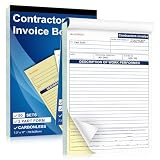
- EFFICIENT 2-PART CARBONLESS SYSTEM WITH 50 SETS – This contractor invoice book 2 part contains 50 sets of white and yellow carbonless forms, creating instant duplicates with no messy carbon paper. Perfect for on-the-job billing, it serves as a reliable invoice receipt book for small business owners who need clean, professional copies for customers and records.
- PROFESSIONAL SIZE & DURABLE COVER – Measuring 7.3" x 11", each page provides ample writing space for labor, materials, and job details. The 250g coated paper cover resists wear on job sites, making this contractors invoice book a durable choice for electricians, plumbers, and general contractors.
- SEQUENTIALLY NUMBERED & PERFORATED – Pre-numbered pages help track every transaction, while the top perforated tear line allows for clean, easy removal. Whether used as contractor invoice forms or work order receipt book pages, the organized layout reduces errors and saves time.
- STURDY CARDBOARD BACKING FOR ON-SITE USE – Built-in bottom cardboard backing provides a firm writing surface anywhere—no desk required. Ideal for work order estimate forms or contractor estimate book applications, this feature ensures legible copies even in trucks or trailers.
- VERSATILE FOR MULTIPLE BUSINESS TYPES – Works seamlessly as invoice receipt book 2 part for contractors, work order estimate forms for repair shops, or contractor estimate book for service professionals. From construction and landscaping to HVAC and handyman services, this invoice receipt book for small business adapts to any industry that needs professional on-site billing.
What to compare when evaluating permit-information tools
- Geographic coverage: Does it cover the city and county where the property is located?
- Source verification: Are answers tied to current municipal pages and exact rule text?
- Parcel specificity: Can it account for the actual address, lot, and existing structures?
- Question coverage: Does it handle the type of work you are planning, including trade permits and right-of-way issues?
- Update reporting: Does it show when sources were checked and how changes are handled?
- Human review: Is there a clear path to a city reviewer or qualified professional?
No tested ranking among permit tools is established by the available reporting. The practical standard is whether a service helps you locate authoritative requirements and know when a human decision is still required.
What this means for Seattle homeowners and builders
Kolmo’s appeal is speed and clarity at the research stage: a homeowner can begin with “Do I need a permit?” or “What can be built on this lot?” without first searching multiple municipal document systems. Its reported free, ungated access and stated plan not to monetize or paywall the guide lower the barrier to that first check.
The final authority remains the applicable city or county department. Use the guide to uncover the right questions, then verify the answer through the official permitting process before committing money or beginning work.
Recommended Free Tools
Quick Recap
Product prices and availability are accurate as of the date/time indicated and are subject to change. Any price and availability information displayed on Amazon at the time of purchase will apply.




