Recommended Free Tools
SaaS help desk software brings support requests into a managed workspace so a team can categorize, prioritize, assign, track, and resolve them. To choose a platform, compare how it handles the channels and workflows your team actually uses, then examine automation, service targets, self-service, reporting, collaboration, integrations, and any IT service management processes you require.
What is help desk software?
A help desk is a point of contact for customers or employees who need support. Help desk software provides a structured place to handle those requests, whether they concern account access, setup, technical problems, employee services, or other questions. Requests can arrive through channels such as email, a portal, a chat widget, or workplace messaging, depending on the platform and its configuration.
As an Amazon Associate I earn from qualifying purchases.
Instead of leaving every conversation in a separate inbox, a help desk organizes requests into records that staff can categorize, prioritize, assign, discuss, and resolve. Atlassian’s help desk overview describes this kind of intake and queue management. The exact channels and functions available depend on the product and subscription.
What features should help desk software have?
The right capabilities depend on who is asking for help and what the team must do to resolve each request. Compare features against real work, rather than assuming that every help desk needs the same configuration.
#1 Best Overall

- Digital Stereo Sound: Fine-tuned drivers provide enhanced digital audio for music, calls, meetings and more
- Rotating Noise Canceling Mic: Minimizes unwanted background noise for clear conversations; the rotating boom arm can be tucked out of the way when you’re not using it
- Handy In-line Controls: Simple in-line controls on the headset cable let you adjust the volume or mute calls without disruption
- Plug-and-Play USB Computer Headset: Simply plug the USB-A connector into your computer and you’re ready to talk or listen without the need to install software
- Padded Comfort: Comfortable headphones with adjustable headband features swivel-mounted, leatherette ear cushions for hours of comfort and is easy to clean
| Capability | What to evaluate |
|---|---|
| Request intake and channels | Can customers or employees submit requests through the channels they use? Check whether messages retain useful context and whether agents can work without switching unnecessarily between tools. |
| Queues, triage, and assignment | Can staff categorize, prioritize, assign, and escalate requests based on factors such as request type, urgency, team, or other relevant context? |
| Forms and workflows | Can administrators collect the information needed for different requests and configure appropriate stages, fields, approvals, and exceptions? |
| Automation | Can rules handle repetitive steps such as assignment, notifications, or actions triggered by a status change? Test unusual cases and handoffs as well as the routine path. |
| Service level agreements (SLAs) | Which response and resolution targets can the system track? Can targets account for service hours, time zones, priority, or ticket conditions, and how does it surface an approaching breach? |
| Knowledge and self-service | Can users find relevant, up-to-date articles before submitting a request? Is there a clear route to a person when self-service does not solve the issue? |
| Reporting and feedback | Can managers inspect workload, backlog, response and resolution performance, SLA results, and customer feedback? Check what reports are included and how they can be shared or exported. |
| Collaboration and permissions | Can agents involve other teams, link related requests, and see the context they need? Can access be controlled appropriately for internal and external support? |
| ITSM processes | For internal IT, determine whether you need distinct service request, incident, problem, or change practices, along with alerting, on-call schedules, escalation, or links between user tickets and major incidents. |
| Administration | Can the team maintain forms, rules, permissions, and reports with the people and technical resources it has? |
These are evaluation questions, not a claim that all products include every capability or that features are packaged alike. Atlassian’s service desk checklist also groups evaluation around administrator, agent, and customer experience, reporting, collaboration, ITSM, and support resources. It is a vendor’s checklist, not independent evidence that one platform is better than another.
How does a help desk ticketing system work?
A common ticket workflow moves from request intake through triage and investigation to a recorded resolution. It is a useful model, not a universal sequence: teams may use different channels, approval steps, statuses, or handoffs.
- A requester submits a request. They use an available portal, email address, widget, or supported chat channel.
- A form gathers details. The requester supplies information that helps the team understand and route the issue.
- The request enters a queue. Staff categorize and prioritize it, then assign it to the appropriate person or team.
- The assigned team investigates. Agents communicate with the requester and use knowledge articles or internal collaboration where helpful.
- Rules and targets guide follow-up. Configured automation, urgency, or an SLA may prompt a reminder or escalation. The team records the resolution and any follow-up.
Atlassian’s workflow documentation and SLA documentation describe configurable stages and service goals. They illustrate capabilities in that product; they do not establish that every SaaS help desk uses the same workflow or supports the same controls.
What is the difference between a help desk and a service desk?
The terms overlap, and vendors do not use them as perfectly standardized labels. “Help desk” broadly describes support request handling. “Service desk” often refers to a more structured service management function, particularly for internal IT, where work may include defined service requests and coordinated incident, problem, or change processes.
Rank #2

- Noise-cancelling microphone reduces room noise for clearer Internet calls
- Full stereo sound for your music, movies and games
- Rotating microphone boom can be worn on your left or right side
- Adjustable headband gives you a customized fit
- Works with Windows 10 or later, Windows 8, Windows 7, Windows Vista, Mac OS X 10.5 or later, Chrome OS, Linux Kernel 2.6 plus and iOS or Android devices
For example, Atlassian’s IT service management materials distinguish these practices: a routine service request is not the same kind of work as an unplanned interruption (an incident), an underlying cause or potential cause of incidents (a problem), or a modification that may affect services (a change). Its incident management documentation describes incident coordination. These distinctions are useful when deciding what your team needs, but check how each vendor defines and implements its own service desk and ITSM features.
How do I choose help desk software?
1. Define what the desk will handle
List the request types the team owns, the people it supports, and the boundaries between teams. Atlassian’s service desk guidance advises against making one IT team a catch-all and describes dividing work across teams. Treat that as one vendor’s operational advice: the right structure depends on your organization’s responsibilities and capacity.
2. Map real requests to the workflow
Write down how common requests arrive, what information is needed, who handles them, when approval is required, and what counts as resolution. Include a routine access request, a high-priority outage, a request needing approval, a reassignment between teams, and an issue that an article could solve. These examples expose routing and handoff requirements better than a generic feature list.
What’s actually slowing this PC down?
Pick the symptom - the matching free tool is one click away.
3. Score the platform against the work
Use a weighted scorecard: give greater weight to requirements that affect the team’s core service, then assess each platform against the same scenarios. A suitable scorecard covers requester channels and status updates; triage and assignment; forms, stages, and approvals; agent context and collaboration; response and resolution targets; knowledge and self-service; reporting; integrations and permissions; and ITSM processes when those are genuinely needed.
Rank #3

- Digital Stereo Sound: Fine-tuned drivers provide enhanced digital audio for music, calls, meetings and more
- Rotating Noise Canceling Mic: Minimizes unwanted background noise for clear conversations; the rotating boom arm can be tucked out of the way when you’re not using it
- Handy In-line Controls: Simple in-line controls on the headset cable let you adjust the volume or mute calls without disruption
- Plug-and-Play USB Computer Headset: Simply plug the USB-A connector into your computer and you’re ready to talk or listen without the need to install software
- Padded Comfort: Comfortable headphones with adjustable headband features swivel-mounted, leatherette ear cushions for hours of comfort and is easy to clean
For each scenario, record whether the platform supports the requirement, what configuration it takes, and which plan or integration is required. This makes trade-offs visible without treating an attractive feature list as proof that a product fits the team’s daily work.
4. Test agent and requester experiences
In a demonstration, follow each example from submission to closure. Ask to see both the requester’s view and the agent’s workspace, including what happens when a request is incomplete, urgent, reassigned, or outside the usual path. Check that users can understand where to ask for help and that agents can find the history and context required to act.
5. Set service targets and prepare self-service
Agree internally on meaningful response and resolution goals, the hours when they apply, and the conditions that change priority. Seed a knowledge base with clear answers to recurring questions and make sure people can reach human support when an article does not help. HubSpot’s help desk SLA documentation, last updated June 30, 2026, documents SLA setup in HubSpot; the controls and availability in other products may differ.
6. Automate stable steps and review results
Start with low-risk, repeatable actions, such as routing a clearly categorized request or notifying a team when a status changes. Test exceptions and handoffs before relying on a rule. Once the desk is operating, use queue, SLA, and feedback reports to identify bottlenecks and adjust the process.
Rank #4
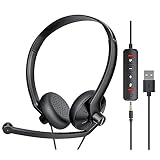
- ✅【Ultra light and Soft USB Headset】: USB computer headset is lightweight, featuring soft ear cups and an adjustable headband to fit all sizes. Memory foam ear cups rest gently on your ears, while the ergonomic design ensures a comfortable and secure fit without discomfort. Perfect for extended wear, it reduces pressure on the ears and blocks external noise.(Connecting to a PC requires the use of a USB port,so that microphone to function)
- ✅【Noise-Canceling USB Headphones for Clear Calls】: With voice pickup technology and advanced audio signal processing, the microphone of wired USB headset is calibrated for optimal performance.USB headset picks up your voice clearly in busy office environments, ensuring high-quality virtual meetings. Ideal for online meetings, e-learning, office business, conference calls, Skype chats, call centers, webinar presentations, Rosetta Stone, Dragon Speaking, Remote working and more.
- ✅【Crisp Audio USB Headphones with Microphone for Meetings】: The 40 mm dynamic drivers produce high-resolution sound and deliver clear, 100% authentic audio. Real-time audio calibration ensures an outstanding listening experience for clearer online meetings and increased work-from-home efficiency.
- ✅【3.5MM & USB Computer Headphones: Plug and Play】: The computer headset with mic mute & indicators/speaker mute is compatible with 3.5mm jack or USB devices: PC, tablet, Mac, iOS, laptop, Android phone. The cable (about 5+4 feet) with in-line audio volume control allows the freedom to stand and stretch during long conversations. Work and talk anytime, anywhere!
- ✅【Warranty Guarantee & Valued Service】: We're dedicated to providing you with high-quality wired headsets at an affordable price. We promise a hassle-free refund or replacement for any defects. Enjoy peace of mind with our commitment to your satisfaction.
What to verify before committing
- Which channels, workflow controls, reports, and ITSM practices are included in the intended subscription.
- Whether the integrations needed for your workflow are supported and whether they require a particular plan or configuration.
- How service targets handle business hours, time zones, priority, and escalations.
- Whether permissions and linked records fit the access needs of internal and external support.
- How administrators will maintain forms, rules, knowledge articles, and reports over time.
Feature packaging, integrations, and availability can change. The reviewed materials do not establish cross-vendor rankings, comparative pricing, or security and compliance suitability. Make those decisions from current product and plan documentation for the specific vendors under consideration.
Frequently Asked Questions
Is SaaS help desk software only for customer support?
No. Help desks can handle support for customers or employees. Internal IT teams may also need service management workflows that distinguish service requests from incidents, problems, and changes.
Are a ticketing system and a help desk the same thing?
They are closely related terms. Ticketing describes the structured records used to track requests; a help desk is the broader support function and workspace that may include intake, routing, communication, knowledge, automation, and reporting.
The Tool Desk
Outbyte Driver Updater FREEFix the driver behind crashes, sound loss and screen glitchesFind Drivers →Outbyte PC Repair FREEClear out junk files and repair common Windows errorsFree Scan →Does every help desk need SLAs?
No. SLAs are useful when a team needs defined service targets, such as first response or resolution time. Whether they are necessary, and which controls are available, depends on the work and platform.
Should every support team automate ticket routing?
Not necessarily. Automation can reduce repetitive work when rules are reliable, but teams should test exceptions and handoffs and keep the process understandable for staff who maintain it.
What should I bring to a help desk software demo?
Bring representative request scenarios: routine access, an urgent outage, an approval, a team reassignment, and a question that might be answered by a knowledge article. Ask to follow each through requester and agent views, and clarify subscription and integration requirements.
Quick Recap
Product prices and availability are accurate as of the date/time indicated and are subject to change. Any price and availability information displayed on Amazon at the time of purchase will apply.
Quick wins for a faster PC:
Fix the driver behind crashes, sound loss and screen glitchesFind Drivers →Repair Windows errors before they cause bigger problemsFix Now →



