Robinhood’s developer documentation describes Robinhood Chain as live: an EVM-compatible Arbitrum Layer 2 with ETH for gas. Its ecosystem page lists apps and infrastructure across trading, lending, bridging, analytics, custody, and data. Those listings are a directory, not proof that every service is live for every user or safe to use. For indexing, choose the network and data-access method your application needs; Robinhood recommends an archive endpoint for historical reads and says its public RPC is rate-limited and not recommended for production.
What is Robinhood Chain, and is it live?
Robinhood Chain is a permissionless, Ethereum-compatible Layer 2 built on Arbitrum Dedicated Blockchains. It uses Ethereum blobs for data availability and ETH as its native gas token. Robinhood describes it as designed for tokenized real-world assets and other financial instruments. The current Robinhood Chain overview says the network is live.

As an Amazon Associate I earn from qualifying purchases.
The timeline matters: Robinhood’s February 10, 2026 announcement described the public testnet as a place for developers to build and verify apps ahead of a future mainnet launch. That was the status at the time of the announcement, not the current status in the developer documentation.
Quick wins for a faster PC:
Scan for outdated or missing drivers - takes under a minuteDriver Scan →Clear out junk files and repair common Windows errorsFree Scan →Which apps and services are listed on Robinhood Chain?
Robinhood’s overview lists the following projects and services by category. It does not provide a comprehensive app-by-app live-status, audit, or jurisdiction check, so treat these as directory entries rather than confirmation that a particular feature is currently usable where you live.
#1 Best Overall

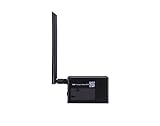
- Experience peak performance with a remarkable 6 TH/s hashrate at just 16.5 J/TH. This next-generation miner delivers a 12% efficiency boost over its predecessor, maximizing your computational output while keeping total power consumption around a low 100W for optimal cost-effectiveness
- 2.4GHz WiFi Only & 24H Support Is it easy to set up? Yes! This plug-and-play miner supports 2.4GHz WiFi only (5GHz not supported). Tip: If your router is dual-band, separate the 2.4G and 5G channels and give them different names. Does it need professional installation? No, no professional installation or complex wiring required. For any setup issues, message us on Amazon. We provide technical guidance and remote support within 24 hours. If unresolved, we will provide a more proactive solution.
- Built for durability and stability, featuring a 2mm FR-4 PCB with 1oz thickened gold immersion for pure signal integrity and superior heat dissipation. Enhanced power layout and signal isolation minimize electromagnetic interference, while a smart, resettable e-fuse replaces disposable fuses for increased system uptime and reliability
- Benefit from a revolutionary spring-loaded heatsink structure that provides uniform compression and exceptional thermal conductivity for lower operating temperatures. The upgraded XT30 high-current connector ensures a stable, easy plug-in connection, reducing energy loss and contact resistance for safer, more efficient power delivery
- Truly plug-and-play with an intuitive web-based configuration interface—get up and running in just 2 minutes. Its compact, eco-friendly design is built for 24/7 operation, making it the perfect, hassle-free choice for everyone from Bitcoin miners to hardware enthusiasts exploring blockchain technology at home
| Category | Projects listed by Robinhood |
|---|---|
| Public DEX | Uniswap |
| PropAMM / aggregator | Rialto |
| Lending | Morpho |
| Perpetuals | Lighter and Arcus |
| Stablecoin infrastructure | Paxos / USDG |
| Cross-chain messaging and bridging | LayerZero |
| Oracles | Chainlink |
| Analytics and data | Entropy Advisors, Allium, TRM Labs, and CoinGecko (token tracking) |
| RPC, account abstraction, and developer services | Alchemy |
| Institutional custody | Fireblocks and BitGo |
| Wallet data | Zerion |
Robinhood’s separate ecosystem directory says third-party inclusion is not endorsement, partnership, affiliation, or sponsorship, and disclaims warranties and representations about safety, legitimacy, or suitability. Verify an app’s own documentation, availability, and security information before connecting a wallet or authorizing a transaction.
How do I connect to Robinhood Chain?
Robinhood Wallet supports the chain natively. Other EVM-compatible wallets can add it using the published network details. The mainnet chain ID is 4663, the currency symbol is ETH, and the block explorer is robinhoodchain.blockscout.com. The testnet chain ID is 46630, and its explorer is explorer.testnet.chain.robinhood.com.
Rank #2
For a wallet or application, use the endpoint and chain ID for the same network. Mainnet and testnet are distinct environments; testnet tokens have no real-world value. Robinhood Chain also operates separately from brokerage and Robinhood crypto accounts: on-chain activity does not change balances or portfolios in those accounts.
Do these 3 things before closing this tab:
1Repair Windows errors before they cause bigger problems2Fix the driver behind crashes, sound loss and screen glitches3Clear out junk files and repair common Windows errorsHow do I move funds onto Robinhood Chain?
Robinhood says users can bridge ETH and supported ERC-20 tokens through the canonical Arbitrum bridge or partner routes. Confirm that the asset and route are supported before sending funds, and check the destination network carefully. Bridging is an on-chain transaction, not a transfer that updates a Robinhood brokerage or crypto-account balance.
Rank #3

- Dimensions: 8.25" overall length, image is 1.5" by 1.5"
- Made of heavy-duty durable metal with high gloss finish
- Black tassels, fancy leather tassels are soft to the touch.
- Image printed on 1 side of this stylish key chain.
- Hardware included
How do I index Robinhood Chain?
First decide whether you need current blockchain reads, historical state and logs, or data already organized into application-friendly records. Robinhood’s documentation identifies managed RPC, archive endpoints, indexed APIs, and running a full node as available patterns, but does not provide a chain-specific indexing tutorial or guarantee coverage for a particular provider.
| Approach | Useful for | What to check |
|---|---|---|
| Managed RPC or WebSocket endpoint | Ordinary JSON-RPC reads and writes, including application interaction with the chain. | Use a provider endpoint for production workloads. Robinhood says its public RPC is rate-limited and not recommended for production. |
| Archive endpoint | Historical reads and custom indexing that needs older chain data. | Confirm archive availability, historical-query coverage, and retention terms with the provider. Robinhood names Alchemy as an example. |
| Indexed data API | Application queries for indexed balances, transaction history, NFTs, or portfolio activity. | Check that the specific endpoint covers the entities and fields your application needs; the documented data types do not establish completeness for every use case. |
| Self-operated full node | Developers seeking full data access and greater operational independence. | Plan to operate and maintain the infrastructure yourself; the documentation does not compare its cost or performance with managed services. |
For a custom indexer, define the contracts and events to follow, then verify the chosen provider’s archive and historical-query coverage before relying on it. The documentation names Alchemy for RPC, WebSocket, archive, and indexed-data options, and also lists Chainstack, QuickNode, Blockdaemon, dRPC, Validation Cloud, and GlobalStake as infrastructure providers. It does not establish a provider ranking, comparative pricing, latency, indexing completeness, or retention guarantees.
Independent reader supportYour contribution helps us test, update, and keep practical guides available for everyone.Which RPC endpoint should I use?
The support documentation gives the public mainnet RPC as https://rpc.mainnet.chain.robinhood.com. Robinhood describes public RPC endpoints as rate-limited and not recommended for production. For production applications, select a provider endpoint suited to your workload rather than assuming the public endpoint will meet capacity or reliability needs. Robinhood’s developer documentation describes Alchemy endpoint patterns that use an API key and lists other supported infrastructure options above.
Before committing to a provider, check its current terms and whether it supports the exact network, access method, historical depth, data types, and traffic level your application requires. Robinhood’s documentation does not publish a universal recommendation or comparative service guarantees.
Best Value

- Dimensions: 8.25" overall length, image is 1.5" by 1.5"
- Made of heavy-duty durable metal with high gloss finish
- Black tassels, fancy leather tassels are soft to the touch.
- Image printed on 1 side of this stylish key chain.
- Hardware included
How do I deploy an app on Robinhood Chain?
Robinhood describes the chain as EVM-compatible, so developers can use Ethereum-compatible development tooling. The documentation establishes the network configuration and available data-access paths, but does not give a chain-specific deployment tutorial or a single prescribed toolchain. At a practical level:
- Choose mainnet or testnet and configure the matching chain ID: 4663 for mainnet or 46630 for testnet.
- Connect an EVM-compatible client to a suitable RPC endpoint. Use testnet for development and testing; testnet tokens have no real-world value.
- Deploy and verify the application using your chosen EVM tooling, then confirm the resulting address and transactions in the explorer for that network.
- If the application needs historical or application-ready data, select an archive endpoint, indexed API, or self-operated node based on its requirements, and validate coverage with the provider.
The public mainnet RPC’s rate limits make it a poor default for production. Provider pricing, performance, retention, and support terms are not compared in Robinhood’s documentation, so evaluate those directly before selecting infrastructure.
Is the testnet still available?
Yes. Robinhood’s support documentation says the testnet remains available for development and testing. Its chain ID is 46630, and its explorer is explorer.testnet.chain.robinhood.com. Testnet tokens have no real-world value.
Quick Recap
Product prices and availability are accurate as of the date/time indicated and are subject to change. Any price and availability information displayed on Amazon at the time of purchase will apply.




