Professional indemnity insurance (PII) is liability cover for a professional or business facing a covered claim that its advice or services caused a client or another third party a loss. Claims commonly allege negligence, an error or an omission. The policy wording—not the name of the insurance—sets out what work, losses and legal costs are covered.
What professional indemnity insurance means
PII is designed for liability arising from professional work: for example, an allegation that a service was performed negligently or that advice was wrong or incomplete and caused a third party financial loss. The UK Financial Conduct Authority (FCA) describes it as liability insurance for firms when a third party claims to have suffered a loss, usually because of professional negligence. The Australian Prudential Regulation Authority (APRA) similarly describes professional cover in terms of errors or omissions in professional services that result in third-party economic loss.


As an Amazon Associate I earn from qualifying purchases.
An allegation is not proof that the professional was negligent, and it does not automatically mean the policy will respond. The insurer’s obligations depend on the policy terms and the facts of the claim.
What it may cover—and what to check
Depending on the policy, PII may cover claims about negligent professional services or advice and associated legal expenses. The Association of British Insurers (ABI) describes the cover as protection against claims for loss or damage made by clients or third parties because of negligent services or advice. The exact covered work, losses, defense costs, settlement arrangements, exclusions and limits vary by policy.
#1 Best Overall
- Professional services: Check that the policy description accurately includes the work you do, including relevant past work and planned services.
- Limits and excess: Confirm the limit for each claim, any aggregate limit, and how the excess applies.
- Legal costs: Establish whether defense costs are covered and whether they reduce the available indemnity limit.
- Exclusions and extensions: Review excluded activities or circumstances and any cover that can be added.
- Territory and jurisdiction: Check where work may be performed and where claims may be brought.
These are questions to check in the policy schedule and wording, not standard features guaranteed by the term “professional indemnity.”
How claims-made cover affects timing
PII is usually written on a claims-made basis: broadly, the timing of the claim matters, and the claim generally needs to be made during the policy term. This differs from assuming that a policy will respond simply because the work took place while it was active. Notification requirements and deadlines also matter; follow the policy’s instructions promptly if a claim or relevant circumstance arises.
When changing insurers, stopping work or retiring, check the retroactive date, rules for notifying circumstances, and whether run-off cover or an extended reporting period is available. Do not assume a new policy will cover earlier work: retroactive cover and exclusions for known circumstances depend on the wording.
Quick wins for a faster PC:
Repair Windows errors before they cause bigger problemsFix Now →Scan for outdated or missing drivers - takes under a minuteDriver Scan →Is professional indemnity insurance required?
There is no single requirement or minimum limit that applies to every professional and business. Obligations depend on occupation, activity and jurisdiction. In the UK, for example, the FCA sets requirements for specified regulated firms, while the Solicitors Regulation Authority (SRA) has separate rules for solicitors. Those rules should not be treated as universal requirements for all businesses.
Rank #3
Check the rules that apply to your profession and location, as well as any insurance terms in client contracts. If no specific requirement applies, the appropriate cover still depends on the work performed, potential exposure and contractual commitments.
How it differs from public liability insurance
PII centers on claims that professional advice or services caused a third-party loss. Public or general liability insurance addresses a different set of exposures, often involving physical injury or property damage. The dividing line and any overlap depend on the actual policy wording, so review both policies rather than assuming one replaces the other. PII also does not automatically replace employers’ liability, cyber or other insurance relevant to a business’s risks.
Rank #4
How to choose cover that fits the work
Start with the services you provide and the obligations you have accepted, then compare policies on their wording rather than price alone. The FCA says insurers may consider a firm’s income, required limit and excess, risk profile and nature of business when calculating premiums. It also advises firms to check that a broker understands their sector and which insurers the broker can access.
Do these 3 things before closing this tab:
1Fix the driver behind crashes, sound loss and screen glitches2Clear out junk files and repair common Windows errors3Scan for outdated or missing drivers - takes under a minute- Describe the work accurately. Tell the broker or insurer about current services and relevant past work; check that the policy description matches them.
- Set a suitable limit. Consider applicable professional rules, client contracts and the potential scale of a claim. Do not assume a single limit is right for every business.
- Compare the mechanics. Check per-claim and aggregate limits, excess, defense-cost treatment, exclusions, extensions and territorial terms.
- Check continuity. For claims-made cover, confirm the retroactive date, notification deadlines and available run-off or extended reporting arrangements.
- Assess broker fit. Ask whether the broker regularly handles your sector and which insurers it can approach.
For UK regulatory guidance, see the FCA’s professional indemnity insurance guidance, the ABI’s overview of professional indemnity insurance, and the SRA’s indemnity insurance rules for solicitors. For Australia’s prudential terminology, consult APRA’s CPS 001 defined terms.
Quick Recap
Best Value
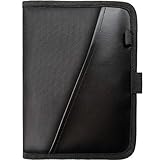
- PERFECT SIZE - The size of this car document case was designed to fit most glove box compartments, larger car or truck consoles, and door pockets. Fits all your important documents and paperwork perfectly and hassle-free. Fits automotive owner manuals up to 8.3” x 6” x 1” (21cm x 15cm x 2.5cm), also fits tablets and e-readers up to 8”.
- CONVENIENT ORGANIZATION - This glove box console organizer features five interior pockets for service and car user manuals, repair receipts, maps, registration and insurance, eight credit or business card pockets, one vinyl clear pocket for ID or roadside assistance card, exterior quick access pocket, interior & exterior pen or tire gauge loops.
- AUTO LOG BOOK & PEN TIRE GAUGE INCLUDED - We are including an easy to use Car Log Book, includes 4 categories (Fuel Log, Trip Log, Maintenance & Repairs, and Notes). A Tire Gauge is also included, so you can accurately measure your tire pressure for safer driving.
- SIMPLE & PRACTICAL - This stylish and compact vehicle storage wallet was designed with enough room to hold everything in one place and keep your important documents protected and safe from tearing, bending or being ruined by moisture. This auto document case makes it easy to find what you need when you need it.
- DURABLE CONSTRUCTION & QUALITY MATERIALS - Our products are backed by high-quality polyester construction, reliable durability, quality top stitching, heavy duty hook and loop fastener, scratch and tear resistant structure. It’s a great choice for Trucks, SUVs, Minivans, Sedans, Motorcycles, and Boats.
Product prices and availability are accurate as of the date/time indicated and are subject to change. Any price and availability information displayed on Amazon at the time of purchase will apply.




