RT-QuIC and PMCA detect prion seeding activity by letting a misfolded prion seed drive aggregation of additional prion protein. RT-QuIC uses shaking and a real-time fluorescence readout; PMCA uses repeated sonication cycles and commonly assesses the amplified material by immunoblot. Neither method is the universal winner: performance depends on the prion form, specimen, substrate, protocol and purpose. RT-QuIC is an established diagnostic tool for sporadic Creutzfeldt–Jakob disease (sCJD) in cerebrospinal fluid (CSF), while broader uses and comparisons need to be interpreted in their specific study settings.
How can a tiny amount of prion seed become detectable?
Prion seed amplification assays exploit a templating process: a disease-associated, misfolded prion protein can induce compatible substrate protein to misfold and aggregate. Repeated rounds of conversion increase the amount of aggregated material until the assay can detect it. The result is evidence of seeding activity; it is not a direct count of infectious particles, a measure of infectious dose, or, by itself, a measure of disease severity. The underlying amplification approaches are reviewed in Brandel and colleagues’ 2019 review.
As an Amazon Associate I earn from qualifying purchases.
The methods differ in how they promote conversion and detect the product. RT-QuIC uses recombinant prion protein substrate, alternating shaking and rest, and fluorescence monitoring. PMCA uses repeated amplification cycles with sonication and, in the described protocol, mouse brain-derived substrate followed by western blot assessment. These differences affect equipment, workflow and which prion forms amplify effectively.
The Tool Desk
Outbyte Driver Updater FREEScan for outdated or missing drivers - takes under a minuteDriver Scan →Outbyte PC Repair FREERepair Windows errors before they cause bigger problemsFix Now →What happens in an RT-QuIC assay?
In real-time quaking-induced conversion (RT-QuIC), the sample is incubated with recombinant prion protein substrate. Alternating periods of shaking and rest encourage seed-induced aggregation. Thioflavin T binds to amyloid structures, and a fluorescence plate reader tracks the resulting signal over time. The assay therefore monitors aggregation as it develops rather than relying only on a final immunoblot.
#1 Best Overall

- EASY TO USE AND DISPOSABLE: These disposable eye droppers are very easy to use for tiny Applications of Liquid and are easily disposable. Coming with 3 ml translucent white plastic transfer pipettes, you don't need to spend tons of time washing them out
- ACCURATE AND EASY TO TRANSFER: The outer wall of our essential oil pipettes is engraved with ml, and the graduated markings are easy to read, which can be absorbed in the appropriate amount of liquid you need
- SOFT AND GREAT SUCTION: These disposable droppers suction appropriately and can hold the stated amount of liquid. It's not flimsy like other transfer pipettes on the market
- SAFE AND SECURE: Made of high-quality food-grade plastic, you can buy them confidently. Our science droppers feature a leak-proof design that prevents spills and waste, ensuring maximum efficiency and accuracy in your work
- WIDE APPLICATIONS: Our disposable transfer pipettes are pliable, resilient, and made for multiple uses and widely used for essential oil blends, aquariums, testing water, feeding pets, crafting, chemical experiments, watercolor painting, etc
The 2016 Nature Protocols method describes a 96-well format that can analyze up to 32 samples in triplicate. It reports approximately 87 hours from sample preparation through analysis for that specific protocol. Those figures describe the method’s workflow, not a universal capacity or turnaround time for every RT-QuIC laboratory.
What happens in PMCA?
Protein misfolding cyclic amplification (PMCA) uses repeated cycles of incubation and sonication to promote conversion and amplification. The cited experimental and clinical methods source describes mouse brain-derived substrate and western blot detection of the amplified product. PMCA consequently requires sonication capability and substrate preparation, whereas RT-QuIC calls for a fluorescence plate reader with shaking and protocol-specific recombinant substrate and reagents. See Current Protocols’ 2020 overview of prion amplification techniques.
Rank #2

- ☑ Package Including - 6 pieces Glass Pipettes 0.5ml + 1ml + 2ml + 3ml + 5ml + 10ml + 2 nylon brushes.
- ☑ High Quality - Pipettes are made of borosilicate glass+rubber, non-toxic and odorless, thick and durable. If transport damaged, please contact us for a FREE REPLACEMENT with show the defective photos.
- ☑ Eco-friendly and Reusable - The dropper is made of glass with corrosion resistance and also reusable. Can be used again after being cleaned up.
- ☑ Multiple Use - Perfect for receiving and dispensing liquids.Apply for testing laboratories, chemistry, microbiology, liquids, scents etc.
- ☑ NOTE - When adding the liquid, the dropper is just above the vertical. After drawing the liquid, the tip can not touch other objects, so as to avoid contamination of impurities.
PMCA can be particularly useful for amplifying variant CJD prions in the literature discussed by Brandel and colleagues. That is a target-specific finding, not proof that PMCA is more sensitive than RT-QuIC for all prion strains or specimens.
Free tools Windows power users keep installed
One-click scans. No signup required.
RT-QuIC and PMCA compared
| Feature | RT-QuIC | PMCA |
|---|---|---|
| What it detects | Prion seed–induced aggregation activity, monitored as it develops. | Amplified prion material produced through repeated conversion cycles. |
| Substrate described in the cited methods | Recombinant prion protein. | Mouse brain-derived substrate in the described protocol. |
| Conversion-promoting method | Alternating shaking and rest. | Repeated sonication cycles. |
| Readout described | Real-time Thioflavin T fluorescence in a plate reader. | Western blot assessment of amplified material. |
| Example application | Established diagnostic use for sCJD in CSF; performance depends on the method and study setting. | Readily amplifies variant CJD prions in some reported applications; response varies with target and protocol. |
| Equipment and workflow | Shaking fluorescence plate reader, multiwell plates, recombinant substrate and protocol-specific reagents. | Sonication equipment, prepared substrate and immunoblot workflow. |
The method descriptions and application differences are summarized in the 2019 amplification review, the 2020 methods overview and the 2016 RT-QuIC protocol. The table is not a head-to-head ranking: a useful comparison must hold the target prion form, specimen, substrate and experimental objective in view.
Rank #3
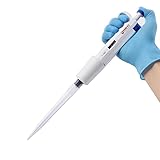
- Volume Range: 1-10 ml; Increment: 100 μl. Micro pipette is set with digit display. Simply rotate the piston button to select the desired volume. Compatible with most universal pipette tips, especially Four E's Scientific 10 ml micropipette tips
- Fatigue-less Pipetting: Lightweight handle design combined with low plunger, tip attachment and ejection forces help reduce the risk of Repetitive Stress Injury (RSI)
- Support Autoclave: The tip cone of 10ml micropipette can be disassembled and autoclaved in 121 ℃ (252 ℉,1 atm, 20 min). After autoclaving the pipettor must be cooled down and dry for 12 hours
- Professional Calibration: To ensure precision and accuracy, every pipette is calibrated with a professional balance. All pipettes have been quality tested according to ISO8655. Each micropipette comes with an individual test certificate
What does “high throughput” mean for these assays?
Throughput is a property of the complete protocol, not just the instrument. Plate format, replicates per specimen, controls, sample preparation, reaction time and result interpretation all affect how many specimens a laboratory can process and when it can report them.
- Replicate capacity: The 2016 Nature Protocols RT-QuIC method describes up to 32 samples in triplicate in a 96-well plate. That is a protocol-specific layout, not a general maximum for the assay.
- Newer formats: A 2025 review from the American Society for Microbiology discusses development of 384-well formats, along with alternative readouts and data-analysis approaches. These developments indicate ongoing work on throughput and standardization, not a single established capacity for all laboratories. See the 2025 review.
- Elapsed time: The approximately 87 hours in the 2016 RT-QuIC protocol covers sample preparation through analysis. It should not be equated with a reaction-time or diagnostic-performance figure that counts a different part of the workflow.
PMCA also depends on the number and duration of cycles and the downstream detection workflow. The cited sources do not establish one universal PMCA sample capacity or a directly comparable end-to-end time, so a general claim that one assay is faster or higher-throughput would be unsupported.
Rank #4
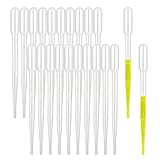
- APPLICATION SCENARIOS - science experiment, modeling, making watercolors, etc.
- CALIBRATED DIAL - The outer wall of the straw is engraved with a scale, which can be absorbed in an appropriate amount.
- Easy To Use - Soft, pliable and easy to use, these pipettes could save your time when mixing your fragrances, no cross contamination.
- PACKAGE AND COLOR - 200 translucent white Plastic Pipettes, can hold 3ml liquid, convenient and easy to use.
- SAFE AND SECURE - Made of high quality food grade plastic, non-toxic & harmless, you can buy it with confidence.
How established is RT-QuIC for diagnosing sporadic CJD?
RT-QuIC testing of CSF is an established diagnostic tool for sCJD. A 2017 review by Caughey and colleagues reports that, with specific RT-QuIC methods for sCJD using CSF, diagnostic sensitivity as high as 96% can be achieved in less than 24 hours, with specificity of 98%–100%. These are reported figures for the application and methods described in that review, not guarantees for every assay version, patient population or laboratory. The review is available at PubMed.
Those figures and the 87-hour protocol workflow answer different timing questions: the former reports a diagnostic assay result in a particular setting, while the latter counts from sample preparation through analysis in a detailed protocol. Test interpretation and availability also depend on local laboratory practice; the cited methods papers and reviews do not establish a universal clinical workflow or current availability in every location. An assay result should be interpreted in the relevant clinical context.
Best Value

- Ergonomic design provides excellent operating experience
- Large display window allows for easy volume identification
- The tip cone(the black lower section) can be disassembled and autoclaved (121°c,20 min), other part is not autoclaved
- Easy calibration and maintenance.Each pipette supplied with an individual calibration certificate
- Available in 11 different volume ranges covering from 0.1μL to 10mL
Why can results differ by strain, specimen or laboratory?
Seed amplification depends on whether the sample’s prion seed can efficiently convert the chosen substrate under the assay conditions. Prion strain, specimen type, substrate, protocol settings, signal threshold and laboratory execution can all influence performance. RT-QuIC and PMCA do not respond identically to every prion form, so a result or performance estimate for one target should not be generalized to another. Reviews of diagnostic applications discuss these method- and target-specific differences, including the 2018 review of prion protein amplification techniques.
For laboratory selection, the practical question is therefore not simply which assay is “more sensitive.” It is whether the method has been evaluated for the prion form and specimen of interest, whether its substrate and readout fit the objective, and whether the laboratory has the required equipment and expertise.
Are these assays established for other protein-aggregation diseases?
Researchers are adapting in-vitro conversion and amplification approaches to other proteinopathies. That work may support biomarker research, but promise in a research assay does not establish clinical diagnostic performance. A 2019 review of conversion assays for neurodegenerative proteinopathies emphasizes that further assessment is needed before extending diagnostic claims beyond established prion applications. See the review. A broader 2021 RT-QuIC literature review also describes development of applications beyond prion disease: RT-QuIC assays literature review.
What’s actually slowing this PC down?
Pick the symptom - the matching free tool is one click away.
Quick Recap
Product prices and availability are accurate as of the date/time indicated and are subject to change. Any price and availability information displayed on Amazon at the time of purchase will apply.




