What’s actually slowing this PC down?
Pick the symptom - the matching free tool is one click away.
Pocket PC 2002 was a Microsoft handheld software platform, not one specific PDA. It reached retail broadly on October 4, 2001, across devices from multiple manufacturers; the hardware, expansion options, batteries, and wireless capabilities varied by model. The related Phone Edition added integrated phone functions, as seen in the GSM/GPRS HP Jornada 928.
What was Pocket PC 2002?
Pocket PC 2002 was an early-2000s generation of Microsoft software for handheld computers. Microsoft announced on September 6, 2001, that devices would be widely available in retail on October 4; its launch announcement that day said 22 hardware vendors had announced support. That figure describes vendor support, not 22 devices confirmed to have shipped on launch day. The launch list included established manufacturers and companies announcing upcoming product lines. Microsoft’s October 4, 2001 launch announcement and September announcement provide the chronology.
As an Amazon Associate I earn from qualifying purchases.
The platform focused on productivity, customization, business access, synchronization, and wireless readiness. Microsoft highlighted Terminal Services, strong passwords, VPN connections, and ActiveSync 3.5, which improved USB and remote synchronization and could sync email inbox subfolders. Server ActiveSync was described as syncing email, calendar, and contacts directly with Exchange 2000 Server. These were software capabilities and requirements; a particular handheld still needed compatible hardware, setup, and network infrastructure to use them.
Microsoft named 802.11b, Bluetooth, and wide-area network solutions as wireless options, but they were not built into every Pocket PC 2002 device. A model might have a radio integrated, support an add-on, or lack a particular connection option. More than 180,000 developers had received the Pocket PC software development kit by the 2001 launch, according to Microsoft. The same release quoted Handango’s CEO reporting average quarter-on-quarter Pocket PC application-sales growth of 90 percent since Q4 2000; that was Handango’s reported figure, not an independently audited market statistic.
#1 Best Overall

- True Handheld Win 11 PC with 5.7" Touchscreen: Carry a full computer in your pocket. Unlike bulky laptops or desktops, this pocket-sized Mini PC features a vibrant 5.7-inch HD touchscreen and a full QWERTY backlit keyboard, giving you a complete Win 11 experience anywhere for on-the-go coding, remote server management, document editing, or media streaming-no smartphone limitations
- Desktop-Grade Connectivity with HDMI 2.1, DP, Dual Type-C, Gigabit Ethernet: Turn it into a full workstation in seconds. Equipped with HDMI 2.1 and DisplayPort 1.2, both supporting 4K@60Hz output, you can connect dual monitors for a multi-screen setup. The dual Type-C ports (one full-featured with video output) and 1000M Ethernet offer unmatched expandability for a device this size. Connect external drives, displays, and networks with ease
- N95 Processor, 16GB RAM & 512GB SSD for Smooth Multitasking: The N95 quad-core processor (up to 3.4GHz) handles Win 11, office suites, web browsing, and light coding smoothly. With 16GB DDR4 RAM and a fast 512GB SSD, you can run multiple applications and store your files without lag. It's a productivity beast in a tiny frame
- Ultra-Portable Design with Long Battery & All-Day Sensors: Built for mobility and intelligent interaction. The built-in 16.34Wh battery provides hours of untethered use. G-sensor automatically rotates the screen. A 1MP front camera and dual BOX speakers make it ready for video calls and media consumption on the go
- Complete Package with WiFi6, BT5.2, Backlit Keyboard & Win 11: Ready to use right out of the box. This mini PC comes pre-installed with genuine Win 11. Stay connected with the latest WiFi 6 (802.11ax) and Bluetooth 5.2 for ultra-fast wireless speeds. The RGB backlit keyboard allows comfortable typing in any lighting, and the responsive touchpad supports multi-finger gestures
Which devices ran Pocket PC 2002?
Launch-era examples covered general-purpose handhelds as well as equipment aimed at particular work settings. Microsoft’s launch event featured devices associated with Compaq iPAQ, HP Jornada, Intermec, and Symbol; the launch announcement also named manufacturers including Casio, Audiovox, and Toshiba. These examples show the breadth of the platform rather than an exhaustive catalog. The launch-event transcript records the devices and descriptions presented there.
Compaq iPAQ and the later HP iPAQ line
Steve Ballmer presented a new Compaq iPAQ at the launch event. After acquiring Compaq, HP selected the iPAQ Pocket PC as its handheld platform and renamed it HP iPAQ. HP’s 2002 annual report says the company introduced the h1910 and h5450 in November 2002 and decided to discontinue the Jornada line. Those later models illustrate the transition in HP’s handheld portfolio; they should not be treated as proof that every model used the same Pocket PC 2002 configuration. HP’s 2002 annual report documents the change.
Rank #2

- [Ultra-Portable Performance Powerhouse] The GPD Pocket 4 is a cutting-edge mini laptop designed for users who demand high performance on the go. Equipped with the powerful AMD Ryzen 7 8840U processor, this 2-in-1 device combines the portability of an 8.8-inch tablet with the processing power of a desktop. The integrated AMD Radeon 780M GPU ensures exceptional gaming performance, making this handheld device perfect for both work and play.
- [2-in-1 Versatility with Touchscreen Display] Experience adaptability with the GPD Pocket 4's design, featuring an 8.8-inch high-refresh-rate IPS panel. With a 144Hz refresh rate and 2.5K resolution, the display delivers crisp visuals and fluid motion. Its 10-point touch capability ensures smooth navigation, letting you switch between laptop and tablet modes. Whether browsing, working, or enjoying content, this 2-in-1 mini laptop offers productivity and entertainment in a compact form.
- [Next-Gen Graphics and AI Capabilities] With the GPD Pocket 4, gaming and creative tasks reach new heights. The integrated AMD Radeon 780M GPU, based on RDNA 3 architecture, offers enhanced performance, allowing you to enjoy demanding games and applications with ease. Additionally, the device features AMD's advanced AI technology, making it an ideal choice for those who require powerful AI processing on the go.
- [Expandable and Modular Design] The GPD Pocket 4 is not just a powerful mini laptop; it’s also highly customizable. With 16GB of LPDDR5x memory and 1TB of M.2 NVMe SSD storage, you can configure this device to meet your specific needs. The Pocket 4 includes an HDMI 2.1 & 2x USB-C for triple display output, as well as support for the following modules, 4G, MicroSD, KVM and RS-232 modules, making it a versatile tool for both gaming and professional use.
- [Long-Lasting Battery and Fast Charging] Stay productive and entertained all day with the GPD Pocket 4’s 44.8Wh battery, offering up to 9 hours of video playback. The device supports 100W PD fast charging, ensuring that you can quickly recharge and get back to work or play. Whether you're using it as a laptop or a tablet, the GPD Pocket 4’s efficient power management keeps you connected wherever you go.
HP Jornada 560
The Jornada 560 series appeared in Microsoft’s launch presentation. Ballmer specifically noted a removable battery and an optional battery pack, making battery arrangement an important model-level detail for anyone assessing a surviving unit. The announcement does not establish present-day replacement-battery availability or compatibility.
Quick wins for a faster PC:
Repair Windows errors before they cause bigger problemsFix Now →Fix the driver behind crashes, sound loss and screen glitchesFind Drivers →Toshiba Pocket PC e740
Toshiba’s official e740/e740W specification page identifies the e740 as a July 2002 Pocket PC and names Microsoft Pocket PC 2002 software. That confirms the platform association, but the available page information does not support broader claims here about the device’s hardware specifications. Toshiba’s e740 specification page.
Rank #3
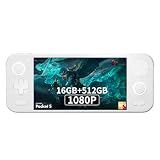
- AYANEO Pocket S- A No Compromise Snapdragon G3x Gen 2 Gaming Console, VC+ Air Cooling Borderless Full-Screen, Luxurious Quality, Versatile Control Inside Out, A Great All Around Android Handheld Experience.
- 6" Borderless Mirror Screen, Top-Notch Screen Resolution 1920x1080,16:9 resolution ratio,490ppi, 400 Nits,100% sRGB.Breaking conventions, it pioneers the introduction of a borderless full-screen design for Android handheld devices. The ultra-slim narrow edges achieve an ultimate screen-to-body ratio, delivering an immersive visual experience. Crafted from high-intensity, high-transparency glass, the dazzling mirror screen offers a stunning appearance and a warm touch.
- Innovatively integrating passive and active cooling, accommodates a massive VC heat dissipation plate exceeding 5000mm² within a slim 14mm body. With active air cooling system, comprehensive thermal conductivity enhancement ensures the prolonged release of the true gaming potential of the Snapdragon G3x Gen 2 Gaming Platform.
- Debut with Three-Mode Vibration, Immersive Sensation at Your Fingertips Innovatively supporting three-mode vibration, coupled with X-axis linear motors, providing immersive and delicate vibration sensations covering a wide range of games.
- 6000mAh Battery, Slim and Long-Lasting, 16GB RAM / 512GB Storage, Weight: About 390 gram, your Best Pocket Game Cosnole on the go !!
Intermec and Symbol handhelds
At the launch event, Ballmer described Intermec’s displayed device as ruggedized for industrial applications and characterized Symbol’s handheld work as serving retail and distribution. These are descriptions from the event, not detailed or independently tested specifications. They nonetheless show that Pocket PC 2002 appeared beyond consumer-style PDA designs.
Independent reader supportYour contribution helps us test, update, and keep practical guides available for everyone.What was Pocket PC 2002 Phone Edition?
Phone Edition was a related software branch for handhelds with integrated phone functions, rather than a capability present in every Pocket PC 2002 device. Microsoft introduced it at the 3GSM World Congress on February 19, 2002, describing phone and PDA integration, calling features, SMS and Inbox integration, multiple wide-area network options and Wi-Fi, plus over-the-air synchronization. Microsoft demonstrated the HP Jornada 928, a GSM/GPRS integrated device. Microsoft’s Phone Edition announcement describes the launch and example device.
Rank #4

- Boost productivity with our 2 in 1 handheld laptop: This mini touchscreen laptop features an 8 inch HD display and weighs only 0.78 kg, offering exceptional portability. The 180° rotating screen easily transforms it into a tablet, supporting both touch and handwriting input—ideal for work, travel, note-taking, and gaming. Includes a free rechargeable stylus pen.
- Powerful performance in a small form factor: 12GB LPDDR5 RAM, and 512GB/1TB SSD, this mini laptop runs on the efficient N95 processor (up to 3.4GHz). Whether you're using it as a portable business laptop or a travel-friendly PC, it delivers smooth multitasking and advanced application performance.
- Clean system, ready for personalization: This 2 in 1 mini PC provides a clean and fast experience from the start. Perfect for professionals and students who prefer to install only the software they need.
- Compact yet full-featured design: This CNC-machined full-metal body handheld laptop supports touch and stylus input. A fast-charging battery provides 4–5 hours of use from just 2 hours of charging. With USB 3.0, USB-C, HDMI, and a headphone jack, it's ready for both productivity and entertainment on the go.
- Seamless connectivity and dependable support: Stay connected wherever you go with built-in Wi-Fi 6 and BT 5.2. This small size convertible laptop is ideal for mobile work, casual use, or creative tasks. Enjoy peace of mind with a 1-year warranty and responsive 24-hour customer service. Contact us anytime for returns or exchanges.
Microsoft’s February announcement also attributed 120 percent growth in worldwide shipments in 2001 to IDC for the combined Windows CE and Pocket PC category. This was not a Pocket PC 2002 device-sales figure.
Recommended Free Tools
How to assess a Pocket PC 2002 device today
Historical documentation establishes meaningful differences between models, but does not establish current seller inventory, asking prices, or the condition of any individual handheld. For a collector or restoration project, check the exact model and software edition rather than relying on a broad “Pocket PC 2002” label.
- Confirm the model and edition. Identify the precise device and whether it runs standard Pocket PC 2002 or Phone Edition. Phone features depend on the model, not just the platform family name.
- Check wireless hardware. Determine whether the device has integrated wireless hardware, uses an add-on, or lacks the connection you need. The platform’s support for wireless options does not mean a given unit includes them.
- Inspect expansion and accessories. Verify the actual expansion interfaces and whether the cradle, charger, or other required accessories are included. Compatibility should be confirmed for the exact model.
- Assess battery condition and design. Check whether the battery is removable and whether any optional pack is part of the model’s documented setup. For the Jornada 560, Microsoft specifically mentioned both a removable battery and optional pack; this does not verify that replacements are available now.
- Evaluate intended use. A general-purpose PDA, a phone-integrated device, and a ruggedized industrial handheld serve different needs. Event descriptions of ruggedness are not substitutes for checking the specific unit and its condition.
Why the platform mattered
Pocket PC 2002 was a software generation shared across a varied device market, with Microsoft emphasizing productivity and enterprise connectivity. Microsoft’s launch-day framing came from Steve Ballmer: “Pocket PC 2002 makes a great mobile platform even better.” The more useful distinction for understanding the devices is that common platform software did not make their hardware interchangeable: batteries, expansion, wireless connectivity, ruggedness, and phone functions depended on the specific model.
Quick Recap
Product prices and availability are accurate as of the date/time indicated and are subject to change. Any price and availability information displayed on Amazon at the time of purchase will apply.




