The Tool Desk
Outbyte Driver Updater FREEFix the driver behind crashes, sound loss and screen glitchesFind Drivers →Outbyte PC Repair FREERepair Windows errors before they cause bigger problemsFix Now →PM2.5 is the fine-particle fraction, with aerodynamic diameters generally no larger than 2.5 micrometers (µm). PM10 is the broader inhalable fraction, generally no larger than 10 µm, and it includes PM2.5. The particles between 2.5 and 10 µm are commonly called PM10–2.5 or coarse particles. Both fractions can affect health, but the U.S. Environmental Protection Agency (EPA) says PM2.5 carries the greatest health risk and has stronger evidence of harm than other size fractions. Particle size is important, but it does not by itself determine toxicity: chemical composition, source and dose also matter.
What PM2.5 and PM10 actually measure
PM2.5 means particles up to 2.5 µm
PM2.5 is a size-defined fraction of airborne particulate matter. The number refers to an aerodynamic diameter of about 2.5 micrometers or less. An aerodynamic diameter is a monitoring convention that accounts for how a particle behaves in air; it is not necessarily a simple measurement across a perfectly round particle. Instruments use size-selective cut points, so the labels describe fractions captured by a standard method rather than a promise that every particle is exactly 2.5 µm or exactly 10 µm.
As an Amazon Associate I earn from qualifying purchases.
PM10 is a larger umbrella
PM10 includes particles with aerodynamic diameters generally up to 10 µm. It contains the entire PM2.5 fraction plus particles larger than 2.5 µm and no larger than 10 µm. Treating PM10 as if it means only “2.5 to 10 µm” creates a common but important error. The non-PM2.5 portion is often written PM10–2.5 or called coarse particulate matter.
Size is extremely small in practical terms. The EPA compares the largest PM2.5 particles with an average human hair, about 70 µm in diameter. That hair is roughly 30 times wider than a 2.5-µm particle. A particle can therefore be invisible while still falling within the PM2.5 or PM10 categories.
#1 Best Overall

- Personal Air Purifier: Designed for small space use, this convenient, portable travel air purifier cleans 6ft² of air in 12 minutes*, so you can breathe fresher air in your personal space and tackle common issues, such as allergies, sinus problems, colds, nasal swelling, and more.
- True HEPA Filter: The 2-stage filtration system eliminates 99.97% of germs. Stage 1 is an Activated Carbon Pre-Filter that traps odors and harmful gasses, while the Stage 2 True HEPA Filter eliminates dust, dander, pet hair, pollen, mold spores, and smoke in the air.
- CORDLESS & TRAVEL-FRIENDLY: The rechargeable lithium-ion battery lasts up to 12 hours on low setting, so you can use the purifier with or without an outlet. You can even purify the air inside your car for cleaner air to and from any location. Weighing less than 1 pound, it’s a lightweight and portable option for anyone on-the-go.
- Customized Features: The adjustable handle allows you to place the air purifier either upright or on its side to find the best position, or even remove the handle when you don’t need it. Choose from 3 fan speeds (low, medium, or high) to find the air purification that works best for you. Place the fan speed on high and the purifier can even double as your own personal cooling fan.
- 5-Year Manufacturer's Warranty: This mini air purifier comes with a 2-in-1 filter, USB charging cable, and Pure Enrichment’s guaranteed 5-Year Manufacturer’s Warranty. Our customer support team provides daily quality service and peace of mind to millions worldwide all from a brand you can trust. *Coverage area based on AHAM standard of CADR (4 CFM) x 1.55.
PM2.5 versus PM10 at a glance
| Comparison | PM2.5 | PM10 |
|---|---|---|
| Size definition | Particles generally at or below 2.5 µm aerodynamic diameter | Particles generally at or below 10 µm aerodynamic diameter |
| What the fraction contains | Fine particles only | Fine particles plus coarse particles larger than 2.5 µm and no larger than 10 µm |
| Coarse band name | Not applicable | PM10–2.5 is the portion above 2.5 µm and up to 10 µm |
| Health evidence | Associated with serious effects; EPA says this fraction poses the greatest risk and has stronger evidence than other size fractions | Can be inhaled and is associated with harm; it should not be treated as harmless |
| Typical source pattern | Often linked to combustion and particles formed through atmospheric chemical reactions | Includes the fine fraction and commonly includes dust and biological material in the coarse portion |
| Practical use | Useful for interpreting fine-particle pollution and smoke or combustion impacts | Useful for assessing the combined inhalable fraction, including dust and other coarse material |
These are tendencies, not exclusive source labels. A single location can have both fractions at the same time, and PM10 readings can rise because of either fine particles, coarse particles or both.
Why size matters for health
Both fractions can be harmful
EPA health information links particle-pollution exposure with premature death among people with heart or lung disease, nonfatal heart attacks, irregular heartbeat, aggravated asthma, reduced lung function, airway irritation, coughing and difficulty breathing. Those are population-level associations, not a prediction that a particular reading will cause a specific outcome in one person.
Children, older adults and people with heart or lung diseases are among the groups EPA identifies as more likely to be affected. EPA also notes that some minority and lower socioeconomic-status populations may be more affected because of sensitivity or higher exposure. These categories describe patterns observed across populations; they do not determine an individual’s response.
Quick wins for a faster PC:
Clear out junk files and repair common Windows errorsFree Scan →Fix the driver behind crashes, sound loss and screen glitchesFind Drivers →Evidence is strongest for fine particles
The EPA educational material says scientific evidence for health effects is stronger for fine particles than for other size fractions. That supports saying PM2.5 is generally the more concerning fraction, but it does not support a fixed multiplier such as “PM2.5 is 10 times more dangerous than PM10.” No reliable multiplier is established here, and PM10 includes PM2.5 in the first place.
EPA attributes the importance of size directly: “The size of particles is directly linked to their potential for causing health problems.” The statement appears on the agency’s Health and Environmental Effects of Particulate Matter (PM) page. Size affects how particles are transported and sampled, but the particle’s chemistry and source also influence risk.
Particle size is not the whole toxicity story
Particulate matter is a mixture rather than one chemical. It can contain soot, soil, dust, salts, metals, organic compounds, pollen and other biological material. The mix changes with location, weather and source. The available evidence does not allow researchers to cleanly assign every health outcome to one PM component or one source. A coarse dust particle and a combustion-generated fine particle may therefore differ in composition even when both are reported under a size category.
Rank #2

- 𝗪𝗛𝗬 𝗖𝗛𝗢𝗢𝗦𝗘 𝗔𝗛𝗔𝗠 𝗩𝗘𝗥𝗜𝗙𝗜𝗗𝗘 𝗔𝗜𝗥 𝗣𝗨𝗥𝗜𝗙𝗜𝗘𝗥𝗦: AHAM (Association of Home Appliance Manufacturers) is an ANSI-accredited organization that sets strict standards for appliance performance. Air purifiers with the AHAM VERIFIDE seal have been independently tested for air cleaning performance, safety, and energy efficiency. When you choose an AHAM certified air purifier, you're choosing a product trusted for reliable and effective indoor air quality improvement
- 𝗥𝗘𝗠𝗢𝗩𝗘 𝗣𝗢𝗟𝗟𝗨𝗧𝗔𝗡𝗧𝗦 𝗘𝗩𝗘𝗥𝗬𝗪𝗛𝗘𝗥𝗘: Our Pre-Filter and Main Filter capture lint, hair, pet dander, fine airborne pollutants, and smoke particles, helping achieve a cleaner environment for you
- 𝗛𝗘𝗟𝗣𝗦 𝗠𝗔𝗞𝗘 𝗢𝗗𝗢𝗥𝗦 𝗢𝗗𝗢𝗥𝗟𝗘𝗦𝗦: The air purifier helps neutralize smoke, odors, and fumes. You'll love the feeling of breathing clean air at home
- 𝗨𝗦𝗘 𝗜𝗧 𝗔𝗡𝗬𝗪𝗛𝗘𝗥𝗘: With the Levoit Core Mini-P, you can focus on your activities in the bedroom, kitchen, or office. It offers an auto-off display, sleep mode for fewer interruptions, and relaxing aromatherapy, all while operating more quietly than a whisper
- #𝟭 𝗔𝗜𝗥 𝗣𝗨𝗥𝗜𝗙𝗜𝗘𝗥 𝗕𝗥𝗔𝗡𝗗: Levoit has sold over 6.5 million products worldwide and has been a pioneer in air purification technology for 6 years.
Where PM2.5 and PM10 come from
Direct emissions
Some particles are emitted directly into the air. EPA lists construction activity, unpaved roads, fields, smokestacks and fires as examples. Combustion-related emissions tend to produce finer particles, while material from the earth’s crust and biological sources tends to be coarser. These are broad patterns with overlap: a fire can generate more than one size fraction, and dust can contain particles across a range of sizes.
What’s actually slowing this PC down?
Pick the symptom - the matching free tool is one click away.
Particles formed in the atmosphere
Other particulate matter forms after gases react in the atmosphere. EPA identifies pollutants such as sulfur dioxide and nitrogen oxides as ingredients in reactions that can create particles. Consequently, the place where PM is measured is not always the place where its precursor pollutants were emitted. A monitoring site can record a mixture of locally emitted particles and particles formed or transported from elsewhere.
Indoor sources
Indoor activities can create both fine and coarse particles. EPA lists cooking, candles, fireplaces, unvented heaters, smoking and some hobbies as indoor sources. Outdoor particles can also enter through doors, windows and building leakage. In a home without smoking or another strong indoor particle source, EPA says indoor PM would generally be expected to be the same as or lower than outdoor levels, although the actual result depends on infiltration, ventilation and filtration.
Why clean-looking air can still contain particle pollution
Visibility is an unreliable test. Fine particles can be present when air appears clear, while visible haze does not identify the exact mixture or concentration. EPA says levels can be elevated near busy roads and industrial areas, during smoke events and under stagnant atmospheric conditions. Weather that limits dispersion can allow pollution to accumulate even without an obvious plume.
For outdoor conditions, use the official AirNow Air Quality Index (AQI) information for your location rather than judging by smell or appearance. AQI communicates current conditions using the pollutant and averaging period relevant to the local report. A PM2.5 value and a PM10 value answer different monitoring questions, so one number cannot be substituted for the other.
Indoor exposure: source control first, filtration second
Reduce or remove the source
EPA identifies source control as one of the most effective indoor strategies. Practical examples include stopping smoking indoors, limiting candle or fireplace use, and avoiding activities that generate particles when they are not necessary. For fuel-fired appliances, vent exhaust outdoors. While cooking, use an exhaust fan that vents outdoors rather than merely recirculating air.
Rank #3
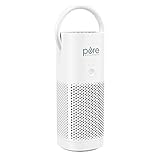
- Personal Air Purifier: Designed for small space use, this convenient, portable travel air purifier cleans 6ft² of air in 12 minutes*, so you can breathe fresher air in your personal space and tackle common issues, such as allergies, sinus problems, colds, nasal swelling, and more.
- True HEPA Filter: The 2-stage filtration system eliminates 99.97% of germs. Stage 1 is an Activated Carbon Pre-Filter that traps odors and harmful gasses, while the Stage 2 True HEPA Filter eliminates dust, dander, pet hair, pollen, mold spores, and smoke in the air.
- CORDLESS & TRAVEL-FRIENDLY: The rechargeable lithium-ion battery lasts up to 12 hours on low setting, so you can use the purifier with or without an outlet. You can even purify the air inside your car for cleaner air to and from any location. Weighing less than 1 pound, it’s a lightweight and portable option for anyone on-the-go.
- Customized Features: The adjustable handle allows you to place the air purifier either upright or on its side to find the best position, or even remove the handle when you don’t need it. Choose from 3 fan speeds (low, medium, or high) to find the air purification that works best for you. Place the fan speed on high and the purifier can even double as your own personal cooling fan.
- 5-Year Manufacturer's Warranty: This mini air purifier comes with a 2-in-1 filter, USB charging cable, and Pure Enrichment’s guaranteed 5-Year Manufacturer’s Warranty. Our customer support team provides daily quality service and peace of mind to millions worldwide all from a brand you can trust. *Coverage area based on AHAM standard of CADR (4 CFM) x 1.55.
Ventilate when outdoor air is clean
Ventilation can dilute indoor pollution when the incoming outdoor air is cleaner. It is not automatically beneficial during smoke, dust or other high-PM events. Check outdoor conditions first, then use windows or mechanical ventilation in a way that brings in cleaner air without creating a new source of exposure.
Use filtration as a supplement
HVAC filters and portable room air cleaners can reduce airborne particles, but they do not remove every pollutant and cannot compensate for a continuing source. Change filters according to the manufacturer’s directions and make sure a portable unit is appropriate for the room in which it is used. EPA presents filtration as a supplement to source control and clean-air ventilation, not as a reason to ignore either one.
A consumer indoor PM monitor is not established by the cited guidance as necessary for every household, and it is not a replacement for official outdoor monitoring or medical advice. If you use one, treat its readings as an indication of conditions in that device’s location, not as a regulatory measurement.
Free tools Windows power users keep installed
One-click scans. No signup required.
What the current U.S. standard says—and does not say
For the United States, the EPA’s National Ambient Air Quality Standards page reports that a February 7, 2024 rule set the primary health-based annual PM2.5 standard at 9.0 micrograms per cubic meter (µg/m³). The same page says the rule did not change the existing 24-hour PM2.5 standards or the primary and secondary PM10 standards.
That 9.0 µg/m³ figure is an ambient-air standard designed for regulatory protection of public health. It is not a personal exposure threshold, a guarantee that concentrations below it are risk-free, or a universal limit for every country. It should not be presented as a World Health Organization guideline. EPA’s page also lists a March 12, 2025 announcement describing a path forward on reconsidering the PM2.5 standard. Regulatory status can change, so check the current EPA rule page when a legal or compliance decision depends on it.
How to read a PM report without mixing up the fractions
Start by identifying which pollutant the report names. A PM2.5 value describes the fine fraction; a PM10 value describes the combined fraction up to 10 µm. Because PM10 includes PM2.5, the numbers are related, but they are not interchangeable and should not be compared as if they represented equal size bands.
Rank #4

- Efficient Particle Filtration: FULMINARE air purifier uses an H13 HEPA filter. Simply turn it on and maintain a clean and peaceful environment and give families health.
- High Circulation Rate: The air purifier for home adopts dual-channel technology with a 360° air outlet, evenly covering rooms up to 1,086 ft² (based on 5 air changes per hour). The small portable air purifier is easy to place anywhere you want. One is enough to effectively improve your indoor air quality.
- Low Decibel Operation: FULMINARE H13 air purifiers for bedroom is so nice to light sleepers, allowing investors to sleep soundly each night. Set your air purifiers to sleep mode and, the air purifier will run at a near-silent noise level is around 20db at low fan speed. Ultra-quiet but enough to clean your room air at night, bringing you a smooth and sweet sleep.
- Independent Night Light and 5 Timers: It is designed to serve both as an air purifier and a night light. Dual function design makes it a good choice for babies and young children, who can find the softly glowing light or a soothing night time companion. Besides, the air purifiers come with 2-4-8-10-12 five-timers that fit your needs while you're away from home.
- Notice:1. Please open the bottom base cover to get the charging adapter(Plug-in design no battery required). 2 Remove the plastic packaging of the filter before running the air purifier. 3. The air purifiers for pets in time to replace them (3 Months Normally, Search FULMINARE PU-P05 Air Purifier Replacement Filters to get independent filter replacements).
Next, check the averaging period. An AQI report may communicate conditions for a particular time window, while the U.S. annual standard is an annual regulatory measure. A short-term reading and an annual average answer different questions. Use the period shown by AirNow or another official monitoring agency when deciding whether conditions are elevated.
Finally, consider the setting. A monitor near traffic, an industrial area, construction, an unpaved road or a smoke event may capture a different mixture from a monitor in a less exposed location. Local readings are useful for local decisions, but they do not describe every room or neighborhood.
A practical exposure-control sequence
- Check conditions before opening windows. Use AirNow AQI information and note whether PM2.5, PM10 or another pollutant is driving the report.
- Look for controllable indoor sources. Stop smoking indoors, postpone unnecessary candle or fireplace use, and avoid particle-generating hobbies during an elevated episode.
- Vent combustion outdoors. Fuel-fired appliances should exhaust outside. Use a kitchen fan that vents outdoors while cooking.
- Ventilate selectively. Bring in outdoor air when it is cleaner than indoor air; during smoke or dust events, reduce infiltration instead.
- Filter what remains. Run a suitable portable air cleaner or maintained HVAC filtration as a supplement, and replace filters on the manufacturer’s schedule.
- Use extra caution for sensitive people. People with heart or lung disease, children and older adults should follow local advisories and individualized medical advice.
This sequence does not promise zero exposure. It prioritizes the measures EPA identifies as most useful: controlling the source and using clean outdoor air when available, with filtration as an additional control.
Independent reader supportYour contribution helps us test, update, and keep practical guides available for everyone.Common misconceptions to avoid
- “PM10 means particles from 2.5 to 10 µm.” Incorrect. PM10 includes PM2.5; only the portion above 2.5 µm is the PM10–2.5 coarse band.
- “PM10 is safe because PM2.5 is the dangerous one.” Incorrect. Both fractions can be inhaled and are associated with health effects. EPA’s stronger evidence for PM2.5 does not make coarse particles harmless.
- “A visible haze tells me the particle size.” Incorrect. Visibility does not reliably reveal concentration or fraction.
- “Particle size alone determines toxicity.” Incorrect. Size matters, but composition, source and exposure also matter, and current evidence cannot assign every outcome to one component.
- “A home purifier eliminates PM risk.” Incorrect. Filtration can reduce indoor particles, while source control and clean-air ventilation remain important; no device removes every pollutant.
- “The U.S. annual standard is a safe personal limit everywhere.” Incorrect. The 9.0 µg/m³ value is the U.S. annual primary standard reported for the 2024 rule, not a universal guideline or individual threshold.
The practical takeaway
When someone asks, “What’s the difference between PM2.5 and PM10?”, the shortest accurate answer is that PM2.5 is the fine subset inside the broader PM10 measurement. PM2.5 generally presents the greater health concern and has the stronger evidence base, but PM10 still matters because it includes fine particles and additional inhalable coarse material. Use official AQI information outdoors, reduce particle sources indoors, ventilate with clean air, and treat filtration as an additional control rather than a guarantee of zero exposure.
Frequently Asked Questions
Is PM2.5 part of PM10?
Yes. PM10 is the broader fraction of particles generally no larger than 10 µm, so it includes all PM2.5 plus particles larger than 2.5 µm and no larger than 10 µm. The latter portion is called PM10–2.5 or coarse particulate matter.
Recommended Free Tools
Which is worse for health, PM2.5 or PM10?
Both can be inhaled and are associated with harm. EPA says PM2.5 poses the greatest risk and that the evidence for fine-particle effects is stronger than for other size fractions. That comparison does not make PM10 harmless, and no fixed multiplier describes the difference.
Best Value

- Effortless Operation: Simplified control panel with intuitive design makes it easy to operate. No complicated setup—just one tap, and you're on your way to cleaner air, saving time and letting you relax with ease
- Compact Yet Powerful: Covers up to 1,076 ft² while maintaining a compact size of just 6.69 x 6.69 x 9.84 inches. Its small frame makes placement a breeze—whether on your desk or in a corner, it's ready to work hard wherever you need it (Laboratory Tested: Our air purifier efficiently cleans 250 ft² every 15 minutes, covering up to 1,076 ft² per hour)
- 360° Airflow & High Efficiency Filtration: The elegantly engineered 360° surround air intake, coupled with the sophisticated a triple-layer filtration system, meticulously captures an astounding 99.97% of airborne pollutants, transforming your living space into a sanctuary of purity and vitality
- Quiet with Essential Oil Option: Operates as quietly as 22dB, perfect for undisturbed sleep. The built-in essential oil tray lets you add 3–5 drops to infuse your space with soothing scents while enjoying purified air
- Fully Certified: Backed by DOE, ETL, FCC, CARB, CE, and ROHS certifications, our air purifier meets the highest standards for performance, giving you peace of mind with every use
Can I see PM2.5 or PM10 in the air?
Not reliably. Particle pollution can be present when air looks clear, and visible haze does not reveal the concentration, chemical mixture or size fraction. Use official AirNow AQI information rather than appearance or smell.
What are common sources of PM2.5?
Combustion-related emissions and particles formed through atmospheric reactions commonly contribute to PM2.5. Fires, smokestacks and other combustion sources can produce fine particles, while sulfur dioxide and nitrogen oxides can participate in reactions that form particles in the atmosphere.
What commonly raises PM10?
PM10 includes PM2.5, so any fine-particle source can contribute. Its coarse portion often includes dust from construction, unpaved roads or fields, along with crustal and biological material. Source categories overlap, so a single event can raise both fractions.
Should I open windows when PM is high outside?
Only when incoming outdoor air is cleaner than indoor air. During smoke, dust or other high-PM events, opening windows can increase indoor concentrations. Check the local AQI first and use source control and maintained filtration when outdoor air is polluted.
Does an air purifier remove all particle pollution?
No. A portable room air cleaner or HVAC filter can reduce airborne particles, but it cannot remove every pollutant or compensate for a continuing source. EPA recommends filtration as a supplement to source control and ventilation with clean outdoor air.
What does the U.S. 9.0 µg/m³ PM2.5 number mean?
EPA reports 9.0 µg/m³ as the primary health-based annual PM2.5 standard in its February 7, 2024 rule summary. It is an ambient regulatory standard, not a personal exposure threshold, a guarantee of zero risk, or a universal limit for every country. EPA’s page also lists a March 12, 2025 announcement about reconsideration.
The Bottom Line
Bottom line: PM2.5 is the fine subset within PM10, not a separate, nonoverlapping category. Both fractions matter, but EPA identifies PM2.5 as the greater health concern. Check official AQI reports, control indoor sources, ventilate only with cleaner outdoor air, and use filtration as a supplement.
Quick Recap
Product prices and availability are accurate as of the date/time indicated and are subject to change. Any price and availability information displayed on Amazon at the time of purchase will apply.




