Quick wins for a faster PC:
Fix the driver behind crashes, sound loss and screen glitchesFind Drivers →Repair Windows errors before they cause bigger problemsFix Now →Scan for outdated or missing drivers - takes under a minuteDriver Scan →PC audio ports connect headphones, headsets, microphones, speakers, and other audio equipment—but their roles differ. On many desktop PCs, green is headphone or speaker output, blue is line input, and pink is microphone input. Check the socket’s icon or label and your computer’s manual before connecting: colors and layouts can vary.
What the common PC audio ports do
Analog audio jacks are often 3.5 mm sockets, but a port’s appearance alone does not establish its function. Read the printed label or icon where possible.
As an Amazon Associate I earn from qualifying purchases.
| Port or label | Usual role | What to connect |
|---|---|---|
| Headphone, line out, or front speaker out | Analog audio output | Headphones or powered speakers |
| Line in | Analog audio input | An external audio source |
| Mic in | Microphone input | A compatible microphone |
| Rear speaker out | Output for rear channels in a multichannel speaker setup | Rear speakers |
| Center/subwoofer out | Output for center and subwoofer channels in a multichannel setup | Center speaker and subwoofer |
| Side speaker out | Output for side channels in a multichannel setup | Side speakers |
| Headset combo jack | Can provide headphone output and microphone input through one socket, if the PC and headset wiring are compatible | A compatible headset |
| Optical or coaxial S/PDIF out | Digital audio output | Compatible audio equipment |
| USB | Connection for a USB audio device | A USB headset, speaker, or other audio device |
| HDMI or DisplayPort | Can carry digital audio as well as video to compatible equipment | A compatible display or receiver |
Analog outputs send sound from the PC; line and microphone inputs send sound into it. S/PDIF, USB, HDMI, and DisplayPort use digital audio paths rather than the conventional analog headphone or microphone signal. Optional ports and supported routes depend on the PC and connected equipment. Intel’s motherboard guide describes common analog jacks and optical or coaxial S/PDIF examples.
Crashes, No Sound, or Screen Glitches?
Random freezes, missing sound and display glitches usually trace back to one bad driver. Find and replace yours safely.Free scan · under a minuteWindows Errors? Fix Them Before They Spread
Repair common Windows errors and clear accumulated junk for a smoother, more stable PC - no reinstall needed.Free scan · no reinstallHow to read the color-coded jacks
A common desktop layout uses three rear analog jacks:
#1 Best Overall

- ELIMINATE CABLE BENDING IN TIGHT SPACES: Our 90-degree right-angle design prevents stress and damage. Perfect for cramped car AUX connections or resting a gaming controller comfortably against your body without bulky, annoying interference.
- PRISTINE HI-FI STEREO SOUND WITHOUT STATIC: Engineered with pure copper cores and triple shielding for lossless audio. Enjoy your music or immersive gaming without lag, distortion, or the frustrating crackling background noise of standard cords.
- HEAVY-DUTY NYLON BRAIDING FOR MAXIMUM LIFESPAN: Built to withstand heavy daily use. This robust, tangle-free 3.5mm auxiliary cable features reinforced connectors tested for 20000+ bends, completely preventing fraying and unexpected breaks.
- FAILSAFE UNIVERSAL 3.5MM PLUG & PLAY: Seamlessly links to standard audio jacks. Instant, zero-driver setup for Car Stereos, PS5/PS4/Xbox Controllers, Home Speakers, Headphones, PCs, and Tablets. Upgrade your current audio setup effortlessly.
- CRUCIAL COMPATIBILITY NOTE & 24-MONTH SUPPORT: Designed for native 3.5mm ports. Modern devices without a jack require a separate adapter (not included). Nanxudyj stands by your purchase with 24-month dedicated support for a flawless experience.
- Green or lime: headphone, line, or front-speaker output.
- Blue or light blue: line input.
- Pink: microphone input.
A six-jack surround layout may add black for rear speaker output, orange for center/subwoofer output, and silver for side speaker output. These are common conventions, not guarantees. Intel’s example and ASUS’s desktop guidance describe these typical assignments.
Manufacturers can change colors, omit sockets, use symbols instead, or assign a jack differently for a surround configuration. ASUS notes that line out may serve as front-speaker output in multichannel configurations. Use the label or icon and the manual for your exact PC or motherboard to confirm the assignment.
Rank #2

- Universal Compatibility: Perfectly compatible with any devices with a 3. 5mm aux port. Such as Apple iPhone, iPod, iPad, Headphones, Hi-Fi, Car Stereos, Tablet, Laptop, Smartphones, MP3 Player, Speaker and any other audio-playing devices. (ATTENTION: Incompatible with Life proof Cases And Otter Box cases)
- Unparalleled Sound Quality: Polished 24K gold-plated connectors ensure reliability and eliminate signal loss and noise possible, offer clear and stereo sound to your devices.
- Ultra Durable And Tangle-Free: With an 15000+ ultra-durable bend lifespan several times longer than original audio cables. You can wind it without having to worry about knots or kinks.
- Easy Carrying And Storage: Double shielding significantly enhances protection against interference, and with the specially designed organizer, no messy or tangled cable any more.
- What You Get - Sync wire 3.3 ft. Nylon Braided Aux Cable, 3 Years Free Card, User Guide and Customer Service
Where to plug in headphones and a headset
Headphones without a microphone
Plug analog headphones into a jack marked with a headphone icon or labeled headphone, line out, or speaker out. On many desktops that is the green or lime jack. A USB headset instead connects to a USB port; select it as the playback device if the PC does not switch automatically.
A headset with one plug
A headset’s single 3.5 mm plug may carry both headphone audio and microphone signals. It works directly only if the PC’s socket supports a compatible headset connection. If the PC has separate headphone and microphone sockets, a compatible headset splitter cable can divide the headset connection into separate headphone and mic plugs. Do not assume that any adapter will work: plug contact arrangements and jack support can differ. HP’s connection guidance describes separate and headset-capable connections; MSI’s audio setup guide warns that mismatched 3.5 mm contact arrangements can cause abnormal results.
Rank #3

- 【Hi-Fi Sound Quality】: 24k gold-plated connector, Enameled wire core, which ensure seamlessly transmit stereo audio for premium sound experience.
- 【Copper connector】: Pure copper shell of this stereo aux cable provides reliable performance and reducing signal loss.
- 【Incredibly Durable】: 20000+ bend lifespan & double-braided nylon exterior make audio cables adding to the durability and tangle free.
- 【Universal Compatibility】: Our AUX cord works perfectly with any device with a 3.5mm aux port. Such as car stereos, speaker, iPod, headphones, etc.
- 【Plug and Play】: Tangle free design makes our 3.5mm audio cable more convienient to carry and storage. You can enjoy your music anytime and anywhere while commuting. Let the fun begin.
A headset with two plugs
Connect the headphone plug to the headphone or line-out socket and the microphone plug to the mic-in socket. Follow the symbols or labels rather than relying on color alone. A headphone-only socket does not necessarily accept microphone input.
Other ways to connect audio
USB audio
USB headsets and speakers appear to Windows as audio devices. If sound continues through another device, choose the desired playback endpoint in Windows sound settings; for a microphone, choose the corresponding recording endpoint. Microsoft documents USB audio endpoints in its audio endpoint builder guidance.
Rank #4
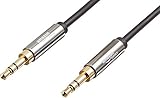
- IN THE BOX: 8-foot 3.5mm male-to-male stereo audio cable transmits audio in stereo format
- DEVICE COMPATIBILITY: Works with any device equipped with standard 3.5mm audio jack or AUX-in port
- CONVENIENT: Connects compatible devices like a smartphone, MP3 player, or tablet to a car stereo or portable speaker
- SECURE FIT: Beveled step-down design for a secure connection
- CLEAR SOUND: Corrosion-resistant gold-plated plugs for reliable, static-free performance
HDMI or DisplayPort audio
HDMI and DisplayPort can carry audio to a compatible monitor, television, or receiver. The PC hardware, connection, and receiving device all need to support the route. If the display does not appear as an audio choice, check the PC or graphics hardware documentation and select the intended audio endpoint. Microsoft lists HDMI and DisplayPort display audio as endpoint form factors in the same Windows audio documentation; HP notes that HDMI availability can depend on system configuration.
Free tools Windows power users keep installed
One-click scans. No signup required.
Optical or coaxial S/PDIF
S/PDIF is an optional digital audio output. Connect it only to equipment with a compatible optical or coaxial input; not every PC has either version. The computer manual identifies which, if any, is provided.
Best Value
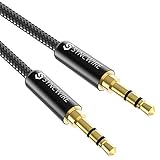
- Ultra Durable & tangle-free - with an 15000+ ultra-durable bend lifespan several times longer than original audio cables. You can wind It without having to worry about knots or kinks.
- Universal compatibility- Works with any Device equipped with standard 3. 5mm audio jack or aux-in port, connects smartphone, MP3 player, or tablet to car stereo or portable speakers
- Fit - Syncwire aux cable is designed to fit almost all aftermarket cases, excluding life proof cases & OtterBox cases.
- Unparalleled sound quality - polished Gold-plated connectors ensure reliability and eliminate signal loss and Noise possible.
- What you get - Syncwire 6. 5 ft Nylon braided aux cable, 3 years free card, user guide and customer service
How to identify an unfamiliar socket
- Read the label or icon. Look for headphone, speaker, microphone, line-in, or channel markings beside the socket.
- Check the device manual. Search the exact PC or motherboard model’s documentation for the rear-panel or audio-port diagram. This is the best way to resolve model-specific colors, combo-jack support, and configurable ports.
- Match the port to the device. Confirm whether the device uses a 3.5 mm analog plug, USB, optical or coaxial S/PDIF, or HDMI/DisplayPort, and whether it needs playback, microphone input, or both.
- Select the right audio device in the operating system. When using USB or display audio, choose the intended playback or recording endpoint in Windows sound settings if it is not selected automatically.
Without the PC model, motherboard model, or a clear view of the port labels, the precise socket assignment cannot be determined reliably. Manufacturer layouts are useful examples, but the computer’s own documentation is authoritative. For a practical orientation, Intel describes common front-panel headphone and microphone sockets as analog 3.5 mm ports.
Quick Recap
Product prices and availability are accurate as of the date/time indicated and are subject to change. Any price and availability information displayed on Amazon at the time of purchase will apply.




