The Tool Desk
Outbyte PC Repair FREEClear out junk files and repair common Windows errorsFree Scan →Outbyte Driver Updater FREEFix the driver behind crashes, sound loss and screen glitchesFind Drivers →If you need a scanner you can inspect, run locally and wire into your own CI, start with the open-source NVIDIA SkillSpector or Cisco AI Defense Skill Scanner. If you use ClawHub or skills.sh, their integrated scanning passes may add coverage inside those platforms. Choose by what each scanner can inspect, how it analyzes skills, where scan data goes, and how your team will review findings—not by the open-source or commercial label alone. A clean result is not a safety certification: testing summarized by the Cloud Security Alliance reports that researchers bypassed every scanner they tested.
What an AI agent skill scanner checks—and what it cannot promise
A skill may contain instructions that influence an agent’s later decisions and tool use, along with code and other artifacts. A scanner checks some combination of those materials before installation, publication or execution. The practical question is the one NVIDIA uses: “should this skill be installed?” A scan can help answer it, but it cannot establish that a skill is safe in every environment or after its contents change.
As an Amazon Associate I earn from qualifying purchases.
“Open-source versus commercial” is not a clean divide among the options documented here. Cisco’s scanner is open-source, yet its documentation describes optional integrations with Cisco AI Defense and other services. NVIDIA SkillSpector is also open-source. By contrast, the commercial or third-party names in the Cloud Security Alliance’s June 2026 account are primarily services integrated into distribution platforms: ClawHub uses VirusTotal Code Insight, while skills.sh combines Gen Agent Trust Hub, Socket and Snyk as successive detection passes. That account does not establish these as standalone agent-skill scanner products or specify their current pricing, service levels or packaging.
How the documented options differ
| Option | Documented inputs and analysis | Reports and integrations | Best reason to consider it |
|---|---|---|---|
| NVIDIA SkillSpector | Scans local directories, individual SKILL.md files, Git repositories and ZIP files. Provides fast static analysis and optional LLM semantic analysis; static-only scans can use --no-llm. NVIDIA’s repository lists 71 vulnerability patterns across 17 categories, including prompt injection, data exfiltration, privilege escalation, supply-chain risks, dangerous code and MCP tool poisoning. |
Terminal, JSON, Markdown and SARIF output. NVIDIA identifies it as part of its Verified Skills pipeline. | Local inspection, selectable static-only scanning and CI or code-scanning integrations. |
| Cisco AI Defense Skill Scanner | Scans local paths and GitHub repositories and supports relevant skill formats. Cisco describes a layered, best-effort approach: pattern detection, static checks, dependency intelligence, bytecode analysis, behavioral dataflow analysis, optional LLM analysis and adjudication. | SARIF and other report formats for CI and review. Optional integrations include VirusTotal and Cisco AI Defense. | Teams seeking several analysis layers and integrations, with an explicit review workflow for findings. |
| ClawHub’s VirusTotal Code Insight pass | The Cloud Security Alliance’s June 2026 note says ClawHub scans every submitted skill with VirusTotal Code Insight. Further details on the pass’s inputs and analysis layers are not stated in that account. | Described as a platform-integrated scan. Standalone availability, report formats and service terms are not stated in the cited account. | Relevant if your distribution workflow is on ClawHub; verify exactly what the platform scans and how it presents results. |
| skills.sh integrations: Gen Agent Trust Hub, Socket and Snyk | The Cloud Security Alliance’s June 2026 note describes these as successive detection passes. It does not specify the inputs or analysis layers for each service in this context. | Described as checks integrated into skills.sh. Standalone packaging, report formats and service terms are not stated in the cited account. | Relevant if you distribute or find skills through skills.sh; establish what each pass covers before treating the combination as comprehensive. |
OWASP documents use of NVIDIA SkillSpector in local scans and CI, including an example GitHub Actions workflow. For either CLI, confirm the precise formats your pipeline consumes and decide how findings will affect a build; the existence of SARIF output does not by itself define a useful gate or false-positive process.
#1 Best Overall

- Upgraded AI-Powered Detection: Military-grade technology detects hidden cameras, listening devices, and GPS trackers with precision. Enjoy peace of mind in hotels, offices, and even your own home. Stay one step ahead of hidden threats!
- Simple, Fast & Effective: Just turn it on, sweep the area, and let the audible alarm + LED alerts notify you of threats. No technical skills needed - Press, Search, Relax! Skip expensive private investigators - protect yourself in seconds.
- Compact & Travel-Ready: Lightweight, rechargeable, and pocket-sized for discreet, on-the-go security. Toss it in your bag, purse, or pocket - perfect for travel, work, and public spaces.
- Total Privacy Protection: Don’t gamble with your security. Safeguard against spying in hotel rooms, changing rooms, offices, cars, dorms, and more. Know for sure if you’re being watched, recorded, or tracked.
- Trusted by Experts & Customers: Designed with cybersecurity and counter-surveillance professionals. Join 300,000+ satisfied users who rely on our detectors for ultimate privacy & safety.
How to choose for your workflow
Compare the operational details, not just the tool names. The following questions help expose gaps before you adopt a scanner or make it a release gate.
- Input coverage: Can it inspect the files, directories, repositories and archives your team actually receives? Does it analyze dependencies, scripts or bytecode that matter to your skill ecosystem?
- Analysis layers: Which checks are enabled by default? Does the scanner combine rules with static or dataflow analysis, dependency intelligence, behavioral checks or semantic review?
- Data handling: Can you scan statically without an LLM, or use a local model? If you enable an optional model provider or hosted service, which skill contents are sent outside your environment?
- CI and triage: Can it emit a format your pipeline accepts? Can the team distinguish a blocking issue from a finding that needs human review, and manage known false positives?
- Evaluation evidence: Are results reported with the dataset, split, scanner configuration, model or judge, threshold and metric? A metric without that context is difficult to apply to your own workload.
- Control and dependence: Is the scan a local tool, a hosted service or a marketplace pass? Can you inspect or reproduce it, and what happens if you change distribution platforms?
- Operational burden: Account for setup, credentials, model calls, maintenance and human review. The cited sources do not provide a complete cost comparison across these options.
For a local, inspectable baseline with configurable reporting, evaluate SkillSpector or Cisco’s scanner against your actual skills and pipeline. A platform-integrated pass can complement that workflow when it covers a distribution channel you use, but first verify its scope and reporting. Do not assume that two services with different inputs and methods provide interchangeable or additive coverage.
What published performance figures do—and do not—show
The available figures are not a head-to-head leaderboard. They come from different publishers, methods, datasets and configurations, so attach each number to its stated context rather than ranking products by it.
- Cisco AI Defense, rules alone: Cisco’s 2026 repository says rules alone catch about 8% of held-out malicious skills. Cisco recommends an LLM judge in each of its recommended setups; the rule-only result is a warning against treating signatures as broad coverage.
- Cisco AI Defense, balanced setup: Cisco reports 66.7% recall, a 15.4% false-positive rate and 75.5% F1 for its MEDIUM+ review queue on MaliciousSkillBench’s held-out split, using Gemma 4 26B as the judge. Cisco also reports a low-noise configuration at 63.2% recall, 13.4% false-positive rate and 73.5% F1, and a quiet configuration at 50.3%, 7.2% and 64.9%, respectively. These are Cisco-reported configurations, not independently standardized comparisons with the other named services.
- NVIDIA SkillSpector: The Cloud Security Alliance’s June 2026 note attributes approximately 87% precision to SkillSpector. That precision figure is not directly comparable with Cisco’s recall, false-positive rate or F1 results.
- NVIDIA repository dataset claim: NVIDIA’s repository says that, in an analyzed subset of 31,132 skills, 26.1% contained vulnerabilities and 5.2% showed likely malicious intent. These are findings about that project’s analyzed research-dataset subset, not an estimate of prevalence across all published skills.
- SkillSieve academic result: The Cloud Security Alliance reports an F1 score of 0.920 on a 390-skill benchmark at $0.006 per skill for SkillSieve, an academic framework. This is not a performance or price claim for any of the commercial or platform-integrated services above.
Dataset composition, thresholds, versions and model configurations affect scanner results. The cited sources do not establish a standardized head-to-head evaluation of every named service; use the published results to understand stated methods and limitations, not to select a universal winner.
Rank #2
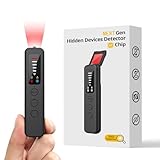
- 【AI-Powered Intelligent Detection System】Equipped with an upgraded AI chip and a patented 360° full-range real-time scanning system, this detector delivers faster scanning and enhanced anti-interference performance. 5-level adjustable sensitivity allows precise positioning of hidden cameras, listening devices, and GPS trackers within a 32-foot detection range. It captures suspicious signals quickly without omission, delivering reliable detection you can count on.
- 【7-in-1 Comprehensive Privacy Protection】This 1MHz to 6.5GHz detector integrates 7 core modes: RF signal detection, wireless camera scanning, red-light lens detection, infrared night vision, magnetic field detection, audio recording jamming, and SOS alert. It quickly locates hidden cameras, GPS trackers, and other devices, and clearly identifies reflections from pinhole lenses with its HD optical sensor. LED indicators provide clear real-time status feedback, keeping you informed at every step.
- 【Real-Time Vibration & Sound and Light Dual Alarm System】It instantly triggers sound and vibration alerts when suspicious signals or devices are detected. It performs reliably in both noisy and quiet environments, and supports a discreet silent mode for meetings and private occasions, ensuring timely warnings without drawing attention. Portable and easy to operate, it serves as a dependable privacy protector for travel, business trips, and daily use.
- 【Portable and Long Battery Life】The device weighs only 1.06 oz, is compact and portable, and can fit in your pocket. It features 1-hour Type-C fast charging and a built-in 800mAh battery, delivering up to 25 hours of continuous working time and 30 days of standby. There is no need for frequent charging during travel and daily use, and privacy protection can be activated at any time.
- 【Smart Signal Filtering & Multi-Scenario Protection】Built-in intelligent background filtering blocks interference from WiFi routers, Bluetooth devices, and microwaves, significantly reducing false alarms. Suitable for hotels, cars, offices, bathrooms, rentals, conference rooms, and public spaces. Trusted by over 1000,000 professionals and privacy-conscious users, it provides all-round privacy protection and peace of mind in any environment.
Why a clean scan cannot establish that a skill is safe
The Cloud Security Alliance’s June 2026 note summarizes Trail of Bits’ June 3, 2026 report, The sorry state of skill distribution. It says Trail of Bits bypassed every scanner it tested across ClawHub, Cisco’s scanner and the three services integrated into skills.sh. The researchers created four malicious skills, three of which took less than an hour to develop. This describes that specific testing, not proof that every current scanner always fails in the same ways.
The note describes four bypass patterns:
- Whitespace inflation: Put a payload beyond a scanner’s inspection window.
- Precompiled bytecode: Place malicious behavior in Python bytecode rather than relying on source that a scanner might inspect.
- Attachments: Hide instructions in documents or archive contents.
- Prompt injection: Target an LLM scanner’s interpretation of the skill.
There are broader limits behind those examples. Static analysis may miss behavior that activates only at runtime. An LLM scanner may truncate or misread persuasive hostile content. A skill that changes after installation can also differ from the material checked before installation. Trail of Bits’ conclusion, quoted in the Cloud Security Alliance note, is: “Don’t outsource trust to a scanner.”
Use scanning as one layer of review
Pair automated checks with controls that address different failure modes. This is a practical response to the reported bypasses and analysis limits, not a guarantee that a skill is safe.
Free tools Windows power users keep installed
One-click scans. No signup required.
- Review the source and provenance. Check the skill’s instructions, permissions, dependencies and origin rather than relying on a pass/fail label alone.
- Limit access. Give the agent only the data and tools it needs for the task, reducing the consequences if a skill behaves unexpectedly.
- Monitor after installation. Watch behavior as well as the pre-installation result, particularly when skill contents or dependencies can change.
- Keep a human decision point. Define who reviews findings and what evidence is required before a skill is installed or published.
The right scanner is the one whose coverage and data-handling model fit your workflow and whose findings your team can act on. Treat its output as evidence for a decision—not as permission to stop reviewing the skill.
Quick Recap
Product prices and availability are accurate as of the date/time indicated and are subject to change. Any price and availability information displayed on Amazon at the time of purchase will apply.




