NVMe SSDs can be much faster than SATA SSDs, but the interface alone does not show which drive is more reliable or will last longer. Choose by first confirming your computer supports the drive’s interface and form factor, then comparing the exact models’ performance, capacity, endurance rating (TBW) and warranty. The available manufacturer examples illustrate the speed difference; they are not a controlled comparison or evidence that one interface has a longer lifespan.
What is the difference between NVMe and SATA?
NVMe and SATA describe different ways an SSD communicates with a computer. NVMe drives use the PCIe interface; SATA SSDs use the SATA interface. The drive’s physical shape is a separate question. M.2 is a form factor, not a guarantee that a drive is NVMe: an M.2 slot may support NVMe, SATA, or both, depending on the computer or motherboard.
As an Amazon Associate I earn from qualifying purchases.
Check the device’s specifications or manual for the supported interface, connector and form factor before buying. Also verify any capacity or PCIe-generation limits. For example, Samsung’s 980 product page identifies the cited 250 GB model as M.2 2280, PCIe Gen 3.0 x4 and NVMe 1.4. The Samsung 860 EVO document cited below is specifically for an mSATA SATA drive, not every SATA SSD or M.2 drive.
How much faster is NVMe than SATA?
NVMe PCIe drives can advertise substantially higher sequential throughput. The following Samsung specifications illustrate the difference, but compare two different products—not a controlled test of the interfaces. Actual performance can vary with system hardware and configuration.
#1 Best Overall

- ENCLOSURE ONLY, SSD NOT INCLUDED: This is the case you put your own M.2 SSD into, not a drive with storage inside. 100% tool-free, so the SSD installs and comes out in seconds with no screwdriver.
- FITS M.2 NVMe AND SATA: Works with both M.2 PCIe NVMe and M.2 SATA SSDs in 2242, 2260 and 2280 lengths. Bare drives only, no room for a drive with a pre-installed heatsink. It does NOT take 2.5in SATA drives or mSATA.
- 10GBPS USB 3.2 TYPE-C: Up to 10Gbps, and up to 1000MB/s in real transfers. Backward compatible with USB 3.1 and USB 3.0 at their own speed limits. Bus powered, no drivers and no external power supply.
- SLIM ALUMINUM BUILD: Ultra-slim aluminum case with an ABS frame, with a thermal pad to move heat off the drive. Light enough to live in a laptop bag, solid enough to survive it.
- IN THE BOX: Enclosure, 8in Type-C to Type-C cable and user manual. Works with Windows 7 or later, macOS 10.5 or later and Linux. Register on the manufacturer's website for extended warranty service.
| Example drive | Maximum sequential read | Maximum sequential write | Product and source context |
|---|---|---|---|
| Samsung 980 NVMe | 2,900 MB/s | 1,300 MB/s | 250 GB model; Samsung product specifications: Samsung 980 specifications |
| Samsung 860 EVO SATA | 550 MB/s | 520 MB/s | mSATA model; Samsung Semiconductor datasheet, revision dated January 2018: 860 EVO mSATA datasheet |
Samsung’s 2018 860 EVO mSATA datasheet describes 600 MB/s as SATA’s theoretical interface bandwidth limit. That is an interface ceiling, not a promise that a SATA SSD will sustain that speed in real use. Likewise, a manufacturer’s maximum sequential figures are not a guarantee of application-level performance; results depend on the drive, workload and system.
When the speed difference matters
Higher sequential throughput can matter when moving large files or working with data-heavy tasks, provided the rest of the system and workload can use that speed. For everyday tasks, the interface’s headline maximum alone is not enough to predict how much faster a particular computer will feel. Compare the specific models and the workload you care about rather than treating the NVMe label as a universal performance guarantee.
Rank #2
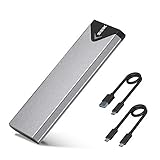
- Applicable SSD: This M.2 SSD Enclosure is for NVMe PCIE & SATA M-Key / B+M connectors M.2 SSD. Applicable to sizes 2242 / 2260 / 2280 solid state drivers. This SATA/ NVMe Enclosure does not support M.2 PCIe AHCI SSDs, M.2 PCIe devices such as WiFi and capture cards, mSATA SSDs, and non-M.2 form factor SSDs. Note: NVMe and SATA SSD are not included in M.2 SSD Enclosure
- Type C interface: M.2 SSD Enclosure Both side can be inserted; M.2 NVME recommends USB-C Gen 2 10Gbps or Thunderbolt 3 for extreme speed performance. One HD movie transfer only takes 2 seconds; Backward compatible with USB 3.1 Gen1 and USB 3.0 up to 5Gbps
- Aluminum Alloy Shell: SSK M.2 enclosure adopts aluminum alloy shell, slim design, excellent heat dissipation, be portable and easy to carry. Package includes 2 x Thermal Pad,both USB Type-C and USB 3.0 (Type-A) cables, and a Screw Driver
- Blue Indicator: Blue Indicator shows NVMe enclosure transfer status, easy and clear; As with all SSDs, new media must be formatted before use. SSD file system must be supported on host operating system to be accessible
- Improved RTL9210B Chip: Adopts high performance controller IC Chipset, Complies with UASP and Trim which can effectively improve SSD enclosure speed and exteend the longevity of SSD. M.2 enclosure Compatible Multi OS, Windows 7/ 8/ 8.1/ 10/ Linux/ MAC. Plug-and-play, no additional drivers required. Bus powered, does not need an external power supply
Does NVMe make an SSD more reliable or longer-lasting?
The manufacturer material cited here does not establish that NVMe drives are inherently more reliable or last longer than SATA drives, or the reverse. It contains no comparative field-failure rates and no universal lifespan in years. Reliability and lifespan depend on the particular drive and how it is used; interface type alone is not a supported ranking.
Keep four measures distinct when comparing models:
- Reliability: how often drives fail in real use. The cited material does not compare NVMe and SATA field-failure rates.
- Endurance rating: a model- and capacity-specific limit, often expressed as TBW.
- Warranty: the manufacturer’s coverage terms, which may depend on time or writes.
- Calendar lifespan: how long a drive actually works in a particular system. A TBW rating or warranty does not predict an exact failure date.
What does TBW mean, and how should you use it?
TBW means terabytes written. It is a published endurance figure for a particular drive model and capacity, and can be part of that product’s warranty conditions. Samsung’s SSD warranty policy says coverage is for the stated time period or TBW limit, whichever comes first. The policy also says its documented endurance testing complies with JEDEC JESD218. That testing context does not establish consumer failure rates across all SSDs or interfaces.
Rank #3
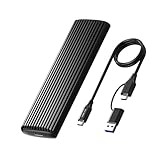
- Tool-free SSD Enclosure: 100% Tool-Free, quickly install and remove SSDs without any tools. Plug and play, no drivers required. The buckle design of the M.2 SSD enclosure can ensure stable and fast transfer.
- Stay cool: High-quality aluminium housing and thermal pad for optimal heat dissipation. Aluminum efficiently dissipates heat away from the SSD and keeps the operating temperature constant during normal use. Whether you're gaming, creating content or managing large datasets, advanced thermal management system supports sustainable performance and longevity.
- 10Gbps NVMe Enclosure: USB C to A (10Gbps) and USB C to C (10Gbps), suitable for any computer with usb a or usb c ports, easy to connect computers, mobile phones, game consoles, tablets and other devices. (Please ensure your devices with USB 3.0 or up USB Ports)
- Broad Compatibility: Supports Window / Mac / Linux. No Driver required. This external hard disk box is suitable for connecting computers, Smartphones, laptops, PS4, and other devices. Please note, all new solid-state drives must be formatted before use. (Does not support SATA NGFF SSD or mSATA SSD)
- Compact & Portable: This ultra-slim aluminium external NVMe enclosure with a 2 in 1 Cable (USB C to USB C & USB C to USB A Cable), making it ideal for travelling
As a model-specific example, Samsung’s warranty table lists the following TBW values for the 970 EVO and 970 EVO Plus; each has coverage for five years or the listed TBW limit, whichever comes first. These are examples for those Samsung models and capacities, not typical values for all NVMe drives and not a comparison with all SATA drives.
| Capacity | Listed TBW | Listed coverage |
|---|---|---|
| 250 GB | 150 TBW | Five years or 150 TBW, whichever comes first |
| 500 GB | 300 TBW | Five years or 300 TBW, whichever comes first |
| 1 TB | 600 TBW | Five years or 600 TBW, whichever comes first |
| 2 TB | 1,200 TBW | Five years or 1,200 TBW, whichever comes first |
See Samsung’s SSD Product Warranty policy for its model-specific terms. Warranty conditions can vary by model and purchase region, so check the policy that applies to the exact drive you are buying. Warranty replacement is not data recovery: Samsung’s policy excludes data recovery costs.
Rank #4

- Flip-Open Tool-Free Design: Open the cover, insert your NVMe SSD, lock it in place, and close—no screws or tools required. Fast and simple for upgrades, cloning, troubleshooting, and portable tech work.
- Cooler 10Gbps Performance: The aluminum enclosure presses the thermal pad directly against your SSD for better heat transfer and more stable 10Gbps speeds than slide-in enclosures. Ideal for long transfers and heavy workloads.
- NVMe Only for Maximum Speed: Supports M.2 NVMe SSDs in sizes 2230, 2242, 2260, and 2280 up to at least 8TB. Not compatible with M.2 SATA SSDs.
- USB C Plug-and-Play: Connect with USB C for up to 10Gbps using USB 3.2 Gen 2. No drivers or external power needed. Works with laptops, desktops, gaming handhelds, and USB C devices.
- Portable and Durable Aluminum Build: Reinforced ABS frame with an aluminum alloy top keeps your SSD protected and cool. Slim, lightweight, and perfect for creators, gamers, and anyone needing fast portable storage.
How to choose the right SSD
- Confirm compatibility. Consult the laptop or motherboard specifications for the supported interface, connector and form factor. Confirm any capacity or generation limits, too. Do not assume every M.2 slot accepts every M.2 SSD.
- Match the drive to the workload. If your system supports PCIe/NVMe and your tasks benefit from higher throughput, consider an NVMe drive. If your host supports SATA and the drive’s form factor matches, a SATA SSD can be a suitable replacement.
- Compare exact models. Check capacity, workload-relevant performance, TBW and warranty for each candidate. Do not infer endurance from the interface name or compare isolated TBW figures as though they represented all NVMe and SATA drives.
- Check the terms for your region. Warranty conditions are product- and region-specific. Read the exact model’s current warranty information before relying on a stated duration or TBW limit.
- Keep a separate backup. A warranty does not replace lost files. Maintain backups of data you cannot afford to lose.
Can you reuse or migrate an older SATA SSD?
A compatible enclosure or adapter may let you connect a SATA SSD externally for migration or reuse, but the accessory must match the drive’s connector and type. The cited Samsung datasheet covers mSATA specifically; it does not establish that one enclosure fits mSATA, 2.5-inch SATA and M.2 drives alike. Check both the drive and accessory specifications before connecting them.
Do these 3 things before closing this tab:
1Scan for outdated or missing drivers - takes under a minute2Clear out junk files and repair common Windows errors3Fix the driver behind crashes, sound loss and screen glitchesQuick Recap
Best Value

- 10Gbps NVMe Enclosure: With the latest USB 3.2 Gen2, this M.2 enclosure can achieve a data transfer rate of 10Gbps. Backward compatible with USB 3.1 and USB 3.0. Note: 10G speeds need to be matched with a USB C 3.2 GEN2 data cable
- Tool-free SSD Enclosure: Tool-free NVMe SSD enclosure for quick and easy installation. Plug and play, no drivers required. The buckle design of the M.2 SSD enclosure can ensure stable and fast transfer
- Broad Compatibility: The UGREEN M.2 NVMe SSD enclosure is specially designed to support NMVe protocol M/B&M keys and for 2230/ 2242/ 2260/2280 size SSDs up to 8TB. The M.2 NVMe enclosure is applicable for Windows, Mac OS (Mac Mini M4/M5 Pro/M6), Linux, Android, IOS systems.(Does not support SATA NGFF SSD or mSATA SSD)
- Security & Stability: USB C NVMe enclosure adopts advanced RTL9210 chip with short-circuit, over-current and multi-protection to ensure the safety of your SSD and valuable data, and supports UASP/ Trim with high transfer speed
- Compact & Portable: This ultra-slim aluminium external NVMe enclosure with extra silicone case is portable yet durable, and much easier to carry with this M.2 to USB adapter, making it ideal for travelling
Product prices and availability are accurate as of the date/time indicated and are subject to change. Any price and availability information displayed on Amazon at the time of purchase will apply.




