The Nike Pegasus Plus is a lightweight, flexible road-running shoe with full-length ZoomX foam. It is built for a responsive, ground-connected ride, especially at tempo and faster paces. It is not a plush, highly protective trainer, and its thin forefoot, firm feel and mixed fit reports are the main reasons some runners should look elsewhere.
This review is based on published lab measurements and reviewer findings from the sources linked below, not on personal testing. Where those sources disagree, the differences are shown rather than averaged away. The newer Pegasus Plus 2 is a separate generation, and this article covers only the original model.
As an Amazon Associate I earn from qualifying purchases.
Specifications: the numbers differ by source
Nike describes the Pegasus Plus as a road-running shoe with full-length ZoomX foam, a perforated Flyknit upper and high-abrasion rubber on the outsole. Its Canadian product page lists the weight at approximately 245 g in men’s size 9 and gives a 10 mm heel-to-toe drop. The same page also displays 9.5 mm in a separate technical-details section, so the drop is not a single settled figure even on Nike’s own material.
Quick wins for a faster PC:
Scan for outdated or missing drivers - takes under a minuteDriver Scan →Clear out junk files and repair common Windows errorsFree Scan →Independent measurements are not identical either. The table below sets out each source’s figures as that source’s own measurement; the differences likely reflect test method or the specific pair measured.
#1 Best Overall

- Nike
- Womens Shoes
- Running Shoes
- Black/Pure Platinum/Anthracite
- Synthetic & Rubber
| Source | Weight | Heel-to-toe drop | Heel stack | Forefoot stack |
|---|---|---|---|---|
| Nike Canada product page (manufacturer listing) | Approximately 245 g (men’s size 9) | 10 mm (9.5 mm in a separate section) | Not stated | Not stated |
| RunRepeat (independent lab review, updated 2026-02-19) | 244 g (8.6 oz) | 9.4 mm | 33.0 mm | 23.6 mm |
| Believe in the Run (review dated 2024-07-25) | Not stated | 10 mm | 35 mm | 25 mm |
| Doctors of Running (2024 review) | Not stated | Not stated | 34 mm | 24 mm |
Nike’s product page also carries a promotional line that Nike wrote and that should be read as marketing rather than independent proof: “The ultra-responsive ZoomX foam midsole delivers Nike’s highest energy return.”
Weight and ride feel
RunRepeat measured the Pegasus Plus at 244 g and its Pegasus 41 at 281 g, a difference of about 37 g in that comparison. RunRepeat’s reviewer said the lower weight helped the Plus feel nimble, particularly at tempo pace. That interpretation is RunRepeat’s, based on its testing, and will vary with the runner’s stride, pace and sensitivity to weight.
Cushioning and energy return
Energy return is the Pegasus Plus’s clearest measured strength. RunRepeat recorded 64.4% energy return in the heel and 70.8% in the forefoot. Its listed averages for comparable shoes are 58.7% and 61.4%. The same review measured the foam at 33.9 AC softness, and noted that the outsole and the lower stack reduce the plush sensation a runner might expect from ZoomX.
Recommended Free Tools
Rank #2

- Nike
- Mens Shoes
- Running Shoes
- Black/White
- Synthetic & Rubber
RTINGS describes the ZoomX formulation in this shoe as tuned for rebound rather than impact protection, and characterizes the ride as harsh underfoot. Taken together, these are lab and reviewer observations about how the shoe responds and feels. They are not clinical measures of comfort or injury risk, and they should not be read as a guarantee for every runner.
Flexibility and geometry
In RunRepeat’s 30-degree bend test, the shoe required 10.5 N of force, against a 15.5 N average for its comparison set. RunRepeat also notes that the Pegasus Plus has no plate and a non-rockered profile. That makes it more flexible than many tempo trainers, which suits runners who want their foot to bend naturally and feel the surface. Runners who prefer a stiffer, more guided platform, or a rocker that carries them through the stride, will find the opposite.
Forefoot protection
The forefoot is where the trade-off is most visible. RunRepeat’s measured forefoot stack of 23.6 mm is below its 27.1 mm average. Doctors of Running describes the 24 mm forefoot stack as providing little protection for midfoot and forefoot strikers, and RTINGS also points to very little forefoot stack.
Rank #3
- Nike
- Unisex Shoes
- Running Shoes
- Black/Pure Platinum/Anthracite
- Synthetic & Rubber
If you prioritize cushioning, or you expect to run long distances on hard surfaces, compare taller alternatives before buying.
Fit
Reviewers disagree on fit, so it is not safe to call the Pegasus Plus universally true to size or suitable for every foot shape.
- Heel and midfoot: Believe in the Run describes a snug, secure heel and midfoot, with an accommodating forefoot.
- Pain and instability: Doctors of Running reports fit-related pain and instability concerns in its reviewers’ experience.
- Width: RTINGS lists no wide sizing.
If fit is uncertain, try the shoe on in person where possible, and check the retailer’s return terms before you wear it outdoors.
Rank #4
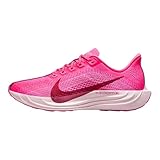
- Flyknit upper has perforations to help reduce the weight of the shoe and make it more breathable.
- ZoomX foam midsole offers springy cushioning.
- High-abrasion rubber on outsole provides traction.
- Midfoot band helps keep you contained.
Outsole durability
RunRepeat notes extensive rubber coverage at the heel and forefoot, with an exposed midfoot area. Doctors of Running reports a hole in that exposed midfoot area after 25 miles on its tested sample. That is one reviewer’s observation of one pair. It does not show a model-wide defect, and it is not a mileage lifespan that applies to every runner.
Independent reader supportYour contribution helps us test, update, and keep practical guides available for everyone.How it compares
RTINGS offers the following recommendations, which are that publisher’s own views rather than universal rankings. The table includes only what RTINGS states about each model; weight is not stated for the two comparison shoes in the sources reviewed.
| Model | Weight (sources reviewed) | RTINGS’s stated strength |
|---|---|---|
| Nike Pegasus Plus | 244 g (RunRepeat) | Lighter and more efficient for faster running |
| Nike Pegasus 42 | Not stated | Better impact protection and a more traditional ride |
| Vomero Plus | Not stated | Better fit for runners prioritizing cushioning and longer runs |
Compare these shoes on the same five points: forefoot cushioning and impact protection, weight and energy return, flexibility against a stiffer or rockered ride, fit and width availability, and current price.
Best Value

- Nike Pegasus Plus Women's Road Running Shoes
- 10 Women = 8.5 Men
Price and availability
On 2026-10-07, Nike Canada’s product page showed C$175.99 against a listed C$235, and the color accessed was sold out. That is a dated snapshot of one Canadian color, not a global price or a stock guarantee. Confirm price, color and size on the retailer’s page before buying.
Who should buy the Pegasus Plus, and who should skip it
The shoe suits a specific kind of runner. Use this checklist to decide.
Quick Recap
- Buy it if you want a light, responsive shoe for tempo runs and faster efforts, and you like a flexible, ground-connected feel.
- Buy it if you have tried it on and your heel and midfoot feel secure, and you are comfortable with the forefoot stack.
- Skip it if you expect plush cushioning or strong impact protection, because the foam is tuned for rebound and the ride is described as firm.
- Skip it if you are a midfoot or forefoot striker who wants a taller forefoot for protection on long or hard runs.
- Skip it if you need wide sizing, or you have had fit problems with snug, flexible shoes before.
Product prices and availability are accurate as of the date/time indicated and are subject to change. Any price and availability information displayed on Amazon at the time of purchase will apply.




