Recommended Free Tools
A silicon-nitride optical gyroscope developed by researchers at UC Santa Barbara, Caltech and the Air Force Research Laboratory has measured rotation as slow as 37 degrees per hour. That is close to Earth’s rotation rate of about 15 degrees per hour and represents an almost 2,000-fold improvement over the team’s earlier device, which measured 72,000 degrees per hour.
The result is a laboratory prototype, not a navigation product. Its significance is that high-sensitivity optical rotation sensing is moving toward a compact, CMOS-compatible photonic chip without moving mechanical parts.
As an Amazon Associate I earn from qualifying purchases.
What the new gyroscope achieved
The work, reported by Optica in 2026, demonstrates an integrated Brillouin optical ring gyroscope fabricated on silicon-nitride photonic circuitry. In controlled testing, the sensor resolved rotation rates down to 37 degrees per hour and produced a linear response as the rotation rate changed.
What’s actually slowing this PC down?
Pick the symptom - the matching free tool is one click away.
For context, the researchers’ previous silicon-nitride Brillouin gyroscope measured 72,000 degrees per hour. The new threshold is therefore roughly 1,946 times lower, commonly described in the release as a nearly 2,000-fold improvement. Earth rotates at approximately 15 degrees per hour, so the device is approaching the scale needed to sense the planet’s own rotation, although it does not yet match that rate.
#1 Best Overall

- MPU-6050 MPU6050 6-axis Accelerometer Gyroscope Sensor
- Communication mode: standard IIC communication protocol
- Chip built-in 16bit AD converter, 16bit data output
- Gyroscopes range: +/- 250 500 1000 2000 degree/sec
- Acceleration range: ±2 ±4 ±8 ±16g
How a Brillouin optical ring gyroscope works
Counter-propagating laser signals
The sensing element is a ring-shaped optical circuit approximately 24 millimeters across. Two semiconductor lasers send light around the ring in opposite directions. When the ring rotates, the two counter-propagating Brillouin laser signals acquire a minute frequency difference. Measuring that difference reveals the direction and rate of rotation.
Why the ring is relatively large for a chip
Optical gyroscopes become more sensitive as the area enclosed by their light path increases. The 24-millimeter ring therefore provides a larger sensing area than a very small circuit would, while remaining compatible with an integrated photonic platform. The chip-scale label describes the fabrication and packaging approach; it does not mean the optical path is microscopic in every dimension.
Optical characteristics that enable the measurement
| Characteristic | Reported value |
|---|---|
| Ring diameter | About 24 millimeters |
| Intrinsic quality factor | Above 163 million |
| Measured bandwidth | 2 MHz isolated from a 200 THz optical signal |
| Photon storage time | Nearly 100 nanoseconds |
| Optical power described by the team | Just milliwatts |
The exceptionally high quality factor means the ring stores optical energy with very low loss. The device isolates a narrow 2 MHz measurement bandwidth from a 200 THz optical carrier, while photons remain in the circuit for nearly 100 nanoseconds. Together, those properties make the tiny rotation-induced frequency shift easier to distinguish from the much larger optical signal.
Quick wins for a faster PC:
Fix the driver behind crashes, sound loss and screen glitchesFind Drivers →Repair Windows errors before they cause bigger problemsFix Now →Scan for outdated or missing drivers - takes under a minuteDriver Scan →How the researchers tested it
- The packaged photonic chip, a few centimeters across, was mounted on a piezoelectric rotation stage.
- The stage drove the package at set rotation frequencies.
- A separate optical interferometer measured the actual motion independently.
- The gyroscope’s frequency response was compared with the interferometer measurement.
- The response remained linear and resolved rotation rates down to 37 degrees per hour.
This setup establishes sensitivity under controlled laboratory conditions. It does not establish performance in a vehicle, aircraft or spacecraft, where temperature changes, vibration, shock, long-term drift and packaging constraints can dominate the error budget.
Why the result matters for navigation
Gyroscopes provide orientation and rotation information without relying on an external signal. A more sensitive, smaller optical gyroscope could eventually support inertial navigation when GPS or other satellite-navigation signals are unavailable or deliberately blocked. The release identifies cars, aircraft and spacecraft as possible application areas.
Rank #2

- MPU-6050 MPU6050 Module: adopts the standard IIC communication for communication and is powered by 3V-5V for sustainable use.
- 3 Axis Accelerometer Gyroscope Module: Gyroscope range: ± 250 500 1000 2000 ° / s; Acceleration range: ± 2 ± 4 ± 8 ± 16 g; Transmission can pass I2C up to 400kHz or SPI up to 20MHz.
- MPU 6050 Chip built-in: with three 16-bit analog-to-digital converters (ADCs) for digitizing the gyroscope outputs and another three ones for digitizing the accelerometer outputs.
- Universally Compatible: This sensor is easy to use with just about any microcontroller that has an I2C interface, for Raspberry Pi and ESP32 models.
- What You Will Get: 3pcs Pre-Soldered GY-521 mpu-6050 mpu6050 3 axis accelerometer sensor. Ready to plug in and go.
Those are potential uses rather than deployed capabilities. The 37-degrees-per-hour result shows what the prototype measured on a test stage; it does not demonstrate that a vehicle could navigate indefinitely without GPS, nor that the chip can replace an existing commercial inertial-navigation system.
What makes the design different from conventional approaches
- No moving sensing mass: rotation is inferred from optical-frequency shifts rather than a mechanically suspended proof mass.
- Silicon-nitride photonics: the circuitry is designed for fabrication methods compatible with standard CMOS-style processing.
- Compact optical path: the ring and supporting circuitry fit on a photonic chip, while the tested package was only a few centimeters across.
- Low stated optical power: the team describes operation using milliwatts of optical power.
- Potential mechanical robustness: eliminating moving parts could help future designs withstand vibration and shock better than delicate mechanical sensors, though the reported experiment did not provide a vehicle-level qualification.
The study does not provide a full, head-to-head commercial comparison with MEMS gyroscopes or larger fiber-optic and ring-laser gyroscopes. Its reported advantage is the combination of sensitivity, integrated fabrication and a non-mechanical optical sensing method.
What still has to be solved
Backscattered pump light
Light scattering backward through the ring can contaminate the counter-propagating signals. The team is working to reduce this effect so the rotation-induced frequency difference can be measured more cleanly.
Stability and environmental performance
The researchers are improving stability and have not yet shown the long-duration, temperature-compensated operation required for navigation hardware. Laboratory linearity is an important step, but it is not the same as a complete inertial sensor specification.
More integration
The current system is not a single fully integrated chip. Future work includes putting the lasers, photodetectors and other supporting components onto the same chip and packaging the complete system into one compact unit.
Rank #3
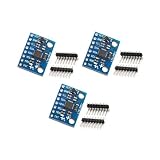
- Sensor: MPU-6050 6-axis accelerometer gyro sensor.
- Communication: Standard IIC protocol.
- Chip Feature: 16-bit AD converter, 16-bit data output.
- Gyroscope Range: ±250 500 1000 2000 degrees/second.
- Acceleration Range: ±2 ±4 ±8 ±16 grams.
When will chip-scale optical gyroscopes be available?
No commercial release date is given. The work remains an experimental demonstration, and the researchers describe further development as necessary before compact, chip-based optical gyroscopes can deliver high-precision sensing in products. The practical timeline will depend on solving scattering and stability problems, integrating the optical and electronic components, and validating the package outside a controlled rotation-stage experiment.
Outdated Drivers Are Slowing You Down
One free scan finds every outdated or missing driver and matches the right update for your exact hardware.Free scan · exact hardware matchPC Slower Than It Used to Be?
A free scan shows the junk files, broken settings and background clutter dragging Windows down - then fixes them in one click.Free scan · Windows 10 & 11The bottom line
This prototype pushes integrated optical rotation sensing to 37 degrees per hour, close to the scale of Earth’s rotation and dramatically better than the team’s earlier silicon-nitride device. It is a promising route toward smaller, manufacturable gyroscopes for GPS-denied navigation, but it is not yet a drop-in GPS replacement or a commercially available sensor.
“Our new gyroscope combines several advanced technologies to achieve a high level of sensitivity in a format that can be made with standard CMOS chip-processing methods and uses just milliwatts of optical power,” said Daniel J. Blumenthal, who led the UC Santa Barbara research team.
Kerry Vahala of Caltech said the technology could, with more development, bring the high-precision sensing of optical gyroscopes to compact, chip-based devices.
Quick Recap
Bestseller No. 3
Product prices and availability are accurate as of the date/time indicated and are subject to change. Any price and availability information displayed on Amazon at the time of purchase will apply.




