Nano-ITX is a compact motherboard and embedded-computer form factor, usually measuring 120 × 120 mm (about 4.7 × 4.7 inches). It is roughly half the board area of Mini-ITX and is used mainly in industrial PCs, kiosks, HMIs, digital signage, gateways and other space-constrained x86 systems. Nano-ITX does not define one processor, memory type, connector layout, mounting pattern or complete computer, so every purchase requires model-specific mechanical, electrical, thermal and software checks.
What is Nano-ITX?
Nano-ITX describes a compact motherboard or single-board-computer format rather than a particular CPU or finished product. VIA introduced the format through its low-power EPIA platform family for applications such as set-top boxes, media centers, car PCs and thin clients. Current products are concentrated in industrial and embedded computing; Portwell and Axiomtek market 120 × 120 mm boards for automation, HMI, medical, transportation, signage and edge applications.
As an Amazon Associate I earn from qualifying purchases.
A usable Nano-ITX computer normally combines the board with memory, storage, a power source, cooling, an enclosure, cables and an operating system. A board with an integrated processor is therefore not automatically a ready-to-run PC.
Quick wins for a faster PC:
Repair Windows errors before they cause bigger problemsFix Now →Fix the driver behind crashes, sound loss and screen glitchesFind Drivers →Clear out junk files and repair common Windows errorsFree Scan →Dimensions and embedded positioning are documented by Axiomtek; current industrial examples appear in Portwell’s Nano-ITX category.
#1 Best Overall

- Ample Interior: Explore ample interior space for Micro-ATX or Mini-ITX motherboards, ensuring easy and future expansion
- Components Clearance: Accommodates CPU coolers with a max height of 159mm, GPU cards up to 360mm, and PSU up to 160mm in length.
- Versatile Cooling: Maximize cooling performance with a 240mm liquid cooler and 5 fans.
- Modular I/O Panel: You have the flexibility to adjust its position at the front, top, or bottom on both sides
- Edge-To-Edge Panel: Show off your meticulous build through the transparent side panel with pride.
Nano-ITX dimensions and layout
| Form factor | Typical board dimensions | Approximate area | Typical role |
|---|---|---|---|
| ATX | 305 × 244 mm | 74,420 mm² | Full-size desktop systems |
| Mini-ITX | 170 × 170 mm | 28,900 mm² | Small desktops, NAS and gaming |
| Nano-ITX | 120 × 120 mm | 14,400 mm² | Compact industrial x86 systems |
| Pico-ITX | Approximately 100 × 72 mm | Varies | Highly constrained embedded products |
| 3.5-inch SBC | Approximately 146 × 102 mm | Varies | Embedded systems with many vendor options |
A 120 × 120 mm Nano-ITX board has about 49.8% of the area of a 170 × 170 mm Mini-ITX board. That does not mean a complete system is half the size: power supplies, cables, antennas, heatsinks, storage and shielding can dominate the enclosure.
The name is not a guarantee of interchangeability. Two Nano-ITX boards can have different mounting holes, thicknesses, connector positions, I/O shields, power plugs, heatsink heights and keep-out zones. Use the exact board’s mechanical drawing before selecting a case or mounting plate.
What hardware does a Nano-ITX computer use?
Processors
Nano-ITX has hosted many x86 generations, including VIA low-power processors, Intel Atom E6xx, E3800/E3900, x6000E and x7000E families, Intel Processor N-series and Core i3-N parts, AMD G-Series APUs, and newer vendor-specific boards using 12th- and 13th-generation Intel mobile processors. These generations differ sharply in performance, graphics, firmware, memory and operating-system support.
Free tools Windows power users keep installed
One-click scans. No signup required.
For examples, see the Emerson NITX-300 Atom E6xx datasheet, WinSystems ITX-N-3900, Portwell NANO-6063 and NANO-6064. A current high-performance example is listed by Intel’s partner showcase for Fodenn’s 12th/13th-generation board; confirm availability directly.
Memory
Memory may be soldered or installed in one or two SO-DIMM sockets. Depending on the board generation, it can be DDR2, DDR3/DDR3L, DDR4 or DDR5. Emerson’s NITX-300 used up to 1 GB of soldered DDR2; WinSystems’ ITX-N-3900 supported one SO-DIMM up to 8 GB of DDR3L; selected newer Portwell boards advertise up to 16 GB of DDR5. There is no single Nano-ITX memory limit. Check voltage, capacity, rank support and whether the memory is replaceable.
Rank #2
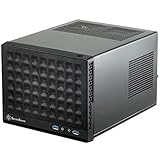
- Support standard-length expansion cards (10 5 inches)
- Mini-dtx/Mini-ITX motherboard & ATX PSU compatible
- Support 120mm or 140mm single fan all-in-one liquid cooler
- Support 2 5" And 3 5" Hard drives
- Case dimensions: 8.47" (W) x 7.13" (H) x 11.22" (D), 11.5 liters
Storage
Interfaces include SATA/SATA III, mSATA, M.2, CFast, eMMC, microSD and onboard flash. WinSystems documents SATA 3.0, mSATA and microSD on the ITX-N-3900, while older Axiomtek NANO100 designs used CFast and Mini Card expansion. An M.2 socket is not automatically an NVMe socket: verify its B-, E- or M-key, supported SATA or PCIe protocol, drive length, boot support and lane sharing.
Connectivity and expansion
Depending on the model, expect Gigabit or 2.5Gb Ethernet, USB 2.0/3.x or Type-C, HDMI, DisplayPort, VGA, LVDS or eDP, serial ports, GPIO, audio, CAN, Mini-PCIe, M.2, TPM 2.0 and wireless-module support. Portwell lists selected boards with triple displays, dual 2.5GbE, USB 3.2 Gen 2, M.2, SATA, Mini-PCIe and TPM 2.0.
Do these 3 things before closing this tab:
1Repair Windows errors before they cause bigger problems2Scan for outdated or missing drivers - takes under a minute3Clear out junk files and repair common Windows errorsDistinguish rear-panel connectors from internal headers and full-size ports from cable-only board connectors. Mini-PCIe and M.2 are not substitutes for a desktop PCIe slot.
Graphics, displays and discrete GPUs
Graphics are normally integrated into the processor, with display outputs routed directly to board connectors or headers. Older products may emphasize VGA and LVDS; newer ones may provide HDMI, DisplayPort, eDP or several simultaneous outputs. Resolution, panel timing and display count remain model-specific.
A conventional full-length PCIe ×16 graphics card is generally incompatible with Nano-ITX’s space, power, cooling and enclosure constraints. Some boards expose PCIe lanes through Mini-PCIe, M.2 or a vendor-specific connector, but that is not equivalent to a gaming motherboard.
Rank #3

- 【Ultra Mini ITX Case with PCIe 3.0 Riser Cable】The Case is only 4.3L capacity, the size is 18.4x10.4x22.3 cm (7.3x4.1x8.8 inch), PCI 3.0 Riser Cable is 18.5cm
- 【Compatibility Accessories】Support Standard ITX Motherboard(17x17cm), FLEX-Small 1U Power Supply (15*4*8cm), Graphics Card (17*10*4cm), Hard Disk(2x2.5inch SSD, thickness less than 9mm), CPU Cooler(Less than 36mm)
- 【High-quality Material】The Body of Case is made of 2.0mm Aluminum Alloy, which has good heatsink performance anf beautiful appearance
- 【Packing Include】1* Mini ITX Case, 1*PCIe 3.0 Riser and some Screws ONLY
Cooling and power
Many Nano-ITX boards are designed for passive cooling, but fanless operation is conditional. Processor TDP, sustained workload, ambient temperature, heatsink size, chassis coupling, airflow and add-in devices determine whether the system remains within limits.
The Tool Desk
Outbyte Driver Updater FREEScan for outdated or missing drivers - takes under a minuteDriver Scan →Outbyte PC Repair FREEClear out junk files and repair common Windows errorsFree Scan →- Emerson’s NITX-300 specifies typical consumption below 7 W with passive cooling.
- WinSystems’ ITX-N-3800 is specified below 10 W for fanless applications; its documented operating range is −40°C to +80°C.
- Portwell’s NANO-6063 lists a TDP below 12 W and fanless suitability for selected configurations.
- WinSystems lists −40°C to +85°C for the ITX-N-3900.
These are product and configuration claims, not universal Nano-ITX limits. TDP, measured consumption and total heat output are different quantities. A sealed enclosure can require a chassis-coupled heatsink, and a short benchmark may not reveal throttling during continuous video processing, compilation or computer vision. A board’s temperature rating does not automatically apply to its SSD, memory, adapter, display, wireless card or finished enclosure.
Operating-system support
Supported software depends on the processor, firmware, drivers and board age. Linux, Windows desktop or IoT editions, vendor embedded Linux and industrial real-time systems may all be possible. WinSystems lists Linux, Windows 10 and Windows 10 IoT for the ITX-N-3900, but that product documentation is not a current guarantee for every board in 2026.
- Confirm UEFI or legacy-BIOS requirements and 64-bit capability.
- Check graphics, network, storage and peripheral-driver availability for the exact kernel or Windows edition.
- Verify Secure Boot, TPM and firmware-update support.
- Check the vendor’s support period and replacement plan before committing to production.
Where Nano-ITX is used
- Industrial control, machine interfaces and automation gateways
- Digital-signage players and kiosks
- Medical equipment and carts
- Transportation and automotive systems
- Thin clients and compact terminals
- Machine vision and edge-computing appliances
- Custom controllers requiring serial, GPIO or CAN
Its value is usually the combination of x86 software compatibility, integrated industrial I/O, compact dimensions and possible fanless operation—not maximum desktop performance.
Nano-ITX versus related platforms
| Platform | Size or architecture | Strength | Trade-off |
|---|---|---|---|
| Mini-ITX | 170 × 170 mm | Broadest consumer cases, PSUs, memory and storage ecosystem | Larger; less specialized industrial I/O |
| Nano-ITX | Typically 120 × 120 mm | Compact x86 platform with integrated embedded interfaces | Limited retail availability and non-standard case compatibility |
| Pico-ITX | Approximately 100 × 72 mm | Smaller footprint | Usually less expansion and more proprietary integration |
| 3.5-inch SBC | Approximately 146 × 102 mm | Large embedded-board vendor ecosystem | Usually larger than Nano-ITX |
| COM Express, SMARC or Qseven | Processor module plus carrier | Custom I/O and scalable long-life OEM design | Requires carrier-board engineering |
| Raspberry Pi-class SBC | Varies; commonly ARM | Low cost and large community | Different software, expansion and industrial requirements |
| Complete fanless industrial PC | Finished system | Lower integration and certification risk | Higher purchase price and less board-level customization |
How to choose a Nano-ITX board
- Define the workload: CPU performance, graphics, displays, networking, serial/GPIO/CAN, temperature and operating system.
- Check the documentation: download the mechanical drawing, manual, BIOS notes and thermal guidance before ordering.
- Verify memory: confirm DDR generation, SO-DIMM voltage, maximum capacity, ranks and soldered-versus-socketed implementation.
- Verify storage: identify SATA, mSATA, CFast, microSD or M.2 protocol, keying, length and boot support.
- Confirm power: check input voltage, polarity, connector, current capacity, startup surge and protection requirements. Similar-looking laptop adapters are not automatically safe.
- Design cooling: account for heatsink contact, enclosure thermal paths, ambient temperature and sustained load.
- Plan the enclosure: verify mounting holes, connector clearance, board thickness, I/O brackets, cable bends and antenna space.
- Assess lifecycle: look for product-life statements, firmware access, driver downloads, replacement availability and documentation quality.
- Calculate total cost: include memory, storage, power, cooling, enclosure, cables, wireless hardware, integration and validation.
Building and validating a Nano-ITX computer
- Install the specified memory and storage using the board manual.
- Fit the approved heatsink or chassis thermal solution with the specified interface material and mounting pressure.
- Connect the correct DC supply and confirm polarity before powering on.
- Install the vendor-supported BIOS, drivers and operating system.
- Validate boot order, storage detection, displays, Ethernet, USB, serial ports, wireless and GPIO/CAN as applicable.
- Run the intended sustained workload while monitoring temperatures, clock speeds and throttling.
- Secure cables, provide strain relief and repeat testing at the actual ambient-temperature extremes.
Common problems and recovery
Board does not fit
A Mini-ITX case may lack the correct mounting holes, I/O alignment or heatsink clearance. Use the board drawing, a custom mounting plate or an enclosure designed for the exact model.
Rank #4

- JONSBO TK-0 BLACK Separated Cabinet Mini ITX Pc Case, ITX Desktop sff case,compact -Easy horizontal and vertical desktop placement,Walnut Wood.
- 【2.5 surface curved glass perspective】, suitable for desktop multi-angle arbitrary place ment of display surface
- 【Design material characteristics】: *Aluminum alloy + steel +16mm Wood veneer+ 270° Dual-Curved Glass side view- multi-angle hardware display(No need to remove the protective film when using) *Removable Al PCI cover for easy removal of GPU. *Dual warehouse structure,easy to manage cables and hardware Easier to build your PC,More convenient.
- 【Hardwares support】Motherboard:ITX / SFX PSU160mm /GPU:230mm/Drive Bay:3.5"HDD*1/2.5"SSD*1
- 【Cooling system】: CPU Cooler H:137mm Top 120mm*1/140mm*1 (OPT )/Bottom 120mm*1/140mm*1 (OPT)/Rear 90mm*2 (OPT )
Power-on but no boot
Check voltage, polarity, current rating, memory seating, supported storage, BIOS mode and boot-device order. Some boards require a particular cable or DC input range.
M.2 SSD is missing
Recheck key type, SATA-versus-NVMe protocol, drive length, BIOS support, lane sharing and whether the socket is intended for Wi-Fi rather than storage.
Display resolution is limited
Investigate graphics drivers, adapter limits, LVDS panel timing, the board’s maximum resolution and simultaneous-display restrictions.
Thermal throttling or shutdown
Inspect heatsink pressure and thermal material, chassis contact, airflow, ambient temperature and heat from the SSD or wireless module. Test sustained load rather than idle temperature alone.
Recommended Free Tools
When Nano-ITX is a good or poor choice
Choose it when
- The board must be close to 120 × 120 mm.
- You need x86 software or Windows compatibility.
- Integrated industrial I/O matters more than consumer expansion.
- Low power, quiet operation or a sealed enclosure is important.
- Long availability, controlled bills of materials and vendor support justify specialized hardware.
Look elsewhere when
- You want a conventional home, gaming or high-end desktop PC.
- You need a discrete graphics card.
- You require inexpensive standardized cases, PSUs and replacement parts.
- You expect frequent upgrades or have no allowance for custom mounting, cables or thermal engineering.
- A 170 × 170 mm Mini-ITX system already fits.
Mini-ITX is normally the easier and cheaper route for consumer builds. Pico-ITX or a small SBC suits tighter volume, while COM Express, SMARC, Qseven or a complete industrial PC can reduce risk in a productized design.
Buying landscape in 2026
Portwell’s official Nano-ITX listings show modern industrial options, including selected Intel platforms, DDR5, 2.5GbE, USB 3.2, multiple displays, M.2 and TPM 2.0, but pricing commonly requires a quotation, distributor or integrator. Axiomtek maintains a Nano-ITX catalog and similarly emphasizes sales contact rather than standardized retail checkout. A historical Mouser catalog listed NANO100/NANO101 variants around $294.38–$341.08, but those figures are legacy catalog signals, not a current price or availability promise.
Older Atom, VIA, AMD G-Series, DDR2/DDR3, VGA/LVDS and Windows-era boards remain visible online. They can be useful for replacement projects, but check security updates, drivers, supply continuity and storage compatibility before using them in a new design. A current listing, such as Fodenn’s Intel partner page, should be treated as a lead until the vendor confirms price, stock and lifecycle terms.
Quick Recap
Product prices and availability are accurate as of the date/time indicated and are subject to change. Any price and availability information displayed on Amazon at the time of purchase will apply.




