Craft a bucket with three iron ingots at a crafting table. Put the ingots in the upper-left, upper-right and middle-bottom slots to make one empty bucket. Use that bucket on a water or lava source, a cow, mooshroom, goat, powder-snow block, or certain aquatic mobs, then place or use what you collected. Empty buckets stack to 16; filled buckets do not stack.
Playing with friends? Godlike.Host runs hosted Minecraft Java servers from 10 data-center locations, with free DDoS protection.
This guide explains the exact crafting pattern, collection rules, payloads, movement tricks, automation, edition differences and the common reasons a bucket appears not to work.
As an Amazon Associate I earn from qualifying purchases.
Recommended Free Tools
What a Minecraft bucket can hold
A bucket is a reusable container whose behavior depends on its payload. The table below covers the practical choices you can make in survival play.
| Payload | How you collect it | What you can do with it | What happens to the bucket |
|---|---|---|---|
| Water | Use an empty bucket on a water source block | Place water, fill or empty compatible cauldrons, load a dispenser, transport aquatic mobs, recover a wet sponge, and create a landing or waterfall | Returns empty after placement or other one-use interactions |
| Lava | Use an empty bucket on a lava source block | Place lava, empty or fill compatible cauldrons, load a dispenser, or use it as furnace fuel | Returns empty after placement; furnace use leaves an empty bucket |
| Milk | Use an empty bucket on a cow, mooshroom or goat | Drink it to remove status effects or use it in a cake recipe | Returns empty after drinking; crafting behavior can vary by edition |
| Powder snow | Use an empty bucket on a powder-snow block | Carry and place powder snow in an adjacent empty or replaceable space | Returns empty after placement |
| Bucketed aquatic mob | Use a water bucket on a cod, salmon, tropical fish, pufferfish, axolotl or tadpole | Transport the individual mob and release it later with its water | The filled mob bucket remains a single, non-stackable item until released |
How to craft a bucket
Required materials
- Three iron ingots.
- One crafting table (the recipe uses a 3×3 grid).
Exact crafting-table pattern
- Open the crafting table.
- Place one iron ingot in the top-left slot.
- Place one iron ingot in the top-right slot.
- Place one iron ingot in the center slot of the middle row.
- Take the bucket from the result slot.
The three ingots form a shallow “U” shape: two at the top corners and one in the center. The recipe makes one empty bucket. Iron can also be found through normal world exploration and generated loot, but crafting is the reliable way to obtain one early.
#1 Best Overall

- Official Minecraft Merchandise – Licensed by Minecraft, featuring authentic design details from the Jack O’ Lantern block.
- Iconic Block Shape – True-to-game cube shape with a pixelated pumpkin face just like in Minecraft.
- Perfect for Trick-or-Treating – A fun and functional candy pail for Halloween, costume events, or gaming parties.
- Durable & Lightweight – Made from thick molded plastic that’s sturdy enough for repeated use, but light enough for kids to carry easily.
- Kid-Friendly Handle – Easy-grip handle designed for young Minecraft fans to comfortably carry their Halloween haul.
Stacking and inventory rules
Empty buckets stack to a maximum of 16. Any filled bucket—water, lava, milk, powder snow or an aquatic-mob bucket—occupies its own inventory slot and cannot stack with another filled bucket. Plan hotbar space before a long collection trip, especially when moving several fish or axolotls.
Collection and placement fundamentals
Source blocks versus flowing liquid
An empty bucket collects a liquid only from a source block. A flowing water stream will not fill the bucket when you use it on the moving section. Find the still source at the top or origin of the flow, aim at that block and use the bucket. Lava follows the same source-block rule.
Quick wins for a faster PC:
Repair Windows errors before they cause bigger problemsFix Now →Fix the driver behind crashes, sound loss and screen glitchesFind Drivers →Clear out junk files and repair common Windows errorsFree Scan →Where a filled bucket can be emptied
Use a filled bucket against a solid block or another block that accepts the payload. Water can also be placed into waterloggable blocks. If the target location is occupied by a non-replaceable block, the game will not place the liquid and the bucket remains filled. Clear the target or aim at a neighboring face.
Why a bucket sometimes stays empty
- You targeted flowing liquid rather than its source block.
- The crosshair is on a block face that cannot accept the payload.
- You are trying to place water in the Nether, where it evaporates instead of creating a water block.
- The entity or block you targeted is not a valid bucket interaction.
- A dispenser or redstone setup is behaving differently from the edition you are playing.
Water buckets: the broadest set of uses
Collecting and placing water
Use an empty bucket on a still water source to obtain a water bucket. Use the filled bucket on a suitable neighboring block to create a new water source. This lets you move water away from rivers, lakes and underground pools and build controlled channels at your base.
Filling and emptying cauldrons
A water bucket fills an empty cauldron. An empty bucket used on a full water cauldron retrieves the water and leaves the cauldron empty. Cauldron interactions have additional edition-specific behavior, so confirm the result in your edition before designing a large redstone or storage system.
Rank #2

- Minecraft Stacking Storage Tin with Handle
- Built to Stack with additional Stack Store and Carry Line and other licenses offered.
- With recessed handle and embossed ridge to make stacking and organization easy
- Patent Pending
- Buy in multiples to stack in a room and store all sorts of items
Dispensers and automation
A dispenser can hold a water bucket and perform bucket interactions when powered. Depending on the edition and the target, it can place water or collect a nearby source. Dispensers are useful for farms, temporary barriers, elevators and traps, but test the exact orientation and redstone timing in a small prototype because Java and Bedrock do not always treat dispenser bucket actions identically.
Recovering water from a wet sponge
When you smelt a wet sponge, place an empty bucket in the furnace fuel slot. The bucket fills with water as the sponge dries, giving you a water bucket instead of leaving the water inaccessible. A lava bucket can also supply the furnace fuel; after that fuel is consumed, the resulting item is a water bucket. This is a practical way to turn ocean-monument sponge rooms into a renewable supply of portable water while preserving the bucket.
Moving fish, axolotls and tadpoles
Use a water bucket on a cod, salmon, tropical fish, pufferfish, axolotl or tadpole. The result is a bucket containing that individual mob, which can be carried through tunnels, over land or across dimensions more safely than transporting it in an open pool. Use the mob bucket at the destination to release the creature with water. Because filled mob buckets do not stack, bring enough inventory slots for the number of animals you plan to move.
Waterfalls, climbs and controlled descents
Place water against a cliff or tall wall to make a temporary waterfall. Swim upward to climb or descend along the stream, then collect the source again when you are finished. This technique avoids building a long staircase and can give you a controlled route through ravines and vertical caves.
Saving yourself from a fall
In the Overworld and the End, placing water just before you land can cancel fall damage if the water is successfully placed under you. The maneuver requires a clear target and precise timing, so practice from a safe height. Water does not create a landing in the Nether: it evaporates instead of placing, making a water bucket an unreliable emergency tool there.
What’s actually slowing this PC down?
Pick the symptom - the matching free tool is one click away.
Rank #3

- ICONIC CREEPER DESIGN: Features the instantly recognizable Creeper face from Minecraft, adding a fun, gamer-inspired touch to any space.
- SPACIOUS & PRACTICAL: Large size (21.65" x 13.78" x 13.78") makes it perfect for storing clothes, toys, and other household items, keeping rooms tidy and organized.
- POP-UP & COLLAPSIBLE: Convenient pop-up feature allows for quick setup, while its collapsible design saves valuable storage space when not in use.
- LIGHTWEIGHT & PORTABLE: Designed for easy transport with sturdy handles, making it an ideal companion for weekend getaways or family trips.
- DURABLE CONSTRUCTION: Built from long-lasting materials to withstand everyday use, ensuring it stays functional and stylish for extended periods.
Lava buckets
Collecting and relocating lava
Use an empty bucket on a lava source block to obtain a lava bucket. Empty it against a suitable block to create a new lava source. This is useful for smelting stations, defensive moats, lighting effects and controlled Nether or Overworld builds. As with water, flowing lava cannot be collected directly; locate the source block.
Using lava as furnace fuel
Place a lava bucket in a furnace fuel slot. The furnace uses the lava to power smelting and leaves an empty bucket when the fuel is consumed. Because the bucket is returned, you can maintain a fuel rotation rather than losing the container. A lava bucket can also fuel the furnace while drying a wet sponge; that process produces a water bucket afterward.
Lava and cauldrons
In editions and situations that support the interaction, an empty bucket can collect lava from a full lava cauldron. Water or lava cauldron behavior is not identical in every edition, so verify the interaction in the version running your world before relying on it for automation.
Milk buckets
How to obtain milk
Hold an empty bucket and use it on a cow, mooshroom or goat. The animal remains in the world and the bucket becomes a milk bucket. These three sources provide the same core drinking effect.
Drinking milk and clearing effects
Drink the milk bucket to remove all status effects currently affecting you, including beneficial effects. The bucket returns empty after drinking. Use milk when you need a complete effect reset—for example, after an encounter that has left several effects active—rather than when you want to preserve a helpful buff.
Rank #4

- 3 PACK ASSORTED DESIGNS: Officially licensed Minecraft Hostile Mob Head Beach Ball in vibrant, fun styles.
- EASY INFLATION/DEFLATION: Pinch valve for hassle-free setup and packing convenience.
- GENEROUS SIZE: Inflated to a spacious 16”x16” for maximum pool fun.
- DURABLE MATERIAL: Crafted from durable vinyl for lasting playtime.
- REPAIR PATCHES INCLUDED: Enjoy worry-free fun with the bonus repair patches for quick fixes.
Milk in cake crafting
Milk buckets are cake ingredients alongside sugar, an egg and wheat. Cake is assembled in the crafting grid from those components. Since filled buckets are non-stackable and edition handling of the empty containers after crafting can differ, leave room in your inventory and check the result slot before starting a large batch.
Powder-snow buckets
Collecting powder snow
Use an empty bucket on a powder-snow block to scoop it up. The item becomes a powder-snow bucket, allowing you to carry the block out of a snowy area without mining the surrounding terrain.
Free tools Windows power users keep installed
One-click scans. No signup required.
Placing powder snow
Use the powder-snow bucket on an adjacent empty space or another replaceable space. The powder snow is placed as a block and the container becomes empty. If the target is occupied by a block that cannot be replaced, aim at a different face or clear the space first.
Why powder snow is useful
Portable powder snow lets you build traps, controlled drop areas and themed snow structures away from mountain biomes. Remember that it is a block with its own movement and freezing hazards; do not place it across a frequently used walkway without a way to mark or protect the area.
Aquatic-mob buckets in detail
Supported creatures
Water buckets can capture cod, salmon, tropical fish, pufferfish, axolotls and tadpoles. Other aquatic or water-adjacent creatures cannot automatically be turned into bucket items just because they are in water.
Best Value
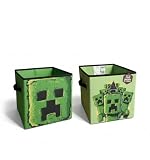
- OFFICIALLY LICENSED: This officially licensed Minecraft storage bin 2 pack features authentic Creeper graphics kids will love. These collapsible fabric storage cubes are perfect toy organizer baskets for keeping bedrooms, playrooms, and closets neat. A fun and decorative Minecraft storage solution that helps reduce clutter while adding a playful gaming theme.
- KID FRIENDLY DESIGN: These Minecraft storage bins feature bold Creeper character artwork in a 2 pack collapsible fabric toy organizer design. The kid friendly storage cubes add a pop of color to any kids room, playroom, or bedroom. Perfect cube storage bins for children who love fun and functional room organization.
- ORGANIZATIONAL SOLUTION: Keep spaces tidy with these Minecraft collapsible storage bins designed as toy organizer baskets for kids rooms. These fabric storage cubes provide spacious storage for toys, books, clothes, and more. Ideal cube organizer bins for bedroom, closet, nursery, or playroom organization.
- MULTIPURPOSE USE: These Minecraft storage cube bins are perfect for storing toys, books, clothes, shoes, and accessories. Use these collapsible toy organizer baskets in cube shelves, closets, bedrooms, or playrooms. Lightweight and portable fabric storage bins make cleaning up fun and easy.
- MATERIAL & COLLAPSIBLE DESIGN: Made from soft durable fabric, these Minecraft storage bins are built for everyday use. The collapsible storage cubes fold flat for easy storage when not in use. Sturdy toy organizer baskets designed for cube organizers, shelves, and kids room storage.
Capture and release procedure
- Fill a bucket with water.
- Approach the target creature closely enough for the interaction outline to select it.
- Use the water bucket on the creature. The mob disappears into a corresponding mob-bucket item.
- Travel to the destination with the filled bucket in your inventory.
- Use the mob bucket on a suitable space to release the creature and its water.
Capture is safer than trying to push a fish through a narrow tunnel or keep an axolotl alive in a temporary trench. Keep the destination ready before release so the animal does not strand itself outside water.
Cauldrons, dispensers and edition differences
Bucket mechanics are broadly shared between Java Edition and Bedrock Edition, but edge cases matter for technical builds. The differences most likely to affect you are dispenser behavior, cauldron interactions, what remains in your inventory after cake crafting, generated-loot tables and the names of achievements or advancements.
| Area | What to expect | Practical advice |
|---|---|---|
| Dispenser bucket actions | Collection and placement behavior can differ by edition and target block | Test a single dispenser, its facing direction and the redstone pulse in the edition you use |
| Cauldrons | Water and lava filling or emptying rules are not completely identical across editions | Prototype the exact cauldron circuit before building a large automated system |
| Cake crafting inventory | The treatment of the empty buckets after using milk in a cake recipe can vary | Keep spare inventory slots open and inspect the crafting output |
| Loot and names | Generated loot probabilities and achievement or advancement names are version- and edition-sensitive | Use the current reference for your exact game version rather than assuming parity |
Finding buckets without crafting
Crafting is the dependable source, but buckets can also appear in generated loot. Current reference data lists an 18.5% chance for a bucket in a Java Edition monster-room chest. Treat that figure as version-sensitive: world-generation tables can change between releases, and it should not be used as a universal probability for every chest type or edition.
Choosing which buckets to carry
Early-game exploration
- Carry at least one empty bucket for emergency water, lava collection and fall protection.
- Carry a second bucket when you expect to gather milk or move a mob, so you do not have to abandon a liquid source.
- Keep an empty hotbar slot for rapid placement and retrieval.
Mining and cave travel
- Water is the priority for extinguishing lava-adjacent hazards, making a descent route and limiting fall damage.
- A lava bucket is valuable as furnace fuel when you have a safe source and a smelting setup.
- Do not rely on water for a Nether emergency; it evaporates there.
Building and farms
- Use water buckets to shape channels, elevators and mob-transport streams.
- Use powder-snow buckets for controlled hazards or decorative builds outside snowy biomes.
- Use dispensers only after confirming the edition-specific collection and placement result.
Troubleshooting checklist
The bucket will not pick up water or lava
- Look for the still source block at the origin of the flow.
- Move the crosshair from the flowing section to the source.
- Check that you are holding an empty bucket, not a filled one.
- Try approaching from another side if the target face is obstructed.
The bucket will not place its contents
- Target a solid block face or a block designed to accept the payload.
- Clear non-replaceable blocks from the destination.
- For powder snow, choose an empty or replaceable adjacent space.
- For water in the Nether, move to a dimension where water can exist.
The aquatic mob dies or escapes after transport
- Capture it with a water bucket, not an empty bucket.
- Prepare a water-filled destination before releasing it.
- Release it into a contained area so it cannot swim away immediately.
- Remember that each filled mob bucket occupies a separate inventory slot.
The redstone machine behaves unexpectedly
Reduce the design to one dispenser, one bucket and one target block. Test collection, placement and the return state separately, then rebuild the circuit for your specific edition and version. Do not assume a Java tutorial’s dispenser timing or cauldron behavior will be identical in Bedrock Edition.
Quick Recap
Bucket safety and efficiency tips
- Store empty buckets together in stacks of up to 16, but reserve individual slots for filled buckets.
- When mining near lava, place a water source where it cannot flood your escape route, then collect it again if you need the space.
- Keep milk separate from combat supplies: drinking it clears positive effects as well as harmful ones.
- Label or segregate powder-snow and lava buckets in storage so a quick hotbar click cannot create an accidental hazard.
- Before a long expedition, decide whether the bucket’s job is transport, fuel, emergency movement or mob collection; that choice determines how many empty slots you need.
Product prices and availability are accurate as of the date/time indicated and are subject to change. Any price and availability information displayed on Amazon at the time of purchase will apply.




