A Metroidvania uses exploration mainly to expand where you can go: abilities and items unlock routes through an interconnected world. Survival horror uses exploration to make you weigh danger, uncertainty, and supplies. Both genres can feature backtracking, puzzles, and combat; the clearest difference is what those systems make you think about as you play.
What exploration is for
Metroidvania: find the route your abilities can open
In a Metroidvania, the world is often a connected map whose routes become available as the character gains new abilities or items. A blocked passage is a navigation problem to revisit: acquire a capability, remember where it might apply, and return to see what has changed. Nintendo describes the Metroid series as exploratory action in a maze-like world, where new items and weapons expand accessible areas and reveal alternate routes. Its Metroid Dread developer report also frames map reading and getting lost as part of the experience.
As an Amazon Associate I earn from qualifying purchases.
The central question is often, “Where can I go now, and what ability opens the next route?” Backtracking is valuable when it turns a previously inaccessible area into a new possibility.
Survival horror: explore while deciding what risks to take
In survival horror, exploration may uncover routes, story details, puzzles, and supplies, but entering a room or lingering in a corridor can expose the player to threats. The question shifts toward, “Can I survive this space, and is fighting worth the risk or resources?” The original Resident Evil’s maze-like mansion combined exploration and action with resource management and an aim to terrify players, according to PlayStation’s franchise overview.
#1 Best Overall
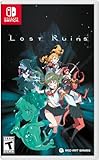
- Mysterious metroidvania with punishing boss fights.
- Survival-themed mystery with several endings.
- Range of weapons and magic to wreak havoc on your enemies.
- Gorgeous pixel art and haunting music.
- In-game text languages - English, French, Japanese, Korean, Portuguese - Brazil, Russian, Simplified Chinese, Spanish - Latin America, and Traditional Chinese. In-game voice language – English.
Exploration is therefore not just about reaching the next part of a map. It also creates uncertainty: what is ahead, what might be needed later, and whether it is safer to fight, evade, or conserve supplies.
How combat changes the experience
Metroidvania combat often works with progression
Combat is commonly part of the action loop, and acquired weapons or abilities can serve both as ways to fight and as tools for reaching new areas. Greater capability can make the character more versatile as the map opens up. That does not mean every encounter is easy; it means combat tends to sit alongside traversal and progression rather than define the player chiefly by vulnerability.
Rank #2
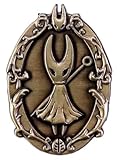
- Celebrate your love of Hollow Knight with this high quality enamel pin!
- Measures 1.6 inches tall.
- High quality metal & enamel pin.
- Brand new, boarded and bagged.
- Secured with firm pinback.
Survival-horror combat can be a costly choice
Survival horror does not mean “no combat.” Fear, vulnerability, and resource management can make each fight a decision rather than an automatic response. Ammunition or other supplies may be limited, and a threat can make retreat or evasion more appealing than confrontation. In a 2016 interview about Resident Evil 7, director Koshi Nakanishi described the series’ pillars as “fear and horror, exploration of the environment, puzzle-solving elements, resource management, and combat against enemies.” The Capcom interview is a historical statement about that game’s development, not a guarantee that every Resident Evil entry gives those elements equal weight.
Quick comparison
| Design question | Metroidvania tendency | Survival-horror tendency |
|---|---|---|
| What does exploration reward? | New abilities or items that expand traversal and unlock gated areas. | Routes, story, puzzles, and supplies, often with exposure to threats. |
| How is the world arranged? | Often a connected map with revisits and alternate routes. | May use a compact, interconnected location or route network; layouts vary. |
| What is combat for? | Frequently a central action loop and a way to use new capabilities. | Present in many games, but risk and resource costs can discourage fighting. |
| How does player power feel? | Options tend to grow as abilities are acquired. | Resources or threatening enemies may keep the player feeling unsafe. |
| What question drives play? | “Where can I go now, and what ability opens the next route?” | “Can I survive this space, and is fighting worth the resources or risk?” |
These are genre tendencies, not mandatory rules. Nintendo’s Metroid descriptions and Capcom and PlayStation’s Resident Evil materials illustrate representative approaches rather than universal definitions.
Rank #3

- Celebrate your love of Hollow Knight with this high quality enamel pin!
- Measures 1.6 inches tall.
- High quality metal & enamel pin.
- Brand new, boarded and bagged.
- Secured with firm pinback.
Where the genres overlap—and how games bend the labels
Both genres can have interconnected spaces, puzzles, combat, and reasons to return to earlier areas. A single shared feature does not settle the label. Ask instead which pressure organizes the loop: ability-gated navigation and expanding access, or uncertainty and survival decisions.
Individual games can mix those pressures. Nintendo describes Metroid Dread as an action-platformer-adventure with E.M.M.I. pursuit zones, where careful movement and evasion matter, as well as combat involving an Omega Cannon. That survival-like vulnerability does not erase its exploration-and-ability progression. Likewise, Resident Evil entries have varied in perspective and combat emphasis, so the franchise label does not promise one camera or combat model. Genre names are useful summaries, not feature checklists.
Rank #4

- Condivisione età: adatto dai 12 anni
- Genere: Azione
- Piattaforma: Nintendo 3DS
- Versione: standard
Can Resident Evil be considered a Metroidvania?
Resident Evil has traits that can resemble a Metroidvania, including exploration, puzzles, and interconnected locations. But those traits alone are not enough: the useful distinction is whether gaining abilities to unlock traversal is the main progression structure, or whether navigating danger, managing resources, and surviving threats organize play. Resident Evil is identified as survival horror in PlayStation’s franchise overview; individual entries can still borrow mechanics or structures associated with other genres.
Free tools Windows power users keep installed
One-click scans. No signup required.
Are there survival-horror Metroidvanias?
Yes, the labels can describe a hybrid when a game combines ability-gated exploration and a revisited interconnected map with horror built around vulnerability, threats, or resource pressure. The terms are not mutually exclusive. To judge a particular game, look at which loop is central and how much the other one shapes moment-to-moment decisions.
Quick Recap
Best Value

- Celebrate your love of Hollow Knight with this beautiful wristband.
- Displays vibrant images from the hit video game on both sides.
- Reversible so that you can switch between the 2 designs on your wrist.
- Measures 7.1 inches by 1 inch.
- Made of soft polyester, flexible and elastic, woven with comfortable material, fits well on your wrist.
Product prices and availability are accurate as of the date/time indicated and are subject to change. Any price and availability information displayed on Amazon at the time of purchase will apply.




