Matter is the connectivity standard that’s meant to make smart home devices work across ecosystems with less friction. With the Matter 1.5 update, the biggest headline for many owners is broader support for smart home cameras—so you can bring video-capable devices under a more consistent Matter-based control and automation experience.
This guide focuses on what the Matter 1.5 camera support changes, what you need to check before upgrading, and how to set cameras up reliably across the major controllers people actually use. If you’re trying to reduce app sprawl or make camera alerts and automations behave consistently, this is the reference you’ll want.
As an Amazon Associate I earn from qualifying purchases.
What the Matter 1.5 update changes
The Matter 1.5 update is a protocol and interoperability refinement released by the Matter ecosystem to improve device compatibility, onboarding behavior, and feature coverage across supported controllers. For end users, that usually shows up as “my device is finally controllable from more than one brand’s app” and “my automations behave more predictably.”
In the case of smart home cameras, Matter 1.5 adds support that helps cameras fit more cleanly into the Matter device model used by home controllers. That matters because camera functionality spans multiple responsibilities—on/off state, motion/event reporting, user permissions, and integration with scenes and automations. When these are aligned to Matter, you get fewer “it works here but not there” surprises.
#1 Best Overall
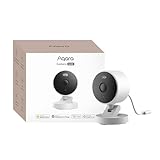
- 2K Clarity Day and Night: The G100 Wi-Fi Camera films in 2304×1296 (3MP) resolution with a 140°FOV and a wide-angle f/1.8 lens for superior image quality. It features two night vision modes: Spotlight Color Night Vision and IR Detection Mode. The spotlight provides illumination in dark, great for color recording outdoors at night. The G100 also includes 940 nm infrared lighting, ensuring covert illumination without alerting potential intruders. (Note: Both Spotlight and IR night vision modes must be manually enabled in the app and do not turn on automatically.)
- Indoor/Outdoor Ready IP65 Protection: With durable, weather-resistant IP65-rated housing, the G100 surveillance camera is both an indoor camera and outdoor security camera, offering reliable home surveillance for flexible indoor or outdoor mounting. Withstands rain, dust, and rugged environments.
- Local and Cloud AI Detection: The G100 surveillance cameras supports local motion and person detection, and the HomeGuardian Plan unlocks cloud-based recognition for pets, vehicles, packages, and faces, with AI event tagging. Integrated Events automatically can be triggered when paired with other Aqara devices (subscription required). It also supports Lens Obstruction Detection, custom audio files, and 2-way audio (Notes: Only in Aqara Home App).
- HomeKit Support & Wide Compatibility: The Aqara G100 Camera provides full support for HomeKit Secure Video (Note:Requires an active iCloud subscription and an Apple Home hub. HomeKit limits resolution to 1080p. When connected to both Apple and Aqara Home, the G100’s resolution in Aqara Home will also be limited to 1080p, but will return to 1296p if HomeKit is disconnected.) The G100 has some of the best third-party ecosystem support on the market, it can stream to Google, Alexa compatible smart displays, and even Home Assistant via the RTSP protocol, making it easier to interact with visitors or check in on loved ones.
- Flexible Storage Methods: Record 24/7 with a microSD (up to 512GB, not included) or NAS. Time-lapse mode compresses 24-hours of footage to 15-second clips (wired connection and microSD card required). Automatically store detected events with end-to-end encryption in the cloud with a HomeGuardian subscription, ensuring protection against data theft and guaranteeing your privacy at home.
What smart home camera support means in practice
Camera support in Matter 1.5 is about more than simply listing the device in a controller. It aims to standardize how the camera’s capabilities map into the Matter ecosystem so that common actions (like arming, triggering events, and reporting status) are consistent across controllers.
Common camera features Matter 1.5 may unlock
- Consistent device presence: Your controller can track the camera as a first-class Matter device, not just a vendor add-on.
- Standardized event reporting: Motion or activity events can map into automation triggers more reliably.
- Unified state control: Arming/disarming behaviors (where the camera supports them) can tie into system modes.
- Cross-platform onboarding: A controller update can make pairing and viewing more uniform across iOS, Android, and hub platforms.
Where Matter still differs from vendor apps
Even with Matter 1.5 camera support, many camera brands still rely on their own mobile apps for advanced features like full recording libraries, detailed camera configuration, and vendor-specific video workflows. Matter is typically best for standardized control and event integration—not necessarily every video setting.
Expect some functionality to remain split: you might use the vendor app for fine-grained camera configuration, while using Matter for automations, device states, and system-level integration.
Quick wins for a faster PC:
Fix the driver behind crashes, sound loss and screen glitchesFind Drivers →Repair Windows errors before they cause bigger problemsFix Now →Prerequisites before you try Matter cameras
Before you purchase a camera “for Matter,” verify the full chain: camera firmware, controller support, and your home hub (if you use one). The most frustrating setup failures happen when one link in the chain lags behind.
Hardware/software requirements
- Camera: Must explicitly support Matter (and ideally Matter 1.5-capable behavior). Look for firmware version notes in the camera’s support pages or release notes.
- Controller app: The app that you use to add and manage devices must support Matter camera endpoints for the version you’re attempting.
- Hub (recommended): Many Matter devices work best with a always-on Matter hub/controller to maintain connectivity.
Network and account requirements
- Same home network for onboarding: Pairing usually requires devices to be on the same network segment or configured for discovery.
- Stable Wi‑Fi: Camera pairing can be sensitive to weak signal, captive portals, and roaming issues.
- No exotic network filtering: Aggressive DNS filtering, “client isolation,” or firewall rules can block discovery and event reporting.
Check whether your devices are Matter 1.5 capable
Start by confirming compatibility on both sides: your controller (where you manage devices) and your camera (what you’re trying to add). If either side isn’t aligned, you’ll waste time troubleshooting issues that aren’t resolvable via rebooting.
How to verify your controller supports Matter 1.5
Controllers generally show their Matter support through app updates and device compatibility notes. On iOS and iPadOS, Matter support is built into the system and often improved with updates; on Android, it typically tracks the platform and the controller app you’re using.
Rank #2

- 2K Clarity Day and Night: The G100 Wi-Fi Camera films in 2304×1296 (3MP) resolution with a 140°FOV and a wide-angle f/1.8 lens for superior image quality. It features two night vision modes: Spotlight Color Night Vision and IR Detection Mode. The spotlight provides illumination in dark, great for color recording outdoors at night. The G100 also includes 940 nm infrared lighting, ensuring covert illumination without alerting potential intruders.
- Indoor/Outdoor Ready IP65 Protection: With durable, weather-resistant IP65-rated housing, the G100 surveillance camera is both an indoor camera and outdoor security camera, offering reliable home surveillance for flexible indoor or outdoor mounting. Withstands rain, dust, and rugged environments.
- Local and Cloud AI Detection: The G100 surveillance cameras supports local motion and person detection, and the HomeGuardian Plan unlocks cloud-based recognition for pets, vehicles, packages, and faces, with AI event tagging. Integrated Events automatically can be triggered when paired with other Aqara devices (subscription required). It also supports Lens Obstruction Detection, custom audio files, and 2-way audio (Notes: Only in Aqara Home App).
- HomeKit Support & Wide Compatibility: The Aqara G100 Camera provides full support for HomeKit Secure Video (Note:Requires an active iCloud subscription and an Apple Home hub. HomeKit limits resolution to 1080p. When connected to both Apple and Aqara Home, the G100’s resolution in Aqara Home will also be limited to 1080p, but will return to 1296p if HomeKit is disconnected.) The G100 has some of the best third-party ecosystem support on the market, it can stream to Google, Alexa compatible smart displays, and even Home Assistant via the RTSP protocol, making it easier to interact with visitors or check in on loved ones.
- Flexible Storage Methods: Record 24/7 with a microSD (up to 512GB, not included) or NAS. Time-lapse mode compresses 24-hours of footage to 15-second clips (wired connection and microSD card required). Automatically store detected events with end-to-end encryption in the cloud with a HomeGuardian subscription, ensuring protection against data theft and guaranteeing your privacy at home. The Aqara Camera G100 requires a power adapter with DC 5V/1A output which is not included in the box. Zigbee2MQTT and comparable third-party USB dongles are not officially supported by Aqara. Full product functionality may be limited or unavailable.
- Update your OS: Ensure your iPhone or iPad is on a recent iOS/iPadOS build that includes current Matter improvements.
- Update the controller app: If you’re using a third-party Matter controller (or Home Assistant), update to the latest available version.
- Check hub firmware: Apple TV, HomePod, and other hubs may need firmware updates to fully support newer device classes.
How to verify your camera supports Matter
For most cameras, the box or product page will state “Matter supported,” and setup will include a pairing method that uses Matter (commonly a QR code, setup code, or controller-driven pairing flow). If your camera is only Wi‑Fi via vendor cloud, it may not offer Matter camera support.
Free tools Windows power users keep installed
One-click scans. No signup required.
Also verify firmware. If the camera launched before Matter camera support was available, it may require a firmware update before it will behave correctly with Matter controllers.
How to set up Matter smart home cameras
Setup is similar across ecosystems: you add the camera as a Matter device, assign it to a room, then confirm event/state behavior. The exact screens differ by platform, but the workflow should stay consistent.
iPhone or iPad (iOS controller)
- Open the Home app.
- Tap + (Add) and choose Add Accessory.
- Follow the on-screen prompts to scan the camera’s Setup Code (often printed on the device or packaging) or scan the QR code.
- When prompted, confirm the camera’s network details (some setups require you to use the camera’s pairing Wi‑Fi dialog).
- Choose the Room for the camera and review permissions prompts.
- Test basic behavior: confirm the camera appears and that the controller receives state/event changes (e.g., motion activity reports).
Android phone (Matter controller)
- Open your Matter controller app (or the Android Home app, depending on your setup).
- Go to Add device (or Add accessory) and select Matter.
- Scan the camera’s QR code or enter the Setup Code.
- Complete the pairing flow and connect/discover the camera.
- Assign a room and confirm device permissions.
- Validate integration by triggering a motion event and checking whether the controller logs it.
Home Assistant (Matter controller via integration)
Home Assistant can be a powerful hub for cameras even when vendor apps still handle video. Matter integration helps with standardized device states and triggers.
- Update Home Assistant to a recent stable release and confirm the Matter integration is installed/enabled.
- Ensure your Matter controller/hub is running (if required by your configuration).
- In Home Assistant, open Settings → Devices & Services → Add integration (if needed) and select HomeKit/Matter style integration for Matter discovery.
- Start device discovery and run the camera pairing flow (Setup Code/QR) from the camera side as prompted by the integration.
- After pairing, map relevant triggers (motion/activity) to automations in Home Assistant and test with a real event.
Smart home hubs (Apple TV, HomePod, Echo, Nest Hub)
If your ecosystem uses a hub, pairing may complete faster and stay more stable. A hub can maintain connection state so your camera doesn’t rely on your phone being “online” for events.
- Update your hub firmware (Apple TV/HomePod via Home app; other hubs via their companion app).
- Start camera pairing from your primary controller app (not from the hub UI, unless the platform instructs you to).
- Assign the camera to the desired room so automations and notification rules target the right location.
- Trigger motion and confirm the hub/controller receives updates without delays.
Best practices for camera setups
Camera integration is where “works once” can still become “works poorly” if you skip configuration hygiene. A few practices prevent most issues.
Rank #3

- 𝐏𝐮𝐫𝐞𝐂𝐨𝐥𝐨𝐫 𝐍𝐢𝐠𝐡𝐭 𝐕𝐢𝐬𝐢𝐨𝐧 𝐋𝐢𝐤𝐞 𝐃𝐚𝐲𝐥𝐢𝐠𝐡𝐭: Capture vivid, full-color video even in near-darkness. With an f/1.2 aperture and BSI sensor capture 2.8× more light for crisp. No harsh spotlights to wash out faces or license plates. Check on your baby or elderly loved one without waking anyone. See everything outside in true-to-life color—just as your eyes would in daylight.
- 𝐅𝐥𝐞𝐱𝐢𝐛𝐥𝐞 𝐈𝐧𝐝𝐨𝐨𝐫 &𝐎𝐮𝐭𝐝𝐨𝐨𝐫 𝐔𝐬𝐞:IP66-certified waterproof and dustproof, C31 delivers reliable 24/7 monitring on your patio, garage, driveway, or entryway. Versatile mounting—upright or inverted, resistant bracket and waterproof power cable. Rain or shine, your security never takes a day off.
- 𝐎𝐧𝐞 𝐂𝐚𝐦𝐞𝐫𝐚, 𝟑𝟔𝟎° 𝐏𝐚𝐧𝐨𝐫𝐚𝐦𝐢𝐜 𝐂𝐨𝐯𝐞𝐫𝐚𝐠𝐞:360° pan and tilt covers your entire room or yard—one camera replaces many. AI auto-tracking follows people, vehicles, and pets in real time, while instant sound and light alarms deter unwanted visitors.
- 𝐃𝐮𝐚𝐥 𝐄𝐱𝐭𝐞𝐫𝐧𝐚𝐥 𝐀𝐧𝐭𝐞𝐧𝐧𝐚𝐬, 𝟐𝟒/𝟕 𝐒𝐭𝐚𝐛𝐥𝐞 𝐑𝐞𝐜𝐨𝐫𝐝𝐢𝐧𝐠:Dual external antennas lock onto a stronger, more stable Wi-Fi signal—even at a distance, your camera stays online when it matters most.Continuous wired power ensures your camera 24/7 recording, never stops running, no missed moments.
- 𝐍𝐨 𝐌𝐨𝐧𝐭𝐡𝐥𝐲 𝐅𝐞𝐞𝐬, 𝐄𝐯𝐞𝐫:Protect your home without cloud subscriptions or hidden costs. Save up to $300 over three years and experience complete security without falling into the subscription trap.
Privacy settings and notification controls
- Disable notifications you don’t need (or configure them per motion zone) to avoid constant alerts.
- Confirm whether the controller supports a privacy mode. If it does, link it to system modes like Night.
- Review which users get access to camera events and live feeds.
Network placement (Wi‑Fi vs Ethernet)
Cameras are network-sensitive. If your camera supports Ethernet, it’s often more stable for motion detection and event reporting. If you’re on Wi‑Fi, place the camera where signal strength is reliably strong—especially for 2.4 GHz vs 5 GHz differences.
- Prefer stable 2.4 GHz for many cameras if the vendor recommends it.
- Avoid guest networks for onboarding and event reporting unless the vendor specifically supports it.
- Check for client isolation features that block peer-to-peer discovery.
Zones, automations, and modes
Matter camera support shines when you tie events into modes. For example: when Away is set, motion triggers can turn on lights, start recording behaviors (depending on vendor support), or send notifications.
- Create automations that trigger on motion/activity events, not just camera online/offline state.
- Use room-based grouping so you can set different behaviors for front door vs backyard.
- Test after any firmware update—event payloads can change, especially with new Matter capability revisions.
Security considerations for Matter cameras
Even with Matter’s security model, smart cameras deserve extra care because they collect sensitive video. The best setup combines strong account security, controlled sharing, and restricted network paths.
Recommended Free Tools
Minimize camera exposure
- Turn off remote access features you don’t use.
- Prefer local-only workflows where your camera supports them.
- Disable public sharing links or integrations you never intended to use.
Secure your controller and home network
- Use a strong Wi‑Fi password and modern router firmware.
- Enable WPA2/WPA3 as supported by your network hardware.
- Use separate network/VLAN practices if your router supports it (IoT network), but confirm the camera’s discovery flow still works.
Review event sharing and user permissions
When you add a camera to a smart home, you’re also deciding who gets the ability to view events and video. Audit user roles and revoke access for anyone who no longer needs it.
If your camera supports granular permissioning, choose the most restrictive option that still meets your needs.
Troubleshooting when Matter camera setup fails
Most camera problems fall into a few repeatable categories: pairing failure, partial pairing, missing triggers, or unstable status. Use the steps below in order to narrow down the cause quickly.
Rank #4

- Feature-Rich, Wire-Free Security - The C425 camera addresses common security camera challenges with its easy installation and maintenance. It offers a range of features designed to simplify monitoring and enhance security
- Wire-Free & Versatile Installation - This IP66 weatherproof camera offers hassle-free, wire-free mounting. Its magnetic base enables easy attachment to metal surfaces, providing flexible indoor and outdoor placement
- Extended Battery Life - The 10000mAh battery offers up to 300 days of use. For continuous power, use the optional Tapo A200 Solar Panel (sold separately), which eliminates the need for recharging
- 2K QHD with 142° FOV - The 2K QHD resolution provides clear details like license plates, offering 1.7x the pixels of 1080p. The 142° field of view covers a larger area for broader monitoring
- Full-Color Night Vision - Capture vibrant, full-color images at night with the integrated Starlight sensor and built-in spotlights
Device won’t pair
- Confirm firmware: Update the camera firmware first, then retry pairing.
- Power cycle: Unplug the camera for 10 seconds, then restart the pairing flow.
- Try a different controller device: Pair from another iPhone/iPad or Android device if your first controller shows repeated failures.
- Check network constraints: Disable client isolation temporarily and ensure there’s no captive portal interfering with onboarding.
- Use close-range onboarding: For cameras with weak radios, keep the camera within a few meters of the router during pairing.
Camera pairs but won’t appear in the right room
Sometimes the camera appears but is misassigned, which breaks automations you configured by room.
- Open the camera device details in your controller and change Room to the correct location.
- Re-check automation conditions that reference the device name or room grouping.
- If room assignment won’t save, remove the device and re-add it, then assign the room during setup.
Live view works but automations don’t trigger
This usually means event mapping differs from what your automation expects.
- Confirm the automation is tied to the correct trigger (e.g., motion vs. person detected).
- Verify the camera actually generates the event type you’re using (test with real motion).
- Check whether the vendor app must enable event detection categories for that integration.
- Update both the camera firmware and your controller app—event schemas can change with protocol support updates.
Frequent disconnects or stale status
- Move the camera closer to the router or switch from 5 GHz to 2.4 GHz if the camera recommends it.
- Prefer Ethernet if supported.
- Make sure your hub/controller is always-on and not in a low-power state.
- Review router settings for power-saving, band steering anomalies, or aggressive roaming behavior.
Common mistakes that waste hours
- Assuming a camera that says Matter supports every Matter feature version: Look for firmware notes and controller compatibility.
- Setting up on guest Wi‑Fi: Discovery and event reporting often break on guest networks.
- Skipping firmware updates: Matter 1.5 improvements often require controller and device updates to fully work together.
- Forgetting to test event triggers: A camera that “looks fine” may still not emit the event type your automations rely on.
- Not auditing user permissions: Shared homes often lead to unintended access if you don’t review roles.
Alternatives if your camera doesn’t support Matter 1.5 yet
If your existing camera doesn’t support Matter (or doesn’t support Matter 1.5 camera features), you still have workable paths.
Use vendor integration for video, and Matter for system events
Some homes run cameras on vendor apps while using Matter-enabled sensors (like door contact sensors or motion sensors) to drive the automations. That gives you consistent triggers without relying on camera-native Matter event support.
Add Matter-capable cameras alongside existing ones
When you replace cameras over time, start with the high-value locations (front entry, driveway) so you feel the automation benefit immediately while leaving legacy cameras in place.
Outdated Drivers Are Slowing You Down
One free scan finds every outdated or missing driver and matches the right update for your exact hardware.Free scan · exact hardware matchWindows Errors? Fix Them Before They Spread
Repair common Windows errors and clear accumulated junk for a smoother, more stable PC - no reinstall needed.Free scan · no reinstallConsider a controller-centric workflow
Platforms like Home Assistant can often normalize events from multiple sources so your automations are consistent even when the cameras themselves are not Matter-native.
Best Value

- 𝐔𝐥𝐭𝐫𝐚 𝐇𝐃 𝟒𝐊 𝐂𝐥𝐚𝐫𝐢𝐭𝐲: Features true 4K UHD resolution to capture every detail around your home. It can even recognize license plates up to 33 ft (10m) away.
- 𝐀𝐈 𝐌𝐨𝐭𝐢𝐨𝐧 𝐃𝐞𝐭𝐞𝐜𝐭𝐢𝐨𝐧 𝐚𝐧𝐝 𝐒𝐦𝐚𝐫𝐭 𝐓𝐫𝐚𝐜𝐤𝐢𝐧𝐠: Built-in AI instantly detects and automatically tracks people, vehicles, or important events within view, minimizing false alarms and keeping your property secure.
- 𝟑𝟔𝟎° 𝐏𝐫𝐨𝐭𝐞𝐜𝐭𝐢𝐨𝐧 𝐰𝐢𝐭𝐡 𝐍𝐨 𝐁𝐥𝐢𝐧𝐝 𝐒𝐩𝐨𝐭𝐬: Enjoy comprehensive coverage with a wide viewing angle, minimizing blind spots and allowing you to monitor your front porch, yard, or even your driveway.
- 𝐌𝐨𝐭𝐢𝐨𝐧-𝐀𝐜𝐭𝐢𝐯𝐚𝐭𝐞𝐝 𝐒𝐢𝐫𝐞𝐧: Protect your home with a powerful, motion-activated strobe light that scares off unwanted visitors and gives you instant notifications about suspicious activity.
- 𝐀𝐥𝐰𝐚𝐲𝐬-𝐎𝐧 𝐒𝐞𝐜𝐮𝐫𝐢𝐭𝐲 𝐰𝐢𝐭𝐡 𝐒𝐨𝐥𝐚𝐫𝐏𝐥𝐮𝐬 𝟐.𝟎 𝐓𝐞𝐜𝐡𝐧𝐨𝐥𝐨𝐠𝐲: Just 2 hours of direct sunlight daily keeps your camera fully charged for continuous, maintenance-free operation in any weather.
FAQs
Does Matter 1.5 automatically make all smart home cameras work across platforms?
No. Matter 1.5 camera support depends on both the camera firmware and your controller/hub software. If the camera doesn’t support Matter (or hasn’t updated), you’ll still be limited to vendor-specific integrations.
Will I get full camera configuration inside the Home app or Matter controller?
Not always. Matter typically standardizes control and event/state reporting, while deeper configuration (recording schedules, advanced detection tuning, clip review) may still live in the camera’s vendor app.
Do Matter cameras work without an internet connection?
Often, basic device presence and local event triggers can work without the internet, but live view availability and cloud-based features depend on the camera brand and your settings. Test with your specific camera model.
The Tool Desk
Outbyte Driver Updater FREEScan for outdated or missing drivers - takes under a minuteDriver Scan →Outbyte PC Repair FREERepair Windows errors before they cause bigger problemsFix Now →Why do my motion automations trigger late after switching to Matter?
Latency can come from Wi‑Fi signal quality, power-saving settings, or an automation trigger mismatch (e.g., using motion events when the camera reports person-detected events). Confirm the correct trigger type and check network reliability.
Can I share Matter camera access with family members?
Usually yes—sharing depends on your ecosystem’s home sharing model and the controller you use. Review user permissions in the controller app and limit access to what each person needs.
Bottom Line
The Matter 1.5 update is a meaningful step toward making smart home cameras behave more like standard Matter devices—especially for consistent control, event triggers, and automation workflows across controllers.
If you want the best results, verify camera and controller compatibility first, update firmware and hub software, and then validate the event triggers with real-world testing. Do that, and Matter camera support tends to feel far more predictable than vendor-only setups.
Do these 3 things before closing this tab:
1Fix the driver behind crashes, sound loss and screen glitches2Clear out junk files and repair common Windows errors3Scan for outdated or missing drivers - takes under a minuteQuick Recap
Product prices and availability are accurate as of the date/time indicated and are subject to change. Any price and availability information displayed on Amazon at the time of purchase will apply.




