Satellite measurements suggest Masaya Volcano in Nicaragua has two distinct zones of magma-related activity: a deeper reservoir beneath the caldera and a much shallower source beneath Santiago crater. The finding comes from models of ground movement, not a direct image of magma underground. It does not show that an eruption is imminent.
What did the study find beneath Masaya?
In a paper published July 23, 2026, E. Johnson, Y. C. Kim and C. Wauthier used satellite radar measurements to infer two active sources in Masaya’s magma plumbing system. Their preferred model places the Masaya Central Reservoir (MCR) at about 3.2 kilometers beneath the caldera, and a second, shallower source about 200 meters below the Santiago crater area. Both are modeled interpretations of surface deformation; neither is a chamber directly seen by satellite.
As an Amazon Associate I earn from qualifying purchases.
| Inferred source | Approximate location and depth | Deformation pattern in the study | Interpretation |
|---|---|---|---|
| Masaya Central Reservoir (MCR) | Beneath the caldera, about 3.2 km deep | About 3 cm of line-of-sight displacement away from the satellite from 2018 to mid-2022; the broader signal shifted toward the satellite from mid-2022 to February 2024 | Deflation followed by likely renewed inflation |
| Santiago crater-area source | Beneath Santiago crater, about 200 m deep | Localized deflation continued throughout the study window | A shallow deflating source, distinct from the deeper reservoir’s later change |
The depths and source locations are the authors’ preferred geodetic model, not measurements of the boundaries of physical chambers. The paper’s central result is that the two deformation patterns can be better explained by separate sources than by one uniform source.
The Tool Desk
Outbyte PC Repair FREERepair Windows errors before they cause bigger problemsFix Now →Outbyte Driver Updater FREEFix the driver behind crashes, sound loss and screen glitchesFind Drivers →How did satellites detect a possible magma reservoir?
The team analyzed Sentinel-1 Interferometric Synthetic Aperture Radar (InSAR) time series from January 2018 through February 2024. InSAR compares radar observations collected at different times to measure changes in the distance between the ground and satellite along the radar’s line of sight. Those measurements reveal surface movement; scientists then use geodetic models to infer what underground sources could produce it.
#1 Best Overall
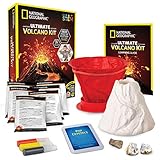
- MORE ERUPTIONS EQUALS MORE FUN – This kids science kit packs more eruption powder than ever before! You get 3x the eruption powder, plus pop crystals which add an exciting sound to your eruptions. Science kits like this are fun for everyone!
- UNFORGETTABLE SCIENCE EXPERIMENTS – This is a great hands-on experiment kit for any science fair; the updated mold and instructions make it easy to assemble a sturdy volcano form and realistic paint colors give the volcano a lifelike look.
- YOU GET REAL VOLCANIC ROCKS – Includes a pumice and a geode specimen so your kids can see real rocks created by a volcano! A full-color learning guide teaches about each rock and provides a wealth of educational information on volcano science.
- HOME SCHOOL CLASSIC – This is a classic STEM project that teaches kids about chemistry, geology, and earth science. Plus, the volcano mold is reusable, and the learning guide provides tips on different eruptions to try with common household items!
- AWARD-WINNING PRODUCTS - Blue Marble, winner of the Toy Association's prestigious Toy of the Year Award, proudly develops products that foster education, imagination, and creativity, with a U.S. support team to ensure a stellar experience!
For the deeper MCR, the study reports roughly 3 centimeters of line-of-sight movement away from the satellite between 2018 and mid-2022, interpreted as continued deflation. From mid-2022 through the end of the analyzed period in February 2024, the broader MCR signal shifted toward the satellite, which the authors interpret as likely renewed inflation and magma supply from depth. Meanwhile, the Santiago crater area kept deflating.
“Inflation” and “deflation” describe inferred changes in a source’s volume based on the ground’s movement. They are not direct readings of magma entering or leaving a chamber. A discussion in the paper refers to an extended time series through April 2026, but the core analysis window reported for the study is January 2018 to February 2024; those dates should not be treated as interchangeable.
Rank #2

- GET MORE ERUPTIONS FUN - there are 6 experiments to do by use 2 volcanoes. A plastic volcano, a gemstone dinosaurs fossil dig volcano, plastic dinosaurs, for volcano and snow eruption chemistry experiments ingredient.
- DIG REAL STONES - Includes 4 gemstones, so your kids can see real rocks and dinosaur skeletons excavate from a volcano!
- RED LAVA VOLCANO AND SNOW-CAPPED VOLCANO - This is a classic S.T.E.M project that teaches kids about chemistry, geology, and earth science.
- UNFORGETTABLE SCIENCE EXPERIMENTS – This is a great hands-on experiment kit for any science lesson. Perfect opportunity for kids to learn science while having fun.
- HIGH-QUALITY EDUCATIONAL TOYS - All you need to conduct your experiments are included in our all-inclusive kit. keep kids busy for hours.the volcano mold is reusable.
Does a second reservoir mean Masaya is about to erupt?
No. The study identifies a more complex pattern of deformation and offers a better-constrained model of magma storage. It does not forecast an imminent eruption. The researchers say the result does not by itself explain why Masaya can shift between intrusive, effusive and explosive behavior, and that longer-term geodetic observations and modeling are needed to understand those transitions and improve hazard monitoring.
Crashes, No Sound, or Screen Glitches?
Random freezes, missing sound and display glitches usually trace back to one bad driver. Find and replace yours safely.Free scan · under a minuteWindows Errors? Fix Them Before They Spread
Repair common Windows errors and clear accumulated junk for a smoother, more stable PC - no reinstall needed.Free scan · no reinstallMasaya is a basaltic shield volcano and complex caldera system with an active vent at Santiago crater. The paper notes persistent degassing, a history of large explosive eruptions, and that the last major lava flow occurred in 1772. It also reports that about 2 million people live within 20 kilometers of the volcano. That is a proximity estimate, not a claim that every person in that area has the same exposure to hazards.
Rank #3
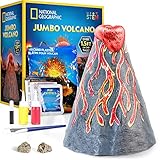
- OUR BIGGEST VOLCANO EVER - This jumbo volcano kit is our biggest yet at nearly 2 feet tall! Astound friends, family, and classmates with the stunning size and exciting eruption experiments! It's the perfect hands-on experiment for any science fair.
- EASY SETUP - Kid-friendly instructions make this jumbo volcano easy to make and erupt. Layer the plaster wrap over the frame, add plaster, and once it's dry, paint it and erupt it again and again!
- MORE ERUPTIONS, MORE FUN – This kids science kit comes with 3 packets of eruption powder plus pop crystals that add exciting crackling sounds. Instructions for more eruptions from household materials are also included.
- EVERYTHING KIDS NEED - Our jumbo volcano kit has everything kids need for an amazing science project, including the volcano mold, plaster mix and tint, two paint colors, paintbrush, and more. Genuine geode and pumice specimens are also included!
- AWARD-WINNING PRODUCTS - Blue Marble, winner of the Toy Association's prestigious Toy of the Year Award, proudly develops products that foster education, imagination, and creativity, with a U.S. support team to ensure a stellar experience!
The paper separately identifies persistent sulfur dioxide as a known hazard. That ongoing gas risk is not evidence that the newly modeled deformation is an eruption warning. The study’s value is in improving understanding of the volcano’s subsurface behavior and supporting future monitoring, not in establishing a near-term threat.
Quick Recap
Best Value

- ERUPTION-READY EXPERIMENTS: Kids discover the science of fizzy, foamy chemical reactions with this 13-piece deluxe science kit for kids, hands on science toys and preschool science tools for kids
- REAL SCIENCE SKILLS: As they follow along with the full-color guide's 10 fun science experiments for kids, little ones build observation, experimentation, and other STEM skills with this science kit
- KID-SIZED LAB TOOLS: Designed for little hands, this science kit's color lenses, test tube, beaker, funnel, and dropper help kids build fine motor skills as they experiment, hands on science toys too
- AGES AND SKILLS: Specially designed with little ones in mind, this preschool science lab helps kids as young as 4 build essential STEM skills through hands on volcano science experiments for kids
- EASY STORAGE AND CLEANUP: When the volcanic experiments are done, the pieces fit inside the Fizzy Volcano Preschool Science Lab for easy storage, a hands on science kit for the classroom or home too
Rank #4

- MASSIVE SCIENCE KIT FOR CURIOUS KIDS - More than 15 experiment activities including dueling water tornadoes, building an erupting volcano, growing a crystal, two geologic dig kits, and more!
- ENOUGH TO GO AROUND - This science lab allows kids to conduct multiple experiments and is great to share with family, friends, or classmates. Enjoy the magic of discovery together!
- THE SECRET IS THE SCIENCE - A detailed, full-color Learning Guide teaches the science at work in the experiments, allowing your child to develop a deep, lasting appreciation for a variety of Earth sciences.
- HASSLE-FREE EXPERIMENTS - Clear, easy-to-follow instructions build young scientists' confidence as they experiment, allowing them to focus on the joy of exploration and discovery.
- AMAZON EXCLUSIVE - Blue Marble has developed this product exclusively for Amazon.
What remains uncertain?
- The sources are inferred. Radar detects surface displacement, and models connect it to possible underground sources; the satellites do not image magma directly.
- The two-source model is not a complete explanation of Masaya’s eruptions. The finding does not resolve why the volcano alternates among intrusive, effusive and explosive activity.
- The observation period has limits. The main analysis ends in February 2024, even though the article’s discussion mentions a time-series extension through April 2026.
- Population proximity is not a measure of individual risk. The estimate of about 2 million people within 20 kilometers does not specify equal exposure or predict who would be affected by a future event.
Sources
- E. Johnson, Y. C. Kim and C. Wauthier, “Double Trouble: Two Active Magma Reservoirs Identified at Masaya Volcano, Nicaragua, Using Satellite Geodesy,” Geophysical Research Letters, first published July 23, 2026. Read the research paper.
- Ellyn Lapointe, “2 Million People Live Near ‘Mouth of Hell’ Volcano. It May Be Hiding a Second Magma Chamber,” Gizmodo, October 5, 2026. Read the report.
Product prices and availability are accurate as of the date/time indicated and are subject to change. Any price and availability information displayed on Amazon at the time of purchase will apply.




