Maritime systems gain speed and reach from satellite links, cloud services, remote support and shared corporate networks. Those same connections can create routes to technology that supports ship and port operations. The risk is not that every vessel is online or that a cyberattack automatically takes control of one: it is that a failure in a connected system may disrupt operations or create safety and security consequences, depending on what was reached and what safeguards are in place.
What makes maritime OT a safety and continuity concern?
Operational technology (OT) monitors or controls physical processes and equipment. Information technology (IT) generally handles data, communications and business systems. On a ship or at a port, the distinction matters because some OT supports functions on which safe, continuous operations depend. But the boundary between OT and IT is not always a reliable security boundary: systems may share networks, identities, suppliers or remote connections.
As an Amazon Associate I earn from qualifying purchases.
The International Maritime Organization (IMO) defines maritime cyber risk in terms of the possibility that a technology asset could be threatened in a way that leads to shipping-related operational, safety or security failures when information or systems are corrupted, lost or compromised. A breach does not by itself establish that a physical system was affected. Consequences depend on the system, the access obtained, safeguards, and the circumstances.
Quick wins for a faster PC:
Scan for outdated or missing drivers - takes under a minuteDriver Scan →Clear out junk files and repair common Windows errorsFree Scan →Fix the driver behind crashes, sound loss and screen glitchesFind Drivers →The IMO’s stated goal is “to support safe and secure shipping, which is operationally resilient to cyber risks.” Its framing puts continuity and safety alongside information security.
#1 Best Overall

- Anywhere Cellular Access: Enjoy reliable remote access without depending on Wi-Fi networks. Solace 4G camera uses 4G LTE cellular technology to provide live viewing & mobile alerts wherever coverage is available. Note: An active $24.99/month cellular data plan is required for camera operation. No contract required, cancel anytime.
- Solar Powered Performance: Equipped with solar charging technology and a rechargeable battery backup that lasts up to 14 days without charging, the Solace wireless camera delivers protection without complicated wiring or constant power access. Designed for remote environments, this energy-efficient outdoor camera helps monitor your property day and night.
- Ultra HD 4K Monitoring: Experience powerful surveillance with ultra HD video quality, advanced night vision, and intelligent AI human detection. Solace 4k camera helps capture important activity clearly while sending real-time motion alerts directly to your mobile device for enhanced security awareness.
- All Weather Protection: Built to perform in demanding environments, Solace wireless security camera features a durable weather-resistant design that protects against rain, dust, heat, and changing weather conditions. Ideal solar outdoor camera for boats, docks, marinas, cabins, and other remote locations.
- Advanced 4G LTE Camera: Solace 4G LTE Solar Powered Camera is built for boat owners, docks, marinas, and outdoors. This advanced cellular security camera provides reliable remote monitoring with 4G LTE connectivity, allowing you to view your property, receive alerts, and stay connected from anywhere.
How do connections create pathways into ship and port systems?
Corporate networks can reach beyond the office
The Coast Guard’s 2024 Cyber Trends and Insights in the Marine Environment (CTIME) report says attacks on enterprise networks are now more likely to affect shipboard IT and potentially vessel operations. This is a pathway, not a guaranteed chain of events: an enterprise compromise matters to a vessel when access, trust relationships, shared services or operational dependencies connect the two.
That makes it important to understand what can communicate between business networks and shipboard systems, which accounts and remote tools can cross that boundary, and whether critical functions can continue safely if a connection is unavailable or untrusted.
Satellite links and networked services bring both benefit and exposure
Improved satellite connectivity and networked technology support communication and connected operations, while increasing the number of dependencies that need protection. The Coast Guard’s CTIME materials describe these changes as increasing vessel cyber risks and making enterprise-to-shipboard links more consequential. Connectivity itself is not proof of a weakness; the relevant questions are what is reachable, who can reach it, and how access is controlled.
What’s actually slowing this PC down?
Pick the symptom - the matching free tool is one click away.
Rank #2

- Full-Color Night Vision Camera helps boaters see clearly at night, just like in the daytime. Using an advanced CMOS sensor, it captures full-color images even in extremely dark conditions. This gives you a clear, bright view of what’s ahead — from crab traps and buoys to bridges, kayakers, and other boats — helping you stay safe and confident on the water.
- ULTRA-LOW LIGHT NIGHT VISION: Advanced AI starlight algorithm model captures full-color nighttime images under extremely weak starlight conditions, activating super night mode to illuminate darkness and ensure clear visibility during night navigation
- HIGH-RESOLUTION IMAGING: Offers exceptional night vision up to 1000 meters. Features 5MP (500W pixels) resolution with 120-degree wide viewing angle, powered by 1-inch ultra-large image sensing chip and AI high computing power processor for superior image quality and detail
- MARINE-GRADE DURABILITY: Aviation-grade aluminum alloy construction with CNC processing and seawater corrosion-resistant coating, achieving IP67 waterproof rating to withstand harsh marine weather conditions and saltwater environments
- 4K VIDEO SUPPORT: Supports preview, storage, and playback of up to 4K high-definition videos with HDMI and VGA output options, compatible with Android devices and iOS iPad, analog night vision with storage capacity up to 6TB
Cloud use does not transfer every security duty
Cloud services may support business or operational functions, but the CTIME report notes misunderstandings about shared security responsibility. Organizations retain at least partial responsibility for their systems and data when they use cloud services. Operators therefore need to know which services support operations, who manages each part of the service, and how an outage or compromised account would affect the ability to operate.
Legacy equipment and exposed interfaces need attention
In a July 24, 2020 Marine Safety Information Bulletin, the Coast Guard warned that “Internet-accessible OT assets are prevalent across maritime critical infrastructure.” The bulletin also cautioned that legacy systems were not designed for current threats. This is an important warning about exposure, not a current measurement of how many maritime OT assets are internet-accessible.
Older equipment can be difficult to update or replace, so risk management may have to account for compensating safeguards and operational constraints. Internet exposure is one concern; remote maintenance paths, poorly controlled accounts and connections that are broader than a system needs can also erode the intended separation between IT and OT.
Rank #3

- 4K 8MP Color Vision Day & Night: The battery security camera is upgraded to 4K 8MP ultra-high definition, providing unparalled visual experience for you. The built-in motion spotlight helps you see every important color detail even at night.
- 100% Wire-Free Easy Setup: The camera works on 2.4/5GHz WiFi and continuously powered by the new 3W solar panel, freeing you from frequent battery charging hassles. With this easy-to-install wireless camera, you can build up your independent security system within minutes.
- 360° Coverage & Remote Access: Sweep off blind spots with 355° pan & 140° tilt. With the free Reolink app/client, you can remotely view and control the camera anytime anywhere and talk with your family or delivery person on the camera.
- Smart Detection Reduces False Alarms: Equipped with an advanced sensor and intelligent algorithms, this battery camera brings more accurate alerts, and you can set the detection sensitivity and zones for person/vehicle/pet motion to further reduce unwanted alerts.
- Multiple Alerts & Recording Options: The spotlight and siren will be triggered by motion to deter intruders, meanwhile you'll receive email or push notifications in real time. You can record events to the microSD card (purchased separately) and quickly play back with smart filters.
Suppliers and port equipment are part of the risk picture
Ship and port operations rely on equipment and services provided by outside organizations. The CTIME report describes supply-chain risks and vulnerabilities observed in ship-to-shore cranes manufactured in China. A Coast Guard public summary published in 2025 said about 80 percent of cranes loading and unloading container ships in American ports were made by Zhenhua Heavy Industry Limited (ZPMC), which it described as controlled by the Chinese government.
Windows Errors? Fix Them Before They Spread
Repair common Windows errors and clear accumulated junk for a smoother, more stable PC - no reinstall needed.Free scan · no reinstallCrashes, No Sound, or Screen Glitches?
Random freezes, missing sound and display glitches usually trace back to one bad driver. Find and replace yours safely.Free scan · under a minuteThat figure concerns cranes at U.S. ports; country of manufacture alone does not demonstrate that a crane is compromised. The operational issue is broader: operators need visibility into equipment, software, maintenance access and supplier responsibilities, including how a supplier connection is limited and monitored.
Why does the organizational blind spot persist?
OT has often been managed separately from IT, with different owners, expertise and operational priorities. That separation can obscure shared dependencies: a business account may have access to a remote service, a cloud provider may hold operational data, or a vendor may maintain equipment across organizational boundaries. A system inventory that stops at the ship’s physical boundary can miss these routes.
Rank #4
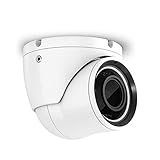
- Provides an extra set of eyes aboard your vessel to monitor areas above or below decks
- Analog camera delivers excellent quality images, even in low light; perfect for engine rooms
- Provides visibility in low light up to 15 meters, an improvement over previous generation analog cameras
- Capable of broadcasting images on 1 chartplotter or across multiple networked compatible chartplotters
- Reverse-image setting on compatible chartplotters helps when backing out of tight locations such as a crowded marina
The blind spot is therefore as much about accountability and operating practices as it is about network diagrams. If no one owns a connection, supplier access or recovery decision, technical controls may not match the way the operation actually works.
Independent reader supportYour contribution helps us test, update, and keep practical guides available for everyone.What do international guidance and U.S. rules require?
IMO guidance is designed to fit existing safety management
The IMO’s MSC-FAL.1/Circ.3/Rev.4 guidelines provide high-level recommendations for managing maritime cyber risk and are intended to complement existing safety and security practices. Resolution MSC.428(98), adopted in June 2017, encourages administrations to ensure cyber risks are addressed in safety management systems under the International Safety Management (ISM) Code no later than the first annual verification of a company’s Document of Compliance after January 1, 2021. This is the IMO’s guidance statement; it should not be read as proof that every jurisdiction applies identical enforcement.
The U.S. Coast Guard rule has a defined scope
The Coast Guard’s final rule was published January 17, 2025, and took effect July 16, 2025. Its stated scope includes U.S.-flagged vessels, Outer Continental Shelf facilities, and facilities subject to the Maritime Transportation Security Act of 2002. Coast Guard materials include training requirements for personnel with access to IT or OT systems. A November 2025 Coast Guard announcement set January 12, 2026, as the deadline for covered training; that date has passed.
Best Value

- 【FULL COLOR LOW LIGHT MARINE CAMERA】The BoatEye360 C1080 marine boat camera is designed to provide clear full-color video in challenging low-light conditions. Equipped with an advanced CMOS sensor, this marine navigation camera captures detailed images during nighttime boating, early morning departures, and evening returns. Ideal for fishing boats, yachts, sailboats, pontoons, and commercial vessels seeking dependable onboard visibility.
- 【1080P HD VIDEO WITH ADVANCED SENSOR】Featuring a high-performance imaging system with 1080P default output and 4K-capable sensor technology, this waterproof boat camera delivers sharp and detailed video for monitoring surrounding waterways, docks, markers, and onboard activity. The wide-angle lens helps provide a broader field of view for enhanced situational awareness while operating your vessel.
- 【HDMI & RCA CONNECTIVITY INCLUDED】Every BoatEye360 C1080 camera includes both HDMI and RCA outputs, allowing easy integration with compatible marine displays, chartplotters, monitors, and video systems. HDMI provides enhanced image quality for supported equipment, while RCA output offers flexible compatibility with existing installations, making upgrades and installations simple and convenient.
- 【316L STAINLESS STEEL WATERPROOF DESIGN】Constructed from marine-grade 316L stainless steel, this camera is built to withstand harsh marine environments. The corrosion-resistant housing offers durability in saltwater and freshwater conditions while helping protect internal components from moisture exposure. Designed for long-term use on recreational and commercial vessels.
- 【VERSATILE INSTALLATION FOR MULTIPLE VESSELS】The included adjustable mounting bracket supports roof, T-top, cabin, and inverted installations to accommodate various boat layouts. Compatible with 12-volt marine electrical systems, this boat camera is suitable for navigation assistance, deck monitoring, docking observation, fishing activities, and general marine viewing applications.
These requirements are not a global rule for every ship or port. Applicability depends on the entity and its circumstances, and this summary is not legal advice. Operators should consult current Coast Guard rule documents and guidance when determining their obligations.
What oversight gaps affect readiness?
The Government Accountability Office (GAO) reported in February 2025 that the Coast Guard could not readily access complete cybersecurity deficiency information from its inspection system. It also identified issues involving incident data, alignment of strategy and workforce competency planning. The GAO page showed recommendations being tracked into 2025; their current status should not be inferred from that review alone.
GAO described the scale of the U.S. Maritime Transportation System as more than $5.4 trillion in goods and services annually. That is a U.S. system figure, not an estimate of global maritime trade. The scale helps explain why incident reporting, inspection visibility and cyber skills are governance concerns as well as technical ones.
Recommended Free Tools
What should operators establish for resilience?
The following checks translate the issues raised in IMO guidance, Coast Guard observations and GAO findings into operational questions. They are a practical synthesis, not a verbatim official checklist.
- Map coverage: Identify shipboard OT, enterprise IT, shore facilities, cloud services and vendor access, including the connections and dependencies between them.
- Prioritize by safety impact: Determine which functions could be affected by a cyber incident and what safe degraded operation would look like if a system or connection became unavailable.
- Control access and separation: Review internet exposure, remote access, identities and permissions. Limit access to what is needed and protect critical functions from unnecessary connections.
- Plan recovery: Establish who responds, how incidents are reported, whether backups can be restored, and how safe operations will be resumed.
- Assign governance: Name accountable owners for systems and supplier responsibilities, train personnel with relevant access, and identify which rules apply to the organization.
Resilience depends on knowing what is connected, who is responsible for securing it, how a problem will be reported, and how operations can recover safely. The goal is not to assume every connection is dangerous; it is to make dependencies visible and prepare for the consequences when one fails.
Quick Recap
Product prices and availability are accurate as of the date/time indicated and are subject to change. Any price and availability information displayed on Amazon at the time of purchase will apply.




