Recommended Free Tools
Managing thousands of IoT devices and powering AI data centres are different operational challenges, but both require planning beyond the headline number: connected-device counts do not capture lifecycle risk, and annual electricity totals do not reveal local grid bottlenecks. A sound IoT program verifies identity and security posture before granting access, then maintains controls through retirement. For data centres, the International Energy Agency (IEA) estimated global electricity consumption at about 415 TWh in 2024 and projects about 945 TWh by 2030 in its base case; those figures cover all data centres, not AI alone.
How do you manage IoT devices at scale?
Treat fleet management as a security and operations lifecycle, not simply a way to connect more devices. Every device needs a known identity, an approved configuration, appropriately limited access, a path for authorized software updates, and an owner responsible for its support and retirement.
As an Amazon Associate I earn from qualifying purchases.
NIST’s SP 1800-36, published in November 2025 and updated in January 2026, describes trusted IP-based network-layer onboarding and lifecycle management. Its approach verifies device and network identity and device posture before issuing network credentials, then addresses secure posture throughout the device lifecycle. NIST says “scalable, automated mechanisms are needed to safely manage IoT devices throughout their lifecycles.” The guide demonstrates standards-based approaches using commercially available technology; it does not endorse a particular vendor or establish a single best architecture.
What’s actually slowing this PC down?
Pick the symptom - the matching free tool is one click away.
1. Define a security baseline, then profile each deployment
Start with the capabilities every device or device class needs. NIST’s technical capability catalog covers device identification, configuration, data protection, logical access to interfaces, software updates, cybersecurity-state awareness, and device security. Not every capability applies in the same way to every use case, so set requirements according to the device’s function, the data it handles, its network exposure, and the organization’s risk.
#1 Best Overall

- UNIVERSAL REMOTE - SMART HUB FOR 8,000+ BRANDS: Matter-certified IR & IoT hub with built-in alarm. Control TVs, ACs, fans and other smart devices from anywhere with 2.4 GHz WiFi. Voice commands, automations and fast alerts deliver a seamless connected home.
- EXPANSIVE COMPATIBILITY ACROSS YOUR HOME: Supports 18 appliance types and thousands of IR brands—TV, Air Conditioner, Set-Top Box, Robot Vacuum, Fan, Light, Air Purifier, Humidifier, Water Heater, Electric Heater, Electric Curtain, Projector, Amplifier, DVD, Camera, Foot Tub, Drying Rack, and Box devices. Easily consolidate control for both new and legacy electronics within IR range, replacing multiple remotes with one powerful smart home hub.
- SEAMLESS VOICE ASSISTANT SUPPORT: Hands-free control with Alexa, Google Assistant or Siri through Matter. Adjust temperature, switch channels and activate routines without touching a remote or phone.
- REAL-TIME ALERTS WITH BUILT-IN 93 DB ALARM: Connect Tapo sensors for real time alerts on motion, door or window activity. Hear important events with loud audible feedback and customizable tones.
- FULL REMOTE ACCESS IN THE TAPO APP: Use the Tapo app on iOS or Android to access devices wherever you are. Turn off forgotten appliances, adjust AC settings before arriving home and keep energy use under control.
- Record a unique device identity and the manufacturer or other supporting entity responsible for security support.
- Specify the secure configuration and which interfaces, services, and users are permitted.
- Decide what data must be protected and how access to device interfaces and network services will be restricted.
- Require an authorized update mechanism and a way to determine whether updates have been applied.
- Define what security-state information operators need to detect failures, drift, or compromise.
2. Onboard devices through a controlled process
Do not treat possession of a network address or a pre-shared credential as proof that a device is safe to join. Establish that the device and the network are the expected ones, check the device against the deployment’s posture requirements, and only then provision credentials and access. Where possible, automate repeatable checks so fleet growth does not depend on manual, device-by-device exceptions.
- Register: associate the device’s identity with its owner, intended purpose, location or deployment group, and support status.
- Verify: confirm device identity and network identity, then check the posture required for that device class.
- Provision: issue credentials and network permissions only after the checks succeed, using access limited to the device’s role.
- Validate: confirm that the device has the intended configuration and can be monitored and updated through authorized mechanisms.
This sequence reflects the trusted onboarding model in NIST SP 1800-36. The exact implementation depends on the protocols, network, device capabilities, and operating environment; the guide is a practice example, not a mandate to use one product or topology.
3. Operate the fleet as an ongoing control loop
After onboarding, keep the inventory aligned with reality and compare device state with the approved baseline. Monitor for missing devices, unexpected configuration changes, update failures, or a change in security posture. Define who can approve configuration changes and software updates, and retain enough status information to identify devices that need intervention.
Free tools Windows power users keep installed
One-click scans. No signup required.
Set an end-of-life process before deployment. When a device is transferred, replaced, or retired, remove its network access, revoke or disable its credentials, handle stored data according to policy, and update the inventory. Otherwise, the fleet record and access controls can outlive the equipment they were meant to govern.
Rank #2

- Reliable Long-Range Connections: The Tapo Hub operates on a lower frequency broadband, resulting in fewer signal interferences and ensuring stable connectivity for all your devices throughout your home. With a maximum connection distance of up to 30m, the Tapo Hub outperforms wireless network systems in the 2.4 GHz band. Our internal laboratory tests confirm the coverage and range of the Tapo Hub, but keep in mind that actual results may vary depending on environmental conditions.
- A Low-Power Way to Connect Everything- The Tapo Hub serves as the central hub for your Tapo smart home, linking smart sensors, switches, and buttons via an ultra-low power wireless protocol. This technology extends the battery life of devices by up to 10 times, in contrast to devices powered by the Wi-Fi protocol.
- Smart Action- With Tapo Smart Hub H100, you can trigger a Shortcut or control Tapo devices (such as smart plugs, smart lights and smart switches) based on sensor detection or with a button press. (Tapo H100 cannot directly connect to Tapo smart plugs or smart lighting, 2.4GHz Wi-Fi is required.)
- All Devices in One Hub- Each Tapo Hub can connect up to 64 Tapo devices throughout your home. Build and manage your smart home ecosystem with ease.
- Protect Your Home Day and Night- By integrating with Tapo motion sensors, door/window sensors, and other devices, the Tapo Hub can activate a high-decibel siren (up to 90 dB) to alert of potential hazards or discourage intruders.
How much electricity do AI data centres use?
There is no single global electricity figure for AI data centres in the cited estimates. The IEA’s 2025 analysis estimates and projects electricity use for all data centres, which serve AI and other workloads. It estimates about 415 terawatt-hours (TWh) of global data-centre electricity consumption in 2024—roughly 1.5% of global electricity—and projects about 945 TWh in 2030 in its base case. The 2030 value is a scenario projection, not a measurement or certainty.
| Measure | Geography and period | Figure | What it means |
|---|---|---|---|
| Data-centre electricity consumption | Global, 2024 | About 415 TWh; roughly 1.5% of global electricity | IEA 2025 estimate for all data centres, not AI alone. |
| Data-centre electricity consumption | Global, 2030 | About 945 TWh | IEA 2025 base-case projection for all data centres. |
| Electricity generation supplying data centres | Global, 2024 to 2030 | 460 TWh to over 1,000 TWh | IEA 2025 base-case projection of generation to supply data centres; this is a distinct measure from the consumption estimates above. |
| Data-centre electricity use | United States, 2023 | 176 TWh; about 4.4% of U.S. electricity | DOE figure announced in 2024, citing the Lawrence Berkeley National Laboratory report. |
| Data-centre electricity use | United States, 2028 | 325–580 TWh; about 6.7–12% of U.S. electricity | DOE’s 2024 summary of an LBNL projection range, not observed consumption. |
The global and U.S. figures should not be blended: they cover different geographies and years, and the forecasts depend on assumptions about future demand. The IEA’s 2025 analysis explicitly includes substantial uncertainty. Annual TWh also describes energy over time, not a facility’s peak power requirement in megawatts (MW), which is crucial when assessing a particular grid connection.
For the U.S. figures, see the Department of Energy’s 2024 summary of the LBNL report. For the global consumption estimates and base case, see the IEA’s energy-demand analysis; its separate energy-supply analysis discusses generation supplying data centres.
Will data centres put too much strain on the power grid?
They can create serious pressure in particular places, but a global annual total cannot establish whether a specific utility territory has enough capacity. Data-centre load is geographically concentrated, and a large facility’s connection can require local delivery capacity on a timescale that differs from broader forecasts of electricity supply.
Rank #3

- Echo Hub — An easy-to-use smart home control panel redesigned for your home. Arrange controls on your dashboard to quickly adjust devices, view cameras, start routines, and more.
- Customize your dashboard — Arrange devices into sections and resize them to focus on what matters most. Create a personalized layout that matches how your family uses their connected devices.
- Reimagined for your home - With an Alexa+ and compatible Ring subscription (sold separately), get Ring camera event summaries to stay in the know. Search your Ring footage using simple voice commands. Create routines by voice, activate modes to manage multiple devices at once, and chat with Alexa to easily control your smart home.
- Home security for the whole family — Use Echo Hub to easily arm and disarm your compatible security system, making it easy for everyone in your family to manage home security. Use the Alexa app and compatible cameras, locks, alarms, and sensors to check in while you're out.
- Works with thousands of Alexa compatible devices — WiFi, Bluetooth, Zigbee, Matter, Sidewalk, and Thread devices sync seamlessly with the built-in smart home hub.
A July 2024 U.S. Department of Energy Secretary of Energy Advisory Board report describes hyperscale data-centre connection requests in the 300–1,000 MW range or larger, with lead times of 1–3 years, as a challenge to local grid delivery capacity. These are the report’s described request sizes and connection context—not a typical timeline for every facility, utility, or country. The report is available as a DOE advisory report.
Three distinctions help make a grid assessment useful:
- Annual energy versus peak load: TWh totals describe energy consumed or generated over a year; MW describes power at a point in time and is more directly relevant to connection capacity.
- Global growth versus local constraint: adequate generation in aggregate does not mean the transmission and distribution network near a proposed site can deliver power when and where it is needed.
- Forecast versus committed project: a scenario for future demand is not the same as a specific connection request, an approved connection, or a completed facility.
What can utilities and data-centre operators do about rising demand?
Planning should connect a proposed facility’s load profile and connection schedule to the actual capacity and constraints of the local system. Because the DOE advisory report describes large requests as stretching local delivery capacity, utilities and operators need to identify connection requirements early rather than relying on an aggregate national or global forecast to answer a site-specific question.
Quick wins for a faster PC:
Clear out junk files and repair common Windows errorsFree Scan →Scan for outdated or missing drivers - takes under a minuteDriver Scan →Plan for the local connection, not just the annual total
For a project review, establish the expected peak MW, when the load will come online, and how quickly it may grow. Compare that schedule with the relevant utility’s available delivery capacity and planned network work. These questions make the discussion specific; the available global estimates do not determine the power needs or connection timeline of an individual facility.
Rank #4
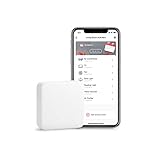
- Easy to use - Easy to set up the Hub Mini in SwitchBot App. With "Smart learning" mode, it can mimic your existing remote control in 5s. USB-powered and portable, you can take & place it everywhere. (*5G Wi-Fi is not supported, so please use 2.4G Wi-Fi. There are two routers, 5G and 2.4G Wi-Fi, but be sure to connect to 2.4G Wi-Fi)
- One for all - Pair your air conditioner, TV, and other infrared appliances to the Hub Mini. All devices in ONE App. Enjoy the convenience at fingertips. Please note that construction materials and metal objects between the WiFi router and the Hub Mini or between the Hub Mini and the IR device it controls can interrupt the connection. If possible, set the Hub Mini within a clear line of sight of the infrared device.
- Your "Mini" step to a smart home - It's the gateway of SwitchBot ecosystem. Connect all SwitchBot devices and home appliances to the Internet, enable the Cloud Service of your SwitchBot devices. Start building up your own smart home with SwitchBot!
- Enjoy voice control - Works with Alexa, Google Assistant, Siri and IFTTT. Control your SwitchBot devices and home appliances with a simple voice command.
- Save energy and save money - Wondering if you have turned off the bedroom AC or not? Just turn it off in SwitchBot App or set a helpful scene, you will NEVER forget to turn off the appliances.
Track supply as well as demand
The IEA’s 2025 base case projects global generation supplying data centres rising from 460 TWh in 2024 to over 1,000 TWh in 2030. In its analysis, renewables meet nearly half of additional data-centre demand over the next five years. That is a global scenario, not a guarantee of the electricity mix available to a particular site or a substitute for checking local grid conditions.
Use digital tools to improve grid operations
AI and other digital tools have a two-sided relationship with electricity systems: data centres add load, while digital tools may help operators with forecasting, optimisation, situational awareness, resilience, and risk management. The IEA’s 2026 report on modernising grids discusses these potential uses. They can support grid management, but they do not remove the need to assess physical network capacity and local connection constraints.
How to turn the evidence into an operational plan
For an IoT fleet, first define the device baseline and support responsibilities; then implement identity and posture checks before credential provisioning, and maintain inventory, monitoring, updates, access controls, and retirement procedures. For a data-centre project, keep annual energy forecasts separate from peak MW and distinguish global scenarios from the capacity and timing of the specific local connection.
Windows Errors? Fix Them Before They Spread
Repair common Windows errors and clear accumulated junk for a smoother, more stable PC - no reinstall needed.Free scan · no reinstallOutdated Drivers Are Slowing You Down
One free scan finds every outdated or missing driver and matches the right update for your exact hardware.Free scan · exact hardware matchNeither area has a universal answer independent of context. NIST’s device requirements are a risk-based foundation to adapt, while data-centre power planning depends on workload, facility design, geography, and utility territory. The evidence supports lifecycle controls and careful grid planning, not a one-size-fits-all IoT architecture or hardware purchase.
Quick Recap
Product prices and availability are accurate as of the date/time indicated and are subject to change. Any price and availability information displayed on Amazon at the time of purchase will apply.




