Recommended Free Tools
The tiny rig described in the original 2016 report is VideoStitch’s Orah 4i: four fisheye cameras, four ambisonic microphones and a separate computer that stitches the views into a live 360-degree feed. It is a capture system, not a complete VR broadcast by itself. A usable live event also needs encoding, a streaming server, delivery infrastructure and a 360-capable player.
What the Orah 4i camera rig was
Futurism described the Orah 4i on April 8, 2016 as a compact 360-degree live-stream camera system designed to be “small, inconspicuous, and able to blend in.” The camera body uses four f/2.0 fisheye lenses arranged to capture a full spherical view and four ambisonic microphones for spatial audio.
As an Amazon Associate I earn from qualifying purchases.
Unlike an all-in-one consumer camera, the Orah 4i sends its feeds to a separate stitching box. That box contains an Intel CPU, Nvidia GPU and a 120GB SSD, along with two Ambarella video chips in the camera system. One Ethernet cable carries both data and power between the camera rig and the stitching box. This division keeps the camera small but adds a dedicated computer, cable and mounting position to the production setup.
Quick wins for a faster PC:
Repair Windows errors before they cause bigger problemsFix Now →Scan for outdated or missing drivers - takes under a minuteDriver Scan →The description is historical. The material available for this article does not establish current retail availability, replacement parts, software support or a present-day price for the Orah 4i.
#1 Best Overall

- Think bold. A collection of stickers that capture the Insta360 spirit, freely pasted wherever you like. In the Box: 1x Insta360 X3, 1x Charge Cable, 1x Protective Pouch, 1x Lens Cloth, and 1x User Guide.
- NEW ERA 360 ACTION CAMERA: Insta360 X3 combines 5.7k 360 with all the power of a 4K action camera together. Unbelievable potential!
- 5.7K 360 CAPTURE & REFRAMING: Insta360 X3 captures 360 Active HDR video, with all the benefits of a traditional action camera. Choose your favorite angle after the fact with easy reframing in the AI-powered Insta360 app.
- 4K WIDE-ANGLE SHOTS: Shoot wide-angle footage in maximum resolution with 4K30fps or a super-wide 170° field of view with 2.7K60fps MaxView.
- KEEP FOOTAGE STABLE & LEVEL: FlowState Stabilization and Horizon Lock algorithms work together to deliver incredibly smooth videos.
What a live VR broadcast needs beyond the camera
A headset viewer does not connect directly to lenses. The complete path has five functional stages:
- Capture: a 360-degree camera records overlapping views and, where supported, spatial audio.
- Stitching and encoding: software or hardware joins the camera feeds into an equirectangular 360 video and compresses it for streaming.
- Media-server ingest: the encoded feed enters a server, commonly through RTMP in the workflow documented by Wowza.
- Delivery: the server packages or distributes the stream through a content-delivery network.
- Playback: a browser or headset application uses a 360-aware player so the viewer can look around the spherical image.
Removing any one of these stages leaves a production gap. A camera that records 360 video is not automatically an RTMP encoder, CDN, or headset player.
Rank #2

- 8K30fps 360° Video with Dual 1/1.28" Sensors: Capture stunning detail with dual 1/1.28" sensors shooting up to 8K30fps. Film epic adventures, everyday moments, and more, all in sharp, immersive 360° video with better clarity, color, and dynamic range
- Triple AI Chip Design, Better Low Light: Shoot confidently even in challenging lighting. X5’s triple AI chip design powers advanced noise reduction and image processing, delivering crisp, vibrant footage even in dim or night conditions
- Invisible Selfie Stick: Create impossible third-person views with no selfie stick in sight! Capture everything in 360°, then choose your angles later using AI-assisted reframing—perfect shots, every time
- InstaFrame Mode: Get a ready-to-share flat video instantly. Choose auto-framing to let the camera track you, or lock in a fixed angle. Preview the 360° video later to add in any unexpected moments, too
- FlowState Stabilization + 360° Horizon Lock: No gimbal needed. X5’s FlowState Stabilization and full 360° Horizon Lock deliver buttery-smooth, level footage, even during action-packed moments, bumps, or full rotations
A documented 4K-to-HLS workflow
Wowza’s 2020 tutorials use an Insta360 Pro 2 as the capture device. The camera is configured for a custom RTMP server and a 3840×2160 (4K) output. The resulting stream is handled by Wowza Video or Wowza Streaming Engine, delivered through a CDN and played in a 360-capable web player such as THEOplayer.
Configuration sequence
- Prepare the camera: connect the Insta360 Pro 2 to the network and select its custom RTMP-server mode.
- Set the video format: choose 3840×2160 output, as in Wowza’s example. Confirm that the camera, encoder and network can sustain the selected bitrate.
- Provide the ingest endpoint: enter the RTMP server address and stream credentials supplied by the media-server service.
- Configure the media server: accept the RTMP input and create the 360-compatible output workflow.
- Package for viewers: use HLS playback and distribute it through the selected CDN.
- Use a 360-aware player: load the HLS stream in a player that exposes spherical navigation on a phone, browser or VR headset.
- Test the entire chain: verify camera orientation, stitching seams, spatial audio, ingest stability, playback controls and end-to-end delay before the event.
How much delay should you expect?
Wowza’s Streaming Engine tutorial says its low-latency HLS option reduced the usual HLS delay of 30–45 seconds to approximately 10–15 seconds in the demonstrated setup. Those figures come from that 2020 configuration; they are not a universal performance guarantee. Camera processing, stitcher load, encoder settings, upload capacity, server configuration, CDN behavior and the player’s buffer can all change latency.
Rank #3
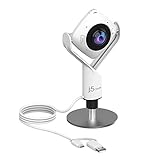
- 360° video conferencing camera with built in ominidirectional microphone
- Six display modes deliver exceptional viewing angles with flexibility and versatility
- Full HD 1080p video playback @ 30 Hz
- USB UVC/UAC plug-and-play with touch bar to specify participants’ location. *Note: App permissions may need to be authorized in order to use the camera. An upgrade of the firmware to the latest version may be required in order to optimize the webcam's functionality and resolution.
- Supports your favorite video conferencing apps: Compatible with Skype, Microsoft Teams, Google Meet, Cisco, Zoom, BlueJeans, Amazon Chime, GoToMeeting, Slack
For a live VR event, measure delay from a visible action in front of the camera to the same action in the headset. If interaction is important, reduce segment and buffer settings only after confirming that the network remains stable; an aggressive latency target can produce stalls or dropped playback.
Orah 4i versus the documented modern workflow
The sources describe different generations of equipment rather than a like-for-like product test. The table shows what is established about each approach.
Rank #4
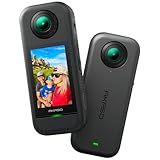
- 5.7K 360° Video: AKASO 360 action camera captures fully immersive 360° video in stunning 5.7K clarity, ensuring you never miss the action. Unleash your creativity to record your adventures like never before. This 360 camera does not support HDR functionality. Video quality may be limited in low-light conditions.
- 360° Supersmooth Video: Advanced in-app stabilization algorithms smooth out shakes and jitters in your action for silky smooth footage, even without a gimbal!
- 360° Horizon Steady: Unlock a new level of stabilization—360° Horizon Lock keeps your footage level all the time, no matter how you flip or spin.
- Invisible Selfie Stick Effect: Yes! You can create unbelievable third-person shots on your own! The selfie stick automatically disappears from your footage like magic. No photographer? No problem! Invisible Selfie Stick is not included.
- Dual 1/2" 48MP Sensors: Equipped with two massive 1/2" 48MP sensors, AKASO 360 captures more pixels for sharper, clearer images, bringing your action to life.
| Characteristic | VideoStitch Orah 4i | Wowza/Insta360 Pro 2 example |
|---|---|---|
| Capture design | Four f/2.0 fisheye lenses in a compact rig | Insta360 Pro 2 360 camera |
| Stitching location | Separate stitching box with Intel CPU, Nvidia GPU and 120GB SSD | Workflow uses camera output, then server-side streaming components; the cited tutorial does not specify an equivalent Orah-style box |
| Audio | Four ambisonic microphones | Not stated in the cited workflow |
| Camera-to-computer connection | One Ethernet cable carries data and power | Network connection for custom RTMP ingest; the tutorial does not specify the camera’s power method |
| Live protocol and delivery | Not stated in the 2016 description | RTMP input, HLS playback and CDN delivery |
| Output example | Not stated | 3840×2160 (4K) |
| Latency evidence | Not stated | Approximately 10–15 seconds with the demonstrated low-latency HLS setup, compared with stated standard HLS delay of 30–45 seconds |
| Portability | Small camera body, but requires a separate box and Ethernet cable | Camera plus the network, encoding, server, CDN and playback chain |
| Current availability | Not established | Current stock and regional availability are not established here |
Choosing equipment for a live VR event
Choose a compact multi-camera rig when
- You need a discreet camera footprint and can accommodate a nearby stitching computer.
- You have staff to manage cabling, power, synchronization and stitching software.
- Spatial audio is important and the rig’s microphone arrangement is supported by the rest of your workflow.
Choose a current integrated 360 camera workflow when
- You want a documented RTMP path into a media server such as Wowza.
- You need a specified 4K output and HLS distribution model.
- You prefer to evaluate currently supported camera firmware, encoding tools and service integrations before committing to an event.
For either approach, confirm lens coverage and seam quality at the intended camera height, reserve upload bandwidth, test the complete RTMP-to-HLS path, and provide a player that recognizes 360 metadata. Do not assume that a camera’s recording resolution, advertised live mode or headset compatibility guarantees the same result in your chosen network and player.
What viewers need to watch
On a phone or desktop, the player should allow drag, mouse or gyroscope navigation around the sphere. In a VR headset, the same 360 stream must be rendered by a headset-compatible application or browser player. HLS is a delivery format; it does not by itself create head tracking, stereoscopic depth or a headset interface. Those capabilities come from the player and the viewing device.
Best Value

- Lightweight & Portable (165g): A sleek 165g* camera bursting with potential. Ultralight, easy to use, full 360 creativity—you won't even notice it's there. *Actual weight may vary slightly depending on configuration and production.
- 8K 360 Video: Dual lenses capture every second of the family fun, all angles of your favorite spot, and every highlight in stunning 8K30fps. Finally, no one is stuck behind the camera.
- Shoot First, Frame Later: Never aim the camera, always get the shot. Just hit record, live in the moment, and pick the best angles later with easy reframing tools in the Insta360 app.
- Invisible Selfie Stick Effect: Capture awesome third-person perspectives and drone-like angles with a selfie stick that magically vanishes from your shots. An iconic effect that's impossible with other action cameras. *Invisible Selfie Stick sold separately.
- Replaceable Lenses: X4 Air's lenses are rugged, durable, and easily replaceable with our handy kit. Swap them out if they get damaged without replacing the whole camera. No stress, no waiting.
The Bottom Line
The Orah 4i explains how a tiny camera body can capture live 360 video, but the practical broadcast is the whole chain: camera, stitching and encoding, RTMP ingest, CDN delivery and a 360-capable HLS player. For a currently documented example, Wowza uses the Insta360 Pro 2 at 3840×2160 and reports roughly 10–15 seconds of latency with its demonstrated low-latency HLS configuration.
Quick Recap
Product prices and availability are accurate as of the date/time indicated and are subject to change. Any price and availability information displayed on Amazon at the time of purchase will apply.




