Choose by fit, comfort and the kind of running you actually do. Use a lighter shoe if speed sessions or races are your priority. Use a more cushioned trainer if a softer ride keeps you running happily. The published studies don’t show that either category is best for everyone, and they don’t show that either one reliably prevents injury.
Weight and cushioning are two different properties
“Lightweight” describes mass. “Cushioned” describes how soft or responsive the shoe feels underfoot. They aren’t opposites. Nike’s consumer guidance puts it this way: “Shoe weight reflects the total materials used, while cushioning is a term used to describe how soft or responsive the shoe feels.” That is manufacturer guidance, not a clinical finding, but the distinction holds up in practice. A relatively light shoe can still have a meaningful midsole, and a heavy shoe isn’t automatically plush.
As an Amazon Associate I earn from qualifying purchases.
So compare individual shoes on these axes rather than picking a category by label:
Recommended Free Tools
- Actual weight (check the listed mass, and note which size it applies to)
- How the cushioning feels when you run, not just how it feels standing in the shop
- Fit and comfort
- The run it’s for: easy, long, speed or race effort
- How different it is from the shoes your body already tolerates
Which fits which kind of run
| Your priority | Leaning toward | Trade-off to weigh |
|---|---|---|
| Speed sessions, intervals, races | A lighter shoe | Check that it still feels comfortable for the full session. A light shoe that bothers you isn’t a good deal. |
| Easy and long runs | Whichever feels most comfortable; many runners prefer a softer, more cushioned trainer | This is a preference, not a proven injury safeguard. |
| One shoe for everything | A moderate shoe that is light enough and cushioned enough for you | You may give up some of the specialised feel of either type. |
| Considering minimalist shoes | A gradual, cautious transition | Minimalist is not the same as lightweight (see below). |
These are design trade-offs and personal preferences, not guaranteed performance or injury outcomes.
#1 Best Overall

- Athletic mesh upper with durable leather overlays for added dimension & midfoot support
- Charged+ midsole cushioning provides unmatched softness & all-day comfort
- Durable rubber outsole provides traction & durability with strategically-placed flex grooves for proper toe-off
- Upper contains at least 30% recycled content
- Weight: 10.2 oz , Lace type: Standard tie, NEUTRAL: For runners who need a balance of flexibility & cushioning
What the evidence says about injury
The big review: mostly “no clear difference”
A 2022 Cochrane review pooled 12 trials with 11,240 participants comparing different shoe types. Most of the evidence was low or very low certainty. The authors concluded: “Most evidence demonstrates no reduction in lower-limb running injuries in adults when comparing different types of running shoes.” The review also flagged inconsistent definitions of injury and of shoe characteristics, and too few studies for many comparisons.
One trial that did find a cushioning effect
In a 2019 randomized trial by Malisoux and colleagues, 848 recreational runners received one of two shoe prototypes that differed in cushioning. The harder-shoe group had a higher overall injury risk (SHR 1.52, 95% CI 1.07–2.16), and the subgroup pattern differed by body mass. This is one trial with specially built prototypes, so it doesn’t amount to a general rule. It also sits alongside the Cochrane finding, not above it.
Rank #2

- Lightweight, breathable mesh upper with synthetic overlays for added durability & support
- EVA sockliner provides soft, step-in comfort
- Charged Cushioning midsole uses compression molded foam for ultimate responsiveness & durability
- Solid rubber outsole covers high impact zones for greater durability with less weight
- Offset: 10mm
Lab impact numbers are not injuries
One study found higher impact measures in a highly cushioned shoe at the faster tested speed. That is a laboratory mechanical measurement. It doesn’t show that cushioned shoes cause injury, any more than a softer feel shows they prevent it.
What the evidence says about performance and comfort
A 2020 study compared the Vaporfly 4%, Saucony Endorphin lightweight racing flats and runners’ own shoes. It used 18 male recreational runners and specific models, so it can’t promise every runner a gain from choosing a light shoe, and it says little about ordinary trainers.
Rank #3

- Lightweight & Breathable – Weighing only 8.8 oz (size 9), with a durable engineered mesh upper, providing a lightweight, breathable feel for daily runs and walks.
- Durable Cushioning – EVA foam midsole with 3D abrasion-resistant particles offers soft cushioning while enhancing slip resistance and durability.
- Stable Heel Support – Reinforced heel structure protects foot stability, preventing ankle rolls and ensuring secure, steady movement for safer walking and running.
- Reflective Heel Strap – Adds convenience for easy on-and-off while enhancing visibility and safety during nighttime runs.
- K-Swiss iconic 5-stripe design with a dynamic speed-inspired twist, balancing commuting and sport, perfect for running, gym workouts, and more.
Comfort looks like the more useful signal. A systematic review and meta-analysis found lower oxygen consumption during submaximal running in the most comfortable footwear compared with the least comfortable: a mean difference of −2.06 mL·kg⁻¹·min⁻¹ (95% CI −3.71 to −0.42). The authors noted methodological limitations, so treat this as suggestive. A separate 2015 study of 12 male runners reported lower oxygen consumption and greater comfort in its tested energy-return footwear than in conventional footwear. That says nothing general about cushioned trainers as a class.
The practical takeaway: a shoe you find comfortable is worth more than one that wins on a spec sheet.
Rank #4

- THIS MEN'S SHOE IS FOR: Runners or walkers focused on improving their fitness, the Revel 8 offers a smooth, distraction-free ride to power through your workouts. Its unique mesh upper combines style and performance, giving you the casual look you want without compromising on the support and comfort you need. This Brooks Revel 8 has been granted the APMA Seal of Acceptance. Predecessor: Revel 7.
- ENGINEERED FOR COMFORT: Adaptable DNA Loft v2 cushioning provides underfoot comfort for any activity that adapts to your stride, weight, and speed to help protect you by deflecting impact away from your body.
- BREATHABLE MESH UPPER: The updated engineered mesh upper offers superior structure, a sleek design, and enhanced breathability, keeping your feet cool and comfortable during every run or workout.
- ROADTACK OUTSOLE: The RoadTack rubber outsole is lightweight, durable, and designed for optimal rebound, providing superior traction and responsiveness to keep you moving with confidence.
- VERSATILE DESIGN: A sleek design that’s ready for both your toughest workouts and casual outings, effortlessly transitioning from run to rest while maintaining a stylish, modern edge.
A note on minimalist shoes
If “lightweight” makes you think of minimalist shoes, keep them separate. A 2017 randomized trial by Ryan and colleagues followed 61 trained habitual rearfoot runners for 26 weeks, comparing minimalist and conventional shoes. Pain and injury findings varied with weekly running distance and body mass. Those subgroup results come from specific runners using a gradual transition. Don’t read them as cutoffs that apply to you. If you try a minimalist shoe, build up slowly and watch for lingering pain.
What’s actually slowing this PC down?
Pick the symptom - the matching free tool is one click away.
How to choose in practice
- Decide the main job: speed work and racing, or easy and long mileage.
- Start from shoes similar to ones you already run in without trouble. Large jumps in feel are where problems are more likely to start.
- Compare the listed weights, but prioritise how each shoe feels while running. Try them in the afternoon, with your usual running socks, and jog a little if the shop allows it.
- Check fit: room for your toes, a secure heel, no pressure points.
- Choose the one that feels most comfortable for that job. Introduce it gradually into your weekly mileage.
- If a shoe causes pain that persists, swap it out rather than hoping you’ll adapt, and see a clinician for ongoing pain.
This advice doesn’t prescribe shoes by body weight or arch type, because the evidence here doesn’t support doing so. Specific models and prices change often, so check current specifications before buying.
Quick Recap
Best Value
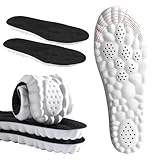
- Arch Support and Pain Relief for Foot Pain: This comfortable cushioning insole is ergonomically designed to effectively relieve foot pain such as plantar fasciitis, heel pain, plantar fasciitis, etc.
- Comfortable and Breathable: These insoles feature a honeycomb design that promotes air circulation and keeps your feet cool and dry. Advanced materials wick away moisture, dry quickly, and help prevent foot odor
- Shock Absorption and Anti-Slip: The U-shaped memory foam heel provides excellent shock absorption, reducing impact on the feet and knees, and there is a comfortable and flexible gel insert at the bottom of the insole for effective shock absorption.
- Memory Foam Comfort Insoles: These insoles are made of high-quality PU material, which is beautiful, soft and comfortable, super soft U-shaped memory foam sports insoles, suitable for both men and women, to keep your feet warm
- Suitable for all occasions: These insoles can easily fit any shoe size, including: sports; walking/running, work, etc., and a transition period is required for the first use
Product prices and availability are accurate as of the date/time indicated and are subject to change. Any price and availability information displayed on Amazon at the time of purchase will apply.




