Choose between LFP and NMC by comparing the specific cars, not by treating either chemistry as an automatic winner. LFP can help keep battery-pack costs down and tolerate regular full charges; NMC packs have higher energy density, which can favor longer range from a given pack size and performance in cold climates. Your usable range, charging needs, local weather, the vehicle’s thermal management, price, and manual matter more than the chemistry label alone.
What LFP and NMC mean for an EV buyer
Lithium iron phosphate (LFP) and nickel manganese cobalt (NMC) are both lithium-ion battery chemistries. They influence a pack’s cost, energy density, and charging guidance, but do not by themselves determine a vehicle’s range, charging speed, safety, or service life. Pack design, vehicle efficiency, battery management and thermal systems all shape what an owner experiences.


As an Amazon Associate I earn from qualifying purchases.
The International Energy Agency’s Global EV Outlook 2025 describes LFP as the main chemistry used in China and NMC as the most widely used in the United States and Europe. That is a report-year snapshot of regional adoption, not a guarantee of what chemistry is available in a particular model or market today. IEA, Global EV Outlook 2025.
Quick wins for a faster PC:
Clear out junk files and repair common Windows errorsFree Scan →Fix the driver behind crashes, sound loss and screen glitchesFind Drivers →Repair Windows errors before they cause bigger problemsFix Now →How the pack-level trade-off looks
In its 2025 report, the IEA said LFP battery packs were almost 30% cheaper per kWh than NMC packs, while LFP pack energy density was about one-fifth lower by mass and about one-third lower by volume. These are pack-level averages reported in the context of 2024 market conditions, not current quotes for a replacement pack or promised savings on a car’s sticker price.
#1 Best Overall
| Consideration | LFP | NMC |
|---|---|---|
| Pack price per kWh | Almost 30% lower than NMC in the IEA’s 2025 report on 2024 market conditions | Reference chemistry for the IEA’s reported comparison |
| Pack energy density | About one-fifth lower by mass and about one-third lower by volume than NMC packs, per the IEA’s 2025 report | Higher than LFP in the IEA’s 2025 pack-level comparison |
| Full-charge tolerance | The IEA says it can reach 100% state of charge when required without significant degradation; vehicle guidance still varies | The IEA says it is typically limited to 80% to preserve long-term performance; vehicle guidance still varies |
| Cold-climate considerations | The IEA describes LFP as typically less effective in cold climates than NMC | The IEA identifies its density advantage as relevant to cold climates |
The IEA also says LFP performance has reached a level sufficient for most EV applications, helping its lower pack cost support mass-market vehicles. That does not mean every LFP model is inexpensive, or that the pack-price difference passes directly to buyers. Retail price reflects the whole vehicle, its equipment, market conditions and other factors.
How to compare range and cold-weather performance
Energy density is not the same as a car’s rated range or the distance it will cover on your routes. Range also depends on usable battery capacity, vehicle size and efficiency, driving style, terrain and climate, according to Australia’s energy department. Compare range figures only when they use the same test method and are reported for the same market. Ford Australia identifies WLTP as the standardized procedure it uses for single-charge range comparisons. Australian government EV battery overview; Ford Australia range and battery options.
Rank #2
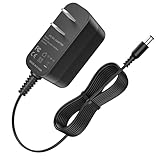
- Compatibility: 36V power supply for TVTAU T10 Pro for whall EV-691 EV-691H 29.6V Lithium Ion battery cordless stick vacuum cleaner
- Specification: Power supply for TVTAU T10 cordless stick vacuum cleaner charger. Input: AC100V-240Volt 50/60HZ, Output: DC 36V 0.5A, the US standard wall charger replacement plug, 5Ft long enough power cord for whall EV-691 cordless vacuum cleaner
- Relability: Protection ac adapter for whall EV-691H cordless vacuum cleaner charger has built in smart chip to provide over current protection, over voltage protection, short circuit protection, over temperature protection you can feel relieved to charge for 29.6v lithium ion battery cordless stick vacuum cleaner
- Durability: AC adapter for 29.6v lithium ion battery cordless stick vacuum cleaners made of durable quality material and has been well checked by the manufacturers. It meets OEM standard for long lasting use. This charger for whall EV-691 cordless vacuum cleaner is small enough to carry easily
- What You Get: 1 Piece 36v max charger for TVTAU T10 Pro 29.6v lithium ion battery cordless stick vacuum cleaner the above listed models. If you have any questions before you order, please contact us, we will reply as soon as possible within 24 hours
NMC’s greater energy density can be useful if you need more range from a given pack size. The IEA also says LFP is typically less effective in cold climates than NMC, but that is not a prediction for every model or winter. Ford Australia says battery preconditioning can improve performance, charging speed and range, particularly in cold weather. Check a specific car’s cold-weather range, whether it can precondition its battery, and how it charges when cold; do not infer those details from chemistry alone. IEA, Global EV Outlook 2025; Ford Australia range and battery options.
Do these 3 things before closing this tab:
1Fix the driver behind crashes, sound loss and screen glitches2Clear out junk files and repair common Windows errors3Scan for outdated or missing drivers - takes under a minuteHow often you can charge to 100%
LFP’s tolerance for a full charge can be convenient when you need the vehicle’s full range or want to follow a maker’s recommendation to charge fully. However, no single charge limit applies to all LFP cars, and chemistry-level guidance is not a substitute for the owner’s manual.
For example, a Ford owner-manual section for a specified standard-range LFP configuration says to set the maximum charge level to 100% and charge to 100% at least once per month to maintain range accuracy. The same manual gives a 90% everyday limit for its extended-range NCM configuration. Volvo’s general U.S. battery guidance recommends charging to 90% and reserving 100% for longer trips. These are examples of vehicle-specific manufacturer instructions, not universal rules for LFP or NMC. Ford owner manual; Volvo battery guidance.
Before setting a routine charge cap, find the guidance for the exact model, battery configuration and market. If the car is used, confirm its battery configuration rather than assuming instructions from another trim apply.
Rank #4
What safety and battery-life evidence can—and cannot—tell you
The available evidence does not establish that all LFP vehicles are safe or that NMC vehicles are unsafe. MG Motor Europe describes LFP as having high chemical stability and thermal-safety advantages; Volvo describes battery-management systems that monitor and safeguard the battery and says its own pack is protected within a safety cage. These are manufacturer descriptions of chemistry or vehicle systems, not a universal comparative ranking of crash or fire risk. MG Motor Europe battery technology; Volvo battery guidance.
Recommended Free Tools
There is no cross-model, cross-market evidence here that supports a universal claim that one chemistry lasts a specific number of years longer than the other. Australia’s energy department says many EV batteries last up to 13 years or more before significant degradation; this is a general statement about EV batteries, not an LFP-versus-NMC comparison. For a new vehicle, check the battery warranty. For a used vehicle, look for documented battery-health information and understand its limits: Volvo says its battery state-of-health certificate is an estimate, not a guarantee of future performance. Australian government EV battery overview; Volvo battery guidance.
Best Value
A practical checklist for comparing two EVs
Compare complete vehicles, with the same routes and ownership assumptions in mind:
- Range and route fit: Check usable capacity, the regional test-cycle rating, highway use, likely winter range and your regular longest trip.
- Charging: Compare the charging curve and fast-charge behavior, not just a peak-rate figure. Check home and public charging access and the manual’s charge-limit advice.
- Climate management: Find out whether the vehicle can precondition its battery and how its thermal management affects cold-weather driving and charging.
- Price and warranty: Compare actual local vehicle prices and battery warranty terms. Do not translate pack-level chemistry costs into an assumed retail discount.
- Ownership pattern: Consider daily distance, how often you need a full charge, parking and charging access, and expected ownership period.
- Battery-health evidence: For used cars, ask what vehicle-specific battery-health documentation is available and whether it is an estimate or a guarantee.
If you can charge at home, Australia’s energy department lists a dedicated Level 2 charger as one option, alongside a standard power point. Home electrical requirements, connectors and rules differ by country, so check local guidance and the vehicle’s compatibility before arranging installation. A home charger is an option, not a requirement for every buyer. Australian government EV battery overview.
Quick Recap
Product prices and availability are accurate as of the date/time indicated and are subject to change. Any price and availability information displayed on Amazon at the time of purchase will apply.




