The Tool Desk
Outbyte Driver Updater FREEScan for outdated or missing drivers - takes under a minuteDriver Scan →Outbyte PC Repair FREEClear out junk files and repair common Windows errorsFree Scan →For a practical start in electronics, pair Charles Platt’s Make: Electronics, third edition, with the parts pack for its first experiments. Read a section, build the circuit, and use a multimeter to see what is happening. That sequence introduces components and basic electrical behavior before moving into measurement, soldering, integrated circuits, microcontrollers, and robots.
Why start with Make: Electronics?
Make: Electronics is a hands-on beginner book built around experiments rather than assuming you already understand circuit theory. Make describes it as a patient, graphical guide for readers who find other beginner resources too advanced. The third edition is more than 330 pages long and includes almost 300 photographs and diagrams; its microcontroller chapters were revised and expanded. Make’s third-edition overview describes the book’s scope and format.
As an Amazon Associate I earn from qualifying purchases.
The method is to try a circuit, observe its behavior, and then learn why it behaved that way. Platt has said, “My bias is that books are still the best way for you to learn electronics.” A book works especially well here because the instructions and explanations stay alongside the experiments, rather than leaving you to infer the lesson from a project alone.
Quick wins for a faster PC:
Scan for outdated or missing drivers - takes under a minuteDriver Scan →Clear out junk files and repair common Windows errorsFree Scan →Fix the driver behind crashes, sound loss and screen glitchesFind Drivers →What to buy for the first experiments
Book and matching components
Get the third edition of Make: Electronics and Make: Electronics Components Pack 1, which covers experiments 1–11. The companion kit description says Maker Shed assembled the tools and components used in the experiments. Later packs add parts for subsequent experiments. Before buying, check that a components pack matches your book edition and the experiments you plan to build; kit contents and availability can change.
#1 Best Overall

- Learn electronics with ProTechTrader's Make: Electronics 3rd Edition Kit 1 Economy pack. Nearly 200 selected parts match Sections 1-3 by Charles Platt.
- Build hands-on circuit projects on solderless breadboards, then move selected work to perforated board. The electrical components match the early lessons and diagrams.
- Test switching, sound, and control circuits with an electronics kit that includes passive parts and semiconductors. An 8-ohm speaker and 9V relay support key experiments.
- Four wire colors separate circuit paths, and alligator-clip leads handle temporary connections. ProTechTrader sorts components in labeled bags for fast cleanup.
- Choose the Economy component pack for Sections 1-3 at home, in supervised STEM, homeschool, or club use if you own bench tools and project power. Book sold separately. This product is not a toy and is designed for use by teens and adults ages 13 and up
Basic tools
Make’s toolkit specification names these tools for the experiments:
- Digital multimeter
- Adjustable soldering iron and stand
- Solder and solder wick
- Wire strippers and cutters
- Pliers and screwdrivers
- Desolder pump
The multimeter helps you measure circuit behavior instead of relying only on whether something appears to work. Soldering tools become relevant as the book progresses; you do not need to make every early exercise a soldering project.
Rank #2
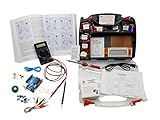
- ProTechTrader's Make: Electronics 3rd Edition Kits 1 and 2 form an electronics component pack for Charles Platt's book. The bundle combines Deluxe Kit 1 and Economy Kit 2 parts.
- Build the book's circuits with resistors, capacitors, fuses, diodes, a breadboard, microcontroller, ICs, and transistors. The 500-item bundle keeps the core parts together for project work.
- Additional contents include an IC assortment, 7-segment display, cylindrical magnets, voltage regulator, piezo crystal earphone, and Arduino Uno compatible controller with USB cable.
- Kit 1 and Kit 2 include a storage organizer, bench tools, soldering iron, 9V adapter, and components for AC and battery-powered work. Package size is 12 x 13 x 3 inches.
- The companion book is sold separately. Choose this component bundle when you have Make: Electronics 3rd Edition and need parts for its experiments. Check edition and kit numbers before assembly.
How to work through the book
- Begin with the first experiments. Use the specified components and follow the build instructions before moving on. Do not substitute an unfamiliar component just because it looks similar.
- Observe and measure. Use the multimeter as instructed to check what the circuit is doing. Compare your observations with the explanation that follows the experiment.
- Add soldering as the book introduces it. Set up the iron on its stand and use the solder, wick, and desolder pump for the relevant tasks. Follow the edition’s safety instructions and take care around the hot tip.
- Advance in sequence. The book moves from basic electrical behavior and components toward integrated circuits, microcontrollers, and robots. Work through the foundations before treating the later projects as a shortcut to programming.
- Buy later parts when needed. Packs beyond Pack 1 are for subsequent experiments. Check each pack’s stated coverage rather than assuming the first pack contains everything in the book.
Safety for beginner electronics
Keep early work within the low-voltage battery circuits specified by the book; do not connect experiments to household mains. Observe any component current limits, and stop if a part becomes unexpectedly hot or shows damage. Wear eye protection when cutting leads or working with parts that could spring free, and provide ventilation for soldering. Match supervision to the learner’s age and experience, and follow the current edition’s safety guidance. Make also publishes safety guidance for children’s first tool and electronics kits.
Outdated Drivers Are Slowing You Down
One free scan finds every outdated or missing driver and matches the right update for your exact hardware.Free scan · exact hardware matchWindows Errors? Fix Them Before They Spread
Repair common Windows errors and clear accumulated junk for a smoother, more stable PC - no reinstall needed.Free scan · no reinstallWhen to add Arduino
Arduino makes more sense as a next step after you have practiced basic circuits and measurement. Make presents an Arduino starter kit as a companion to Getting Started with Arduino, with kit components matched to the book and its online tutorials. Before purchasing, confirm that the kit’s board and the software and setup instructions align with the versions currently supported; older books and kits may describe earlier hardware or software.
Rank #3

- Learn electronics with ProTechTrader's Deluxe Kit 1 for Make: Electronics, 3rd Edition. Its 200-piece electronics kit matches early Sections 1-3 by Charles Platt.
- Build breadboard circuits with specified passive parts and semiconductors, then move projects to perforated board. A double-sided organizer keeps labeled parts sorted.
- Measure and assemble projects with the PDM631 multimeter and 30W soldering iron. Exact solder, heat-shrink tubing, wire, and test leads support the lesson work.
- Power the supported experiments with the supplied 9V battery, connector, or AC/DC adapter. This electronics tool kit sets up a new beginner bench in one package.
- Choose Deluxe for home study or a supervised class when your new bench needs tools, project power, and the parts used in Sections 1-3. Book sold separately. This product is not a toy and is designed for use by teens and adults ages 13 and up
Keep the roles distinct: Make: Electronics teaches foundational circuit concepts through experiments, while an Arduino kit gives you a platform for programmable projects. Starting with the basics makes it easier to understand what the board is controlling rather than treating it as a black box.
Independent reader supportYour contribution helps us test, update, and keep practical guides available for everyone.Choose a kit by fit, not by the parts count
Use these checks when comparing beginner kits or book-and-kit bundles:
Rank #4

- ProTechTrader Kit 2 Economy is an electronic component pack for Experiments 15-30 in Make: Electronics, Third Edition by Charles Platt. Use this electronics kit for Sections 4-5 after finishing Kit 1.
- Use it after Kit 1 Economy or Deluxe. Sections 4-5 continue with logic, sound, and programmable electronics projects using the included Arduino-compatible board.
- More than 150 parts cover the later circuits. The binary counter and 7-segment display support logic work, while the 2-inch speaker handles sound.
- The pack adds a voltage regulator and piezo earphone. Magnets, magnet wire, and an Arduino Uno compatible board support the remaining projects; the Arduino-compatible board supports programmable electronics projects.
- The matching book is sold separately; bring Kit 1, bench tools, and a project power source for Experiment 15. For ages 13 and up.
- Teaching style: Does the book ask you to investigate circuits, or mainly explain concepts for reference?
- Book match: Are the components selected for the exact book edition and experiment numbers you intend to follow?
- Measurement and soldering: Does the learning path teach you to measure a circuit and introduce soldering at an appropriate point?
- Difficulty: Are the first projects suitable for a complete beginner, with a progression toward more complex builds?
- Platform compatibility: For Arduino, do the board and software directions match currently supported versions?
- Replacement parts: Can you identify standard components and obtain replacements if a part is lost or damaged?
- Safety: Are voltage, current, tool handling, and age-appropriate supervision addressed?
- Total cost: Compare the book, required parts, tools, shipping, and any later packs together. Current prices and stock vary by seller, so verify them before ordering.
Make’s product descriptions establish the book’s learning scope and describe the historical kit contents, but they do not establish current inventory, pricing, shipping, or retailer terms. Treat those as details to confirm with the seller rather than assuming a kit remains available in its earlier configuration.
Quick Recap
Product prices and availability are accurate as of the date/time indicated and are subject to change. Any price and availability information displayed on Amazon at the time of purchase will apply.




