What’s actually slowing this PC down?
Pick the symptom - the matching free tool is one click away.
Short answer: Kagelin says it encrypts selected productivity content on your device before account sync, using a passphrase the service does not see. That is a narrower claim than “all your data is private”: dates, priorities, completion status, and account details remain visible, and the available project materials do not independently verify the implementation. Client-side encryption also cannot protect plaintext on a compromised device or from a hostile version of the web client.
What Kagelin says it encrypts
Kagelin describes itself as an offline-first app for tasks, habits, focus, and calendar use. Its repository says you can use guest mode with browser-local storage or create an account for cloud sync. For account use, Kagelin describes “zero-knowledge encryption” performed on-device with a passphrase it says it never sees. The named content categories are tasks, habits, projects, labels, and calendar content.
As an Amazon Associate I earn from qualifying purchases.
Those are claims made by the project, not findings from an independent audit. The repository also names libsodium-wrappers-sumo as an encryption dependency. That identifies a cryptographic library in the project’s stack; it does not show which algorithms and parameters Kagelin uses, or prove that every relevant data path is protected correctly.
What remains readable
Kagelin’s privacy FAQ says that, for registered-account sync, written content is encrypted while dates, priorities, and completion status remain legible so reminders can work. It also says account existence, email address, and item count are not covered by the encryption claim.
#1 Best Overall

- Hardware encrypted drive
- Simple to use pin access. RPM-5400
- Administrator password feature
- Bus powered
- Utilizes Military Grade FIPS PUB 197 Validated Encryption Algorithm
| Data described by Kagelin | What the project says | What that can mean in practice |
|---|---|---|
| Task, habit, project, label, and calendar content | Kagelin says these selected categories are encrypted on-device before account sync. | If the implementation works as described and the key remains secret, the service may be unable to read the protected content from stored ciphertext. That conclusion is conditional, not independently verified. |
| Dates, priorities, and completion status | Kagelin says these remain legible. | Patterns in these fields could disclose routines, schedules, workload, or when tasks are completed, even if the text of a task is protected. Those possible deductions depend on how you use the app. |
| Account existence, email, and item count | The privacy FAQ says these are not covered. | They are account-related information, not protected task text under the stated claim. |
| Attachments, integrations, exports, notifications, analytics, and other operational data | The available project descriptions do not establish coverage for every such path or field. | Do not assume the account-sync encryption claim applies to a separate destination or feature without specific documentation. |
This distinction matters because encryption of selected content is not the same as hiding all activity or account metadata. Libsodium’s general guidance says secret file metadata should be included inside encrypted data, while non-secret metadata may be carried separately. That is a design principle, not evidence about Kagelin’s own schema.
What client-side encryption can and cannot protect
Against the storage service reading protected content
If Kagelin encrypts content in the client before syncing it, and the key stays secret, server-side storage of ciphertext can reduce the operator’s ability to read that content. The condition is important: the project’s materials describe the intended model, but do not independently establish that the deployed code implements it correctly or comprehensively.
Rank #2
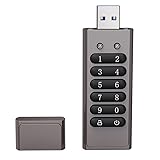
- Advanced Encryption:Built-in independent chip,using AES256 advanced algorithm,preventing brute force cracking from the hardware level,protecting your data.
- Key Unlock:Independent key design,no password trace,after ten incorrect inputs,the USB drive will automatically reset,and the data will be erased,preventing information theft at a deeper level.
- Automatic Lock: After unlocking,if the device is not connected within 30 seconds or the USB drive is unplugged from the computer,it will automatically lock to ensure that data is not maliciously stolen.
- High-speed :Equipped with 3.0 high-speed protocol,faster when transmitting and backing up large files,saving your valuable time.
- Portable Design:The size of a lighter,can be directly hung on the key ring,or put directly into the pocket,carry it with you,use it as you go.
Against a compromised device
The app must have access to plaintext to display and edit it. Malware, a keylogger, a browser extension with sufficient access, or someone using an unlocked device could therefore see plaintext or capture secrets while the app is running. Client-side encryption is not a substitute for securing the device, browser profile, and account.
PC Slower Than It Used to Be?
A free scan shows the junk files, broken settings and background clutter dragging Windows down - then fixes them in one click.Free scan · Windows 10 & 11Outdated Drivers Are Slowing You Down
One free scan finds every outdated or missing driver and matches the right update for your exact hardware.Free scan · exact hardware matchAgainst a hostile or compromised web client
A web app depends on the code delivered to the browser. A compromised client or delivery pipeline could, in principle, capture a passphrase or content before encryption or after decryption. This is a general limitation of browser-based client-side encryption, not evidence that Kagelin has delivered malicious code or suffered a compromise.
Rank #3
- Utilizes Military Grade FIPS PUB 197 Validated Encryption Algorithm
- Super fast USB 3.0 Connection - Data transfer speeds up to 10X faster than USB 2.0
- Software Free Design - With no admin rights needed
- Sealed from Physical Attacks by Tough Epoxy Coating
- Brute Force Self Destruct Feature
Against metadata exposure
Fields Kagelin says it leaves legible remain outside the protection offered by encrypting written content. Someone able to access those fields could potentially infer activity patterns without reading task text. The exact information exposed beyond the fields the project names is not established by the available descriptions.
Guest mode, sync, and separate data destinations
| Use | What Kagelin describes | What is not established |
|---|---|---|
| Guest mode | Data stays in local browser storage on the device, according to the repository and privacy FAQ. | The descriptions do not independently establish whether guest-mode storage is encrypted at rest. Local storage also makes the browser profile, device access, and local backups relevant to your privacy. |
| Registered account | Cloud sync is available; Kagelin says selected content is encrypted on-device, while specified fields and account metadata remain visible. | The exact server-side schema and the treatment of every field or operational record are not documented in the available material. |
| WebDAV, calendar integrations, and exports | Kagelin describes WebDAV backup, calendar integrations, and encrypted ZIP export options. | The available descriptions do not show that account-sync encryption automatically covers every integration, import, backup, or export. Each destination can have its own provider, storage, and access risks. |
Treat a backup or integration as a separate trust boundary. Before sending sensitive information through one, check what that feature exports, where the copy is stored, who controls the destination, and whether it is encrypted independently. The project’s mention of an encrypted ZIP export does not establish the behavior or protection of every other path.
Rank #4

- Easy to use, PIN authenticated hardware encrypted USB Flash Drive - Perfect solution to protect your digital assets. Simply enter a 7-15 digit PIN to authenticate and use as a normal USB flash drive. When the drive is disconnected, all data is encrypted using AES-XTS 256-bit hardware encryption (no software required).
- Government certified: FIPS 140-2 Level 3, NLNCSA DEP-V & NATO Restricted certified. The datAshur PRO helps you ensure compliance with data regulations such as GDPR, CCPA, HIPAA.
- The datAshur PRO is the perfect solution for storing your personal or company data. Carry the datAshur PRO with you wherever you go. Portable, rugged, dust & water resistant (IP57 certified) Without the PIN, there’s no way IN! All data transferred to the drive is encrypted in real time and is protected from unauthorised access even if the device is lost or stolen!
- The datAshur PRO will work on any device with a USB port, no software is required. Compatible with: MS Windows, macOS, Linux, Chrome, Android, Thin Clients, Zero Clients, Embedded Systems, Citrix and VMware
- Transfer your files in seconds Lightning fast backwards compatible USB 3.2 data transfer speeds. Up to 169MB/s Read speeds Up to 135MB/s Write speeds.
What the available materials do not answer
The repository and official privacy information describe the intended behavior, and the libsodium documentation explains general library guidance. None of those materials, as available here, settles the following implementation questions:
- Which password-based key derivation algorithm and parameters Kagelin uses, how salts are managed, and how resistant the design is to offline passphrase guessing.
- Which authenticated-encryption algorithm and mode are used in the application, and how nonces are generated and kept unique.
- Whether all records and sync operations are authenticated against modification, replay, or rollback.
- How keys are held in memory, cleared, rotated, or rewrapped when a passphrase changes.
- Whether there is a recovery route if the passphrase is lost. The available material does not establish either recoverability or permanent loss.
- Whether guest storage, WebDAV backups, ZIP export and import, calendar sync, notifications, and analytics follow the same protection model.
- Whether the delivered JavaScript is independently audited, reproducibly built, or otherwise protected against a compromised delivery pipeline.
- Whether a third party has audited the design or implementation.
Libsodium recommends using crypto_pwhash() for password-based file encryption and an appropriate authenticated-encryption API. Its documentation describes authenticated encryption as providing confidentiality and an authentication tag that can detect tampering. These are library-level recommendations; Kagelin’s naming of libsodium does not establish that it follows them or uses a particular configuration.
Best Value

- Certified to FIPS 197 - U.S. Government Approved High Level Information Security Standard.
- Protection against brute force password attacks - Data is automatically erased after 6 unsuccessful access attempts. The data of the USB flash drive type c encryption with dual connectors is destroyed and the cryptographic drive is reset.
- Durable dual-layer waterproof design* — Protects the crypto reader from bumps, drops, run-in and immersion in water. The electronics are protected by a hardened internal case. Rubberized silicone outer case provides a final layer of protection.
- Auto-Lock —The cryptographic key automatically encrypts all data and locks when removed from a PC/Mac or when screen protection or "computer lock" is enabled.
- Secure Entry —Data on these flash drives cannot be accessed without the correct alphanumeric password of 8 to 16 characters. A password indication option is available for this flash drive. The hint cannot match the password.
How to assess whether Kagelin fits your threat model
- If your main concern is the service reading task text stored during account sync: Kagelin’s stated design is relevant, but treat it as a project claim until its implementation and deployment are independently verified.
- If your concern is hiding schedules or usage patterns: the fields Kagelin says remain legible mean the stated encryption model does not hide all activity.
- If your concern is local device access: guest mode keeps data in browser storage, but the available descriptions do not confirm at-rest encryption. Device and browser-profile security still matter.
- If you plan to use integrations or backups: assess each destination separately; do not extend the account-sync claim to it by assumption.
- If you cannot risk losing access to encrypted content: find out directly whether passphrase recovery exists before relying on the app for important records. The available materials do not answer that question.
- If you require independently verified security: look for a published audit that identifies its scope, date, and tested version. The available sources do not establish that such an audit exists.
The official site describes Kagelin as preview/beta and says hosted extras are planned; that status and product behavior can change. Check the current official privacy information and release details before making a decision that depends on a specific feature.
Quick Recap
Product prices and availability are accurate as of the date/time indicated and are subject to change. Any price and availability information displayed on Amazon at the time of purchase will apply.




