Keep checkout code independent of a payment provider by defining a small, application-owned Java interface and implementing it with a provider-specific adapter. The adapter translates your payment commands, results, statuses, and errors at the integration boundary. This reduces coupling, but it does not make different gateways interchangeable: their payment flows and capabilities can still differ.
Why put an adapter between checkout and a payment SDK?
If order or checkout logic calls a provider SDK directly, provider-specific request classes, response objects, and exceptions can spread through the application. A change to the SDK—or a decision to support another gateway—then reaches beyond the integration code.
As an Amazon Associate I earn from qualifying purchases.
The Adapter pattern converts an existing interface into one its client expects. In a payment integration, checkout expects an application-owned contract; a gateway adapter speaks the provider’s API. This follows the isolation principle behind Oracle’s Data Access Object pattern, which separates clients from the details of a particular resource implementation.
Windows Errors? Fix Them Before They Spread
Repair common Windows errors and clear accumulated junk for a smoother, more stable PC - no reinstall needed.Free scan · no reinstallCrashes, No Sound, or Screen Glitches?
Random freezes, missing sound and display glitches usually trace back to one bad driver. Find and replace yours safely.Free scan · under a minuteThe boundary is useful even when there is only one gateway: it makes provider-specific code easier to locate and keeps the domain model from depending on SDK types. It does add another layer to maintain, however, and a later provider switch still requires deliberate mapping and workflow work.
#1 Best Overall
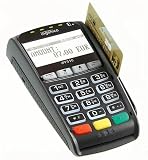
- Secure Multi-Payment Acceptance: Supports EMV chip & PIN, magnetic stripe, and contactless/NFC payments including Apple Pay, Google Pay, and other mobile wallets for fast, secure transactions
- Customer-Friendly Design: Features a large 15-key tactile keypad with raised markings, clear contactless zone, and a bright 2.8 inch color QVGA display (320x240) that improves usability and speeds up checkout
- Easy Integration: Simple USB connectivity with single-cable setup; compact and ergonomic design suitable for countertop, retail POS, and integration with Ingenico countertop terminals
- High Security & Compliance: PCI PTS 5 approved with robust encryption; protects sensitive card data and meets the highest industry security standards for peace of mind
- Reliable Performance: Powered by Cortex A5 processor with 128 MB Flash and 128 MB RAM; durable construction with 500K card insertion lifespan for high-volume retail environments
Define a contract around the payment tasks your application needs
Start with the operations the product actually performs. A small interface might create or authorize a payment, capture an authorized payment, issue a refund, and retrieve a payment’s status. Avoid designing a universal gateway interface in anticipation of every possible provider feature.
public interface PaymentGateway {
    PaymentResult createPayment(CreatePayment command);
    PaymentResult capture(CapturePayment command);
    RefundResult refund(RefundPayment command);
    PaymentStatusResult retrieveStatus(PaymentId paymentId);
}
These are illustrative application-owned types, not classes from a provider SDK or a tested implementation. The domain command should carry the values the application needs to make explicit, such as an order identifier, amount, and currency. Results should express the outcomes the application can act on without leaking a provider’s response object.
Model money without floating-point arithmetic. Stripe’s PaymentIntent creation reference specifies a positive integer amount in the currency’s smallest unit and a three-letter currency code. The precise amount representation and validation should be part of your own contract, not an accidental consequence of a provider request class. See Stripe’s PaymentIntent creation reference.
Rank #2

- 【Universal Compatibility】 - The MDB Payment Device to PC Converter is designed to connect a variety of MDB devices such as acceptors, bill receivers, and card readers effortlessly. It offers seamless integration with any vending equipment compliant with MDB specifications, ensuring versatility in your payment solutions.
- 【User-Friendly Interface】 - This USB adapter features a straightforward setup process. Simply connect it to your computer, and the adapter transforms MDB protocols into RS-232 serial protocols. This allows for easy communication between your vending machine and your PC, simplifying operations while providing reliable performance.
- 【Enhanced Control】 - With capabilities to control up to eight MDB-compatible devices simultaneously, this converter enhances your management efficiency. Whether you’re handling dispensers or bill acceptors, experience effective monitoring and command over your vending machine operations like never before.
- 【Robust Functionality】 - The MDB-PC USB converter supports a variety of interfaces, including cash interfaces (10H and 60H) and USD interfaces (40H). This broad support mechanism ensures compatibility across multiple configurations, making it an ideal solution for complex setups.
- 【Comprehensive Package】 - Each converter comes complete with required cables, a user guide, and a user agreement, providing everything you need for successful installation. Designed for easy implementation, enjoy a plug-and-play experience with reliable support for all essential MDB functions.
Translate between the application contract and Stripe’s Java client
A Stripe adapter implements the application interface and contains the SDK-specific work. Checkout calls the interface; the adapter converts the command into a Stripe request and converts the response or exception into an application-owned result.
- Accept a domain command. Validate that the order, amount, and currency are present and consistent with application rules.
- Construct the provider request. Map the command to Stripe’s request format, including the required amount and currency.
- Make the SDK call at the boundary. Keep Stripe request and response types inside the adapter rather than returning them to checkout or the domain model.
- Map the outcome. Translate the Stripe response into application status and identifiers. Convert provider exceptions into errors that the rest of the application understands, while retaining enough diagnostic context for safe operational handling.
public final class StripePaymentGateway implements PaymentGateway {
    // Hold and call Stripe SDK types here.
    // Map application commands to Stripe requests and Stripe results to domain results.
}
The outline shows where responsibilities belong; it is not a complete or tested Stripe integration. Stripe’s official stripe-java repository documents the Java client, request options, retries, and timeouts. Its retrieved documentation reports SDK version 34.0.0, support for LTS JDK versions 8, 11, 17, 21, and 25, and that StripeClient was introduced in SDK v23. SDK releases and compatibility guidance change, so check the repository and migration guidance for the version you actually use.
Treat payment as a lifecycle, not a single successful API call
A payment request returning from the provider does not necessarily mean an order is paid. Stripe recommends one PaymentIntent per order or customer session; a PaymentIntent can move through statuses and may require customer authentication before completion. Stripe documents that it creates at most one successful charge for a PaymentIntent, despite payment attempts. The application should react to the lifecycle rather than equating “request returned” with “paid.” See the Payment Intents API documentation.
Rank #3
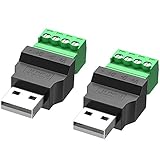
- WIDELY APPLICATIONS: Suitable for U disk, keyboard, mouse, camera, printer, mobile phone and other devices with USB interface. Terminal blocks make it easy to test electronics equipment or power up.
- DURABLE: Nickel-plated interface, anti-friction, strong oxidation resistance, effectively reduce resistance. The signal is more stable and has a longer service life.
- EASY to USE: No soldering required. Just use a small screwdriver to open up the terminal blocks, slide in your stranded or solid-core wire, and re-tighten. Save you from solder trouble, no need to purchase expensive tool. Great time and money saver.
- FLEXBILITY: The terminal block itself is removable from the body. It's more durable than soldering wires onto a connector. Can extend the length of the USB cable,ideal for you electronic DIY projects and test the equipment that with USB interface ports.
- All the pins are clearly labeled, which is really nice because we keep forgetting the order.
Define the statuses your own workflow needs and map provider outcomes into them. For example, checkout may need to distinguish a payment that is pending, requires customer action, failed, was canceled, or succeeded. These are application decisions, not a claim that every gateway uses Stripe’s status names or has identical transitions.
- Decide which outcomes allow an order to be fulfilled.
- Represent authentication or other customer action as an explicit next step, not as a completed payment.
- Determine how asynchronous provider notifications update the order when the initial request does not settle the payment.
- Keep any provider-specific information needed for the next step available at the integration boundary without making the core domain depend on SDK classes.
Use idempotency deliberately when retrying
Network failures can leave an application unsure whether a payment request reached the provider. Retrying without protection can risk duplicate operations. Stripe supports idempotency keys: for subsequent requests made with the same key, it returns the first stored result, according to its documented behavior. Read Stripe’s idempotent requests reference before deciding whether a retry should reuse a key or represent a new operation.
Make the key decision part of the application workflow. Tie the operation to a stable business event, such as a particular order payment attempt, and do not mint a new key simply because a network response was lost. A genuinely new attempt may need a distinct operation identity; the correct boundary depends on your order and retry rules.
Rank #4
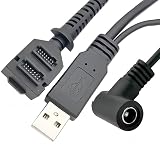
- Dual-Function Cable: Combines USB 2.0 data sync and 5.5x2.1mm DC power delivery in one cable, simultaneously charges your terminal while transferring transaction data.
- Precision Connectors: Features industrial-grade dual 14-pin 1.27mm pitch IDC header + USB Type-A Male + DC 5.5x2.1mm female jack, ensures secure connections for POS systems.
- Adapter Cable: Main 2-meter (6.5 ft) USB cable + 18cm (7-inch) power adapter provides flexible setup for countertop, kiosk, or wall-mounted VX805/VX820 terminals. For CBL 282-045-01-A replacement.
- POS-Specific Design: Engineered exclusively for Verifone VX805 and VX820 payment terminals - resolves "no power/no data" errors caused by worn cables during checkout operations.
- Technical Support and 1 year warranty. Made by Washinglee.
The Stripe Java client documents per-request idempotency-key configuration as well as retry and timeout options. Keeping those choices in the adapter or a deliberately designed integration configuration prevents SDK retry details from becoming checkout policy by accident.
Keep normalization honest about provider differences
A common interface should hide incidental SDK details, not erase meaningful differences in payment behavior. Gateways may differ in authorization and capture semantics, refunds, payment methods, asynchronous confirmation, and error categories. A normalized result can cover common application needs while retaining an intentional extension point for capabilities the product actually uses.
Do these 3 things before closing this tab:
1Repair Windows errors before they cause bigger problems2Fix the driver behind crashes, sound loss and screen glitches3Clear out junk files and repair common Windows errorsAdd another adapter when there is a real second provider or migration requirement, then map each provider’s behavior to the contract and document where semantics differ. Do not assume that identical method names make the underlying operations equivalent. If a business workflow depends on a capability unique to one provider, represent that need explicitly rather than forcing it into a misleading lowest-common-denominator abstraction.
An adapter does not establish PCI DSS compliance
Separating provider SDK code from checkout is an architectural boundary, not a compliance shortcut. PCI SSC says PCI DSS applies to entities that store, process, or transmit cardholder data or sensitive authentication data, as well as entities that can affect the security of the cardholder-data environment. Scope depends on the actual system and data flows, not on whether the code uses an adapter. See the PCI SSC PCI DSS overview.
PCI SSC’s Secure Software Standard addresses secure design and management of payment software, transaction integrity, and card-data confidentiality. Assess the architecture and applicable requirements for the implementation rather than treating an interface boundary as evidence of compliance.
Quick Recap
Product prices and availability are accurate as of the date/time indicated and are subject to change. Any price and availability information displayed on Amazon at the time of purchase will apply.
Quick wins for a faster PC:
Fix the driver behind crashes, sound loss and screen glitchesFind Drivers →Repair Windows errors before they cause bigger problemsFix Now →



