The Tool Desk
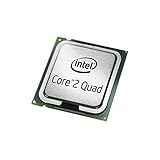
Outbyte Driver Updater FREEScan for outdated or missing drivers - takes under a minuteDriver Scan →Outbyte PC Repair FREEClear out junk files and repair common Windows errorsFree Scan →The Intel Core 2 Quad Q8400 is a 2.66 GHz, four-core LGA775 processor introduced into Intel’s specification documentation in 2009. Its 1333 MHz bus and 95 W thermal design power (TDP) describe a platform from the Core 2 era—not a basis for judging how it performs in today’s software. For a working LGA775 system, the central question is whether the exact motherboard supports the Q8400 with the installed BIOS.
What the Q8400 was designed to be
When Intel added the Q8400 to its specification update in April 2009, it occupied the affordable end of the Core 2 Quad family. HotHardware’s review, published June 22, 2009, placed it alongside the Q9400 and contemporary mainstream AMD processors. That describes its original market position, not its value or competitiveness today.
As an Amazon Associate I earn from qualifying purchases.
Intel’s earlier Q6600 launch announcement framed quad-core processors as suited to highly threaded, processor-intensive work and running demanding applications simultaneously. That is useful historical context for Intel’s move toward four-core desktop CPUs, but it is not a Q8400 test result.
Intel Core 2 Quad Q8400 specifications
| Specification | Q8400 |
|---|---|
| Clock speed | 2.66 GHz, according to Intel’s December 2011 specification update |
| Bus speed | 1333 MHz, according to Intel’s December 2011 specification update |
| Package | 775-land LGA (LGA775), according to Intel’s December 2011 specification update |
| TDP | 95 W, associated with the Q8400 identification row in Intel’s December 2011 specification update |
These are documented product specifications, not current performance measurements. Intel’s revision history records adding Q8400 and Q8400S information on April 20, 2009, and correcting notes to show Intel VT support on May 13, 2009. The VT note is a documented feature clarification; it does not establish that a particular motherboard BIOS exposes or supports every related capability.
Will the Q8400 work in your motherboard?
Not necessarily. Sharing the LGA775 package does not guarantee that a board supports the processor. Motherboard chipset, board revision, BIOS version, and manufacturer validation all matter. A failed boot or blank screen after installation cannot be diagnosed from the processor model alone; compatibility discussions about such symptoms are not proof of a general Q8400 defect.
- Find the motherboard’s exact model and hardware revision, printed on the board or shown in its documentation or system information.
- Open the manufacturer’s CPU support list for that exact model and revision. Confirm that the Intel Core 2 Quad Q8400 is listed.
- Check the listed minimum BIOS version. If the installed BIOS is older, follow the manufacturer’s update procedure while the currently supported processor is still installed, if the board requires that.
- Confirm the power and cooling requirements, including that the system can accommodate a processor with a documented 95 W TDP.
- If the system does not start after installation, power down and recheck the CPU seating, power connections, BIOS version, and the board’s support documentation before concluding that the CPU is faulty.
Without the exact motherboard model and its support list, no reliable board-wide compatibility claim can be made.
Rank #2

- Frequency (GHz): 3.0
- Socket : 775
- Bus speed (MHz) :1333
- L2 cache size (KB) : 6 MB
- Thermal Design Power (Watt) : 65
How to judge the Q8400 as an upgrade today
The Q8400 may be relevant when restoring or extending the life of a compatible legacy desktop, but its historical four-core positioning is not enough to establish how it handles a present-day workload. No current Q8400-specific benchmark, market price, or availability figure is established here, so a performance ranking or value recommendation would be speculative.
Recommended Free Tools
Compare a prospective replacement against the Q8400 using factors that can be checked for your system and workload:
Quick Recap
Best Value
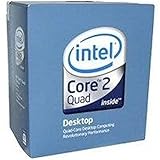
- 1333MHZ BOXED PROCESSOR
Rank #4

- Amazon is only shipping the Q6600 with confirmed BX80562Q6600 SLACR, with G0 stepping
- Intel wide dynamic and quad-core processor
- Intel smart memory access
- Intel advanced smart cache
- Intel advanced digital media boost
Rank #3

- Intel Core 2 Quad Q9300 2.5 GHz 1333 MHz 6 MB Socket 775 Quad Core CPU General Features:
- Intel Core 2 Quad Processor Q9300 2.5 GHz CPU Speed 1333 MHz Bus Speed 6 MB L2 Cache Socket 775
- 0.85V - 1.3625V VID Voltage Range Quad Core Enhanced Intel Speedstep Technology Intel EM64T
- Execute Disable Bit Enhanced Halt State (C1E) Intel Virtualization Technology
- Intel Thermal Monitor 2
- Compatibility: Confirm support for the exact motherboard and BIOS before considering any performance advantage.
- Workload behavior: Core count alone is not a useful ranking. Per-core speed and the way the software uses multiple cores both affect results.
- Platform specifications: Compare cache and bus details where they are documented for the candidate processors.
- Power and cooling: Check the processor’s power requirements against the board, power supply, and cooling setup.
- Total cost: Include the price and availability of the CPU and any platform parts needed; a processor-only comparison can hide the cost of a wider upgrade.
Sources
- Intel, Core 2 Quad Processor Specification Update, December 2011 (model specifications and revision history).
- HotHardware, Intel Core 2 Quad Q8400 Processor Review, June 22, 2009 (contemporary positioning).
- Intel, quad-core processor launch release, January 2007 (historical workload rationale for the earlier Q6600-era launch).
Product prices and availability are accurate as of the date/time indicated and are subject to change. Any price and availability information displayed on Amazon at the time of purchase will apply.




