A warehouse management system (WMS) rollout is safer when the team settles three things before cutover: which system owns each important record, who may change it, and how every update will be reconciled across connected systems. Map those responsibilities first, then configure roles and interfaces, secure warehouse devices, preserve reviewable audit evidence, and rehearse migration and recovery using representative operations.
What does “data control” mean in a WMS rollout?
Data control is the ability to establish where warehouse data comes from, which system is authoritative for each record or transaction, who can change it, how changes travel between systems, and how the organization can detect and investigate errors. It is not simply a matter of copying records successfully into a new application.
As an Amazon Associate I earn from qualifying purchases.
The implementation details depend on the WMS, ERP, other connected systems, warehouse workflows, data quality, device fleet, migration scope, and jurisdiction. There is no universal migration order, reconciliation threshold, log-retention period, or legal checklist that fits every organization. Set those decisions against the chosen platform and the organization’s policies and obligations.
1. Define the system boundary, owners, and responsibilities
Before configuring the WMS, document what is in scope and who is accountable for it. NIST SP 800-18 Rev. 2, published June 30, 2026, is general system-planning guidance rather than a WMS implementation recipe. It supports documenting system purpose, controls, responsibilities, and the expected behavior of people who manage, support, or access the system.
#1 Best Overall
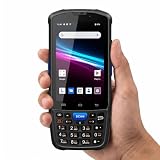
- 【ANDROID 14 WITH TESTED BUSINESS APP COMPATIBILITY】 FARSET F7-WIFI runs Android 14 with GMS and supports popular business applications including Zoho Inventory, inFlow Inventory, Sortly, Orca Scan, Odoo, Ivanti, Scalefusion, SOTI, Zello, Voxer and more. Designed for WMS, inventory, retail and logistics workflows.
- 【FAST & RELIABLE 1D/2D/QR BARCODE SCANNING】 Equipped with the FARSET SE6100 scan engine, the F7-WIFI quickly reads 1D, 2D and QR barcodes, including damaged, faded and on-screen codes. Fast response and flexible scanning help improve efficiency in warehouse, retail, stock checking and inventory operations.
- 【5000mAh REMOVABLE BATTERY FOR DAILY WORK】 The user-replaceable 5000mAh rechargeable battery is designed for extended daily use, while 10W charging helps reduce downtime during warehouse, retail and inventory operations. The removable battery design also makes battery replacement and maintenance easier for business deployments.
- 【IP67 RUGGED DESIGN WITH PHYSICAL KEYPAD】 Built for demanding work environments, the F7-WIFI features IP67 dust and water resistance and 2-meter drop protection. The 4-inch display and 22 physical keys make barcode scanning and data entry easier, even when wearing gloves or working in dusty or wet conditions.
- 【BUSINESS CONNECTIVITY, APP TESTING & 2-YEAR WARRANTY】 Supports WiFi, Bluetooth 5.0 and multi-system GPS for daily business operations. Need to use a specific Android business app? Contact FARSET before purchase and we can help test app compatibility. Expandable storage up to 512GB, a 2-year warranty and professional technical support provide added confidence for business deployment. ⚠️Please note: F7-WIFI does not support 4G/5G cellular networks.
Build a control and ownership map
- Scope: List the warehouses, business processes, applications, services, and device types included in the rollout. Include connected ERP, warehouse-control, transportation, and other systems where relevant.
- Record ownership: For each important record and transaction, name the system of record and the accountable business owner. Clarify whether another system may create, amend, or only consume it.
- Flow and authority: Record which system sends each update, what event triggers it, how the receiving system acknowledges or rejects it, and which team resolves exceptions.
- People and decisions: Name the roles responsible for configuration, access approval, data mapping, interface support, control evidence, and cutover decisions.
- Evidence: Specify what proof each owner must retain or review to show that access, inventory updates, and integration behavior are working as intended.
This map prevents a common ownership ambiguity: two systems appear to be authoritative for the same balance or transaction, but neither team has a defined process for resolving disagreement.
2. Design roles around warehouse work and risk
Translate actual responsibilities into WMS roles rather than assigning broad access for convenience. NIST SP 800-171 Rev. 3 describes approved access enforcement, least privilege, privilege review, and separation of duties. Its least-privilege requirement says: “Allow only authorized system access for users (or processes acting on behalf of users) that is necessary to accomplish assigned organizational tasks.”
Separate duties where practical
Start with the operating model and define access for workers, supervisors, inventory-control staff, integration processes, support personnel, and administrators. Decide which actions each role needs, which require approval, and which should not be combined in one role. For example, distinguish routine warehouse work from changing permissions or system configuration, and determine whether the person who enters an adjustment should also approve it.
Rank #2
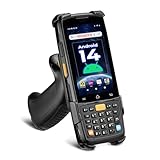
- [Unlock Next-Gen with the First Android 14 PDA] Running on Android 14, the MUNBYN MC005 easily supports 1000+ apps, including popular inventory and asset management software like inFlow, Zoho, Sortly, Odoo, and Orcascan. Compared to previous versions of the Android system, this Android scanner offers enhanced security and significantly improved multitasking efficiency.
- [Unstoppable Multitasking Performance] Powered by a high-performance octa-core MediaTek MT8786 CPU clocked at 2.0GHz per core, the MC005P barcode scanner delivers rapid task execution. With 4GB of RAM and 64GB of storage, it effortlessly handles 15–20 active applications at once, ensuring consistently smooth performance during intensive multitasking.
- [Scan Farther, Scan Faster] Working with the HW HS7 scanner, the MUNBYN MC005P Android handheld scanner achieves a standard scanning distance of up to 80 cm—4 cm longer than the SE4710 Scanner. It also supports motion tolerance of up to 6 meters per second (236 inches per second), making it ideal for scanning barcodes on items moving rapidly along conveyor belts.
- [Built to Last] The MC005P barcode scanner PDA features an IP65 standards, making it dust-proof and splash-resistant. It also supports 1.5-meter drop resistance, ensuring durability in tough environments like warehouses or logistics operations.
- [Why Choose the MUNBYN Keyboard PDA MC005P?] The MUNBYN MC005P barcode scanner PDA with a physical keyboard simplifies usage in tough conditions. The dedicated numeric keypad is ideal for frequent number input, while also supporting glove touch. Unlike Full-touch PDA, the fixed interface prevents issues like input fields moving due to virtual keyboard appearance, offering a more stable experience.
Use individual accounts where actions need to be attributable to a person. A shared account can obscure who performed an inventory change and weaken review. For service or integration identities, document their purpose, owner, permitted actions, and review process rather than treating them as ordinary worker accounts.
Make access review an operating control
- Record who approved access and which duties justify it.
- Review permissions on a schedule set by organizational policy, and when job responsibilities change.
- Remove access that is no longer needed, including support or project access after its purpose ends.
- Test roles with representative tasks before rollout: confirm both that permitted actions work and that restricted actions are denied.
3. Map records and interfaces before migrating data
For every material record or transaction crossing a system boundary, document the sender, receiver, owner, identifier, trigger, timing, expected result, error path, and duplicate behavior. Include items, locations, lot or serial data, receipts, adjustments, picks, shipments, and inventory status where they apply to the operation.
| Interface question | What the implementation team should establish |
|---|---|
| Ownership | Which system is authoritative for the record or transaction, and which system may update it? |
| Trigger and timing | What event sends the update, and what timing or ordering assumptions does the receiving process make? |
| Identity | Which identifiers let both systems refer to the same item, location, lot, serial number, or transaction? |
| Failure and recovery | How are rejected, delayed, replayed, and partially processed updates surfaced and resolved? |
| Duplicates | How does the receiving side recognize a repeated or overlapping update, and who verifies the resulting state? |
Microsoft’s documentation for Dynamics 365 Supply Chain Management in “Warehouse management only mode with external ERP systems” describes inventory update logs and on-hand reconciliation reports for external-system integration. It also warns that a consumer must avoid duplicate updates when update-log data overlaps with shipment receipt or packing-slip messages. This is a useful failure mode to test for; it is not evidence that every WMS uses the same messages or reconciliation mechanism.
Rank #3

- ZEBRA SE6100-2D SCANNING FOR HIGH-VOLUME WORK: Equipped with the Zebra SE6100 scan engine, the F35S quickly captures 1D, 2D and QR codes, including damaged, faded and on-screen barcodes. The pistol-grip design is built for repetitive scanning across receiving, picking, packing, cycle counting and warehouse inventory workflows.
- ANDROID 14 + GOOGLE PLAY/GMS + DEVELOPER SUPPORT: Powered by an octa-core processor up to 2.4GHz with 8GB RAM and 256GB storage, the F35S supports Google Play and GMS services, along with WMS, ERP, inventory and other Android business applications such as Zoho Inventory. Pre-purchase app compatibility testing is available, with SDK and official API documentation for custom integration of barcode scanning and supported hardware functions. FARSET technical engineers can assist with integration, testing and troubleshooting.
- 5G + WI-FI 6 FOR REAL-TIME OPERATIONS: F35S supports 5G, 4G LTE and Wi-Fi 6 connectivity, helping warehouse, logistics and field teams access WMS, inventory and cloud-based data efficiently. Use Wi-Fi 6 across warehouse operations and 5G connectivity for loading docks, delivery, field service and other mobile work environments.
- 6" LARGE SCREEN + IP68 RUGGED DESIGN: The 6-inch HD+ touchscreen provides more room to view item details, orders and inventory data compared with smaller handheld displays. Corning Gorilla Glass, IP68 protection and 2-meter drop resistance help withstand demanding warehouse, manufacturing and logistics environments, while the ergonomic pistol grip supports comfortable one-handed scanning throughout the workday.
- BLUETOOTH 5.2, NFC & GPS FOR BUSINESS WORKFLOWS: Bluetooth 5.2 supports compatible printers and other business peripherals; NFC supports employee identification, asset tracking and contactless applications; multi-system GPS supports logistics, delivery and field workflows. Backed by a 2-year warranty and 24/7 technical assistance for ongoing business support.
Test the paths that create ambiguity
Exercise normal updates as well as delayed, rejected, replayed, and duplicate messages. Confirm what happens if the sender retries after a timeout, if the receiving system accepts an update but the acknowledgment is lost, or if two message paths describe the same business event. A successful interface test should establish the resulting inventory and transaction state, not merely show that a message was transmitted.
The Tool Desk
Outbyte Driver Updater FREEScan for outdated or missing drivers - takes under a minuteDriver Scan →Outbyte PC Repair FREERepair Windows errors before they cause bigger problemsFix Now →4. Protect mobile devices and validate scanning in the real workflow
Warehouse devices are data-bearing endpoints, not just peripherals. Microsoft documents that its Warehouse Management mobile app can read and write some Supply Chain Management data, that devices must authenticate, and that workers can sign in using their own worker accounts. Those product details apply to Microsoft’s application; other WMS platforms may work differently.
Plan device access and revocation
Define how devices are provisioned, how connection settings are distributed, which identity a worker uses, and how access is removed if hardware is lost or compromised. Test the revocation path, including who can carry it out and how the team confirms that the device can no longer access the system.
Rank #4

- Larger battery enables longer continuous usage and twice the stand-by time. With the unique battery indicator light showing the remaining battery level, no more Low Battery Anxiety.
- The curved handle is extended and widened. With specially designed smooth and flat trigger for a better grip.
- The orange anti shock silicone protective cover can prevent scratches and friction even when dropped from up to 6.56 feet. IP54 technology protects the wireless barcode scanner from dust.
- Plug and play with the USB receiver or the USB cable, no driver installation needed. Easy and quick to set up. Wireless transmission distance reaches up to 328 ft. in barrier free environment.
- Supports almost all 1D Barcodes: Febraban Bank Code, Codabar, Code 11, Code93, MSI, Code 128, EAN-128, Code 39, EAN-8, EAN-13, UPC-A, ISBN, Industrial 25, Interleaved 25, Standard 25, Matrix. Reads damaged, fuzzy, reflective and smudged barcodes.
Test scanning as an end-to-end process
Microsoft’s documentation describes barcode scanning and warehouse workflow confirmations, as well as scanner hardware configuration. Actual compatibility depends on the device, its configuration, the application, and the workflow. Validate the equipment the warehouse will use—not just a simulated input—against the barcode formats and operational steps in scope.
- Scan representative labels and confirm the expected item, location, lot, or serial data is captured in the correct field.
- Check how the workflow handles unreadable, invalid, or unexpected scans and whether a worker can recover without silently recording the wrong value.
- Confirm that required worker confirmations appear at the right points in receiving, movement, picking, or other relevant processes.
- Test the exception path and the handoff to a supervisor or support role.
5. Preserve evidence that actions are attributable and reviewable
NIST SP 800-161 Rev. 1 discusses audit records as support for monitoring, analysis, investigation, and reporting, and calls for identifying relevant auditable events. Apply that principle to the WMS and its connections: decide which events matter to inventory integrity and security, who reviews them, and how evidence is protected under organizational policy.
Choose events based on risk
Consider capturing privileged configuration and permission changes, failed access attempts, relevant inventory adjustments, interface errors, and duplicate or replay handling. The exact event set depends on the system and the organization’s risk and policy requirements. Confirm that records can be associated with an individual or responsible process identity and that reviewers can investigate the sequence of events.
Best Value

- Widely Compatible: Bluetooth Barcode Scanner for iPhone iPad Android Tablet PC, Support HID / SPP / BLE mode via bluetooth, Work with Windows XP/7/8/10, Mac OS, Windows Mobile, Android OS, iOS, Linux.
- Strong Recognition Ability: With the 2500 pixels high-resolution CCD sensor Engine, Rapidly decodes all 1D and stacked barcodes (including ISBN book), even worn, damaged or tightly spaced codes. Scan 1D codes directly from paper or screen, such as a computer monitor, smartphone, or tablet, or scan through glass surfaces, plastic shrink wrap, a CCD scanner is likely the best way to go.
- Automatic Scanning: NT-1228bc barcode scanner have three scanning modes: manual trigger mode, continuous scanning mode and auto-sensing scanning mode. In addition, there is a storage mode. Storage mode can be used when you are out of range of Bluetooth and wireless connectivity. Supports storage of up to 100,000 barcodes. Note: Before use, you need to scan the corresponding setting barcode on the manual.
- 2600mAh Battery Upgraded: Continuous scanning up to 200,000 times on a full charge. After a full charge the scanner can be used for one month at least, even in warehouses and at pos checkout counters where scanners are frequently used. In libraries and hospitals it can be used even longer.
- Programmable Configuration: Add custom prefixes/ suffixes, delete characters, Add keyboard keys/ combinations (terminator TAB, CR&LF, Home etc.), Enable or disable the barcode type as you want. Buzzer can be set to mute to allow for a quiet operation.(Note: It does not work with square POS / Divalto / DoorDash / Lightspeed POS system)
The cited guidance does not establish one universal WMS log-retention period. Set retention, access to logs, and review responsibilities through applicable organizational policies and legal or regulatory obligations.
6. Rehearse migration, reconciliation, and cutover decisions
Before production cutover, rehearse migration and reconciliation with representative data and operational scenarios. The goal is to demonstrate that the new system’s records and connected-system updates agree according to the ownership map—not to rely on a single overall count that can hide errors in a particular warehouse, location, or inventory dimension.
Agree acceptance rules before the rehearsal
Set measurable pass criteria internally with the business, IT, and control owners. The sources cited here do not establish a universal numeric threshold. Define how the team will assess:
- Record counts and balances across the inventory dimensions relevant to the operation.
- Unresolved migration and reconciliation exceptions, including who can accept, correct, or escalate them.
- Rejected, delayed, duplicate, and replayed interface updates and the resulting system state.
- Role tests for both allowed and denied actions.
- Scanner and mobile workflows using the actual device fleet and representative warehouse tasks.
- Rollback or recovery decision criteria, decision authority, and the evidence needed to act.
Run the rehearsal as an operational scenario
- Use a representative migration dataset and document its origin, transformation rules, and known exceptions.
- Run the planned data load and interface flows through the chosen platform’s supported process.
- Reconcile balances and relevant transaction state across systems using the ownership map and agreed acceptance rules.
- Exercise exception handling, including a rejected update and a duplicate or replay scenario, then verify the resulting records.
- Have warehouse roles complete representative tasks on the intended devices, and have reviewers inspect the selected access and audit evidence.
- Record issues, owners, decisions, and any retest results before the accountable cutover authority approves the next step.
Keep cutover approval tied to evidence and named decision-makers. If acceptance rules are not met, follow the agreed correction, escalation, or recovery path rather than treating a successful software deployment as proof that inventory data is controlled.
What to confirm before selecting or configuring a WMS
Product choice should follow the organization’s workflows and control requirements; the available guidance does not support a universal vendor ranking. Ask each shortlisted platform and implementation team to demonstrate the behaviors relevant to your environment:
Quick Recap
- Can the organization define ownership and reconcile inventory changes across its actual ERP and other interfaces?
- Can roles support least privilege, individual accountability, and practical separation of sensitive duties?
- Are interface exceptions visible, and can the teams identify who owns their resolution?
- Do the mobile application, authentication approach, scanner configuration, barcode formats, and confirmation workflows work with the actual fleet?
- Can the system capture the events the organization needs to review, and is responsibility for that review clear?
- Can the implementation team rehearse migration, reconciliation, and recovery using representative data and operational scenarios?
Product prices and availability are accurate as of the date/time indicated and are subject to change. Any price and availability information displayed on Amazon at the time of purchase will apply.




