NO LAW’s corner shops stand out not because they prove the game has achieved some universal standard of realism, but because a reported shop interaction ties an ordinary city space to player choice. In a Gamescom report, GameMeca described footage of a checkout where players put items in a cart—and said a shop closed permanently if its shopkeeper was killed. That is a promising example of the dense, responsive city Neon Giant says it wants to build, though it is a report of a demo, not confirmation that every store in the finished game will work that way.
What makes NO LAW’s corner shops interesting?
The noteworthy idea is that a shop can be more than scenery. GameMeca’s Gamescom report described a checkout interaction in which players put items in a store cart. The outlet also reported that killing the shopkeeper permanently closed that shop. If that behavior carries through to the finished game, it gives a small, familiar place a consequence that can persist after the player leaves.

As an Amazon Associate I earn from qualifying purchases.
The qualification matters: this is one outlet’s account of a gameplay demonstration. It does not establish that every corner shop has a checkout, that every shopkeeper can be killed, or that all stores close under the same conditions. NO LAW remains in development, so demonstrated or described features should not be treated as independently verified final-game behavior.
Recommended Free Tools
Why a shop fits Neon Giant’s vision for Port Desire
NO LAW is a forthcoming single-player first-person shooter set in the fictional city of Port Desire. Neon Giant has described its goal as density and detail rather than sheer world size. In a Gamescom interview, co-founder and creative director Thor Frick said, “Building a deeply detailed world was the main reason we hopped back to a first-person perspective.” He added, “We don’t want the biggest open world on the planet; we want the densest one.”
#1 Best Overall
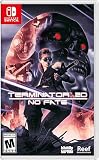
- Step into a classic arcade experience that pays homage to the Terminator universe with authentic arcade gameplay, music and visuals built from the ground up. Relive iconic moments and forge new paths as Sarah, John and the T-800 in a narrative featuring a mix of classic Terminator 2: Judgment Day scenes and untold Terminator stories.
- Shoot, sneak and escape the T-1000’s blades in a wide array of levels and lead the Resistance as John Connor in critical Future War missions. Battle against the full force of Cyberdyne and Skynet’s arsenal, with multiple enemy types and adrenaline-pumping boss fights to take on.
- See the world of Terminator 2: Judgment Day like never before with detailed 2D sprite artwork of your favorite characters and scenes. Enjoy a cinematic soundtrack featuring recrafted music from the legendary score and all-new compositions.
- Mix things up with multiple different game modes to unlock and choose from: Story Mode, Arcade Mode, Infinite Mode, Boss Rush, Mother of the Future and Level Training!
That priority helps explain why an everyday business is a useful example. A shop can make a street feel inhabited, but its stronger contribution comes when it participates in play. The reported cart-and-checkout interaction suggests a routine activity; the reported permanent closure suggests a consequence. Together, they point toward a city meant to respond to the player, not just supply a convincing backdrop.
Shops are part of a larger, layered city
Neon Giant’s Xbox Wire description of Port Desire places street vendors and arms dealers alongside gangsters who remember the player’s actions. It also describes districts with different layouts and rhythms: vertically stacked slums, open thoroughfares, residential courtyards, and luxurious interiors with vents and service corridors. These are developer descriptions of intended design, not an independent assessment of the finished game.
Rank #2
Frick’s comments also frame the city as a place with accumulated history: residents may have lived in a space, moved out, and been replaced, leaving stories and lore in the environment. A corner shop can support that same kind of layered world-building. Its layout and inventory may communicate who uses the neighborhood; a change in its availability can make the player’s actions part of that neighborhood’s story. The available reporting establishes the checkout and closure claim, but not those additional shop-specific details.
What other open-world games can learn from the idea
The useful lesson is not simply to add more products to shelves or make every storefront accessible. Detail has more value when it connects to a place’s purpose and the player’s choices. A shop that can be used, altered, or lost may make a district feel more consequential than a larger number of decorative storefronts.
Rank #3

- UNO MEETS TETRIS: Race to shed all your cards, Uno-style, but with a twist. Strategically play cards based on how they overlap with the card below it (think Tetris). Outwit your opponents and prepare for laughter as you snatch victory from the jaws of defeat!
- 2 PLAYERS OR UP TO 8 PLAYERS: From one-on-one duels to lively gatherings, Overlap delivers endless fun whether you're playing with just 2 players or a full crowd of up to 8 players! Perfect for a cozy couples night in, or a lively get-together with friends and family.
- EASY TO LEARN: Quick to learn, endlessly engaging! Master the rules in under 2 minutes with our instructional video, then dive into a world of strategic twists and turns that will keep you guessing until the end of every game.
- AWARD-WINNING FAMILY GAME: Recommended by American Mensa, Sparks Play Strategic Thinking, and Academics' Choice Brain Toy award-winning game. Enhances strategic thinking and spatial reasoning skills.
- ENDLESS PLAYABILITY: One of the best card games for adults and families with a perfect mix of luck and skill. No two games will be the same!
- Make ordinary places legible. A checkout communicates what kind of space the player is in and how it can be used.
- Let actions leave a local mark. The reported shop closure links violence to a lasting change in that location.
- Use small interactions to reinforce a larger city. Vendors, distinct districts, and people who remember past actions all support Neon Giant’s stated interest in a responsive Port Desire.
These are design principles suggested by the reported demonstration and the developer’s broader city description—not proof that NO LAW’s shops are objectively more realistic than those in another game. The evidence supports a more specific point: the studio is aiming for density and reactivity, and one reported shop interaction makes that ambition tangible.
Independent reader supportYour contribution helps us test, update, and keep practical guides available for everyone.When is NO LAW expected to release?
NO LAW’s official site lists 2027 as its planned release year and describes the game as a single-player first-person shooter developed by Neon Giant and published by KRAFTON. As of October 2026, that is a planned window, not a confirmed launch date. The shop behavior reported at Gamescom should therefore be understood as a demonstration detail, not a guarantee about the release version.
Quick Recap
Best Value

- Travis touchdown lathe a Santa Destroy dopo dieci anni di assenza
- Quali pericolosi assassassini dovrà affrontare travis questa volta
Product prices and availability are accurate as of the date/time indicated and are subject to change. Any price and availability information displayed on Amazon at the time of purchase will apply.
Free tools Windows power users keep installed
One-click scans. No signup required.




