The Tool Desk
Outbyte PC Repair FREEClear out junk files and repair common Windows errorsFree Scan →Outbyte Driver Updater FREEScan for outdated or missing drivers - takes under a minuteDriver Scan →To follow a judo match, watch for three things: whether a throw earns a score, whether groundwork produces a pin or submission, and what the referee signals. In current international IJF competition, ippon wins immediately; waza-ari and yuko are lesser scores; and shido penalties can affect the result. The rules below describe international IJF events. National and age-group tournaments may use different rules.
How do you score in judo?
Judo shifts between standing exchanges, called tachi-waza, and groundwork, called ne-waza. On the feet, a player tries to establish a useful grip and throw an opponent. On the ground, a player may pin or submit an opponent. A score can settle the match, influence who is ahead, or set up a referee’s decision if time expires.


As an Amazon Associate I earn from qualifying purchases.
The IJF restored yuko in its rules revision first used internationally at the Paris Grand Slam in 2025. Its 6 January 2026 season update said the rules remained largely unchanged and would be fixed through LA28 from the Ulaanbaatar Grand Slam onwards. The IJF documents index lists Sport and Organisation Rules dated 14 August 2026; check that current edition for fine procedural details. IJF: 2025–2028 refereeing rules; IJF: 2026 season update; IJF documents.
| Call | What a viewer should understand |
|---|---|
| Ippon | The decisive score: it ends the contest. |
| Waza-ari | A substantial score, but not automatically a match-ending one. |
| Yuko | A lesser score restored in 2025 for specified less decisive landings and qualifying groundwork. |
The IJF’s broad explanation of a throwing ippon describes speed, force, a landing on the back, and control through the landing. The exact criteria and edge cases should be checked against the current IJF rules. IJF general scoring explanation
#1 Best Overall
What is an ippon?
Ippon is the clearest finish to watch for: once awarded, the contest is over. A throw may earn it when the required quality and control are present; an accepted submission can also end a contest. Do not treat every forceful-looking throw as ippon—the referee’s judgment and signal determine the score.
What do waza-ari and yuko mean?
Waza-ari is a meaningful but non-decisive score on its own. Yuko covers specified less decisive landings and, in groundwork, a qualifying hold. The IJF’s 2024 explanation states that five to nine seconds of osaekomi earns yuko under the revised framework. Do not rely on older descriptions that say only ippon and waza-ari exist or that two waza-ari automatically make ippon: those pages predate yuko’s return. IJF 2025 rules announcement; IJF 2024 rules explanation
What should you watch for during a match?
- Watch the grip and the attack. A grip often sets up an attempt to throw. Under the IJF’s 2024 explanation, a conventional grip begins a 30-second window to prepare an attack; unusual grips require more immediate activity. Treat this as a viewer’s guide, not a complete procedural rule. IJF rules explanation
- Look at the landing. The referee determines whether the throw qualifies for ippon, waza-ari, yuko, or no score. A landing that does not finish the bout can still affect who is leading.
- Follow the transition to the ground. After a throw, the action may continue into ne-waza. Watch for a recognized pin, a submission attempt, or a referee’s restart call.
- Listen for the pause and restart. “Mate” pauses action; “hajime” restarts it. A pause is not necessarily a penalty—a referee may stop action for several reasons.
What does shido mean?
Shido is a penalty for an infraction. The IJF’s examples include prohibited leg contact or grabbing, negative use of grips, and intentionally leaving the contest area. These are examples, not a complete list. Penalties matter because they can affect the contest and how the athletes approach the remaining time; consult the current rules for the full accumulation and disqualification sequence.
Distinguish an allowed grip from a prohibited leg action: the IJF describes gripping below the belt as permitted down to the top of the inner thigh, while grabbing, hooking, or touching the leg below that boundary is prohibited. A grip itself may be legal while using it to avoid attacking can still be penalized as negative gripping. IJF 2025 rules announcement; IJF rules explanation
Rank #3
Why might the referee penalize a boundary exit?
The IJF distinguishes an unintentional exit from an intentional one; its current rules explanation identifies intentional exit as penalized. When a player steps or is driven out, the referee’s call tells you whether the action simply pauses or whether a penalty is involved.
What is hansoku-make?
Hansoku-make is disqualification for a serious infraction. The IJF gives dangerous head-first diving and certain high-risk joint-locking combinations as examples. It also notes that rules can vary by age category: head use for throwing or defending is permitted in senior and junior contests under the 2025 framework but penalized at cadet level; reverse seoi-nage also has a cadet-specific distinction. That is one reason the event’s age division matters when interpreting a call. IJF 2025 rules announcement; IJF rules explanation
What happens in golden score?
Golden score is a deciding extension when the regular contest has not produced a winner. Its exact current mechanics—including how the extension ends and how scoring or penalties decide it—should be checked in the IJF Sport and Organisation Rules dated 14 August 2026 rather than inferred from older descriptions. IJF documents
Free tools Windows power users keep installed
One-click scans. No signup required.
Why did the referee stop the match?
A “mate” call pauses action; it does not by itself tell you that a foul occurred. The referee may stop a bout to manage a transition, return the players to a position, address a boundary situation, or call a penalty. Listen for the next announcement or signal, then watch for “hajime” to indicate that action has restarted. The IJF’s rules explanation explicitly distinguishes intentional from unintentional exits, so a boundary stoppage does not automatically mean a penalty. IJF rules explanation
Best Value
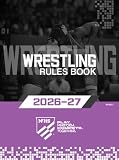
- Physical NFHS product; SKU WRRB27
Where can you watch more international judo?
JudoTV is an IJF viewing resource. The IJF described its event information, replay, and analysis features in March 2024, then announced on 18 June 2026 that every IJF World Judo Tour event would be live-streamed for subscribers from the start of the new Olympic qualification cycle. Access, geography, and subscription terms can change, so check the service for current availability. IJF: JudoTV; IJF live-streaming announcement
Quick Recap
Product prices and availability are accurate as of the date/time indicated and are subject to change. Any price and availability information displayed on Amazon at the time of purchase will apply.




