Claude Code can work with an Obsidian vault because the vault is a folder of local Markdown files. Pointing it at that folder gives it access to your notes, but not perfect memory or an understanding of your personal system by default. A short CLAUDE.md, carefully scoped requests, and approval before edits make the setup more useful—and safer.
What “second brain” means in this setup
Obsidian stores notes as Markdown text files in a folder you choose. You can create a vault or open an existing folder in Obsidian, and the notes remain ordinary files on your system. That makes it possible for other tools, including Claude Code, to work with them. Obsidian explains how to create or open a vault and how vault data is stored.
As an Amazon Associate I earn from qualifying purchases.
Here, “second brain” means a maintained, searchable collection of notes that Claude Code can consult and help you work with. It does not mean automatic recall of every note, flawless organization, or human-like memory. The quality of the help depends partly on what is in the vault and how clearly you explain its structure and rules.
How to connect Claude Code to the vault
- Open or create your vault in Obsidian. If your notes already live in a folder, open that existing folder as a vault rather than copying files unnecessarily.
- Start Claude Code with the vault as its working project. The exact launch method depends on your Claude Code setup. Give it access only as appropriate for your system and the files you intend it to use.
- Add a project-level
CLAUDE.md. Use it to explain the vault’s layout and conventions. Anthropic describes this Markdown file as context Claude reads at the start of sessions in its applicable directory. See Anthropic’s guidance on CLAUDE.md. - Begin with a bounded task. Ask Claude Code to summarize a source into a draft, find related notes, suggest links, or identify material that may be stale. Ask it to propose changes before it writes to the vault.
- Review any proposed edits. Check the changes in context before accepting them, especially when a request affects multiple files or note organization.
What to put in CLAUDE.md
Do not expect Claude Code to infer your taxonomy reliably from a collection of notes. Give it concise, durable instructions for the parts of your system that matter. For example:
#1 Best Overall

- Crisp writing pages provide plenty of space for personal reflections, sketching, or for recording favorite quotations or poems.
- Premium 120 gsm paper takes pen or pencil beautifully.
- Paper is acid-free and of archival quality.
- Light gray lines subtly guide your writing.
- A ribbon bookmark keeps your place.
- Where new notes belong, and which folders should not be reorganized.
- How to name notes and whether to use dates or other prefixes.
- Which frontmatter fields are required, with an example if useful.
- How to handle Obsidian links and tags.
- What counts as a likely duplicate and whether to suggest merging rather than merge automatically.
- When to ask before renaming, moving, deleting, or rewriting notes.
Keep instructions specific enough to guide work but short enough to remain useful. Project context is not a substitute for explaining an unusual request in the prompt.
How to keep control over edits
Claude Code’s permission options provide a practical way to avoid treating every request as permission to change files. Anthropic’s desktop guide describes Ask permissions as prompting before edits or commands, and Plan mode as reading and proposing without editing source files. Product interfaces and behavior can change, so check the current options in your own setup. See Anthropic’s Claude Code Desktop guide.
Rank #2
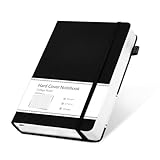
- 320 Pages Journal- Journaling notebooks with 320 pages provides you with enough writing space. A5 journal notebook with 100gsm paper, thicker than normal paper, will not cause bleeding, ghosting or smudging and is suitable for most types of pens.
- Waterproof Hard Cover- Leather journal have a comfortable touch. Durable and waterproof hard cover notebook protects the inside of the pages better than a soft cover and provides a comfortable writing surface.
- Notebook with Pocket- Journal for men comes with a paper pocket and trimmed fabric to make the pockets more durable. Hardcover Notebook has colorful ribbons and elastic bands and a pen insert on the right side of the journal.
- College Ruled- Lined journal is a college ruled notebook on 100 GSM paper, and the writing journal is designed to lay flat with colored tabs. There is a DATE bar at the top of each page. Helps you remember those important dates and find the page.
- Cagie Brand Support- You can purchase our products with full confidence! if you don't love the journal notebook due to any quality issues, simply contact us directly within 1 year and we will send you a hassle-free replacement journals for wroting or full refund.
- Use a proposal-first workflow for broad tasks: ask for a plan or suggested edits, then decide what to accept.
- Keep requests narrow enough that you can judge whether the result matches your intent.
- Review changes before accepting them; do not grant broad access merely to make the workflow faster.
- Keep recoverable copies of valuable notes so a mistaken change can be undone.
A vault can contain personal or sensitive material, and a tool able to write files can also alter or delete them. Check what data your current model and any connected integrations handle; the available product and community descriptions do not establish a universal privacy guarantee.
Do these 3 things before closing this tab:
1Scan for outdated or missing drivers - takes under a minute2Repair Windows errors before they cause bigger problems3Fix the driver behind crashes, sound loss and screen glitchesDo you need an MCP server or Obsidian plugin?
No. Direct access to the vault’s Markdown files is the simplest place to start. MCP servers and plugins may expose more vault-aware operations, such as handling links or metadata in app-specific ways, but they add configuration and another component to maintain. Choose one only if it solves a limitation you actually encounter.
Rank #3

- 【Premium A5 Hardcover Journal】5.5"x8.3" (14x21cm) College-Ruled, Journaling Notebook with 120 Sheets (240 Pages), Featuring Soft-Touch Vegan Leather Cover for Daily Writing Durability.
- 【Built to Last, Your Everyday Companion】 Long last writing across all 240 pages, reinforced to withstand work, daily journaling, note-taking, and Bible study. Versatile for home, school, office, or church use.
- 【180° Lay-Flat Binding】Lay-flat spine design with reinforced thread-binding ensures seamless writing without mid-page gaps.
- 【All-in-One Creative Companion】 Elastic closure strap protects pages from spills in your tote. Bulit-in back pocket holds business cards, receipts, or notes, while the silk ribbon markers project tracking. Easy to carry and ready for ideas anywhere, anytime.
- 【Perfect Gift Choice】 Birthday, Halloween, Thanksgiving, Christmas, or back-to-school gift for family and friends. It also be a great gift for yourself.
| Approach | What it offers | Trade-off to consider |
|---|---|---|
| Direct file access | Works with the vault’s local Markdown files without an Obsidian-specific integration. | Claude Code may need your instructions to interpret conventions and app-specific details. |
| MCP server or plugin | May provide operations tailored to Obsidian features such as links or metadata. | Requires setup and maintenance; check its permissions, approval behavior, and data handling. |
One community plugin listing, Code Workbench, describes local loopback access, a per-session bearer token, origin checks, and approval before writes. Those are claims about the listing’s described design, not an independent security audit or endorsement. Review the actual integration and its permissions before using it. View the Code Workbench community listing.
Anthropic distinguishes persistent CLAUDE.md context from on-demand skills and external MCP connections, among other extension mechanisms. Use a skill when you want a repeatable task, and consider an MCP connection when you need an external tool or vault-specific operation—not simply because the vault exists. Read Anthropic’s Claude Code extensions guide.
Rank #4

- Unique Aesthetics Design: Enhance Your Note, Taking Experience With The Stylish Hardcover Inspirational Quotes Designs Of Our Notebook Journal, Adding A Unique Touch To Your Writing Enhance.
- Meaningful Gift Option: Our Spiral Notebook Unique Beautiful Journal With A Inspired Quotes. It's A Meaningful Gifts For Women, Families, Men, Friends, Classmates And Workmates On Birthday Christmas Thanksgiving Mothers Day.
- High Quality Paper: Smooth Paper, Well Made, Easy To Write. The Notebooks Can Be Use To Daily Diary, Meditation journal, Work Notetaking, Painting And study .To be A Good Choice For Offices.
- Gold Spiral Bound: The Beautiful Notebook Hardcover And Gold Spiral Binding. The Clever Spiral Binding Ensures Smooth Page Turning And Keeps Pages Attached Reliably, While Still Staying Flat When Opened.
- Easy To Carry: The Size Is 5.8 Inches X 8.3inches X 0.55inch(14.8 Cm X 21cm X 1.4cm), This Notebook Is Better To Use As A Journal, Travel Notebook, Or Diary. It Also Easily Fits In Backpacks Or Briefcases Handbags For On-The-Go Use!
Keep sync and backup separate from the AI workflow
Obsidian documents multiple ways to sync vault files, and external changes to those files are part of the ordinary file-based model. Sync helps keep files available across locations; it is not automatically an independent backup. Keep a separate recoverable copy of important notes—such as another local copy—using a method that fits your needs. An external drive is one possible option, not a requirement for using Claude Code with Obsidian. Obsidian’s storage documentation covers files and sync options.
The Tool Desk
Outbyte PC Repair FREEClear out junk files and repair common Windows errorsFree Scan →Outbyte Driver Updater FREEFix the driver behind crashes, sound loss and screen glitchesFind Drivers →A practical way to build the habit
The setup can help turn notes into something you revisit, but it cannot supply the discipline to maintain them. Start with small, repeatable requests: draft a note from a source, find existing notes on a topic, or suggest links for your review. Keep the final decisions—what belongs in the vault, what gets changed, and what should be preserved—in your hands.
A community example, obsidian-second-brain, illustrates direct filesystem access as a default and an optional MCP server for other clients. It is one implementation, not an official Obsidian or Anthropic recipe. See the community workflow example.




