For a first viewing, use release order: start with Star Wars: A New Hope and watch the nine numbered films in the sequence audiences originally saw them. That preserves the saga’s intended reveals. Choose chronological order instead if you want Anakin Skywalker’s story and the galaxy’s in-universe history to unfold from Episode I onward. StarWars.com considers either approach valid.
This guide gives you both nine-film lists, explains the trade-offs, and shows how to add spin-off films and series without assuming that every title fits neatly on one timeline.
| # | Preview | Product | Price | |
|---|---|---|---|---|
| 1 |

|
Star Wars 1-9 Complete Movie Collection Bundle (Blu-Ray, Region Free) | $129.99 | Buy on Amazon |
| 2 |
![Star Wars: The Complete Saga (Episodes I-VI) [Blu-ray]](https://m.media-amazon.com/images/I/51vmUHMpYfL._SL160_.jpg)
|
Star Wars: The Complete Saga (Episodes I-VI) [Blu-ray] | $119.90 | Buy on Amazon |
| 3 |
![Star Wars: The Complete Saga (9-Disc Collection) [Blu-ray]](https://m.media-amazon.com/images/I/51KTKxL-sTL._SL160_.jpg)
|
Star Wars: The Complete Saga (9-Disc Collection) [Blu-ray] | $151.97 | Buy on Amazon |
| 4 |

|
Star Wars Trilogy | $47.94 | Buy on Amazon |
| 5 |
|
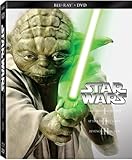
Star Wars Trilogy Episodes I-III (Blu-ray + DVD) | $54.99 | Buy on Amazon |
As an Amazon Associate I earn from qualifying purchases.
The two straightforward ways to begin
“What order should I watch Star Wars in?” has two sensible answers. Release order follows the theatrical sequence in which the numbered films were introduced. Chronological order follows the fictional history, beginning with Episode I and moving through Episode IX.
Do these 3 things before closing this tab:
1Repair Windows errors before they cause bigger problems2Scan for outdated or missing drivers - takes under a minute3Clear out junk files and repair common Windows errorsNeither is a required canon rule. StarWars.com’s May 1, 2025 Star Wars Movies and Series Viewing Guide presents both options. Its broad conclusion is explicit: “Whichever order you choose…is the right one!”
#1 Best Overall
- Pick release order if you are new to the franchise, want the original pacing, or want major twists to arrive in their historical reveal sequence.
- Pick chronological order if you care most about the galaxy’s timeline and want to follow Anakin’s rise and fall before the original trilogy.
- Pick an expanded order only after deciding whether you actually want series and anthology stories. Those titles overlap eras and make a single, universally agreed sequence less simple.
What “release order” and “chronological order” actually mean
Release order is about the audience’s experience in the real world. It starts with the film that introduced the universe, then moves through the original trilogy, prequel trilogy and sequel trilogy as those groups reached theaters. The episode numbers jump from IV to V and VI, then back to I, II and III, before continuing to VII, VIII and IX. That jump is intentional, not a numbering mistake.
Chronological order is about the characters’ fictional history. Episode I is the earliest numbered chapter, followed by Episodes II and III, then the original trilogy and finally the sequel trilogy. This sequence is linear inside the story, but it changes when the viewer learns important background information. “Chronological” therefore describes time in the galaxy, not a promise that every surprise will land as it did for the first theatrical audience.
Star Wars films in release order
This is the cleanest first-time route: nine numbered theatrical films, beginning with the movie that originally introduced audiences to the galaxy.
| Viewing position | Film | Episode | Original release year |
|---|---|---|---|
| 1 | Star Wars: A New Hope | IV | 1977 |
| 2 | Star Wars: The Empire Strikes Back | V | 1980 |
| 3 | Star Wars: Return of the Jedi | VI | 1983 |
| 4 | Star Wars: The Phantom Menace | I | 1999 |
| 5 | Star Wars: Attack of the Clones | II | 2002 |
| 6 | Star Wars: Revenge of the Sith | III | 2005 |
| 7 | Star Wars: The Force Awakens | VII | 2015 |
| 8 | Star Wars: The Last Jedi | VIII | 2017 |
| 9 | Star Wars: The Rise of Skywalker | IX | 2019 |
Why release order is usually the safest first watch
The original trilogy establishes the setting, characters and central conflict before the prequel trilogy supplies earlier history. That arrangement is part of the experience: information that later films explain was intentionally introduced in stages. Watching Episodes IV, V and VI first therefore preserves the reveal sequence that shaped the franchise’s public debut.
After the original trilogy, Episodes I, II and III work as a historical backstory. Episodes VII, VIII and IX then form the sequel trilogy. You do not need background reading, a television subscription or a knowledge of every character to complete this nine-film path.
Release order also gives a new viewer a natural decision point after each trilogy. If the original three films are enough, you can stop without an unfinished opening chapter. If you continue, the prequels explain how the earlier political and personal history led to the original trilogy, while the sequels extend the story beyond its first ending. No spin-off is required between those films.
What release order protects
The main advantage is controlled information. The films reveal the world, the Force, the conflict between the Jedi and Sith, and family relationships in the order that the filmmakers expected audiences to discover them. Later entries can then function as explanations, reversals or consequences rather than introductions that arrive before their context.
This order also avoids the feeling that you have been asked to remember a large cast before you know why each person matters. You meet the central conflict in A New Hope, see it deepen in The Empire Strikes Back, and reach the original trilogy’s resolution in Return of the Jedi before moving to another era.
Star Wars films in chronological order
Chronological film order starts with the earliest numbered episode and moves forward through the in-universe timeline.
| Timeline position | Film | Episode |
|---|---|---|
| 1 | Star Wars: The Phantom Menace | I |
| 2 | Star Wars: Attack of the Clones | II |
| 3 | Star Wars: Revenge of the Sith | III |
| 4 | Star Wars: A New Hope | IV |
| 5 | Star Wars: The Empire Strikes Back | V |
| 6 | Star Wars: Return of the Jedi | VI |
| 7 | Star Wars: The Force Awakens | VII |
| 8 | Star Wars: The Last Jedi | VIII |
| 9 | Star Wars: The Rise of Skywalker | IX |
What you gain and give up
Starting with Episode I lets you see Anakin’s childhood, the political deterioration of the Republic and the events that lead directly into the original trilogy. Connections between the prequel and original eras appear in historical order, which can make the saga feel like one continuous biography.
Rank #2
- THE PHANTOM MENACE(PG),A NEW HOPE(PG),ATTACK OF THE CLONES(PG),THE EMPIRE STRIKES BACK(PG),REVENGE OF THE SITH(PG-13)and RETURN OF THE JEDI(PG)
The cost is that prequel-era information can disclose or soften major revelations from Episodes IV–VI before those films present them. That is not a continuity error; it is simply a different information path. Dan Zehr described chronological viewing as legitimate and “absolutely the way I would introduce this universe to children” in StarWars.com’s May 3, 2018 discussion, From a Certain Point of View: What is the Best Star Wars Viewing Order?
Chronological order can feel especially coherent if your priority is cause and effect. The Republic’s institutions, the Jedi’s position in society and Anakin’s personal history arrive before the consequences seen in the original trilogy. You are less likely to ask, “When did this happen?” because the numbered films move forward by episode.
It can also make the production eras feel more abrupt. You move from the prequel films to the older original-trilogy films, then to the sequel trilogy. That contrast is normal and reflects when the movies were made; it is not a reason to insert other titles between the episodes.
Release order versus chronological order at a glance
| Question | Release order | Chronological order |
|---|---|---|
| First film | A New Hope (Episode IV) | The Phantom Menace (Episode I) |
| Main priority | Original audience reveal sequence | In-universe historical continuity |
| Best for | First-time viewers protecting major surprises | Viewers who want Anakin’s story from its beginning |
| Potential drawback | Episode numbers move backward, then forward | Prequels may reveal information before the original trilogy does |
| Scope | Nine numbered films | The same nine numbered films |
Neither column is a different canon. The films are the same; only the order of information changes. If you begin one way and later rewatch the saga another way, you are not correcting an error. You are emphasizing a different structure.
Which order fits your situation?
You have never seen a Star Wars film
Choose release order. It limits the initial commitment to a familiar trilogy structure and lets you encounter the franchise’s foundational ideas before deciding whether to continue into prequels, sequels and spin-offs.
Free tools Windows power users keep installed
One-click scans. No signup required.
You know the major twists already
Chronological order becomes more attractive when cultural spoilers have already removed the surprise factor. You can concentrate on cause and effect across the timeline rather than protecting reveals you already know.
You are watching with children
Either film sequence works. Chronological order presents Anakin’s life as a single early-to-late story, while release order introduces the world through the original trilogy’s simpler starting point. Consider attention span and maturity for individual films rather than treating the episode number as an age rating.
You are organizing a group watch
Agree on scope before scheduling dates. A nine-film release-order marathon is predictable; an all-media chronology requires decisions about series seasons, anthology episodes and stories that overlap. Put the chosen list in the invitation so nobody assumes a different order.
You want the shortest complete introduction
Watch only the nine episodic films in release order. Add other titles after Episode IX if the central saga leaves you wanting more. This is a practical recommendation, not an official requirement.
Outdated Drivers Are Slowing You Down
One free scan finds every outdated or missing driver and matches the right update for your exact hardware.Free scan · exact hardware matchPC Slower Than It Used to Be?
A free scan shows the junk files, broken settings and background clutter dragging Windows down - then fixes them in one click.Free scan · Windows 10 & 11You are revisiting the saga
Use the order that changes what you notice. A release-order rewatch highlights setup and payoff across the movies. A chronological rewatch emphasizes historical progression and the consequences of earlier decisions. Since you already know the broad story, the spoiler cost is lower, so either approach can be rewarding.
A practical first-time plan
- Commit to the nine films. Decide between the two tables above instead of mixing orders halfway through the first trilogy.
- Keep the episode numbers visible. The numbering is intentionally non-linear in release order; use the film titles as your checklist.
- Pause between trilogies if needed. The original, prequel and sequel trilogies have different styles and production eras. A break prevents a long marathon from blurring their distinctions.
- Decide on extras after Episode IX. Spin-offs are optional expansions, not prerequisites for understanding the nine-film arc.
- Record your stopping point. If you watch over several weeks, note the last completed film so you do not accidentally jump between release and timeline order.
How to avoid accidental spoilers while planning
Use titles and episode numbers rather than searching for plot summaries. If you are hosting, send guests only the list they need and label it “release order” or “chronological order.” A streaming app’s recommendation row may mix films and series, so do not treat its default sequence as a viewing guide.
Agree in advance on whether discussion between films may include future entries. Even a harmless character explanation can reveal a later connection. A spoiler-light plan is particularly useful when some people know the saga and others do not.
Where spin-off films fit
The official guide also lists Rogue One and Solo. They are not numbered episodes, so they do not belong in the nine-film tables. In a broad chronological journey, both occur before A New Hope; the guide places Solo and then the stories involving Obi-Wan Kenobi, Andor, Rebels and Rogue One in the pre-original-trilogy portion of its expanded list.
Quick wins for a faster PC:
Clear out junk files and repair common Windows errorsFree Scan →Scan for outdated or missing drivers - takes under a minuteDriver Scan →You can insert these films after completing the prequel trilogy or wait until after the nine episodes. Waiting is easier for beginners because the main saga remains uninterrupted. Watching Rogue One immediately before A New Hope creates a direct lead-in, but it also turns a simple film list into a larger continuity project.
Solo is an optional character-focused detour in the earlier era. It does not replace any numbered episode and is not needed to understand the central nine-film arc. Rogue One is likewise optional, even though its placement immediately before A New Hope can create a tightly connected two-film pairing for viewers who already know the main saga.
Why an all-series chronology is harder
Television stories do not always occupy one clean point on a calendar. StarWars.com’s May 1, 2025 guide includes films and series together and notes several timeline qualifications.
| Title or group | Placement guidance | Why it needs care |
|---|---|---|
| The Clone Wars film and series | After Attack of the Clones and before Revenge of the Sith | The series has its own official episode sequence that differs from broadcast order. |
| Tales of the Jedi, Tales of the Empire and Tales of the Underworld | Across the prequel-era and other periods | These are anthology series; individual stories do not share one narrow date. |
| The Bad Batch | In the post-prequel transition | Its story begins around the change from Republic to Empire. |
| Maul – Shadow Lord | In the pre-A New Hope era | The guide includes it among later catalog additions; availability and release details can change. |
| Andor and Rebels | Both lead toward Rogue One | Their timelines run concurrently rather than one finishing before the other begins. |
| Resistance | Begins before The Force Awakens and continues beyond it | Placing the entire series before Episode VII would be inaccurate. |
Because of these overlaps, a complete chronological marathon should use the current official guide rather than a list that treats every season as one date. The guide is dated May 1, 2025 and includes later titles through 2026; check it for additions before you lock a long viewing schedule.
How to expand without losing the main thread
The least confusing method is to finish the nine numbered films first, then choose one era or character to explore. For example, you might add The Clone Wars after Episode II and before Episode III, or watch Rogue One and Andor as a separate pre-A New Hope block. This keeps optional material from interrupting the introductory path.
If you prefer an all-media project, copy the official guide into a checklist and mark whether each entry is a film, a complete series or an individual episode. Do not place an anthology season at one date when its stories span different periods. For overlapping shows, note the overlap rather than forcing one series to finish before the other.
If you want to watch The Clone Wars
The animated film and series sit between Episodes II and III. Lucasfilm’s separate March 17, 2014 episode-order guide gives an official sequence that differs from the series’ original broadcast order. Use that sequence for a detailed rewatch.
Rank #4
A newcomer who is watching films first does not need to interrupt the nine-film plan to reorder individual episodes. Finish the episodic films, then choose the official episode list if you decide to explore the series in depth.
What’s actually slowing this PC down?
Pick the symptom - the matching free tool is one click away.
The distinction matters because a series-level placement is only a starting point. Once you decide to watch individual Clone Wars episodes, use Lucasfilm’s sequence rather than inserting episodes by their original broadcast dates. That is the practical way to keep story events in their intended order without requiring a film-first viewer to research every episode before beginning.
Streaming, editions and regional availability
The official viewing guide associates the Star Wars catalog with Disney+, but streaming catalogs are regional and can change. Check the service’s listing in your country on the day you plan to watch instead of assuming that every film or series is available everywhere.
The order itself does not require a special edition, physical box set or accessory. Digital, disc and subscription versions can differ in bonus material or presentation, but those differences do not change the narrative sequence in either table.
Plan for availability before announcing a group date. A title may be listed in the official catalog while a particular country has a different service library, release window or purchase option. If one entry is unavailable, keep the order intact and schedule it later rather than substituting a different-era story without telling the group.
Recommended Free Tools
Common mistakes and how to avoid them
- Starting with Episode I because the number looks first. That is chronological order, not the order in which audiences first met the saga. Choose it deliberately rather than assuming it is the default.
- Mixing orders inside a trilogy. Switching from release to chronology midstream makes the reveal structure harder to follow. Complete one sequence before experimenting.
- Treating every series as a single block. Anthologies and overlapping shows can span years. Follow episode-level guidance when you need precision.
- Assuming spin-offs are required homework. The nine numbered films stand on their own as a starting route. Extras are optional expansions.
- Relying on an old “complete timeline.” The catalog continues to grow, and official guides can add titles. Recheck the May 1, 2025 guide before planning an all-media marathon.
- Promising a title is streamable in your country. Verify local availability because the official guide’s Disney+ association does not guarantee identical regional catalogs.
- Calling a list “chronological” without defining its scope. State whether you mean the nine episodic films, all films, or films plus series. The answer changes once anthology and overlapping stories are included.
- Using a fan-made list as the only authority. Fan lists can be useful for preferences, but the official StarWars.com guide and Lucasfilm’s Clone Wars episode guide are the dependable references for current placement and episode order.
- Skipping a pause between eras. A long, uninterrupted marathon can make the three trilogies blur together. Breaks help viewers absorb each trilogy’s tone and avoid losing track of which order they selected.
Frequently asked questions
What order should I watch Star Wars in for the first time?
Watch the nine numbered films in release order: A New Hope, The Empire Strikes Back, Return of the Jedi, The Phantom Menace, Attack of the Clones, Revenge of the Sith, The Force Awakens, The Last Jedi and The Rise of Skywalker. This preserves the original reveal sequence and keeps the first commitment focused.
Is chronological order better than release order?
Not universally. Chronological order is better if your priority is Anakin’s life and the fictional history of the galaxy. Release order is better if you want the way the films originally introduced their setting and major revelations. StarWars.com says either order is right.
Do I start with Episode IV or Episode I?
Start with Episode IV, A New Hope, for release order. Start with Episode I, The Phantom Menace, for chronological order. Decide based on whether you value audience reveal sequence or in-universe continuity.
Where should I put Rogue One and Solo?
Both are optional, non-numbered films set before A New Hope. Beginners can save them until after Episode IX. If you are following a broad chronology, the official guide places them in the pre-original-trilogy portion, with Rogue One leading directly into A New Hope.
The Tool Desk
Outbyte PC Repair FREERepair Windows errors before they cause bigger problemsFix Now →Outbyte Driver Updater FREEFix the driver behind crashes, sound loss and screen glitchesFind Drivers →Do I need to watch the series before the films?
No. The nine episodic films are a complete starting route. Add series later if you want more context. If you include them, remember that anthology stories span periods, Andor and Rebels overlap, and Resistance crosses the era of The Force Awakens.
Best Value
- Brand New in box. The product ships with all relevant accessories
What is the correct order for The Clone Wars?
The film and series belong between Episodes II and III. For individual episodes, use Lucasfilm’s March 17, 2014 official episode-order guide, because its sequence differs from the original broadcast order. Film-first newcomers can postpone that detailed rewatch.
Can I watch the movies in chronological order with children?
Yes. Dan Zehr wrote on StarWars.com that chronological viewing was the way he would introduce the universe to children. Release order is also suitable. Consider the maturity and attention span required by each individual film rather than relying on episode numbering.
Is every Star Wars title on Disney+?
The official viewing guide associates the catalog with Disney+, but availability varies by country and can change. Check the local Disney+ listing or another legal option when you schedule each title; do not assume that the catalog is identical worldwide.
Outdated Drivers Are Slowing You Down
One free scan finds every outdated or missing driver and matches the right update for your exact hardware.Free scan · exact hardware matchWindows Errors? Fix Them Before They Spread
Repair common Windows errors and clear accumulated junk for a smoother, more stable PC - no reinstall needed.Free scan · no reinstallA simple decision in one minute
Start with A New Hope if this is your first Star Wars experience or you want the original cinematic reveal sequence. Start with The Phantom Menace if you want the fictional history from its earliest numbered chapter and already accept that some original-trilogy surprises will arrive earlier. After Episode IX, consult the current official guide if you want to add animated series, live-action series, anthology stories or spin-off films.
Frequently Asked Questions
What order should I watch Star Wars in for the first time?
Use release order for the nine numbered films, beginning with A New Hope. It preserves the original reveal sequence and gives you a manageable introduction before optional series and spin-offs.
Is chronological order better than release order?
Neither is universally better. Chronological order follows Anakin’s story and the fictional timeline; release order preserves how audiences first discovered the saga. StarWars.com considers both valid.
Do I need to watch Star Wars series before the movies?
No. The nine episodic films stand on their own. Add series afterward, using the official guide for overlapping or anthology stories.
Where do Rogue One and Solo fit?
Both are optional, non-numbered films set before A New Hope. Beginners can watch them after Episode IX, or place them in the pre-original-trilogy section of a broader chronology.
What is the correct Clone Wars order?
The film and series occur between Episodes II and III. Lucasfilm’s March 17, 2014 episode-order guide gives the sequence for individual episodes, which differs from broadcast order.
Is Star Wars available on Disney+ everywhere?
StarWars.com associates the catalog with Disney+, but regional libraries change. Check the service in your country before scheduling a viewing.
The Bottom Line
Bottom line: Begin with A New Hope and follow release order if you are new or want the original reveal sequence. Begin with The Phantom Menace if historical continuity and Anakin’s story matter more. Both are valid; finish the nine numbered films before expanding into spin-offs and series, and use StarWars.com’s May 1, 2025 guide for the current all-media timeline.
What’s actually slowing this PC down?
Pick the symptom - the matching free tool is one click away.
Quick Recap
Product prices and availability are accurate as of the date/time indicated and are subject to change. Any price and availability information displayed on Amazon at the time of purchase will apply.




