Do these 3 things before closing this tab:
1Clear out junk files and repair common Windows errors2Scan for outdated or missing drivers - takes under a minute3Repair Windows errors before they cause bigger problemsPlanar headphones are not inherently responsible for hiss. First work out whether you hear electronic noise from the headphone or audio chain, or sound entering from the room: pause playback, switch ANC or transparency off if available, and test another source. If the problem is outside noise, ANC, a closed-back design, and a good fit address it differently from electronic hiss.
Identify what you are hearing
Listen at a safe, low volume and note whether the sound continues with playback paused. A steady broadband “shhhh” can be consistent with an electronic noise floor; a low hum or buzz, crackle, and ordinary room sounds suggest different things to investigate. These are listening clues, not measurements, and do not by themselves identify a faulty component.
As an Amazon Associate I earn from qualifying purchases.
- Hiss that remains with playback paused: check headphone processing and the source chain.
- Noise that changes with ANC or transparency: the headphone’s electronics or microphone processing may be involved.
- Voices, traffic, or other room sounds: this is an isolation problem, not necessarily headphone-generated hiss.
Work through electronic hiss in order
1. Compare ANC and transparency modes
If your headphones have active noise cancellation (ANC) or transparency mode, listen with each enabled and then disabled. Hiss that appears only in a processing mode points toward the headphone’s electronics or microphone processing. Sennheiser Hearing explains that ANC headphones can produce very low-level electronic white noise, noticeable in a quiet room with no audio playing; playback often masks it. The explanation is general ANC guidance, not a claim that every model behaves identically. Sennheiser Hearing’s explanation of ANC was updated 14 April 2026. Wind can also reach ANC microphones outdoors.
2. Try another source
At a safe low level, connect the headphones to a different phone, computer, DAC, or amplifier. If the hiss changes or disappears, focus on the original device, its output, or its connection. Philips Support says amplifier noise can cause a quiet hiss in the specific noise-cancelling headphone models listed on its support page and describes it as normal for those models. That is not evidence that all headphones share the same noise floor—or that buying an external amplifier will solve yours. Philips Support’s model-specific explanation gives the scope of its advice.
#1 Best Overall

- ROG-tuned 100mm HIFIMAN planar magnetic drivers: Audiophile-grade fidelity across an ultra-wide frequency range with vivid detail and exceptionally low distortion
- Open-back architecture: Spacious, natural soundstage with clear separation across bass, mids, and treble
- On-cable full-band MEMS boom microphone: Accurate voice pickup with a wide 20Hz–20kHz response and high SNR for clean, lifelike communication
- Broad compatibility and plug-and-play convenience: 4.4mm balanced plug included, plus 3.5mm and 6.3mm single-ended plugs, and a USB-C adapter for seamless compatibility with DACs, amps, PCs, consoles, and mobile devices
- Premium build for durability and comfort: Soft, eight-level adjustable headband, robust metal frame, and hinges, and sleek earcup with signature ROG elements
3. Reseat and inspect the connections
Unplug and firmly reconnect the headphone cable at both ends, if applicable. Look for visible damage and, if you already have one, try a known-good compatible cable. OPPO’s PM-3 support guidance says a cable inserted incorrectly or connected at the wrong end can cause missing or intermittent channel audio. That advice concerns connection problems; it does not establish a cable as a general cure for hiss. See OPPO’s PM-3 connection guidance.
4. Check whether the noise is new or persistent
A faint noise floor in a particular ANC mode may be expected, but do not assume pronounced hiss is harmless. If strong hiss, crackling, channel imbalance, or a change from prior behavior persists across sources and modes, consult the manual or support team for the exact model. Manufacturer guidance about normal operation is model-specific.
Rank #2
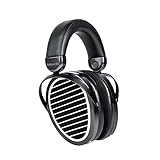
- A Major Upgrade of the Popular Edition X: The new Edition XS expands on its predecessor’s achievements with several essential upgrades. Featuring Stealth Magnet Technology and the company’s NEO supernano Diaphragm, the Edition XS produces a wide, natural soundstage that puts the listener in the best seat in the house. Edition XS from HIFIMAN brings the depth and range of well-recorded music to an affordably priced headphone.
- Acoustically Invisible Stealth Magnet: Unlike the sound waves created by a conventional magnet, the special shape of Stealth Magnets enables the waves to pass through the magnets without generating interference. HIFIMAN’s advanced magnet design is acoustically transparent, dramatically reducing wave diffraction turbulence that degrades the integrity of the sound waves. The reduced distortion yields pure sonic output that is accurate and full-range.
- HIFIMAN’s NEO “supernano” Diaphragm (NsD): The new NsD is 75% thinner than previous designs, resulting in fast response and detailed imaging with lush, full range sonics.
- The Headband: The light weight, ergonomically accurate offers maximum comfort for hours of listening pleasure. The exterior is refined matte black material, and the interior features high-grade memory foam for the most comfortable fit and elasticity. The headphone’s structural design supports overall durability that retains its comfortable fit for years of enjoyment.
- The Cable: HIFIMAN’s new 3.5mm sockets are similar to those found on most common audio devices. The supplied 3.5mm cable is user changeable and replaceable.
Reduce sound coming from the room
ANC and passive isolation are not interchangeable. ANC is most effective against steady, low-frequency sounds such as engine or air-conditioning hum. It is less effective against voices, sudden sounds, and noise that remains after cancellation. Sennheiser describes these limits in its ANC overview.
Passive isolation comes from the physical enclosure and seal around your ears. Closed-back headphones can block some outside sound; open-back headphones do not provide the same physical enclosure. A poor seal can also reduce isolation and ANC performance. Hair, hats, glasses, or misplaced earcups may interfere with the seal, and results vary by model and fit. Sony’s guidance discusses the effect of fit on ANC performance: how to wear headphones for noise cancellation.
Rank #3

- Immersive Listening, Pure Original Sound : Experience high-fidelity sound with nano-thin diaphragm and symmetrical magnets. Precision acoustics deliver high-resolution, low-distortion sound for live-performance realism
- 97mm Ultra-Large Diaphragm : 97mm Nano-Level driver at 2μm thickness reveals microscopic details. Sputtered silver alloy coating enhances clarity while ensuring long-term sonic consistency and durability
- Ergonomic Design, Long-Lasting Comfort : Memory-steel metal headband with multi-axis pivoting earcups adapts instantly. Silicone sliders enable micro-adjustments. Breathable skin-friendly earpads eliminate fatigue during extended sessions
- Refined Craftsmanship : Handcrafted walnut wood chambers paired with CNC-milled aluminum frame. Genuine sheepskin headband and signature S-design accents exude understated luxury and timeless sophistication
- Precision Magnetic Control : 44 N50 neodymium magnets ensure fast transient response. Acoustically transparent open-back grille minimizes resonance for expansive, holographic soundstage with studio-grade accuracy
Planar describes the driver, not noise cancellation
“Planar” refers to a driver technology; it does not tell you whether a headphone cancels noise or blocks the room. HIFIMAN describes its ANANDA as open-back, while OPPO describes the PM-3 as closed-back and isolation-oriented. Those descriptions show that planar headphones can use different enclosure designs; they are not the result of a controlled comparison of noise reduction. The PM-3 is discontinued, so it is an example of construction, not a current availability recommendation.
| What you want to address | Relevant approach | What to expect |
|---|---|---|
| Electronic hiss | Compare processing modes and sources; inspect connections. | These checks can help locate where the sound changes, but no source establishes an amplifier as a universal fix. |
| Steady low-frequency hum | Consider compatible ANC. | ANC is generally more effective on repetitive low-frequency sounds than on voices or abrupt noise. |
| Outside sound without ANC | Consider a closed-back design with a good seal. | Physical isolation depends on the headphone and fit; an open-back design does not provide the same enclosure. |
When choosing a different setup
Before spending money, compare the sound with ANC on and off, across sources, and with playback paused. If outside noise is the issue, prioritize enclosure and fit; if it is steady low-frequency noise, ANC may help. For a purchase comparison, look for measurements made with the exact headphone and setup, and check connectivity, support, and return terms. The cited sources do not provide controlled comparative measurements of planar headphones’ hiss or noise reduction.
Rank #4
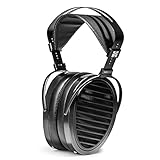
- Acoustically Invisible Stealth Magnet: Unlike the sound waves created by a conventional magnet, the special shape of Stealth Magnets enables the waves to pass through the magnets without generating interference. HIFIMAN’s advanced magnet design is acoustically transparent, dramatically reducing wave diffraction turbulence that degrades the integrity of the sound waves. The reduced distortion yields pure sonic output that is accurate and full-range.
- Nanometer Thickness Diaphragm A breakthrough core technology developed by HIFIMAN and first of its kind in headphone application. Working with this advanced material is extremely challenging yet the successful incorporation of this film as the Arya’s planar driver is the cornerstone of its remarkable sound.
- Metal and High-Grade Plastic Construction: HIFIMAN designed the Arya's high-quality metal headband with extra strength and a special high-grade plastic for lightweight comfort and rugged durability. Sturdy 3.5mm User-replaceable Connector Design allows easy cable swapping, giving both maximum durability and enhanced customizability.
- Patented “Window Shade” System: Created to meet the need for driver protection and an optimized open-back design. Asymmetrical Ear Cups: Follows the natural shape of the human ear. Cable: The Arya keeps things simple with a single Crystalline Copper cable. Featuring a 6.35mm plug and a jet black woven exterior finish it’s the perfect complement to the sound and sight of the Arya.
- Bold Black Aesthetic: With its classic HE1000-style shape combined and striking good looks of its all-black exterior, glossy black headband, and eye-catching matte-black cups and grill, the Arya is a statement of both aesthetic and sonic excellence.
Replaceable cables or pads are maintenance options, not established hiss remedies. HIFIMAN’s ANANDA guide documents compatible cables and pads but does not claim they cure hiss: HIFIMAN ANANDA product guide.
Crashes, No Sound, or Screen Glitches?
Random freezes, missing sound and display glitches usually trace back to one bad driver. Find and replace yours safely.Free scan · under a minutePC Slower Than It Used to Be?
A free scan shows the junk files, broken settings and background clutter dragging Windows down - then fixes them in one click.Free scan · Windows 10 & 11Quick Recap
Product prices and availability are accurate as of the date/time indicated and are subject to change. Any price and availability information displayed on Amazon at the time of purchase will apply.




